A new surveyof more than 800 CEOS and C-suite executives finds that while a vast majority are optimistic about business conditions in a year, they are also much more cognizant of complex risks beyond the pandemic, such as climate change.
Driving the news: The new survey, conducted by the global professional services firm Aon from Aug. 3 to Sept. 4, consists of findings from interviews with business leaders.
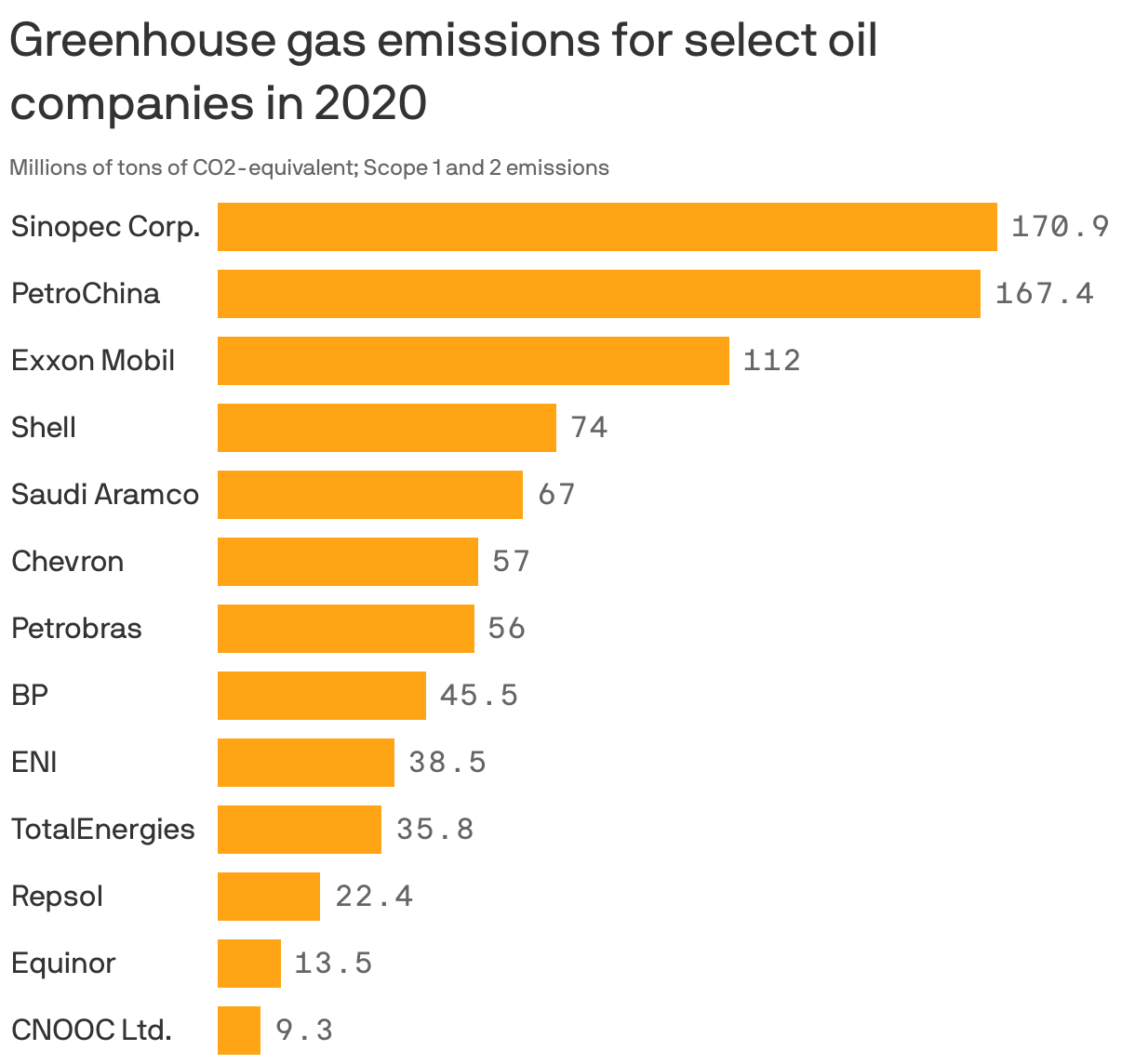
Data: Columbia | SIPA Center on Global Energy Policy; Chart: Thomas Oide/Axios
There's plenty written about what oil giants like Exxon are — and aren't — doing on climate, but a report from a Columbia University energy think tank explores how Chinese companies are approaching the matter.
Why it matters: Chinese state companies have a role to play in China's vow to peak emissions before 2030 and become carbon neutral by 2060.
City landscapes could one day be dotted with automated drone landing pads like the one that Matternet — which makes drones and equipment for drone logistics networks — debuted Thursday in Switzerland.
Why it matters: Urban drone operations could radically change on-demand and last-mile deliveries by making it faster, cheaper and more sustainable to transport packages.
The National Oceanic and Atmospheric Administration (NOAA) sailed a robotic surfboard with a sturdy, vertical "hurricane wing" into the heart of Hurricane Sam, currently the strongest storm on Earth with sustained winds of 145 mph.
Why it matters: The unprecedented footage from the uncrewed vessel inside a major Atlantic hurricane, as well as the data from the drone are helping forecasters hone their understanding of these fearsome storms.
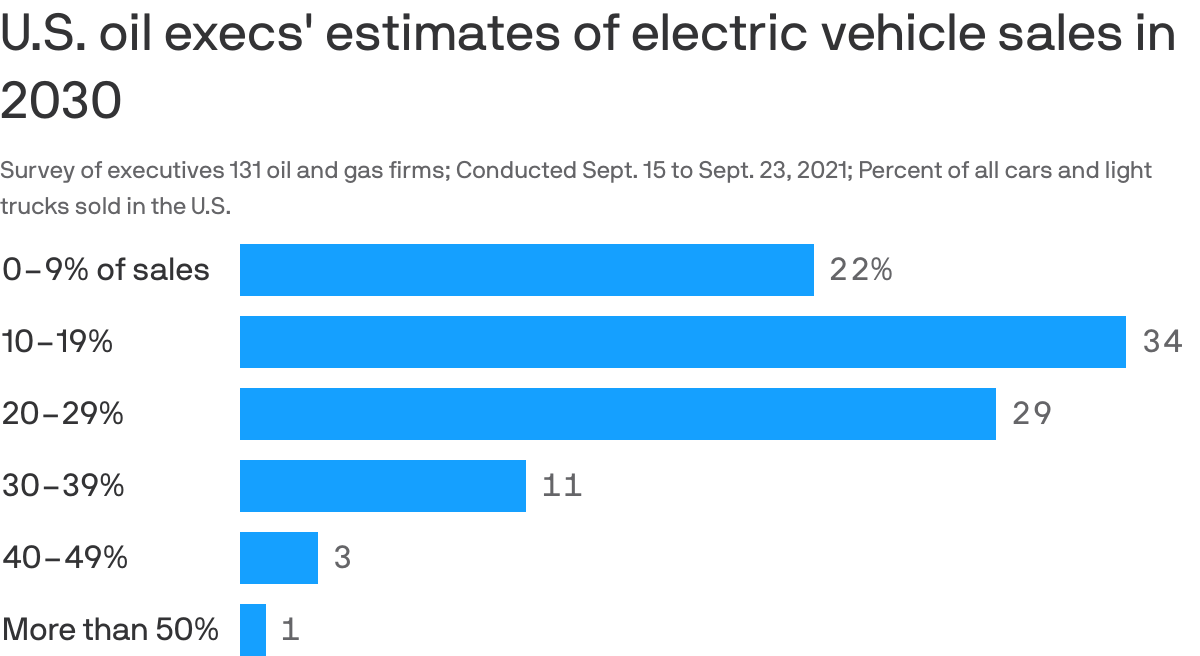
Oil executives surveyed by the Dallas Fed predict levels of electric car sales that would be far short of President Biden's goal of having cars with a plug make up half of U.S. sales by 2030.
Driving the news: The chart above shows responses to one of the bank's questions to oil-and-gas companies in their latest quarterly survey.
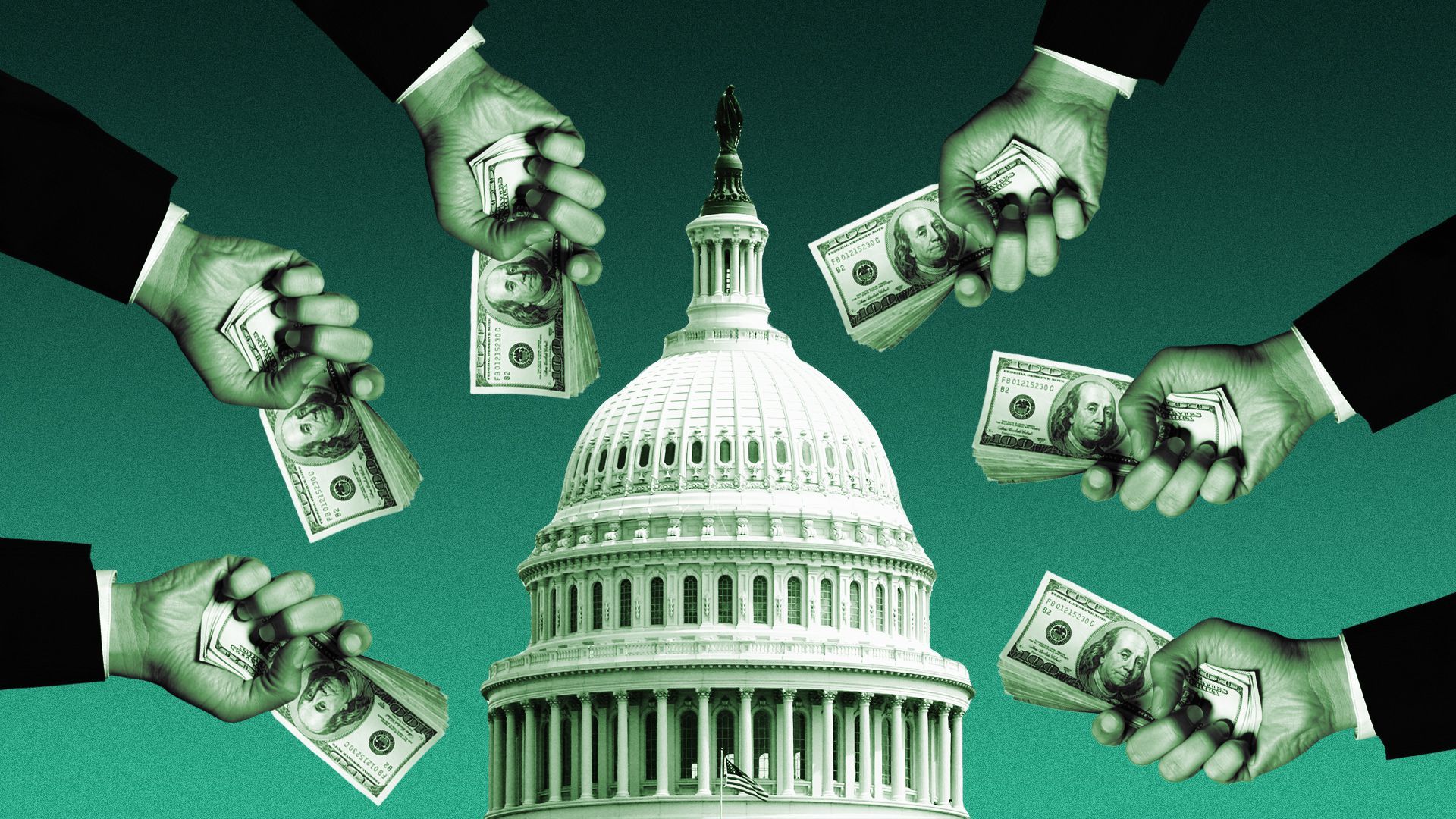
The extended timeline for a reconciliation package on Capitol Hill is widening the spigot for business and advocacy group dollars to flow into the fight.
Why it matters: The longer the skirmishes on Capitol Hill last, the more time they provide for the energy industry, associated trade groups and environmental groups to pour money into TV, radio and online advertising campaigns to influence Americans' views of the wide-ranging proposals.
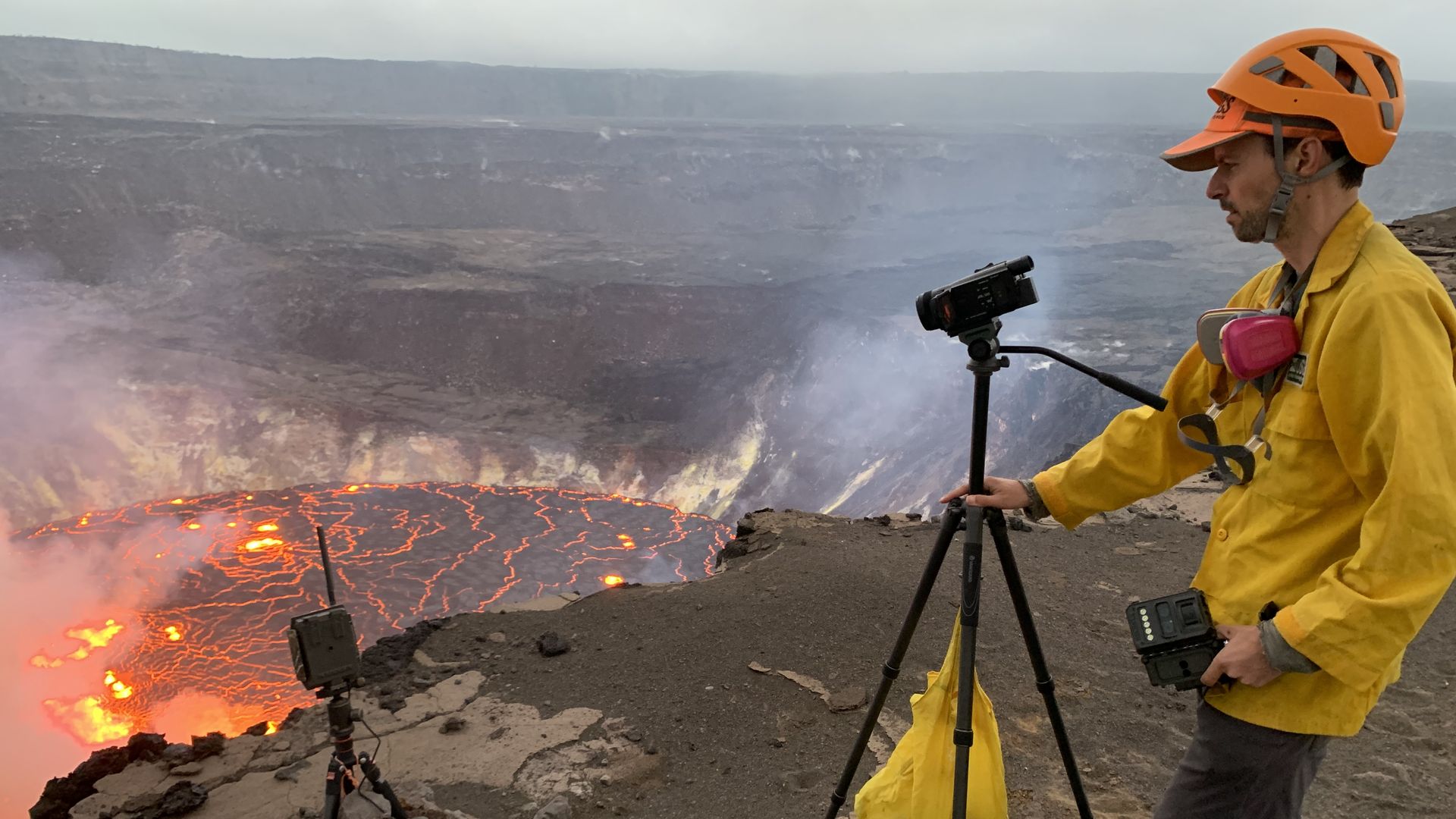
U.S. Geological Survey scientists confirmed that Hawaii's Kīlauea volcano began erupting Wednesday within Halema'uma'u crater, the summit of the volcano.
Why it matters: Kīlauea's major eruption in 2018 destroyed more than 700 homes, displacing thousands of people and devastating residential areas in the Puna District on the Big Island, according to the National Park Services.
U.S. cities are seeing a dramatic surge of e-bike usage — driven in part by high-minded concerns (like the environment and pandemic safety) and in part by the coolness and fun factor.
Why it matters: The proliferation of e-bikes and push for more bike lanes are reshaping city geographies, social dynamics and even politics, as communities grapple with safety concerns and road-use jockeying.
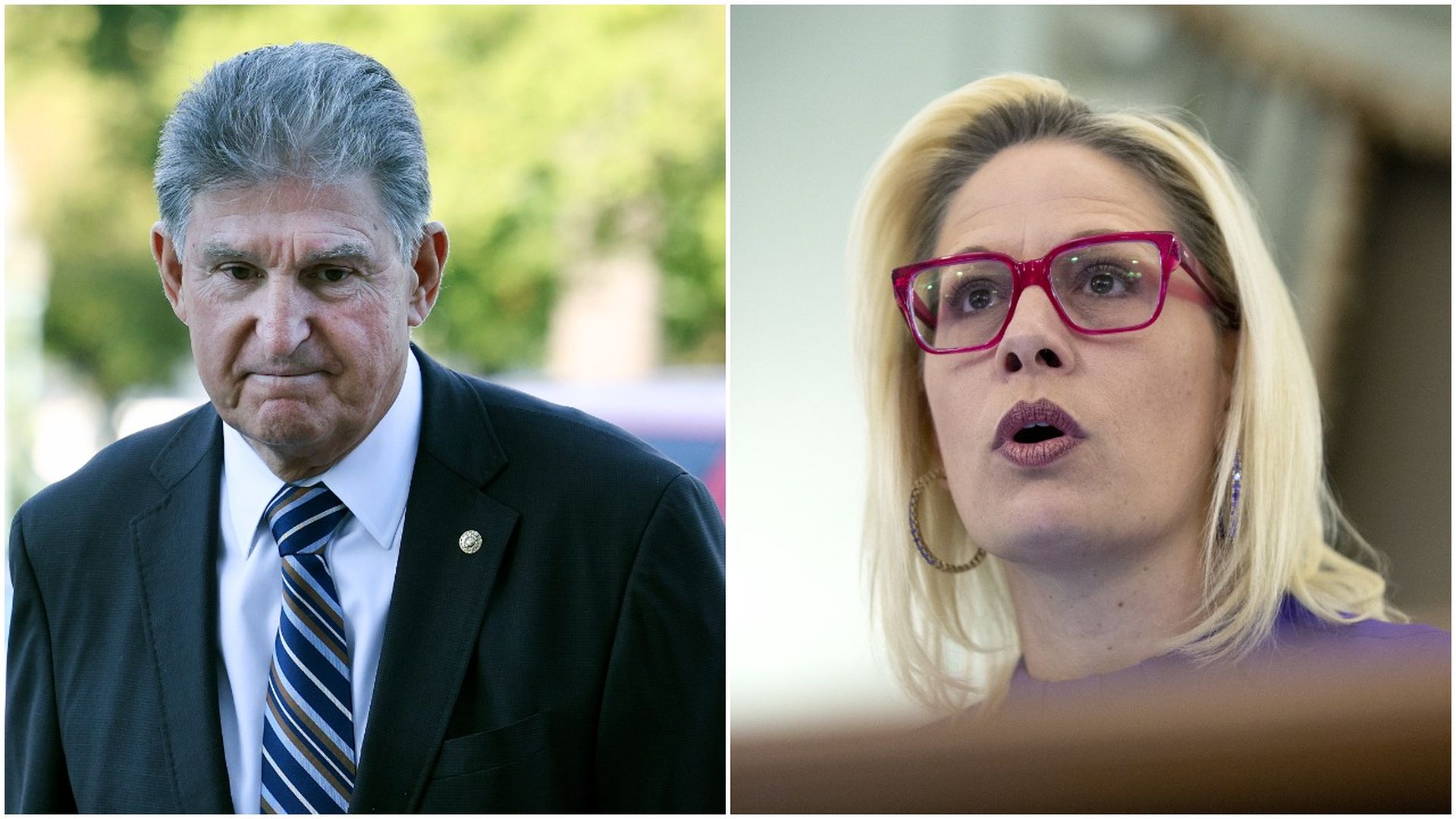
Sen. Joe Manchin (D-W.Va.) is rebuffing pleas from Western Democratic senators, who are citing extreme weather in their home states, to try to gain his support for core climate provisions in President Biden’s $3.5 trillion reconciliation package.
Why it matters: Manchin’s entrenched opposition puts him on a collision course with another key holdout on the spending bill, Sen. Kyrsten Sinema (D-Ariz.). She's indicated that addressing climate change is one of her top priorities in any compromise.





/2021/09/30/1633028121555.gif?w=3840)


/2021/09/29/1632951165597.gif?w=3840)