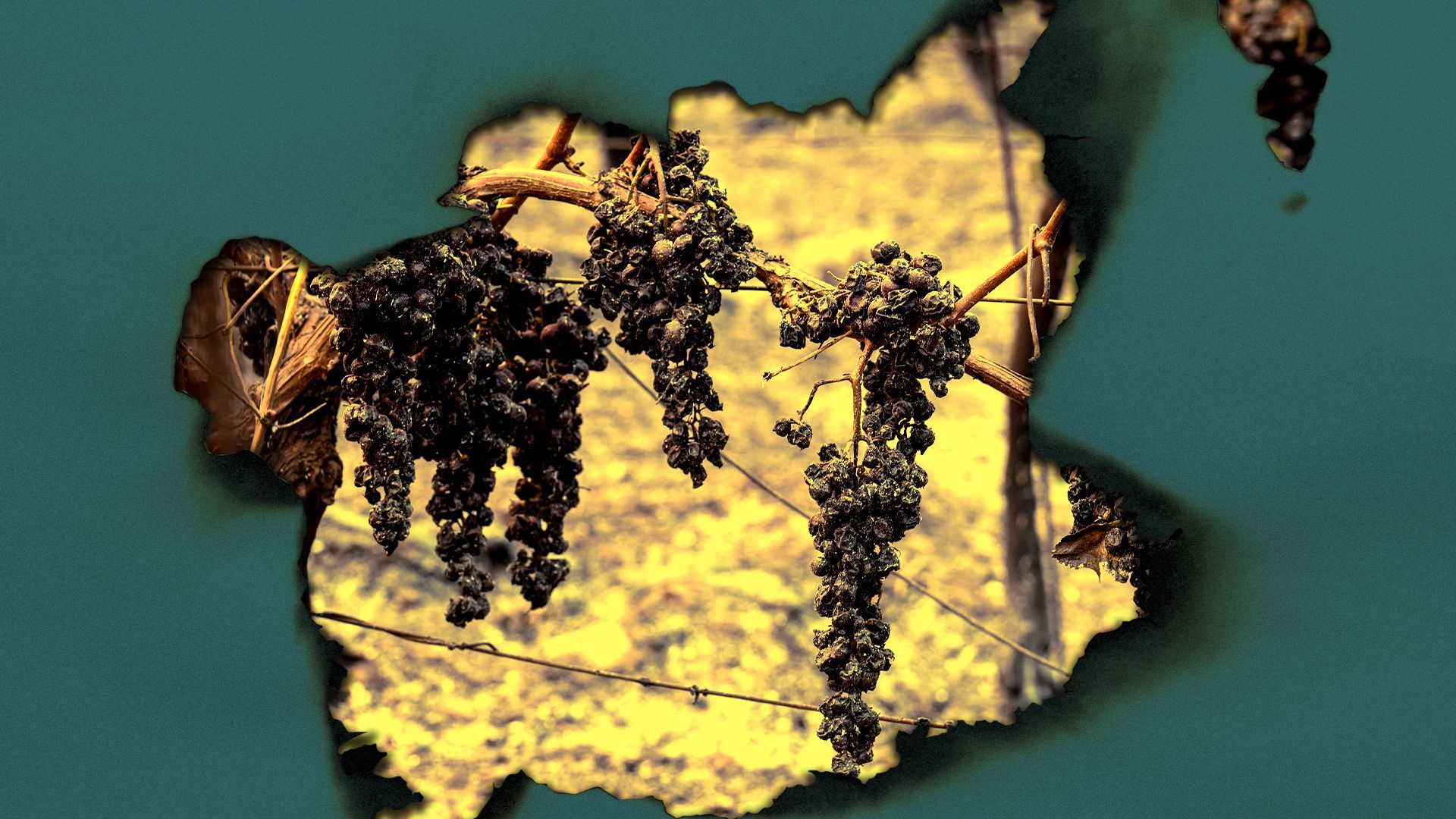
If you want your kids to be able to experience a great Napa cabernet, you might want to lay it down now. Climate change is upending much of the wine world, radically reshaping the map of the world's greatest wine regions.
Why it matters: Wine is the most celebrated agricultural commodity in the world, a key part of many countries' national identity dating back in some cases for thousands of years. Much of that history and environment is now facing an existential threat.
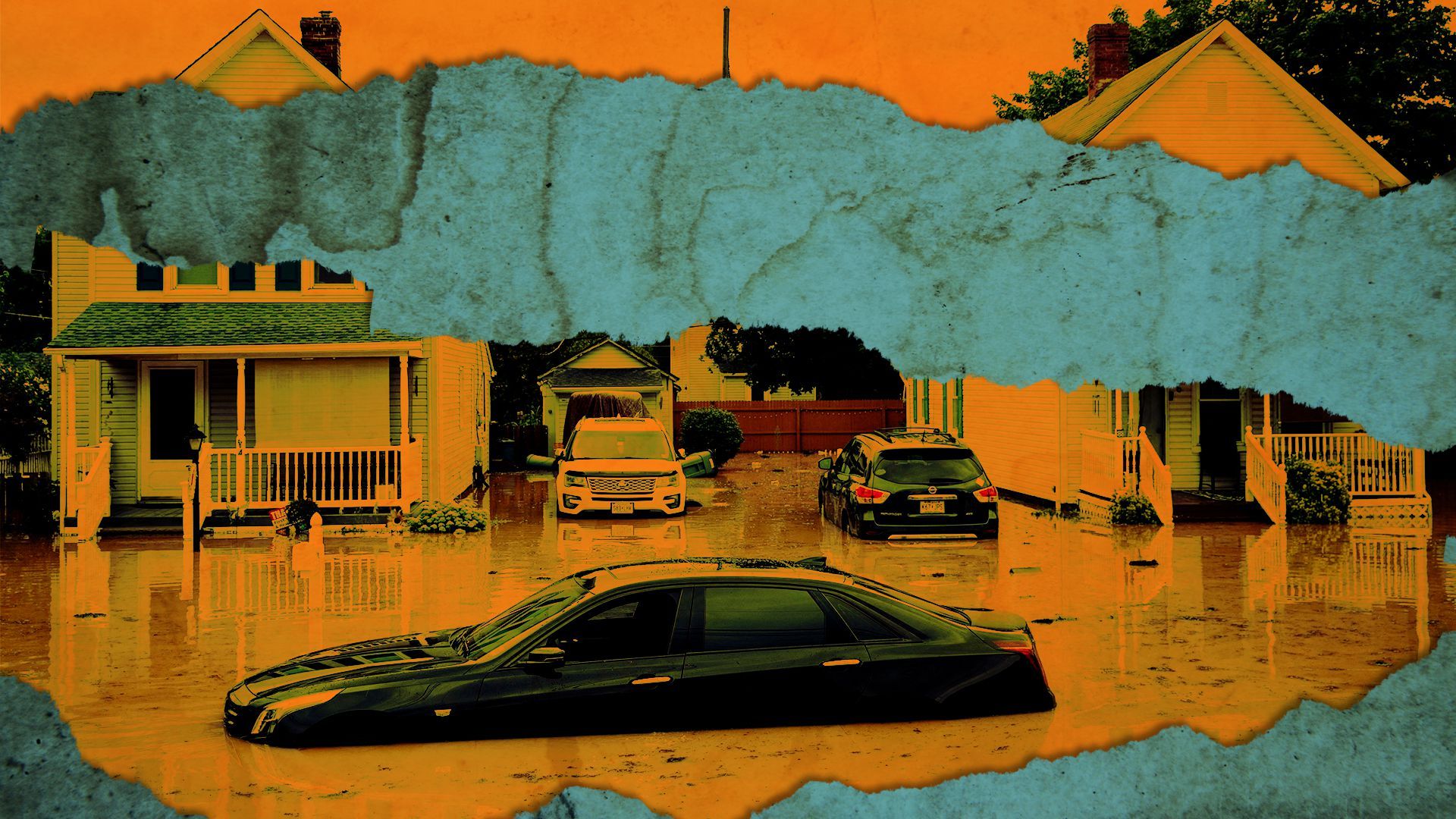
Property owners are now seeing the real, personal cost of climate change, as some homes are in danger of becoming increasingly expensive to insure — forcing property values to plummet and turning interested buyers away.
Starting this month, new National Flood Insurance Program policieswill no longer include subsidized plans that for decades helped prop up home values in some of the most dangerous flood zones.
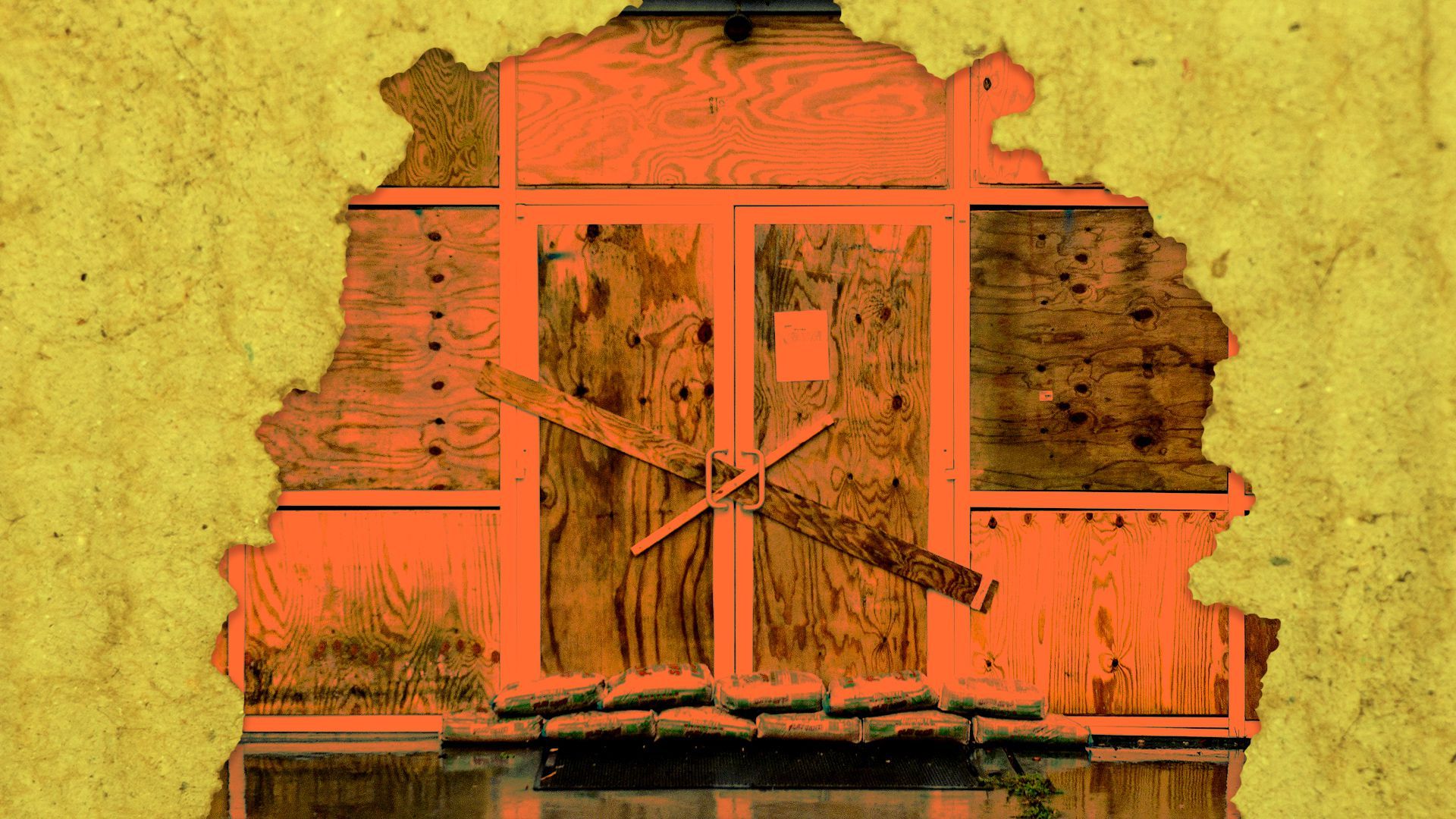
With climate shock waves set to roil communities with increasing frequency and severity, an urgent task facing us all is to build up resilience measures to withstand these events.
Why it matters: It's too late to stop extreme weather from increasing even as emissions are reduced, so all we can do is adapt to it. But there are strategies that you — and your community — can take to become better prepared.
This year's extreme weather is a preview of even more turbulent times that will bedevil us for at least the span of a 30-year mortgage.
Why it matters: Extreme weather events are the clearest way we're feeling climate change in our daily lives, and they will reshape where and how we live, work and play.
Good afternoon, and welcome to our Axios AM Deep Dive on the extreme weather that's making the impact of climate change real to all of us.
This edition is led by Andrew Freedman, co-author of our daily Generate newsletter (subscribe here), and Kia Kokalitcheva, author of the Saturday edition of our Pro Rata newsletter (subscribe here).
For decades, companies have helped Wall Street, large retailers, major industries and other clients anticipate weather fluctuations, and the subsequent price and inventory volatility.
But the new era of extreme weather events has created a market for a different approach — and startups are filling it.
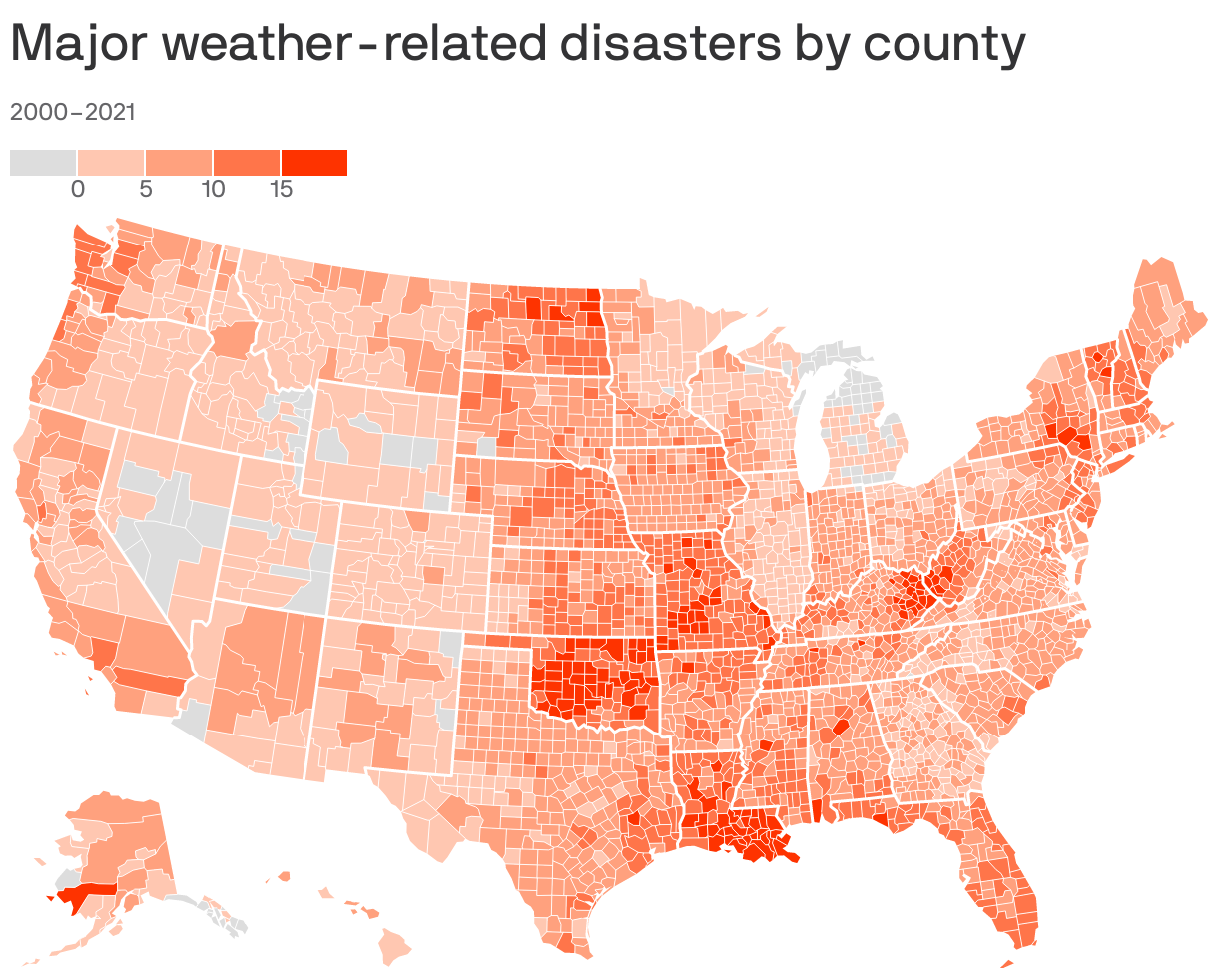
Some regions of the U.S. are safer from climate-fueled extreme weather events than others, but no region will be untouched, especially as greenhouse gases keep building up in the atmosphere.
The big picture: The map above shows major disasters declared by the Federal Emergency Management Agency during the past two decades — a snapshot that ranges from hurricanes and severe storms to wildfires and drought.
U.S. special climate envoy John Kerry believes "enormous progress" could be made at an upcoming UN climate summit in Scotland to reduce carbon emission levels if more governments must come up with concrete commitments, the Associated Press reports.
Driving the news: America's climate credibility rests in part on the reconciliation bill's movement ahead of the 12-day climate summit, which starts Oct. 31.
A new surveyof more than 800 CEOS and C-suite executives finds that while a vast majority are optimistic about business conditions in a year, they are also much more cognizant of complex risks beyond the pandemic, such as climate change.
Driving the news: The new survey, conducted by the global professional services firm Aon from Aug. 3 to Sept. 4, consists of findings from interviews with business leaders.
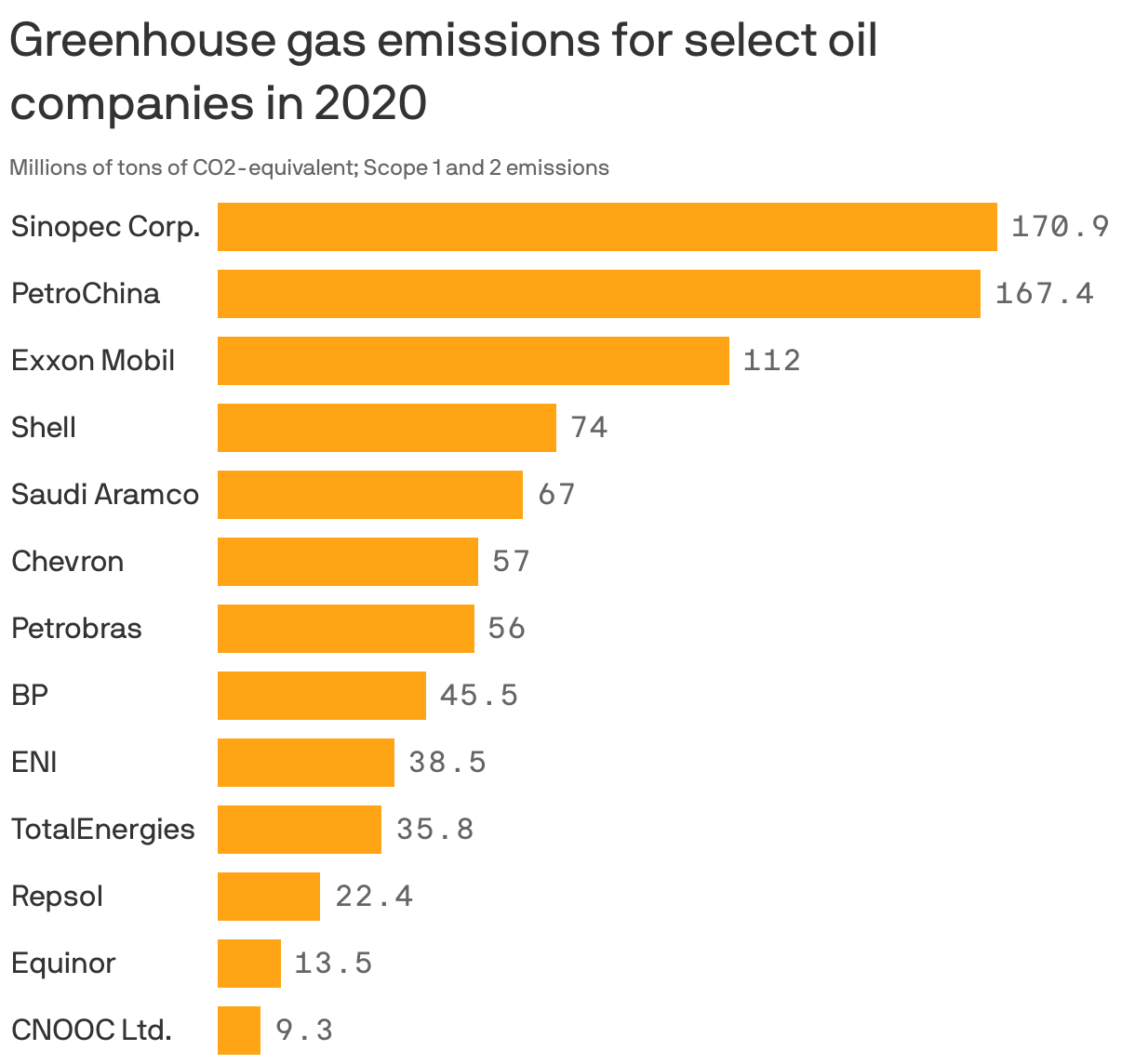
Data: Columbia | SIPA Center on Global Energy Policy; Chart: Thomas Oide/Axios
There's plenty written about what oil giants like Exxon are — and aren't — doing on climate, but a report from a Columbia University energy think tank explores how Chinese companies are approaching the matter.
Why it matters: Chinese state companies have a role to play in China's vow to peak emissions before 2030 and become carbon neutral by 2060.
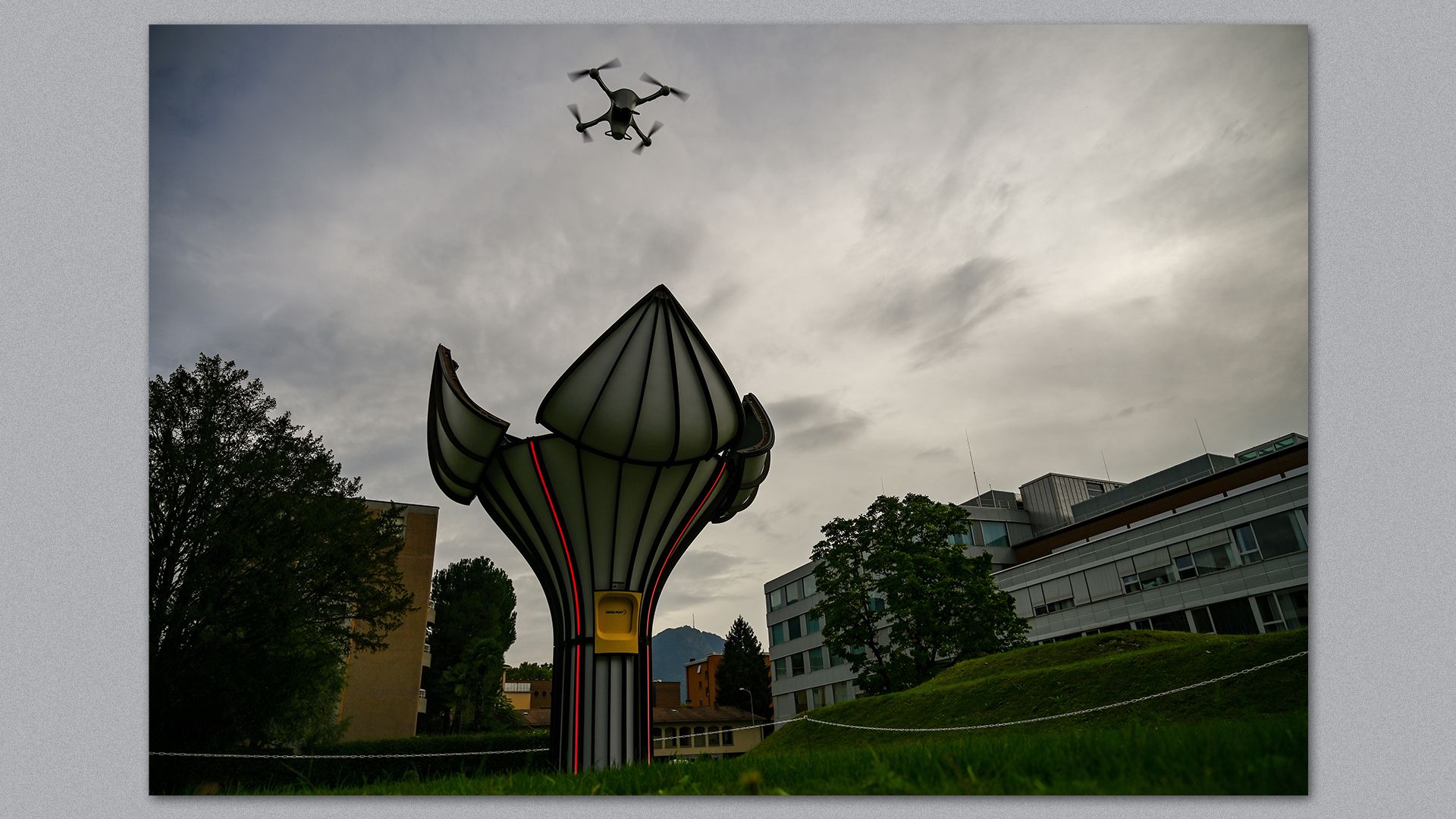
City landscapes could one day be dotted with automated drone landing pads like the one that Matternet — which makes drones and equipment for drone logistics networks — debuted Thursday in Switzerland.
Why it matters: Urban drone operations could radically change on-demand and last-mile deliveries by making it faster, cheaper and more sustainable to transport packages.