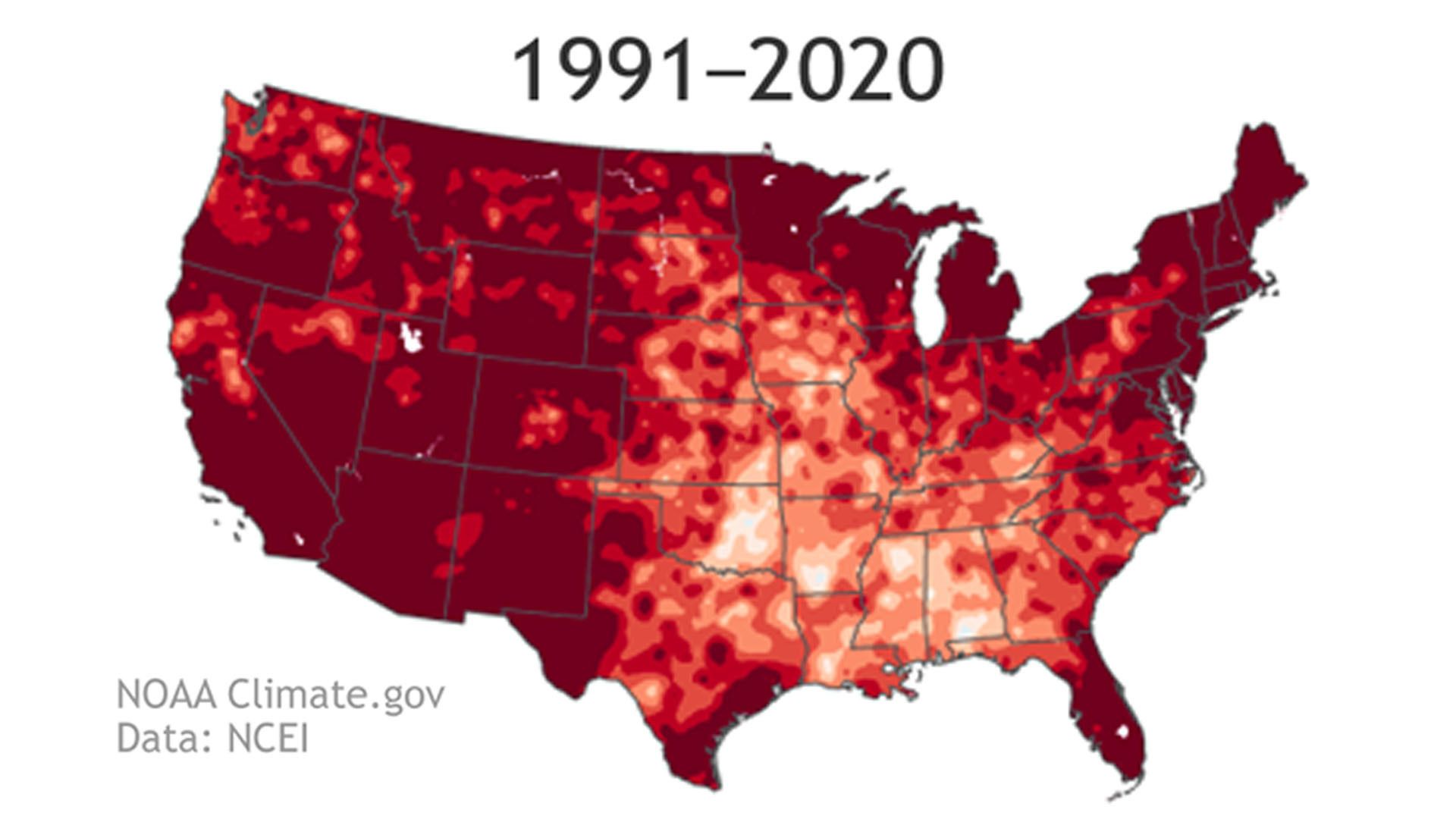
The National Oceanic and Atmospheric Administration revealed new standards on Tuesday for what an average or "normal" U.S. climate looks like, showing average temperatures in the U.S. rising significantly.
Why it matters: Shifting the baseline for normal temperatures highlights just how quickly climate change is affecting conditions on Earth.
Ford and BMW, along with the VC firm Volta Energy Technologies, are investing $130 million in the solid-state battery startup Solid Power.
Why it matters: Solid-state batteries hold the promise of more energy density, durability and safety than existing battery tech with liquid electrolytes, but successful and widespread commercialization remains a challenge.
Uber and the electric vehicle startup Arrival are teaming up to develop an "affordable, purpose-built" EV for the ride-hailing industry that Arrival hopes to bring into production in late 2023, the companies said.
Why it matters: Making ride-hailing electric is important from a climate standpoint, given the mileage the vehicles travel and signs that ride-hailing replaces some walking, biking and mass transit use.
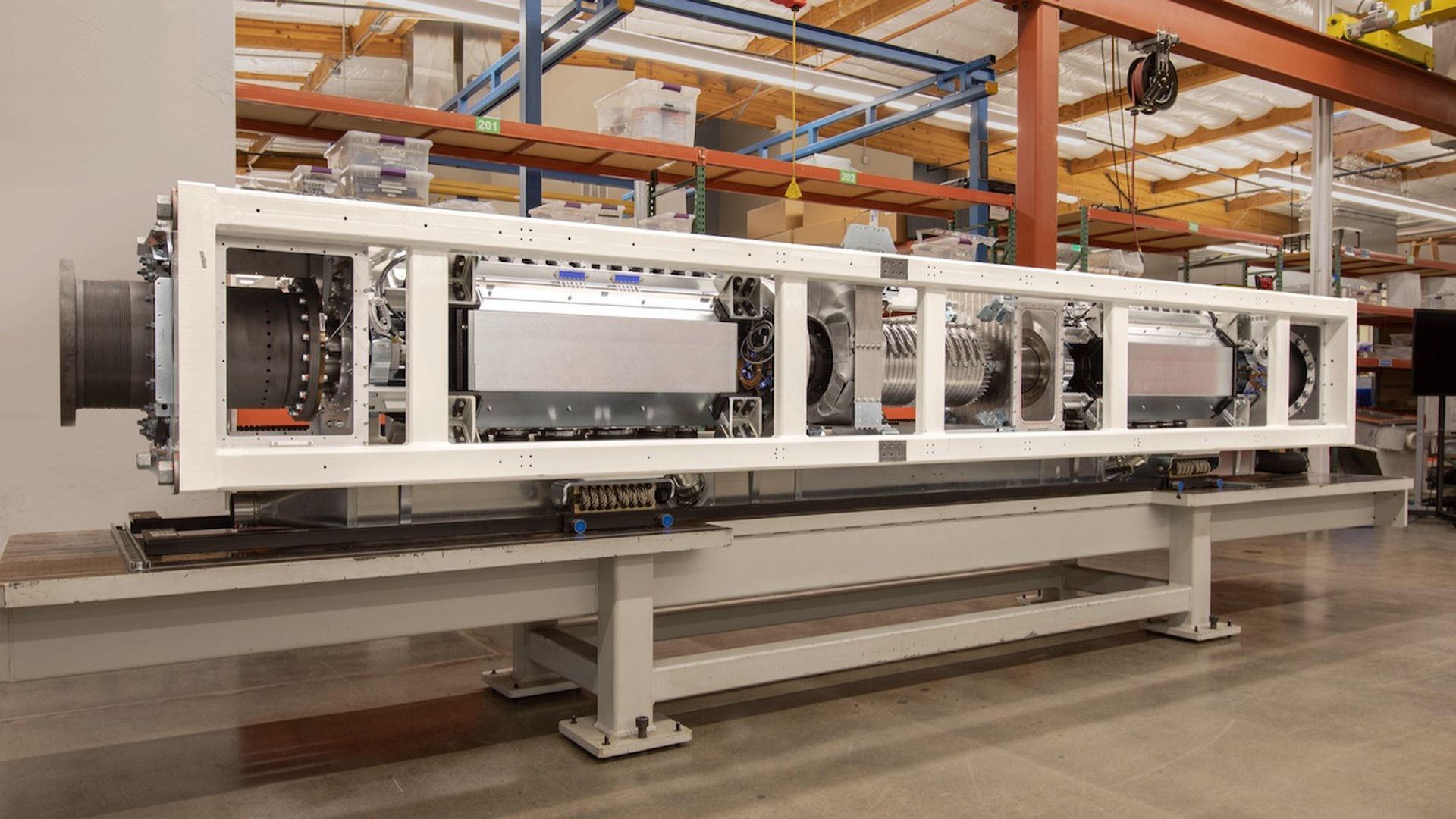
The distributed generation company Mainspring Energy has raised $95 million in new funding led by Fidelity Investment's private equity arm, alongside other new and existing backers like Chevron, Princeville Capital and Bill Gates.
Why it matters: There's growing interest in low-carbon onsite power sources as a way to fight climate change and to create more flexibility and resilience as grids are increasingly stressed by extreme weather.
Google and the energy company AES announced a 10-year deal to supply three Northern Virginia data centers with 90% power from zero-emissions sources on an hourly basis.
Why it matters: It's the latest move in Google's pledge to have all its operations run round-the-clock on carbon-free power by 2030.
The role of food in climate change is having its time in the spotlight, though advocates for eating less red meat probably weren't hoping for it to happen quite like this.
Why it matters: The food system, including raising cattle for consumption, accounts for greater than 30% of worldwide emissions of heat-trapping gases. How to reduce those emissions is an increasingly urgent question as the world remains off track to meet the temperature targets set in the Paris agreement.
A subway train derailed in Mexico City after an overpass partially collapsed onto a road Monday night, killing at least 23 people and wounding dozens of others.
Details: Mexico City Mayor Claudia Sheinbaum told reporters early Tuesday that children were among the dead, and 49 wounded people had been taken to hospitals.
The Federal Aviation Administration (FAA) said Monday unruly airline passenger incidents have soared this year, with airlines reporting some 1,300 cases since February, per Reuters.
Why it matters: The FAA usually deals with 100-150 reports of such behavior in any given year, NBC News notes. Passenger numbers remain below pre-pandemic levels.
Satellite image of the southeastern U.S. on May 3, with satellite-detected lightning strikes included in purple. (CIRA/RAMMB)
This weekend's extreme weather conditions, that included damaging thunderstorms and tornadoes in several Southern states, will continue through the first half of this week, reports the Washington Post.
Why it matters: More than 100 million Americans are facing an "elevated threat of thunderstorms" on Monday, some of which could prove severe, per the Post.
Daniel Humm, the chef at Eleven Madison Park, one of New York's lauded fine-dining institutions, announced Monday that the restaurant will go meatless upon its June reopening.
Why it matters: Humm cited environmental concerns as one of the motivating factors for the change, stating, the "current food system is simply not sustainable, in so many ways."
The Environmental Protection Agency Monday morning floated draft regulations to sharply phase down planet-warming gases used in air conditioning and refrigeration over the next 15 years.
Why it matters: The plan is designed to cut production and importation of hydrofluorocarbons (HFCs), which are highly potent greenhouse gases, by 85% by 2036.
Most drivers of electric cars are wealthy, and most electric cars are luxury.
Why it matters: To effectively combat climate change, the opposite needs to happen: electric cars need to become affordable and broadly appealing so the masses can and want to buy them. Only with mass adoption will heat-trapping emissions steeply decline in America’s most polluting sector.