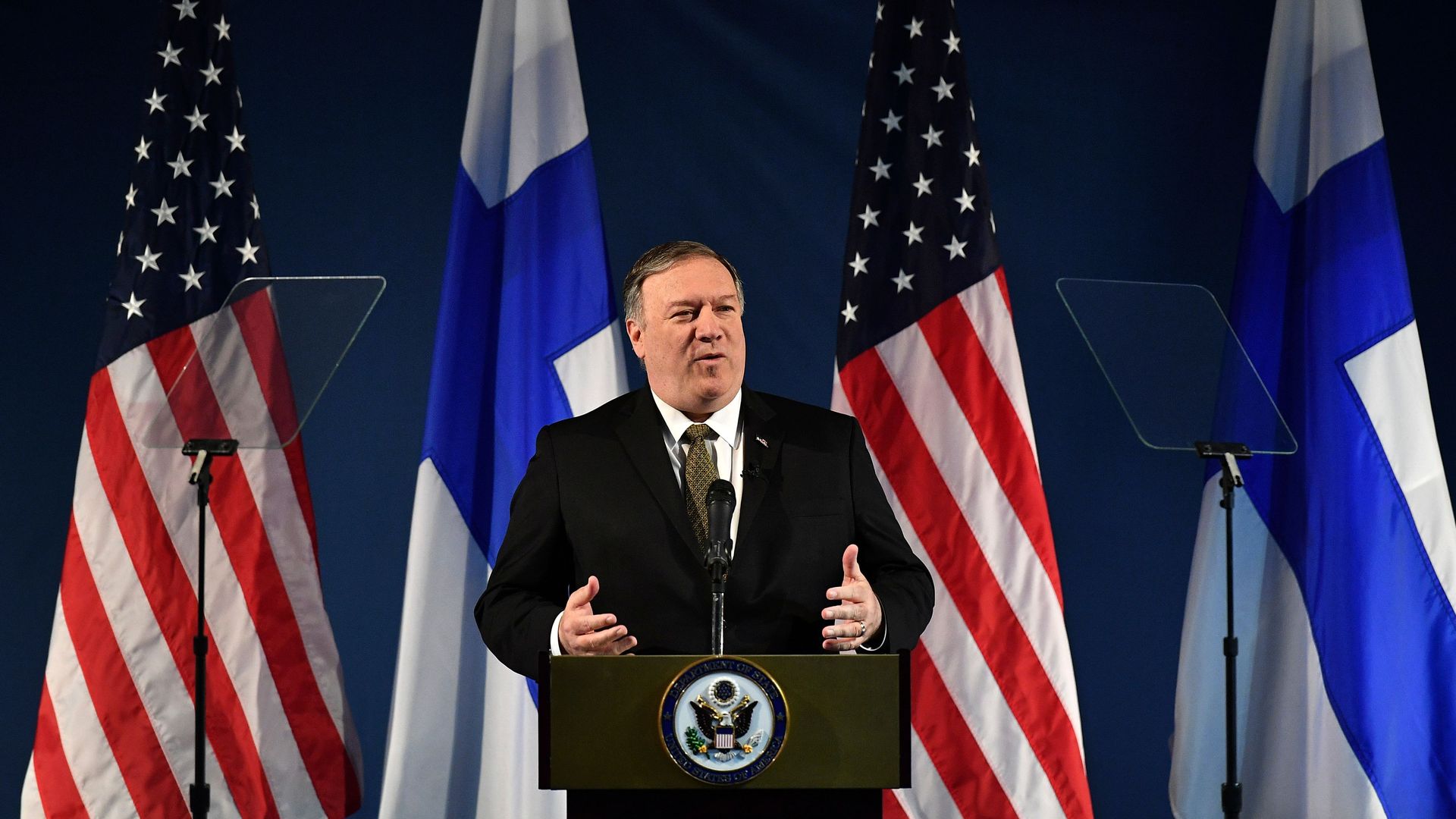
The Arctic Council ministerial in Rovaniemi, Finland, ended on Tuesday without a ministerial declaration, due to U.S. objections over referencing climate change and the Paris Climate Agreement. This was the first time since the council was created in 1996 that no declaration was reached.
Why it matters: Climate change is rapidly redefining the Arctic region, which is warming at more than twice the rate of the rest of the planet. Secretary of State Mike Pompeo focused his council statements at the edge of the Arctic Circle not on climate change, but security — which is not a typical concern for the consensus-based Arctic Council.
House Speaker Nancy Pelosi said on Tuesday that the Trump administration's provocation and refusal to follow the order of subpoenas could be an impeachable offense, Bloomberg reports.
Why it matters: Until now, Pelosi has held the line with other House Democratic leaders in opposition of kick-starting impeachment proceedings against Trump. In a letter to Democrats last month, she said there are other ways to hold the president accountable for his "highly unethical and unscrupulous behavior" besides initiating impeachment procedures.
White House counsel Pat Cipollone has instructed former counsel Don McGahn to withhold subpoenaed documents from the House Judiciary Committee.
Driving the news: In a letter to McGahn's lawyer, Cipollone said that the White House provided documents to McGahn as part of special counsel Robert Mueller's investigation with the understanding that they would remain under control of the White House "for all purposes." As such, Cipollone argues that the committee must negotiate with the White House, and that President Trump has the right to invoke executive privilege and prevent the records from being disclosed.
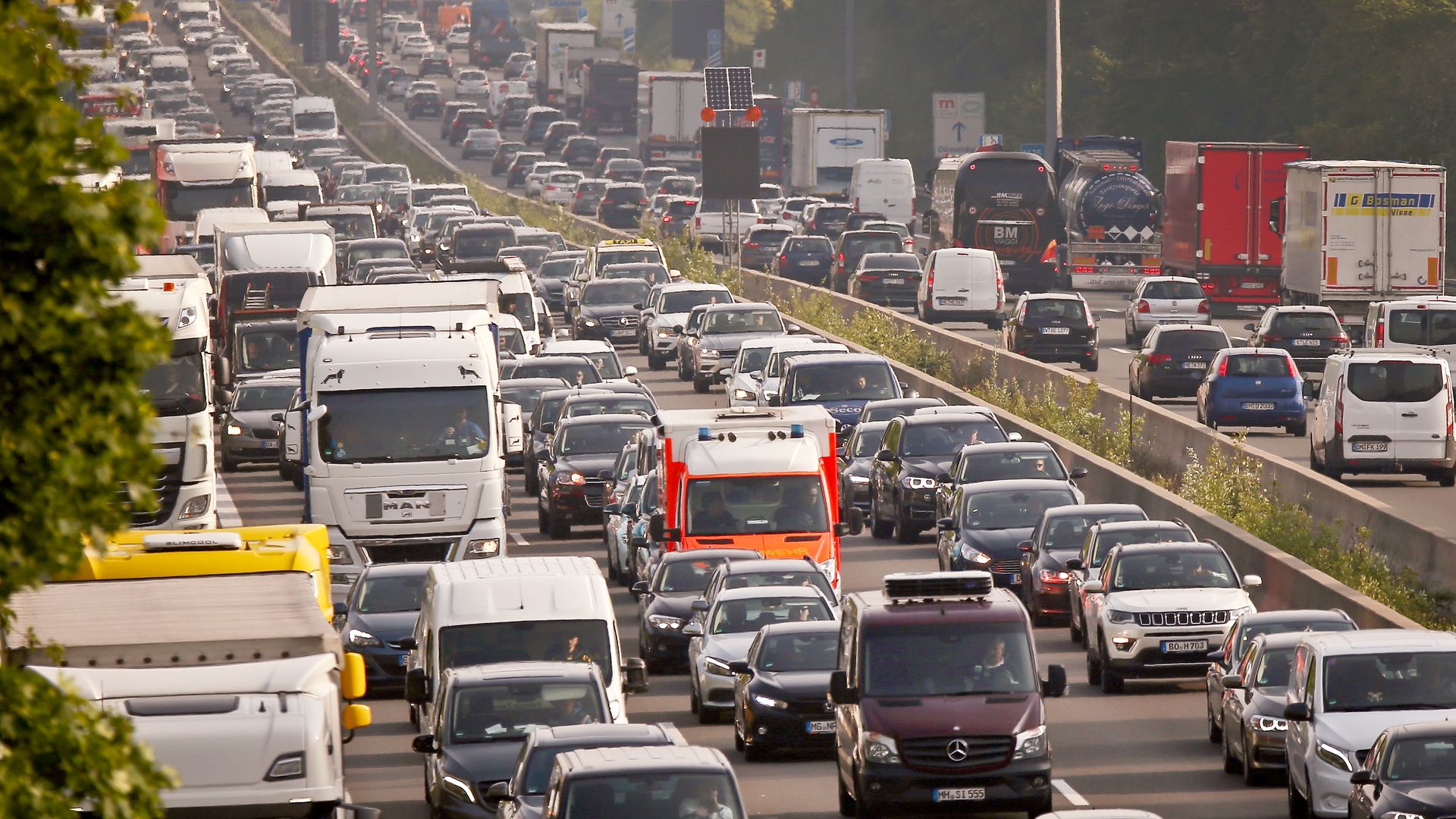
A new piece in The Conversation puts some eye-opening numbers behind why it will take so long to wring carbon emissions out of the country's car and truck fleet even though EVs are growing fast.
Why it matters: Transportation has surpassed electricity as the largest source of U.S. carbon emissions. A number of cities and states are promoting policies to boost adoption of zero-emissions vehicles, which are now a tiny fraction of new car sales.
Chipmaker AMD, long in Intel's shadow, will be at the heart of one of the world's most powerful new supercomputers, a new Cray machine being built for the U.S. Department of Energy.
Why it matters: Though such large-scale computers represent a tiny fraction of the market, they still power advanced basic research — and confer bragging rights on those institutions, companies and, increasingly, nations whose devices top the annual rankings.
The U.S. has reached the roughly half-year mark of a new phase in climate politics, which began when Democrats won House control and the party's 2020 primary campaign got rolling in earnest.
Why it matters: Democrats are beginning to shape the ideas that could become actual policy if the 2020 elections open a political window, while some Republicans are scrambling to come up with a response.
A slew of states and electricity companies are committing to aggressive targets to reduce greenhouse gas emissions in a trend underway since President Trump took office.
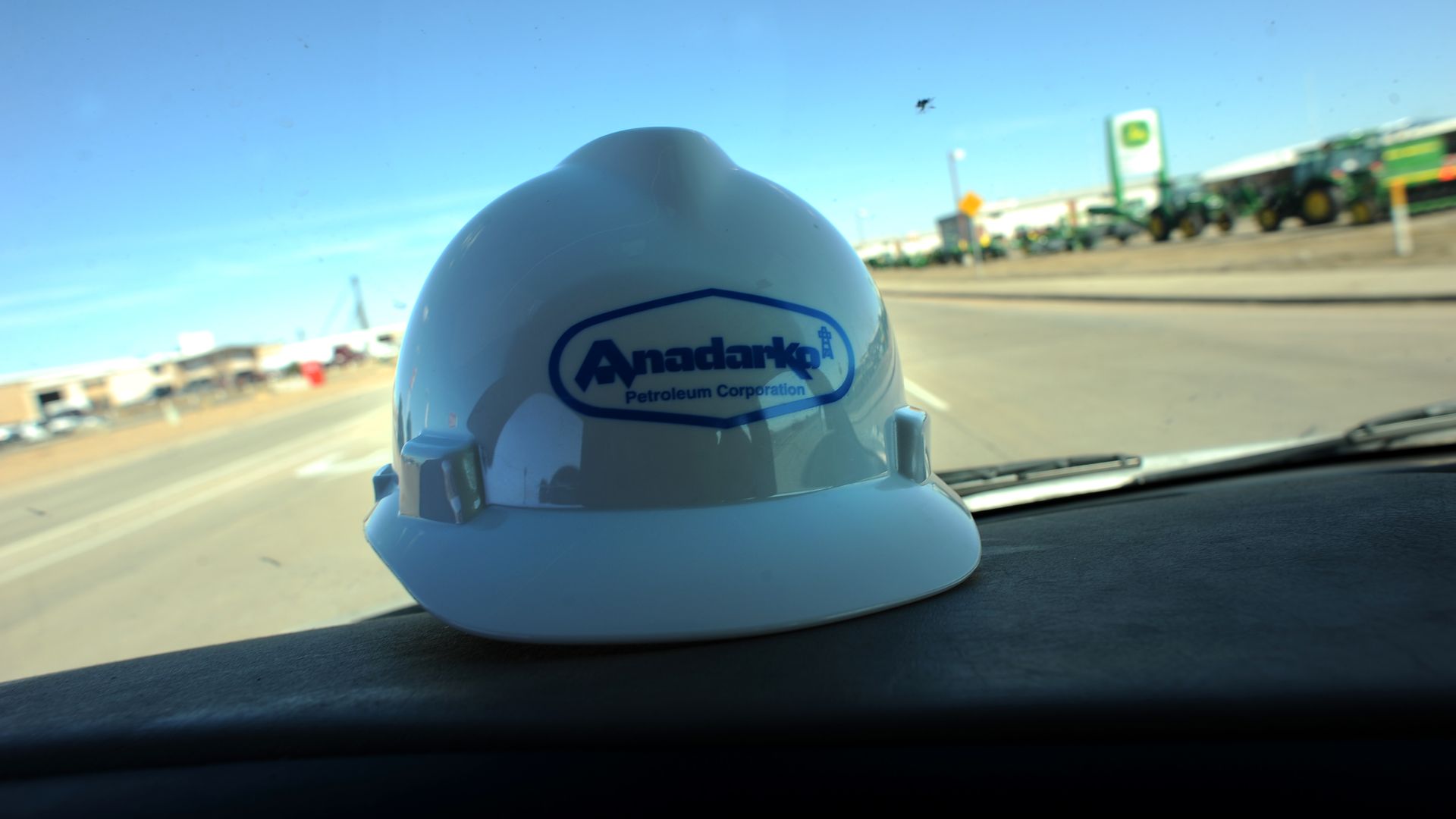
Anadarko Petroleum Corp.'s board said Monday evening that Occidental Petroleum Corp.'s revised offer for the company is "superior" to Chevron Corp.'s bid, a move that gives Chevron 4 days to revise its offer. Chevron did not provide immediate comment.
Why it matters: It's the latest twist in a high-stakes battle to land the biggest oil mega-deal in years — one that will enhance the winner's position in the booming Permian Basin shale fields.
Secretary of State Mike Pompeo told diplomats at a meeting of the Arctic Council in Finland on Monday that the rapidly warming Arctic region presents a land of "opportunity and abundance," citing untapped resources like oil, gas, uranium and gold and rare earth minerals.
"And its centerpiece, the Arctic Ocean, is rapidly taking on new strategic significance. Offshore resources, which are helping the respective coastal states, are the subject of renewed competition. Steady reductions in sea ice are opening new passage ways and new opportunities for trade."
Last night Occidental Petroleum sweetened its offer to trump Chevron's plan to purchase Anadarko Petroleum.
Where it stands: Occidental changed its $76-per-share offer to be 78% cash and 22% stock, compared to the 50-50 split in their prior bid, as they try and snatch Anadarko away from Chevron, a much larger company.
The diversity of life on our planet is deteriorating far more rapidly than previously thought, with up to 1 million species threatened with extinction, many of which could be lost "within decades," concludes a sweeping new scientific assessment released Monday in Paris.
Why it matters: The report, from the Intergovernmental Science-Policy Platform on Biodiversity and Ecosystem Services (IPBES), finds that factors such as land use change, overfishing, pollution, climate change and population growth are pushing nature to the brink. Only "transformational change" to the way society operates can put us back on course to meet global sustainable development targets, which nearly every country on Earth has committed to, the report concludes.
America’s youngest voters are more worried about climate change, more supportive of big government and more likely to identify as Democrats than older generations.
Why it matters: By Election Day 2020, millennials and those in the younger generation known as Gen Z will represent more than a third of eligible voters, according to a recent survey by Harvard University.








/2019/05/07/1557232770756.gif?w=3840)