In a tweet praising Saudi Arabia, which remains at the center of an international controversy over the murder of journalist Jamal Khashoggi, President Trump was misleading about the price of oil, falsely claiming the price had fallen to $54 a barrel, when it was "just $82."
Between the lines: There are two major varieties of oil on the market, and Trump used a near-peak price of one to make the near-bottom price of the other seem more dramatic. West Texas Intermediate is indeed $54, but was only at $75 during its recent high in October and hasn't been at $82 since 2014. Brent Crude is currently at $64 a barrel, and was at recent high of about $85 in October. The two are not the same, and the $28 a barrel price swing Trump is praising hasn't happened.
The path for Trump's choice to fill an open Federal Energy Regulatory Commission seat may be getting more complicated thanks to newly unveiled comments on renewable energy and fossil fuels.
Why it matters: It opens up the nominee to charges that he'll bring an ideological approach to the commission. "FERC is an independent agency whose regulators typically pride themselves on a 'fuel neutral' approach to energy regulation," writes Utility Dive's Gavin Bade.
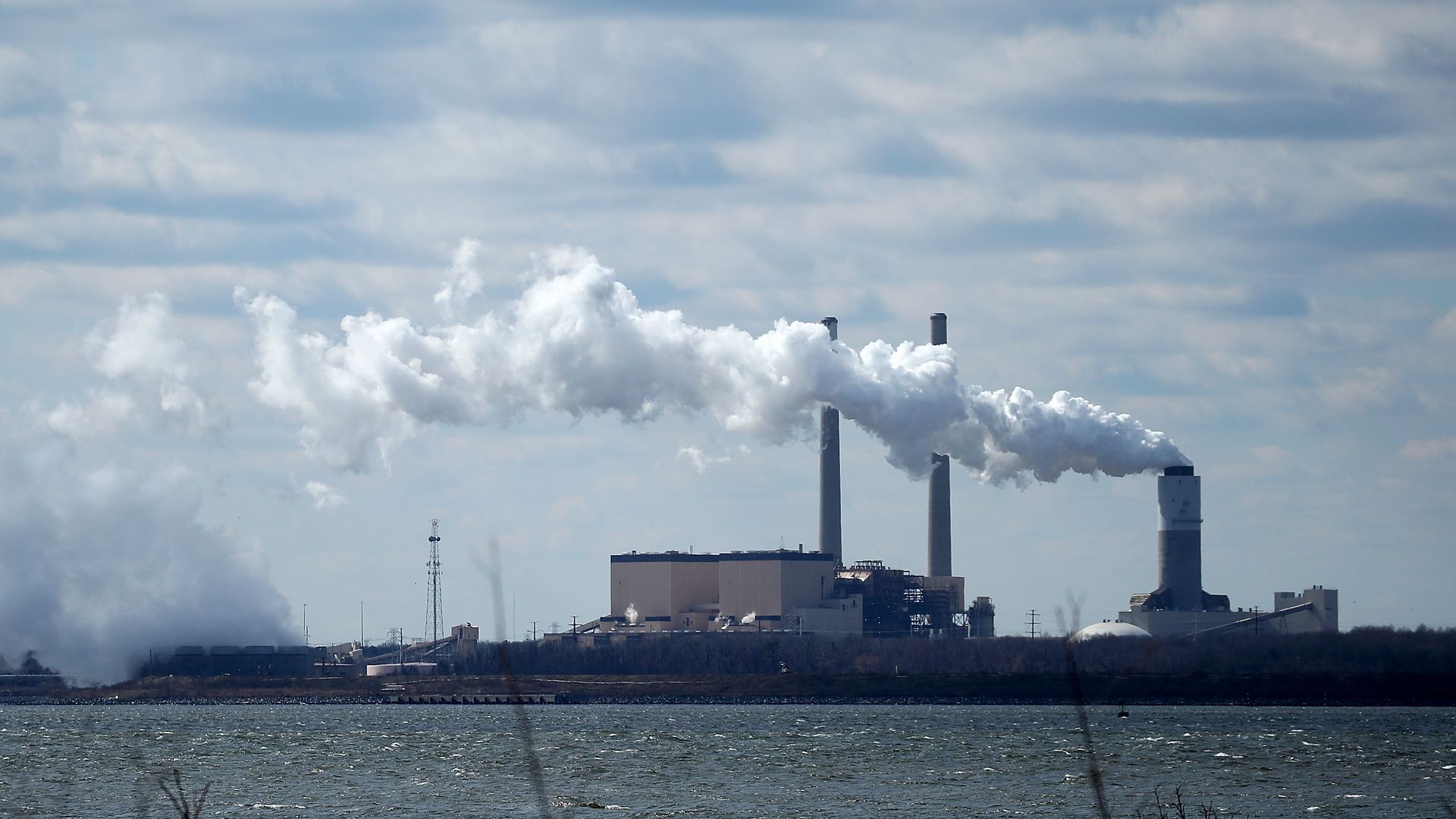
Two countervailing forces that will influence looming OPEC's decisions were on prominent display Tuesday: President Trump and fallling prices.
What's happening: Trump caused a stir yesterday when he issued a statement signaling clear U.S. backing for Saudi Arabia despite the murder of journalist Jamal Khashoggi. He stayed in realpolitik mode, later telling reporters that the Saudis have helped keep oil prices down. And he tweeted this morning, "Oil prices getting lower. Great! Like a big Tax Cut for America and the World. Enjoy! $54, was just $82. Thank you to Saudi Arabia, but let’s go lower!"
Although Washington state’s proposed carbon tax failed at the ballot box, carbon pricing remains one of the best policy solutions to mitigate the effects of climate changes as the window to keep global warming below 1.5°C continues to narrow.
The big picture: There are stark trade-offs to both a carbon tax, under which companies pay for each ton they emit, and a cap-and-trade system, which requires them to buy permits for emissions. However, a hybrid model could be the sweet spot between practical politics and effective policy.
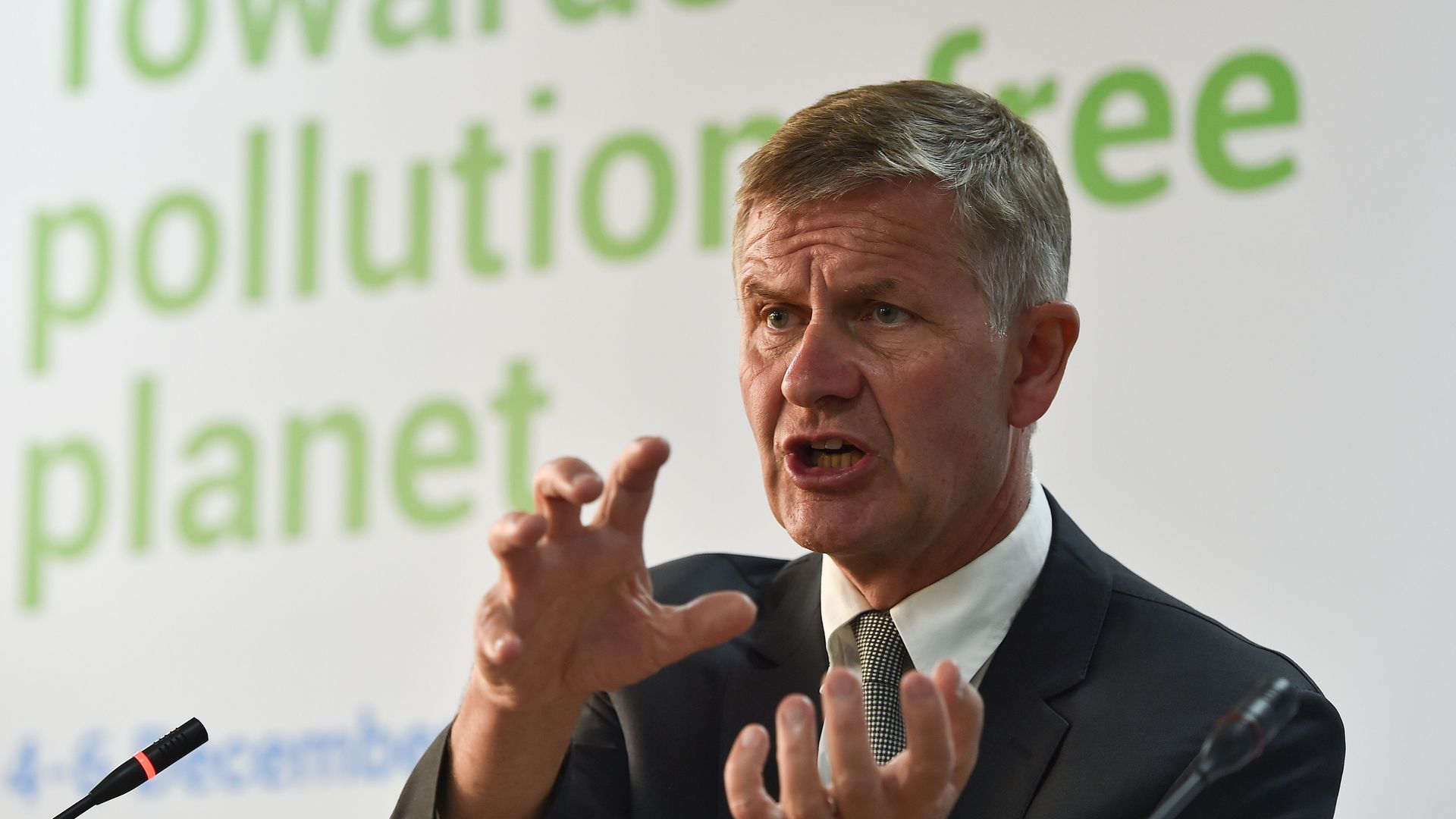
Erik Solheim, the executive director of the United Nations Environment Program (UNEP), has resigned following an internal audit that found he spent nearly $500,000 on flights and hotels in 22 months, reports The Guardian.
Why it matters, per Axios science editor Andrew Freedman: UNEP is the UN's primary environmental organization, and having a leader perceived to be jetting around the world — with a high carbon footprint — jeopardized the reputation of the agency. Solheim's resignation comes just as the group is set to release a key report analyzing how much of a gap exists between current pledges by world leaders to cut global emissions of greenhouse gases and what is needed to meet targets in the Paris climate agreement.
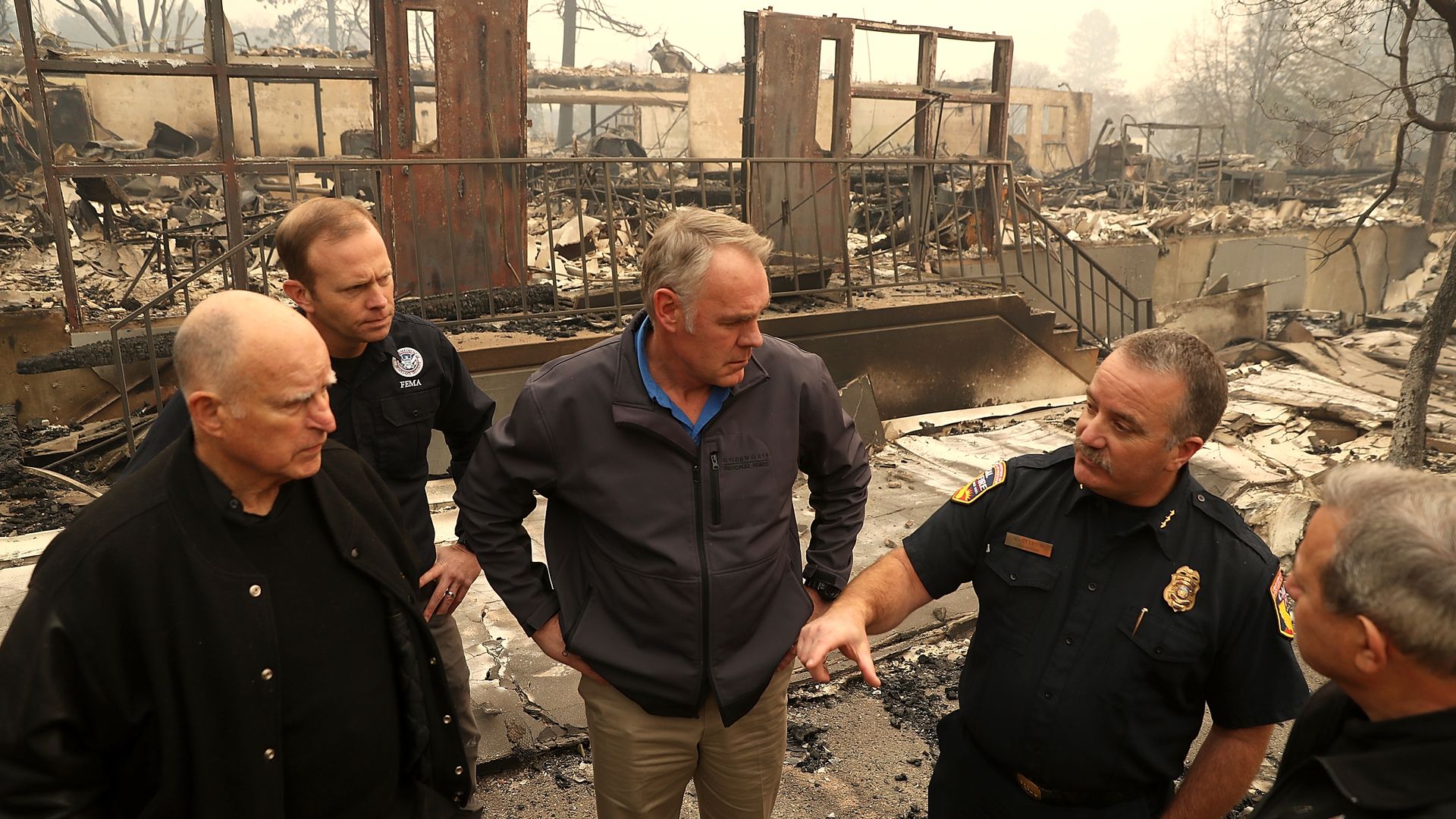
Interior Secretary Ryan Zinke called the country's current forest management principles "unsustainable and unacceptable" when speaking to reporters about California's ongoing wildfires on Tuesday. He called for more focus and funding on strategies such as thinning the forests, removing dead and dying trees, insect control and underbrush control to prevent fires.
The big picture: Zinke's comments come on the back of President Trump pointing to "gross forest mismanagement" as the reason for the state's wildfire issues. California is one of the fastest-warming states in the United States. Hotter dry seasons increase evaporation, providing more fuel for fires to burn. In addition, earlier spring snowmelt and later fall rains have helped stretch the fire season to nearly year-round. These are factors that better forest management may not be able to overcome when it comes to preventing major fires.
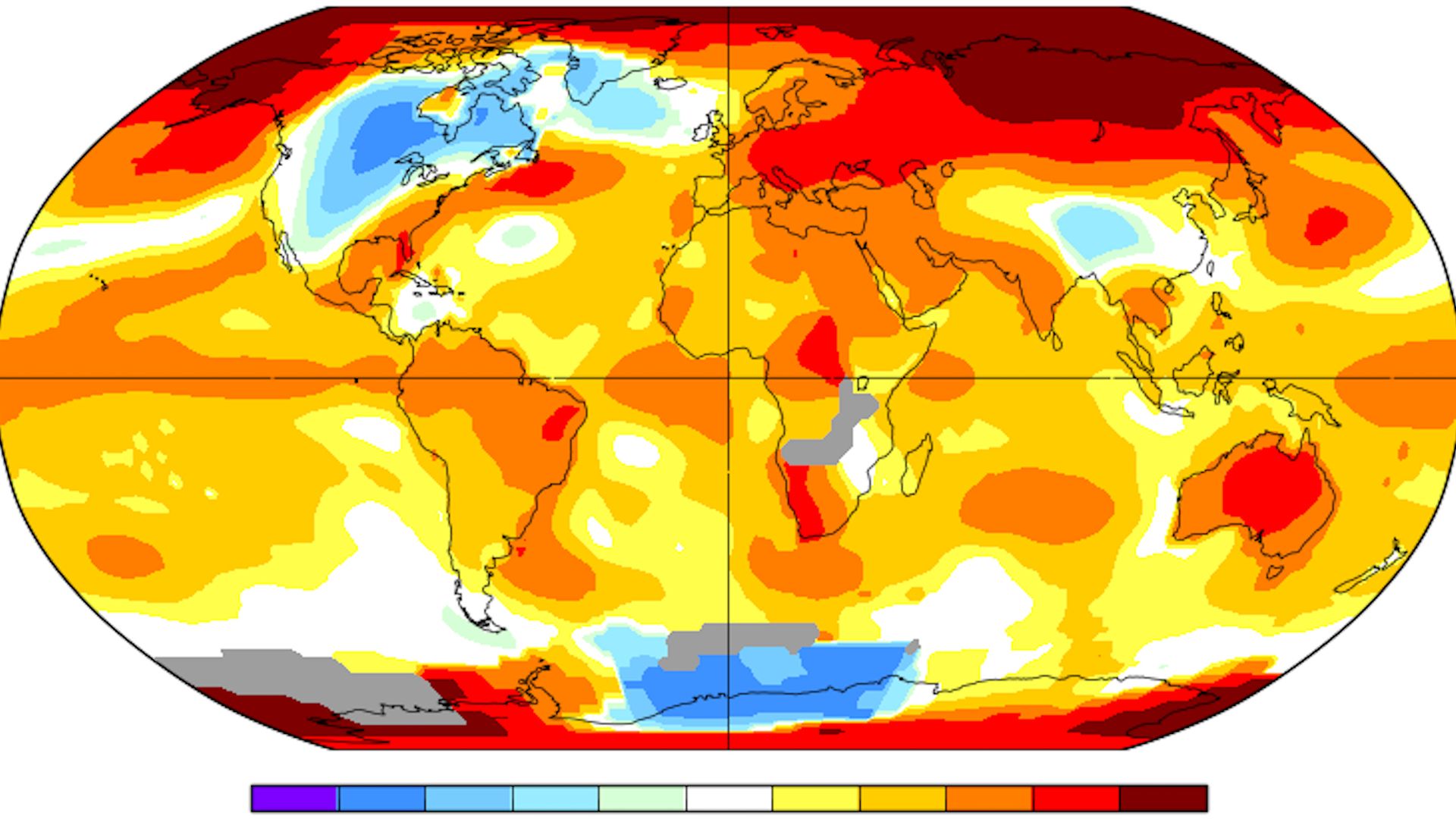
Earth just had its second-warmest October on record, according to NOAA data released Tuesday. NASA reported the same finding last week.
The big picture: The finding extends the planet's hot streak to 406 straight months with temperatures above the 20th century average. Meanwhile, the last colder-than-average month occurred in February 1985. This means that no one under the age of 32 has ever experienced a cooler-than-average month on this planet.
Aided by improved weather conditions, firefighters are slowly containing the Camp fire, California's deadliest and most destructive wildfire. As of Tuesday morning, the fire had burned 151,373 acres and was 70% contained. It has killed at least 79 people, with more than 600 still listed as missing.
The big picture: The fire destroyed the entire town of Paradise in just a few hellish hours on the morning of Nov. 8. According to Cal Fire, 12,637 homes were destroyed, along with 483 commercial buildings and 3,718 other structures. The thick smoke from the blaze prevented satellites from detecting the fire damage until over the weekend, when winds removed enough smoke for images to be taken.
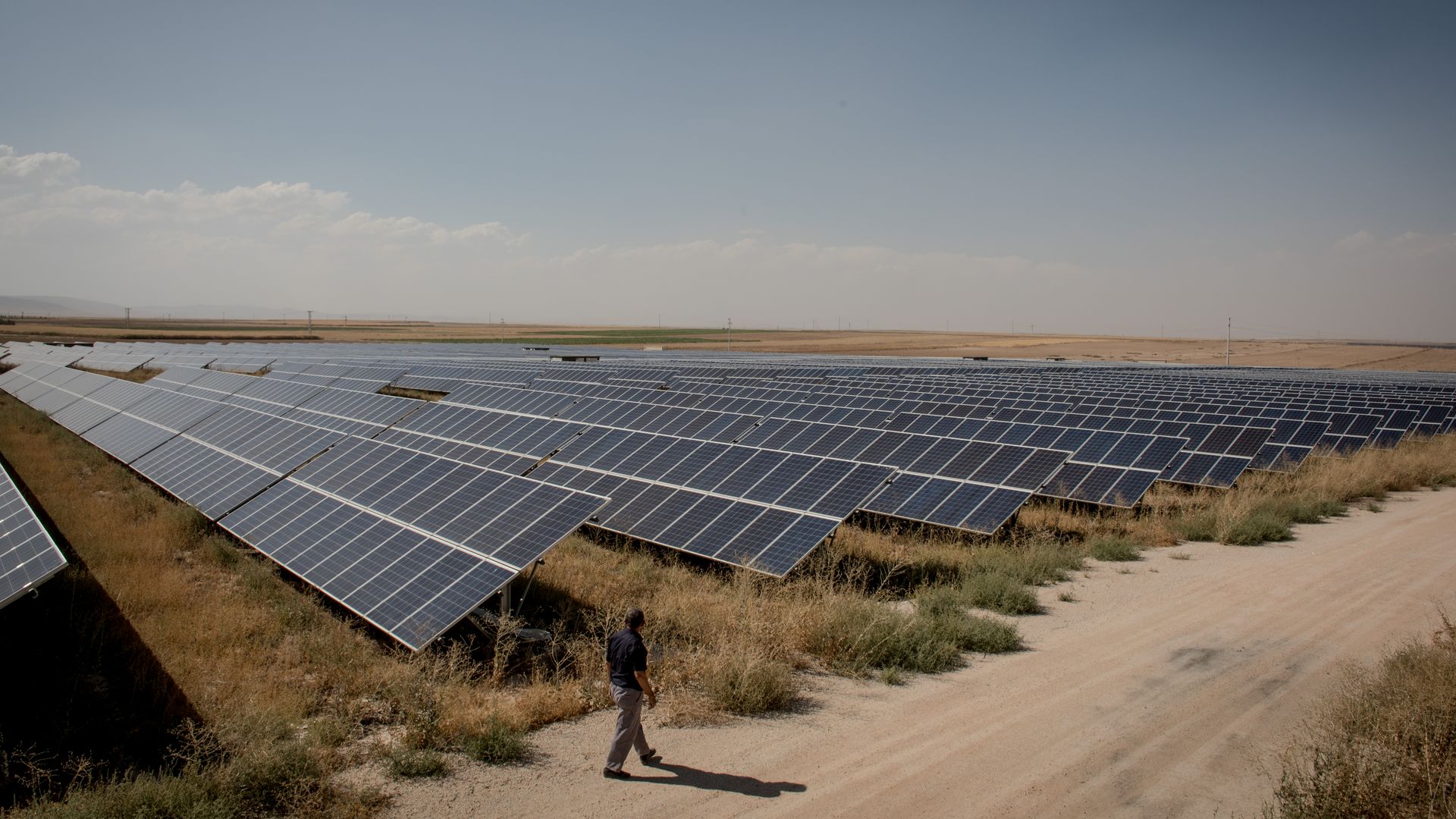
Solar and wind facilities are now the least expensive option for new power worldwide, except in Japan, according to the consultancy Bloomberg NEF.
The big picture: That's the top-line finding of their latest twice-yearly look at the so-called levelized cost of electricity — a metric that compares costs of building, running, supplying and maintaining different types of facilities over time.







/2018/11/20/1542730238981.gif?w=3840)