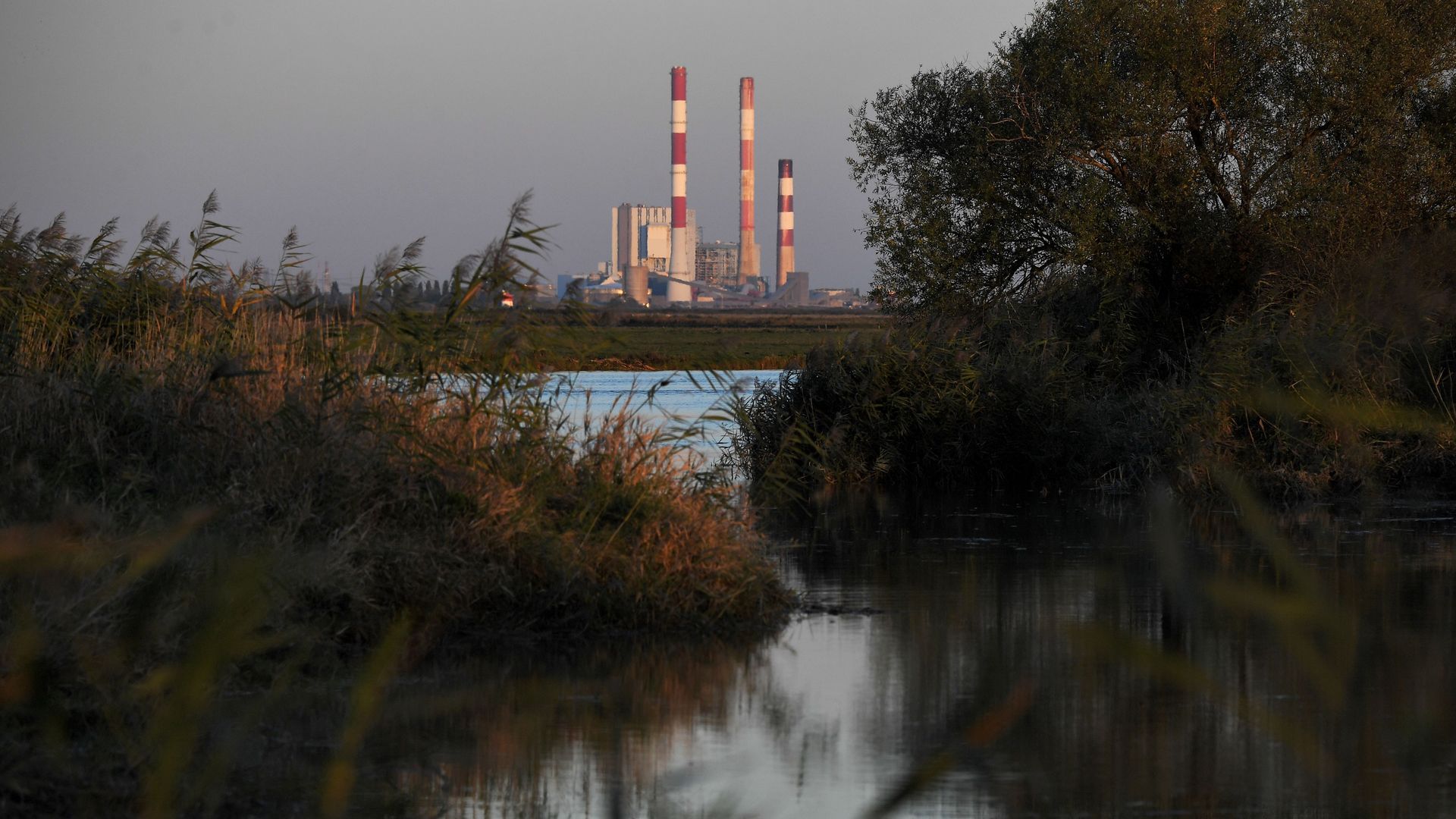
The EPA is promoting newly released data showing a 2017 cut in aggregate greenhouse gas (GHG) emissions from industrial operations, but there's a more nuanced story behind the top-line numbers.
Why it matters: Despite the cuts driven largely by power-sector changes, the U.S. is not on pace to meet Obama-era targets for cutting economy-wide emissions by 26%–28% below 2005 levels by 2025.
The Interior Department is gearing up to auction federal waters for wind-energy development offshore Massachusetts and is taking the first steps for the same development off California, Secretary Ryan Zinke told a conference Monday.
Why it matters: Offshore wind, which is just getting off the ground in the U.S., is a rare example of the Trump administration actively pushing renewable energy, despite its main focus on fossil fuels. With just one operating offshore wind farm in the U.S., government support at this stage of the game is critical.
President Donald Trump touted his "natural instinct" for science, while claiming that the cause of global warming is in dispute, in an interview with the Associated Press on Tuesday. The transcript of this interview was released Wednesday.
Why it matters: Trump's comments come just a week after Hurricane Michael destroyed parts of the Florida Panhandle. The storm was that region's most intense hurricane on record. His statements also come in the wake of new, more urgent warnings from climate scientists about the need to reduce global warming emissions.
The Environmental Protection Agency is set to unveil new federal data today that shows U.S. greenhouse gas emissions decreased 2.7%, according to a release viewed by Axios.
Why it matters: This drop, between 2016 and 2017, is due largely to market forces and moves by President Obama and Congress, and occurred before President Trump officially took office. EPA's announcement contrasts with Trump, who in recent days has dismissed climate change as an issue.
The Center for Strategic and International Studies' Nikos Tsafos looked at coal demand trends and comes to a sobering conclusion in a new analysis: "Unless Asia can find other energy sources to meet its needs, our efforts to curb CO2 emissions from coal will likely fail."
Why it matters: Coal is the most carbon-intensive fossil fuel. Cutting global CO2 emissions enough to prevent high levels of warming will probably fail absent deep cuts in coal demand, or widespread deployment of CO2-trapping systems that are in their commercial infancy.
"In the year since Hurricane Maria devastated Puerto Rico, political parties, candidates and voting rights groups have spent hundreds of thousands of dollars to court residents who fled to the mainland, hoping to register them and get them to the polls," USA Today's Deborah Barfield Berry reports.
The big picture: "[M]ost settled in Florida, where [there are hot Senate and governor's races, and] get-out-the-vote efforts have been intense."