It owes almost $650 billion for computing, generates eye-popping revenue per employee and wants every investor to know that its product poses existential risks to humanity.
Why it matters: The future of the AI race, the market and the global economy rests within Anthropic's IPO prospectus, where some of Silicon Valley's most seasoned investors found new reasons to be bullish.
Data: Pew Research Center. Chart: David Adkins/Axios
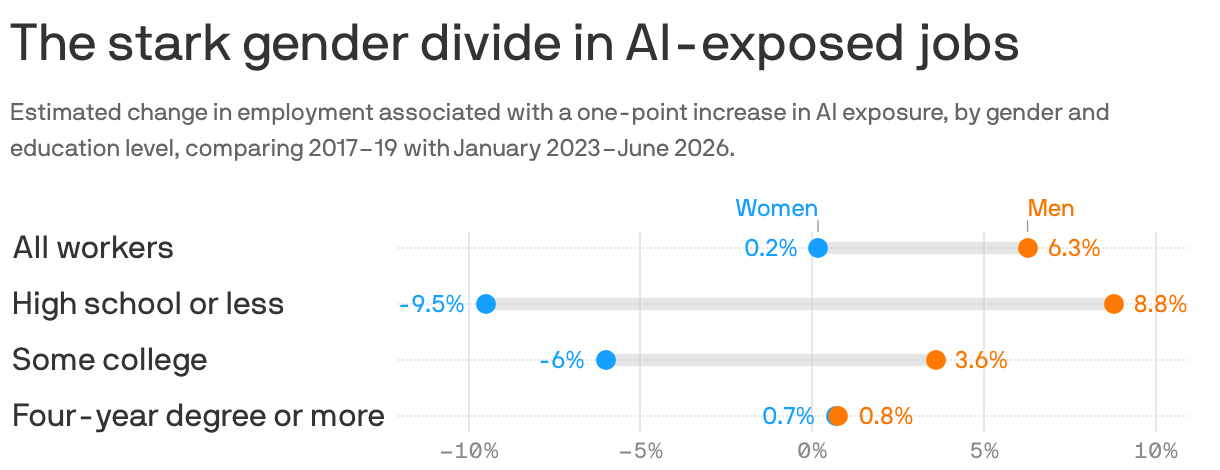
Women without four-year degrees are losing ground in jobs with more exposure to AI, while men with similar education levels are seeing employment gains, according to a new Pew analysis.
Why it matters: Women could be exposed to greater economic disruption than men as AI reshapes the workplace.
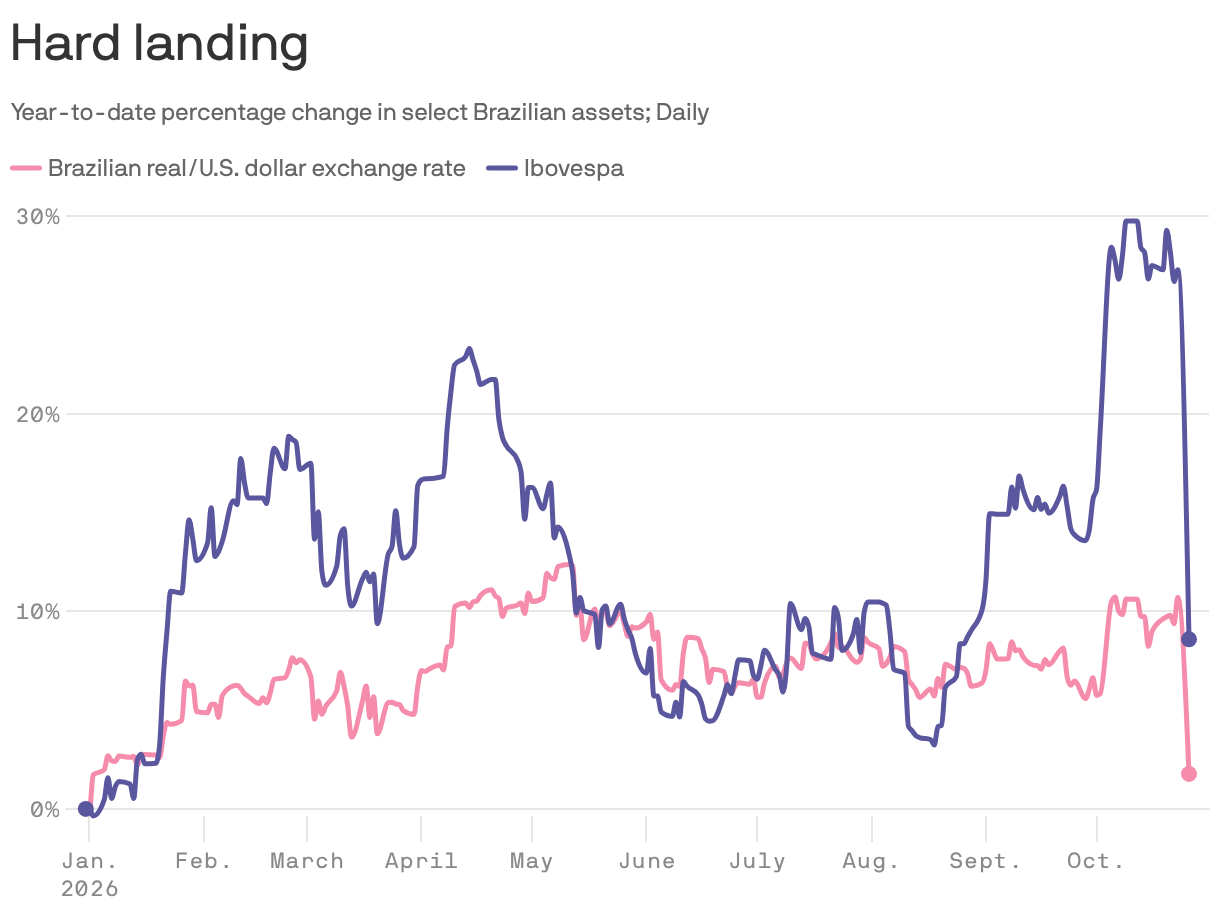
Brazilian assets tumbled Monday following the re-election of Brazil's left-leaning incumbent in a presidential runoff Sunday.
Why it matters: The re-election of Luiz Inácio Lula da Silva — known as Lula— underscores the economic challenges Brazil faces as the one-time union organizer heads toward his fourth non-consecutive presidential term.
President Trump faces an uncomfortable political dilemma ahead of the impending midterm elections: how to stand by the tariffs at the heart of his economic agenda when Republican voters are less convinced of their benefits.
Why it matters: Since returning to the White House, Trump has moved more aggressively than any modern president to remake the global trading system, with sweeping tariffs at the center of that effort.
But with Americans already frustrated by high prices — including a wartime surge in energy prices — his signature economic policy threatens to become a political liability for Republicans fighting to retain control of Congress.
Bon Secours Mercy Health on Monday said that it has agreed to acquire Surgery Partners for around $5.7 billion.
Why it matters: The nonprofit health system would greatly expand its outpatient services, thus helping patients avoid hospitals. Much like when Ascension paid $3.9 billion for Amsurg earlier this year.
Harvard economist Jason Furman told Axios that if he were to return to his old job as chairman of the White House Council of Economic Advisers today, he would rely on AI tools over staff economists for much of the council's day-to-day analytical work.
The big picture: Unsurprisingly, this made some waves in the online discourse, particularly the loose-knit community formerly known as Econ Twitter.
Many veterans of the economic policy trenches see real risks in future policymakers becoming overly reliant on AI — or at a minimum think that Furman is underestimating the importance of human economists in advising the nation's leaders.
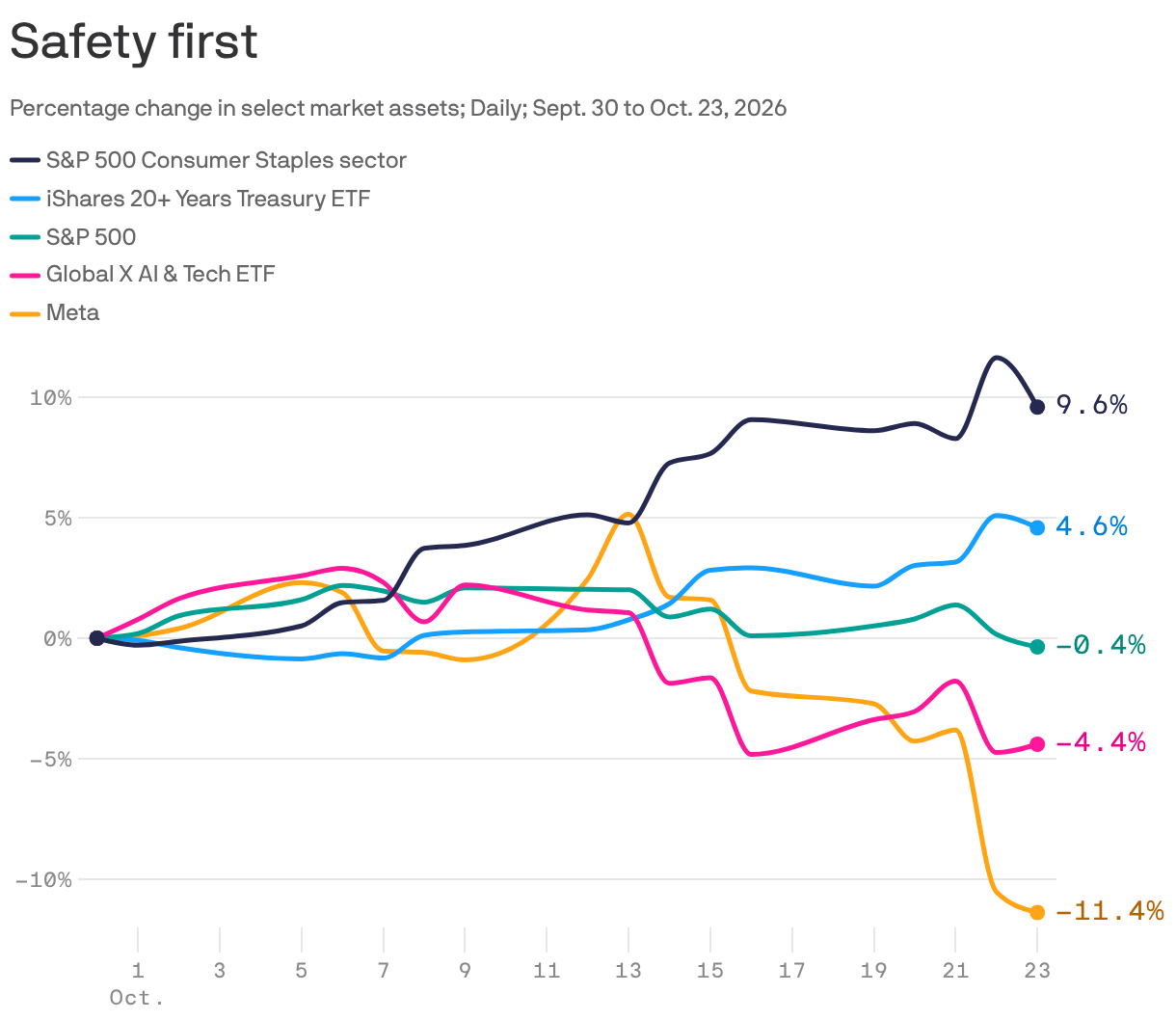
Investors rushed for cover last week in the face of economic, political and market turmoil.
Why it matters: The scramble for safety in both stock and bond markets suggests that investors see reducing risk as the simplest response to the crosscurrents — at least for now.