Brazilian markets whipsaw

Add Axios as your preferred source to
see more of our stories on Google.
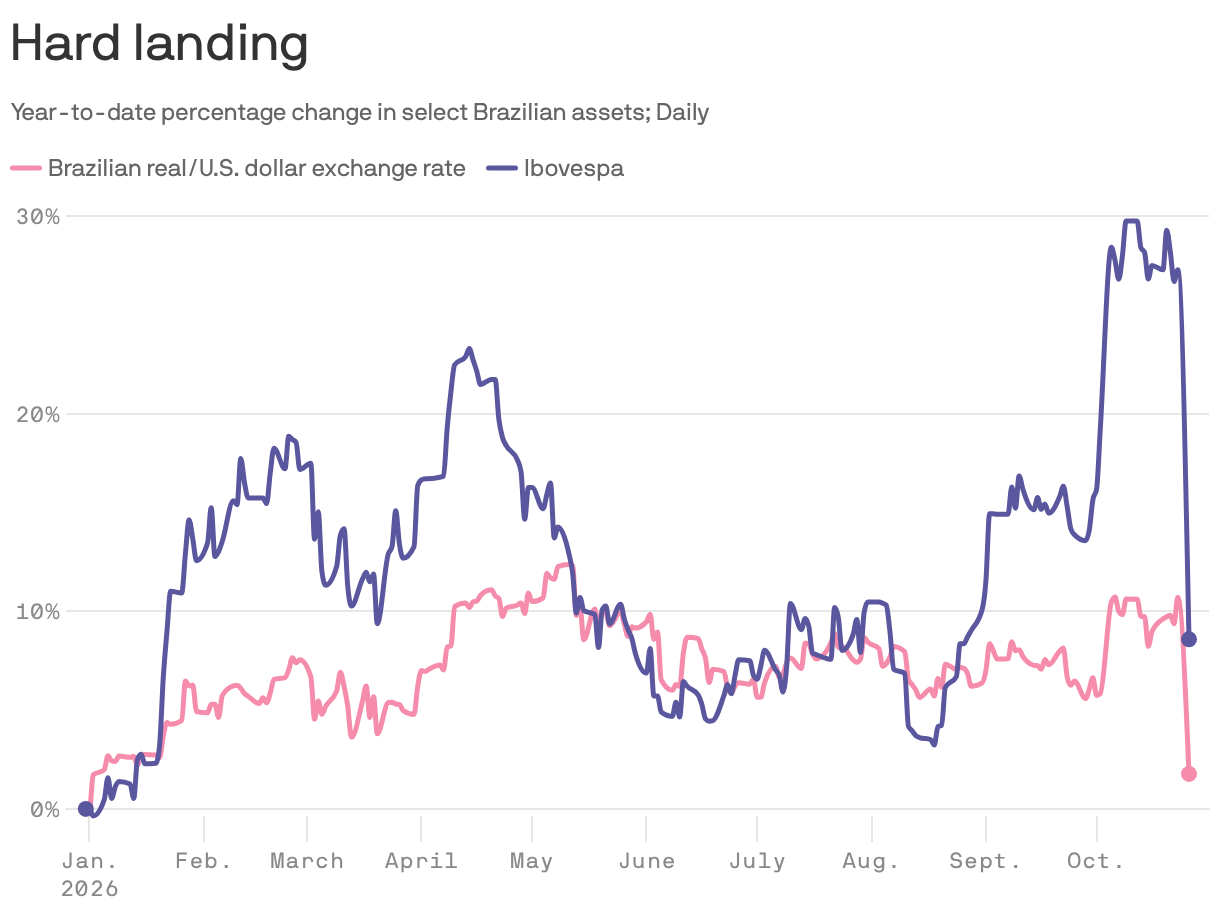
Brazilian assets tumbled Monday following the re-election of Brazil's left-leaning incumbent in a presidential runoff Sunday.
Why it matters: The re-election of Luiz Inácio Lula da Silva — known as Lula— underscores the economic challenges Brazil faces as the one-time union organizer heads toward his fourth non-consecutive presidential term.
The latest: Brazil's currency plunged roughly 9% against the dollar.
- The benchmark Brazilian stock market index, the Ibovespa, dove about 14%.
- Prices of 10-year local-currency Brazilian government bonds dove, pushing yields to about 15%.
The other side: Da Silva defeated right-wing candidate Flávio Bolsonaro, a son of the former president Jair Bolsonaro and a senator, whose victory in the first round of the presidential contest ignited a rally in Brazilian assets earlier this month.
- The younger Bolsonaro's promises to clamp down on government spending had been well-received by international financial markets.
- Bolsonaro has so far refused to concede his defeat, taking a page out of the playbook of his father, who last year was convicted of attempting a coup to remain in power, after he was defeated by Lula in 2022.
What they're saying: "Instead of the expectation of fiscal consolidation under Bolsonaro, traders will likely take the view that Brazil will 'muddle through' for the next four years, and that, like France, it will be market discipline, rather than pre-set policy direction, that will ensure that Brazil does not indefinitely veer off course toward a sovereign default," Macquarie currency and bond analysts wrote.
