E.W. Scripps on Tuesday said its board of directors has unanimously rejected a $538 million unsolicited takeover bid from larger peer Sinclair Broadcast Group.
Why it matters: Kim Williams, Scripps' board chair, said Sinclair's offer to buy out the remainder of Scripps' shares that it doesn't own for $7 apiece is "not in the best interests of Scripps and its shareholders."
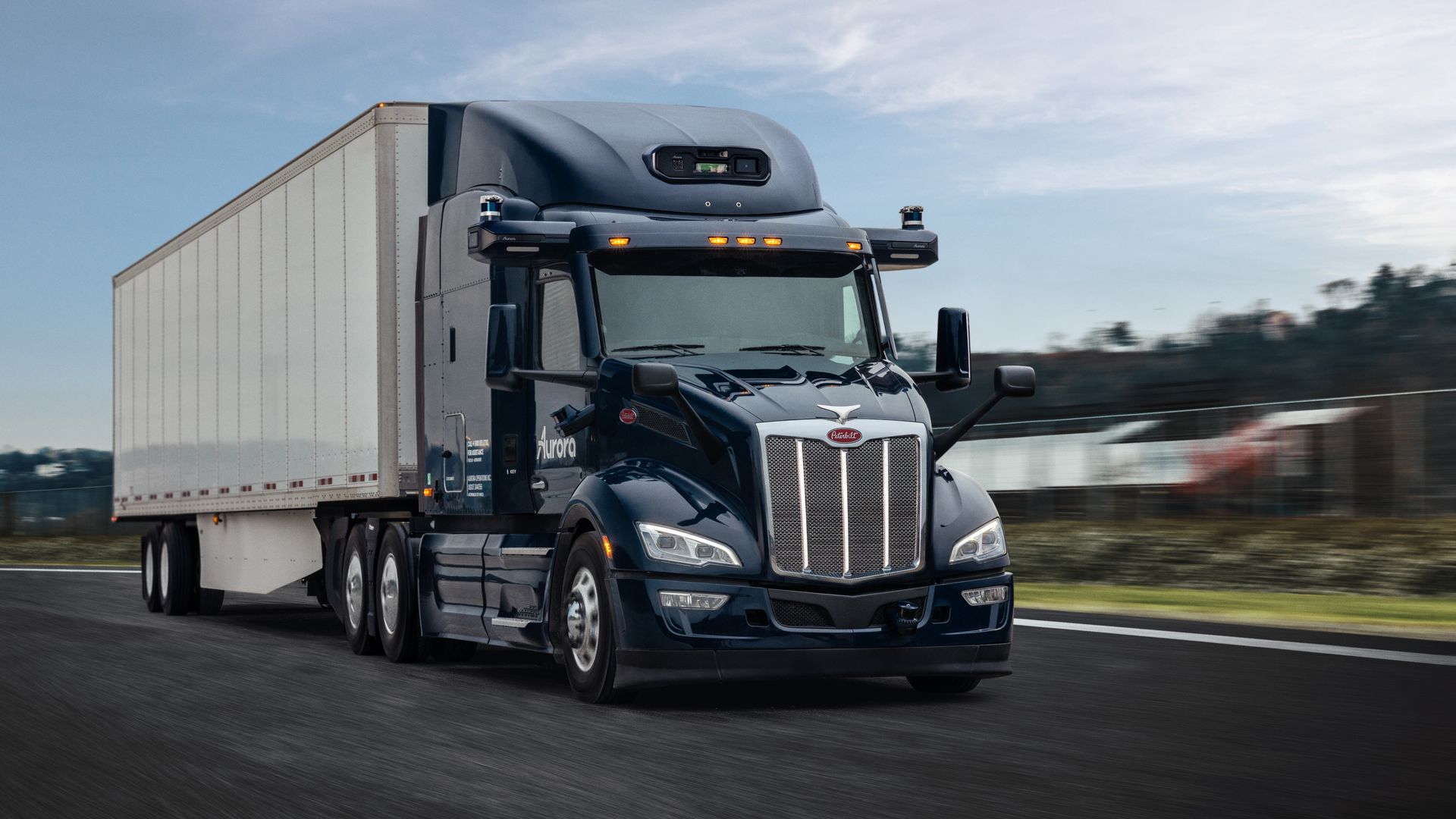
The ascendance of self-driving semi-trucks sets up a collision between autonomous vehicle advocates and union leaders who are signaling resistance to driverless vehicles.
Why it matters: There are some 3.6 million professional U.S. truck drivers, but the industry has struggled with retention amid the worst freight recession in recent memory.
Humanoid robot maker 1X on Monday announced a deal whereby it will make up to 10,000 of its machine men available to portfolio companies of EQT, the alternative investments giant whose venture capital arm is a 1X investor.
Why it matters: This is nightmare fuel for private equity critics.
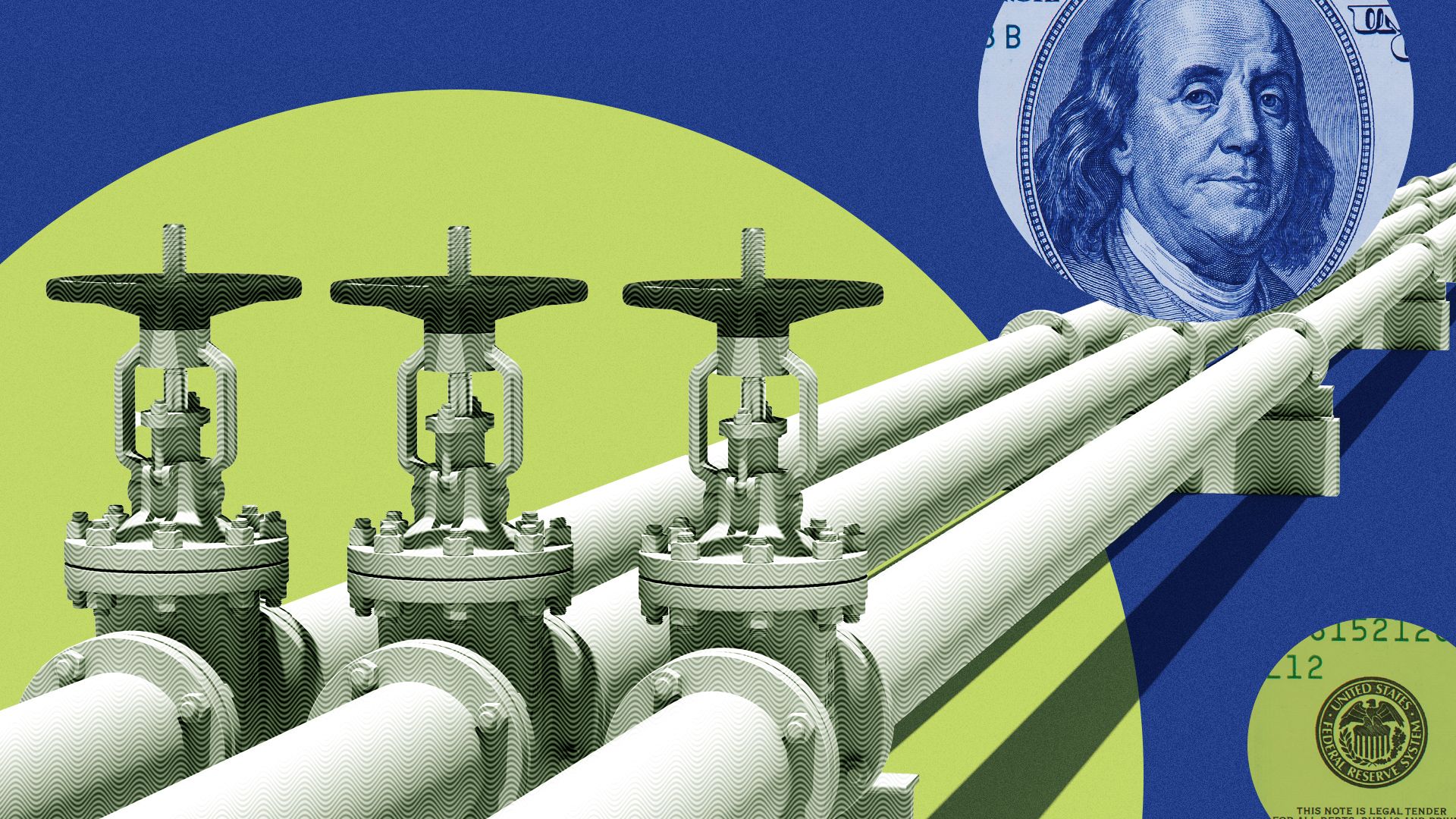
Energy-focused private equity firm Kimmeridge has offered to buy Ascent Resources, an Oklahoma City-based natural gas company, for $6 billion in cash from Energy & Minerals Group (EMG) and First Reserve.
Why it matters: Ascent is at the center of a thorny legal battle between Abu Dhabi Investment Council and EMG, which wants to put Ascent into a continuation vehicle.
The job market slowdown is real and ongoing. But it also isn't quite as bad as the headline numbers from delayed October and November jobs reports suggest.
The big picture: Yes, the unemployment rate hit a new four-year high last month, and overall employment contracted over the October-November window.
But the details are more consistent with the long, gradual labor market slowdown continuing apace — not taking some abrupt turn for the worse this fall.
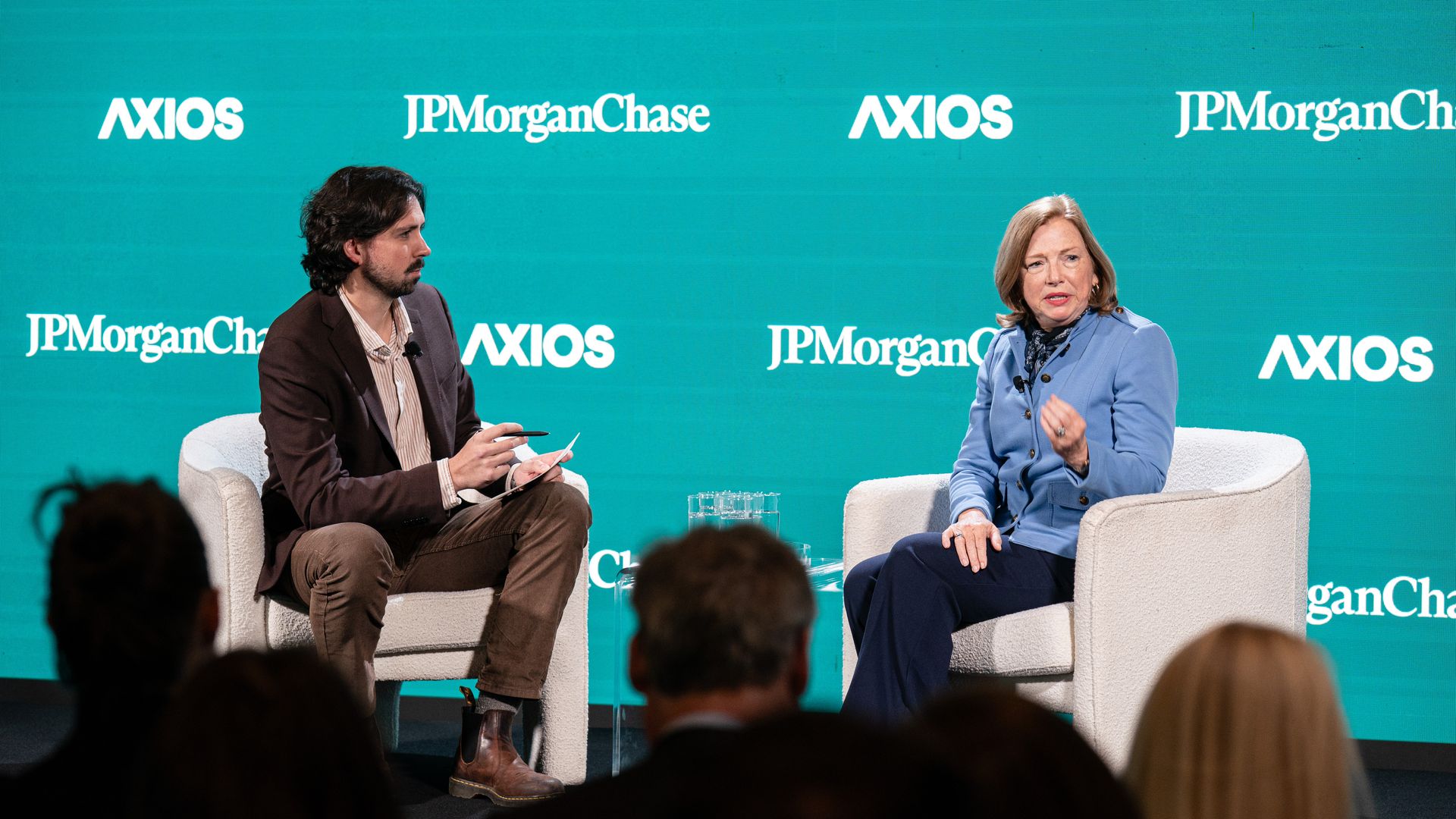
WASHINGTON, D.C. — Policy and economic leaders said the U.S. must rapidly accelerate how it commands artificial intelligence, develops energy sources, and protects key manufacturing materials, at a Dec. 11 Axios Live event.
Why it matters: Access and control over those resources shape the United States' position in the geopolitical hierarchy, with China as a key competitor during a period of major foreign policy upheaval.
Axios' Mike Allen and Colin Demarest spoke with Jarrod Agen, deputy assistant to the president and executive director of the National Energy Dominance Council; USA Rare Earth CEO Barbara Humpton; and, Rep. Raja Krishnamoorthi (D-Ill.). The event was sponsored by JPMorganChase.
Case in point: China currently controls the market on crucial supplies necessary for magnets, Humpton said, adding that "our Air Force turns into paperweights without the magnets that support the rotating equipment inside those vehicles."
"Permanent magnets and critical minerals are in nearly every aspect of our economy. and we don't have stockpiles."
Driving the news: President Trump recently announced on Truth Social that his administration will allow Nvidia to sell H200 chips to China — lifting a prior blockade.
What they're saying: Krishnamoorthi warned that the decision is surrendering a technological advantage the U.S. has over China right now.
"Semiconductors, interestingly, are the main choke point for the [Chinese Communist Party]. … They still have not been able to come up with the world's leading chips."
"I think that we are putting ourselves at risk by basically assisting the CCP with their military modernization and the perpetration of human rights abuses by selling these highest-end chips."
Agen emphasized the need to move quickly cross-industrially.
"It's an urgency. It's throwing out the old playbook and completely rewriting how we tackle something like critical minerals, and [Trump] wants to do that on energy across the board."
Content from the sponsored segment:
In a View from the Top conversation, Douglas Petno, co-CEO of JPMorganChase's commercial and investment bank, said America faces "a strategic imperative to win the AI race," and that it's going to take time to compete effectively.
"The size and scale of our challenges [are] daunting, and the time to correct a lot of the challenges that we have in front of us is not an overnight fix."
The U.S. economy added 64,000 jobs in November, while the unemployment rate rose to 4.6%, the Labor Department said on Tuesday in a report delayed by the government shutdown.
Why it matters: Hiring slowed last month alongside a jump in the jobless rate, a sign of persistent weakness in the U.S. job market.
Concert travel spiked this year and so did interest in the country's indie venues, according to new data shared exclusively with Axios.
Why it matters: Fans aren't just showing up for superstar tours. The appetite for live music is spilling over into independent venues and classic rock.
Investors expect returns from record artificial intelligence investments to come faster than executives do, according to a new Teneo survey of more than 350 global public company CEOs and 400 institutional investors.
Why it matters: Wall Street is tired of waiting for returns on all this AI investment. Based on these survey results, that impatience could leave investors disappointed in 2026.
Elon Musk has begun funding the GOP's House and Senate campaigns for the 2026 midterms — an indication his relationship with President Trump has thawed since their messy breakup earlier this year.
Why it matters: Musk — who threatened to launch a third party and support challengers to Republican incumbents during his dispute with Trump — is now firmly back in the GOP's camp.
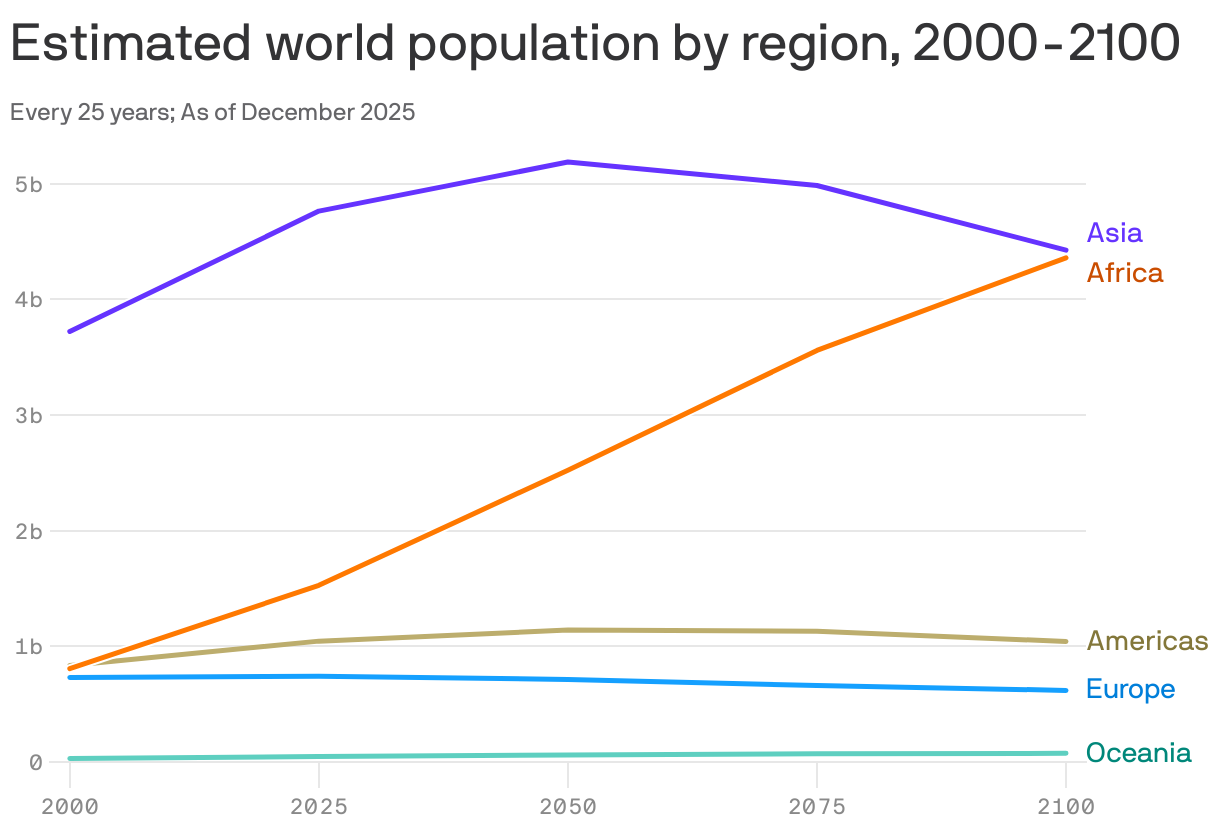
People in the year 2100 will be younger in Africa, and dramatically older in East Asia and Europe, as power tilts sharply toward the global South, per the U.S. Census Bureau's latest global population projections.
Why it matters: This radical reshaping, with mega-nations rising in Africa while China risks the steepest population decline in recorded history, will upend today's geopolitical order.
The U.S. is preparing to seize more sanctioned oil-filled tankers off Venezuela as the Trump administration opens a new phase of its pressure campaign on Nicolas Maduro's regime, officials tell Axios.
That new phase also could soon include "land strikes on Venezuela," President Trump said Friday.
Why it matters: Impounding more tankers would threaten to further impoverish the already struggling oil-rich nation as Trump tries to force Maduro to leave office.