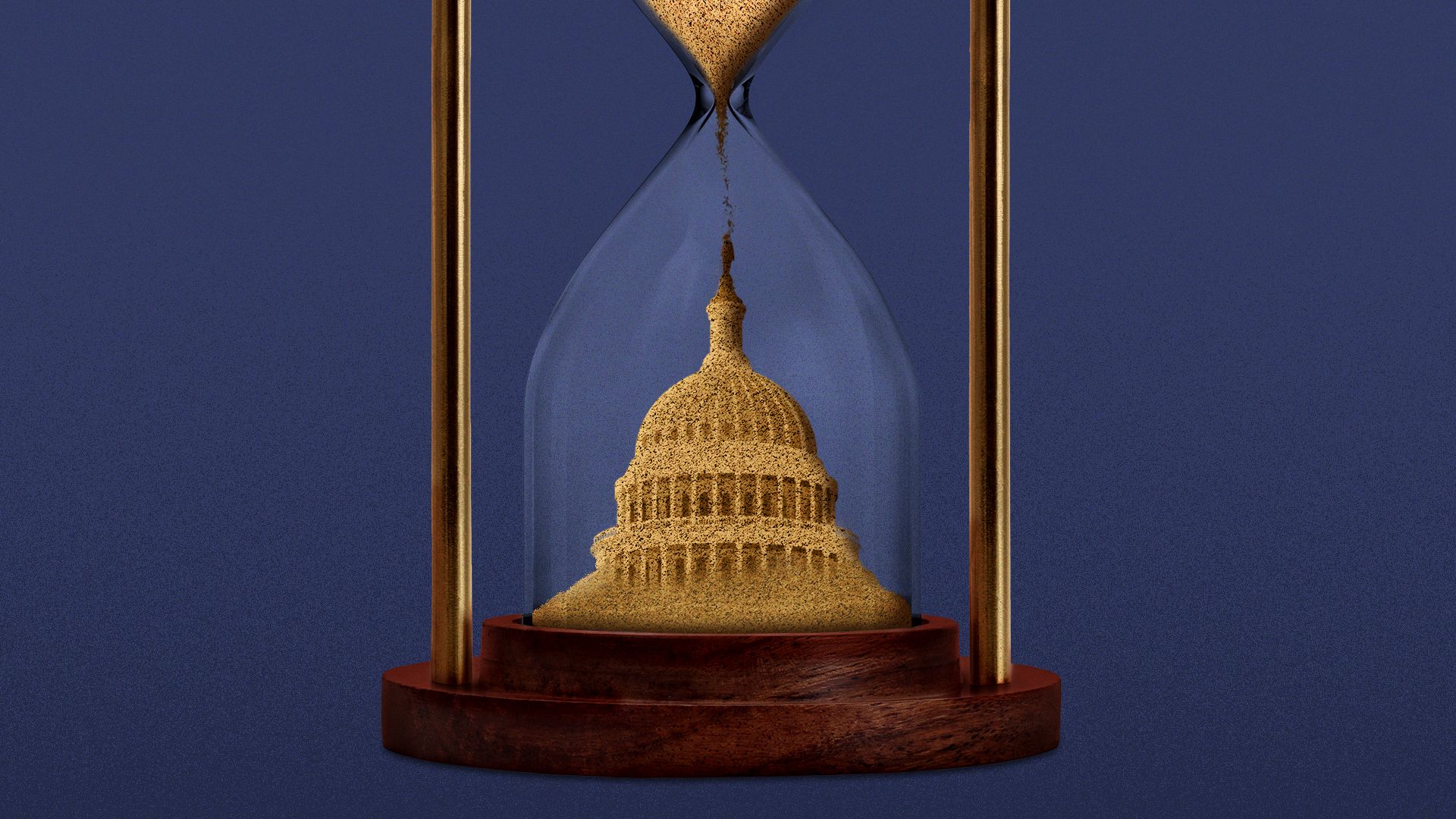
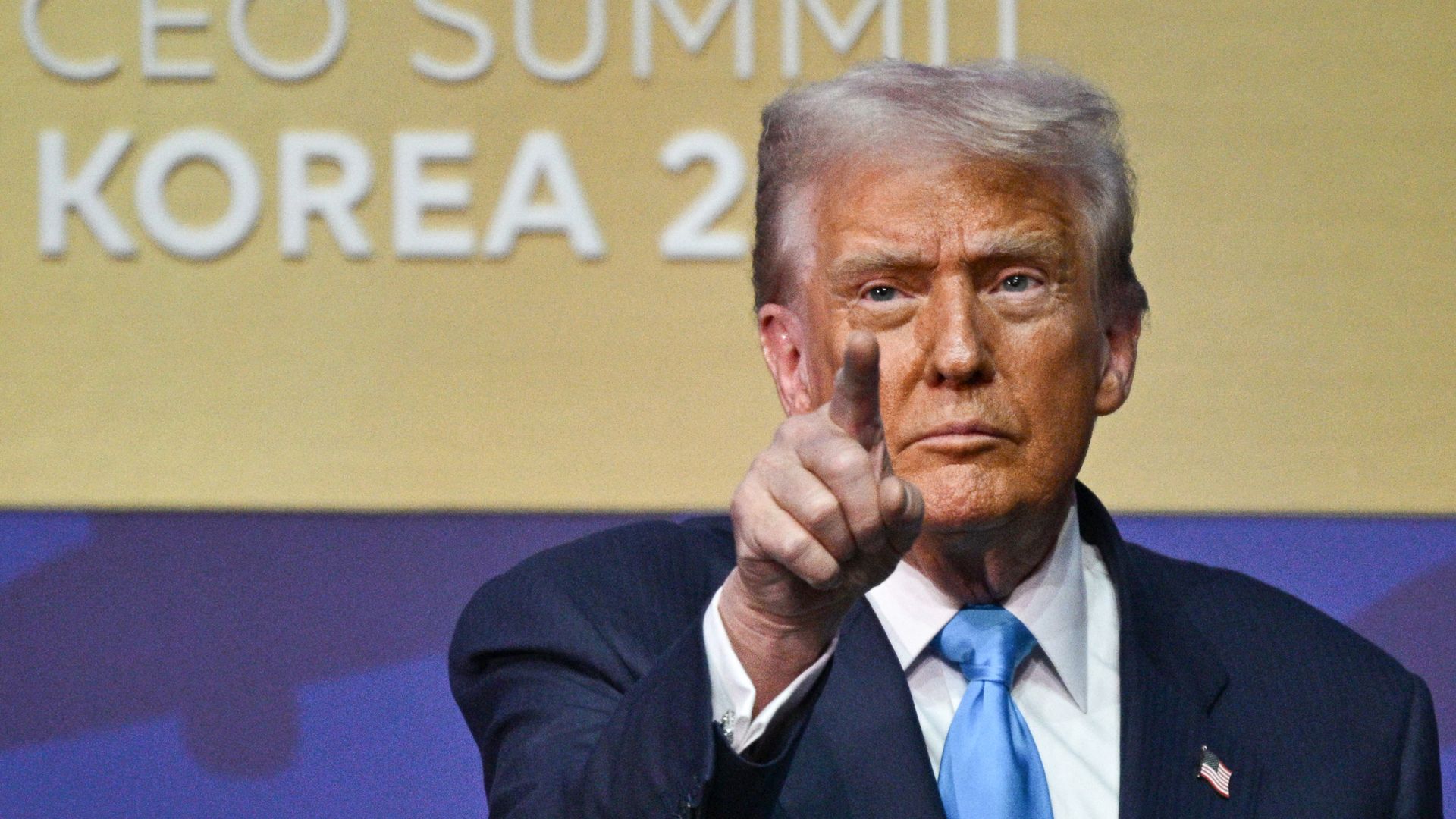
As the Trump administration deploys creativeways to keep parts of the government open without congressional approval, it runs the risk of colliding again with a 150-year-old legal wall: the Antideficiency Act.
Why it matters: The law bars spending without appropriations and underscores Congress' constitutional control of the purse. Every attempt to stretch the law fuels the broader rise of executive power, the defining trait of Trump's second term.
Five of the Magnificent 7 reported earnings this week, and all but Meta had a positive stock move afterward, with Amazon hitting a record high.
Why it matters: The results, and the market's response, capture the debate now taking place on Wall Street over the AI rally: How much return can the tech giants get on their biggest bet ever.
The U.S. Mint has stopped making pennies and the fallout is already hitting cash registers, as stores run short on change.
Why it matters: Roughly 250 billion pennies are still out there — though the American Bankers Association says the issue isn't supply, but circulation, with many coins collecting dust in jars.
Why it matters: Bank of America's and Visa's holiday spending reports show wealthier households are driving retail growth, while lower- and middle-income consumers are stretching to keep up.
The big picture: Millions of people expected to see their Supplemental Nutrition Assistance Program (SNAP) delayed for November due to the government shutdown. But a judge's ruling Friday might have changed that.
Newell Brands conceded Friday that it raised prices too high for imported kitchen products like its Calphalon, Mr. Coffee and Crockpot brands, causing sales to drop last quarter.
Why it matters:Tariffs are forcing companies into an increasingly risky game of pricing chess — go too low and margins vanish; go too high and customers disappear.
The hawks on the Federal Open Market Committee see resilient growth, booming financial markets, too-high inflation, and a labor market that is more or less chugging along.
That, they argue, means cutting rates further right now would be a mistake.
Amazon CEO Andy Jassy says the company's announcement of layoffs earlier this week wasn't about AI.
Why it matters: The cuts of 14,000 white-collar workers at the tech and retail giant have triggered fears of a growing AI job apocalypse, but labor market reality is more nuanced.
The job market slump we're seeing right now is complicated by other factors. AI — though certainly disruptive — is lower down on the list.
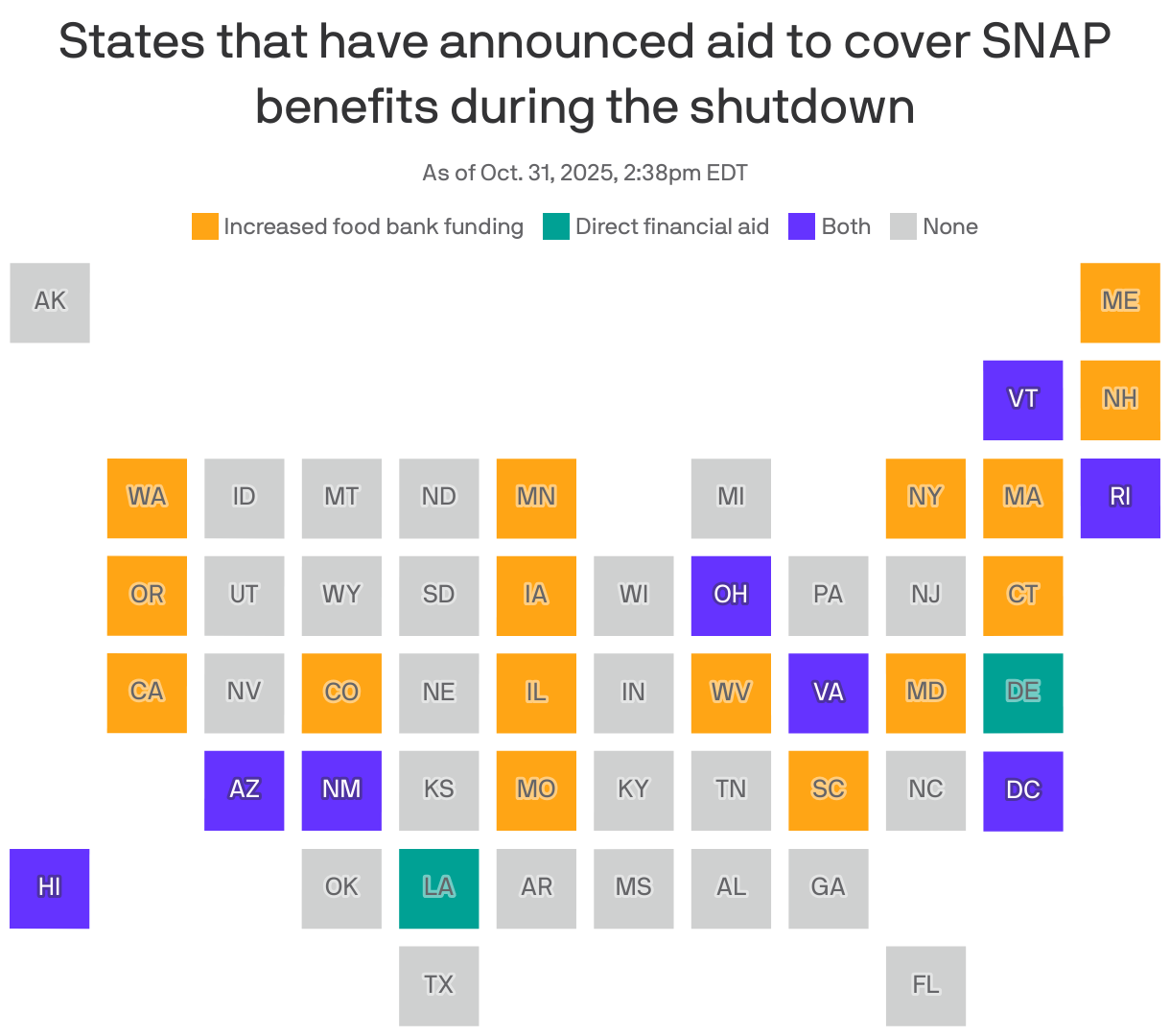
As of Thursday, 14 states have announced funding for food banks, two have announced direct financial aid and six have announced a combination of both. Data: Axios research; Map: Axios Visuals
New York Gov. Kathy Hochul (D) declared a state of emergency on Thursday as 2.9 million New Yorkers are set to lose crucial SNAP benefits this week because of the government shutdown.
The big picture: Some 42 million people across the U.S. will lose safety net nutrition assistance if lawmakers in Washington don't strike a deal to end the shutdown or find a stopgap measure to extend the benefits.
Millions of families are bracing for empty EBT cards this weekend as SNAP benefits pause — spurring grocers, delivery apps and nonprofits to move fast to fill the gap.
Why it matters: The SNAP shutdown halts roughly $8 billion a month in federal food assistance — money that usually flows straight into grocery stores and helps feed 42 million Americans.
The market rally stumbled after Federal Reserve chair Jerome Powell said the central bank is unsure about a third rate reduction in December. But we were in a bull market before lower interest rates came to the table.
So why does Wall Street want more rate cuts so bad?
The big picture: AI has powered most of the rally. Lower rates could allow the rest of the market to catch up. That broadening would make for a less concentrated, and arguably healthier, bull market.
U.S. Customs and Border Protection is expanding its work with supply chain management firm Altana, signing a two-year federal contract to use its AI platform to monitor global supply chains, the company told Axios exclusively.
The big picture: The partnership is part of the administration's focus on federal AI procurement — a central pillar of PresidentTrump's AI action plan.
The White House is now sifting through hundreds of comments on AI regulation from industry and outside groups as it decides how to cut as much red tape as possible.
Why it matters: The Trump administration is touting this effort to cut barriers to AI development and deployment as key to the president's AI action plan.
A handful of Republican senators have broken with President Trump on four issues this week, even as they're in lockstep with him on the government shutdown.
Why it matters: From tariffs to troop levels, some Republicans are starting to flex their institutional muscles.