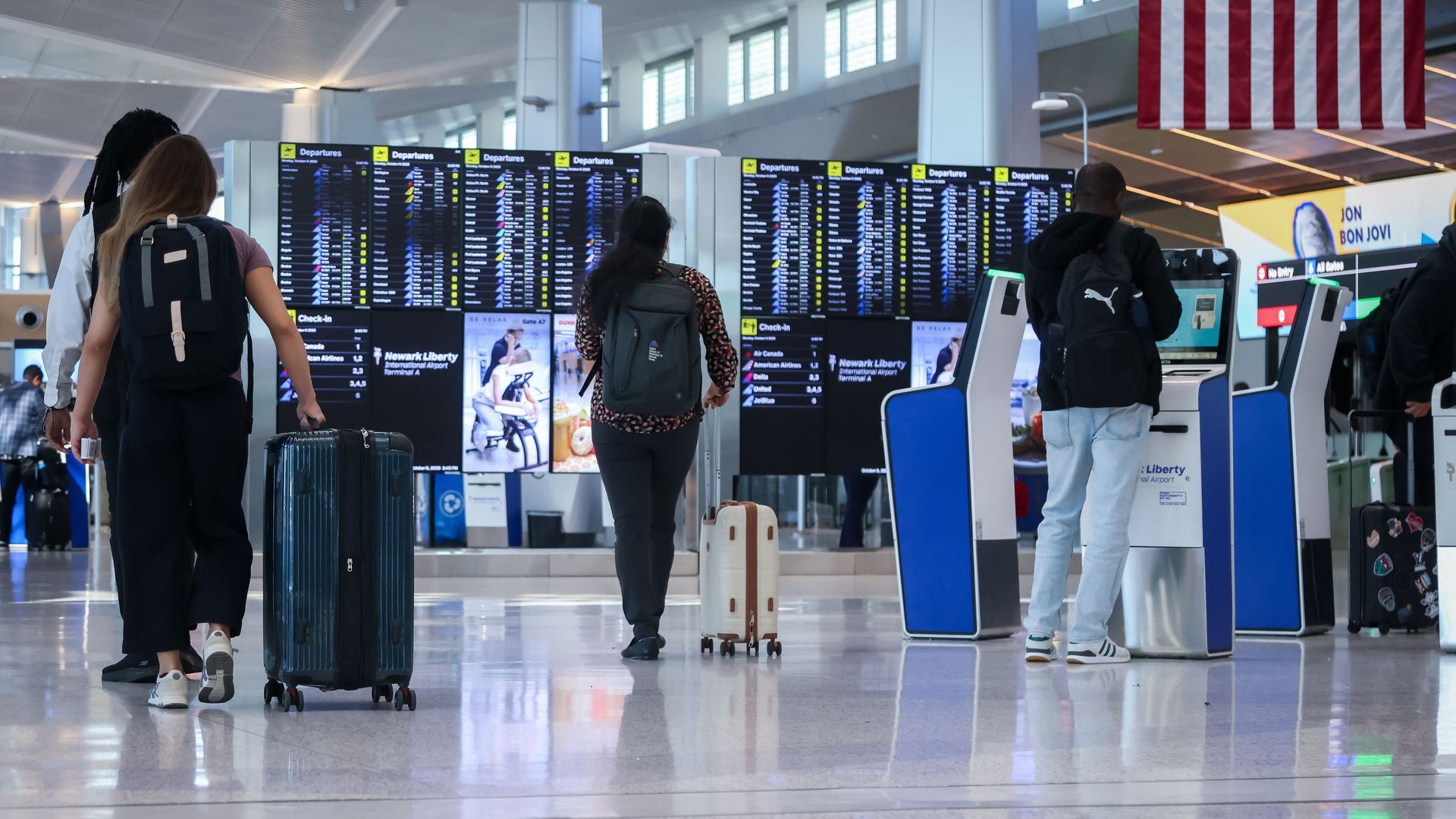
The U.S. Travel Association and nearly 500 tourism organizations and companies are warning of a potential Thanksgiving travel meltdown if the government shutdown drags on.
Why it matters: Thanksgiving is already one of the busiest travel weeks and a shutdown could make it even more chaotic with longer lines, delays and cancellations.
The Trump administration announced it plans to partially fundSNAP benefits on Monday, after two federal judges ruled on Friday that the funds must be released.
Why it matters: Up to 42 million Americans didn't receive their Supplemental Nutrition Assistance Program benefits on the first of the month, but the administration's new plan aims to make sure some amount of money hits recipients' pocketbooks.
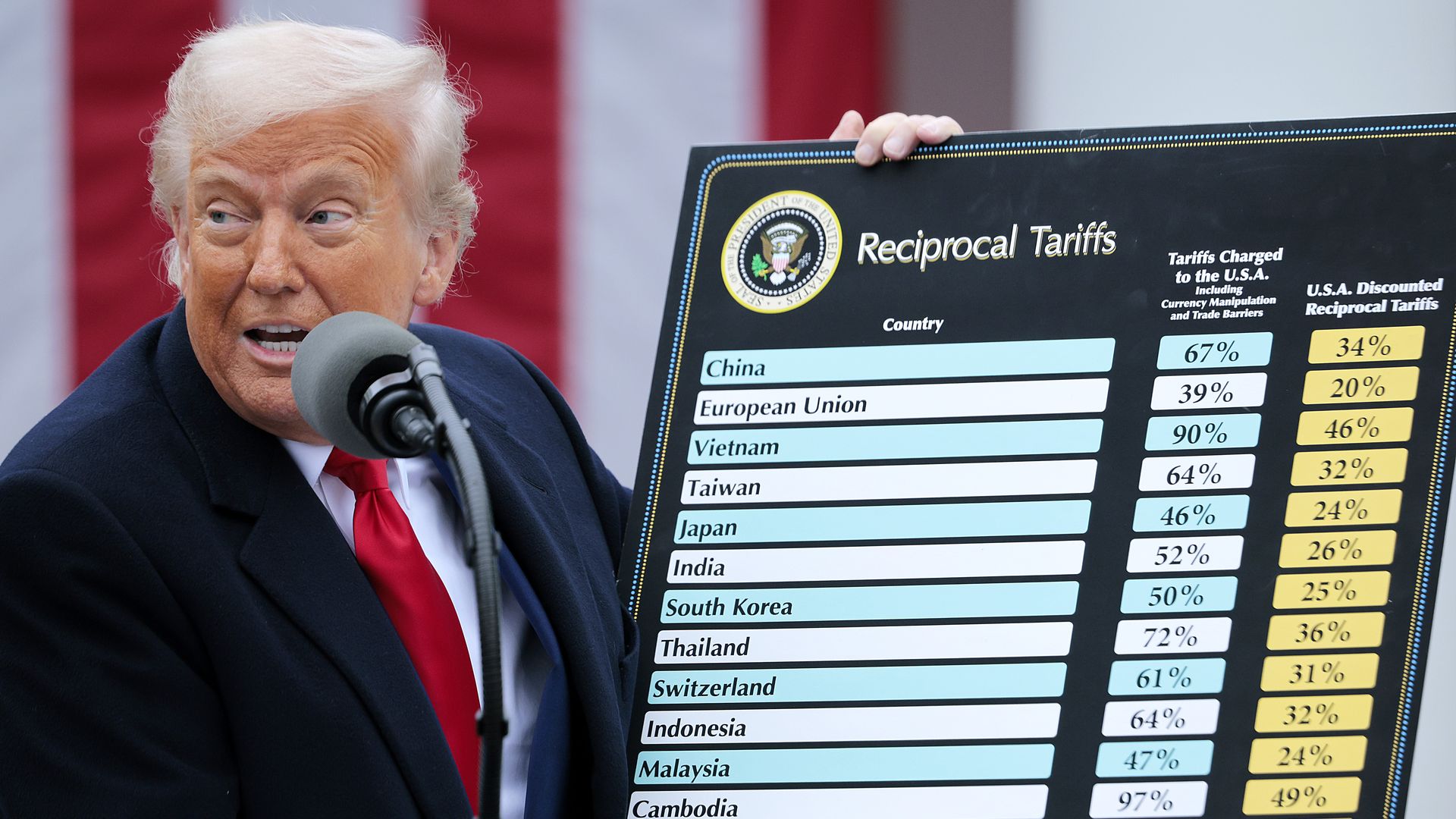
The Supreme Court will hear a case on Wednesday that will decide the fate of President Trump's signature economic policy, the tariffs he has leveraged to reshape the global order.
Why it matters: It is the latest instance of the high court deciding the fate of Trump's agenda, but this time with consequences that transcend the containers full of toys and electronics at the nation's ports.
Staffing shortages at major airports across the country has snarled air travel Sunday after air traffic controllers missed their first paychecks during the ongoing government shutdown.
The big picture: On Friday, the FAA said that nearly 80% of controllers were absent from New York-area facilities and that half of the busiest facilities faced shortages.And Transportation Secretary Sean Duffy warned Sunday that if the shutdown stretches on, it's only going to get worse.
Some portions of the economy are already in a recession, and others could fall into one without more interest rate cuts, Treasury Secretary Scott Bessent said on CNN Sunday.
Why it matters: For as much as the economy is actually growing — close to 4% by some estimates — the administration continues to use the specter of economic weakness to lean on the Federal Reserve to cut more, faster.
China has been an "unreliable partner" in many ways, and the U.S. needs to get out from under the "sword" of Chinese control of rare earth minerals, Treasury Secretary Scott Bessent said Sunday on CNN.
Why it matters: The framework struck by the world's two largest economies isn't even on paper yet, and already both sides are ramping up the rhetoric.