The Trump administration is warning Americans of a looming food crisis brought on by its own crackdown on undocumented farmworkers.
Why it matters: To offset the fallout, the administration pushed through an emergency rule last week that could gut the paychecks of domestic farmworkers by replacing them with foreign guest workers subject to lower wages.
Why it matters: Controller and TSA "sick-outs" played an under-appreciated role in ending the 2018-19 shutdown, as lawmakers faced the prospect of a snarled air traffic network, furious airline executives and an irate flying public.
A few Federal Reserve officials saw a case in keeping interest rates on hold last month, according to minutes from the central bank's policy meeting released on Wednesday.
Why it matters: It shows larger divisions among Fed officials than previously known at the most recent policy meeting, which concluded with the first rate cut in nearly a year.
What you need to know: A sneaky new hack called "prompt injection" can quietly hijack AI systems by slipping malicious instructions into the data that AI models process. So companies are trying to add deterministic security measures, essentially unbreakable guardrails, to keep these attacks at bay.
Rivian might be facing huge headwinds, but CEO RJ Scaringe is looking forward to 2026 and the launch of the company's next model, the $45,000 R2.
"I've never been more confident in the company than I am today," he told me this week during a fireside chat I moderated for the Automotive Press Association.
"We've got this product about to launch. It is insanely good. It takes everything that we've learned in launching the R1 and embodies it in a smaller package."
"The teams are functioning with incredible accuracy and precision, and the way they're working would have been unimaginable 5-10 years ago," he said.
"And along with that, the brand is resonating in ways that we'd only hoped to achieve."
Retailers and drone delivery companies say the federal government is overreaching with a proposed law on drone operations that would require TSA-like security screening for their stores, employees and potentially even their customers.
Why it matters: The proposed rule, which assigns 55-pound delivery drones the same risk profile as huge cargo planes, would cripple the drone delivery business just as it's about to take off, industry leaders say.
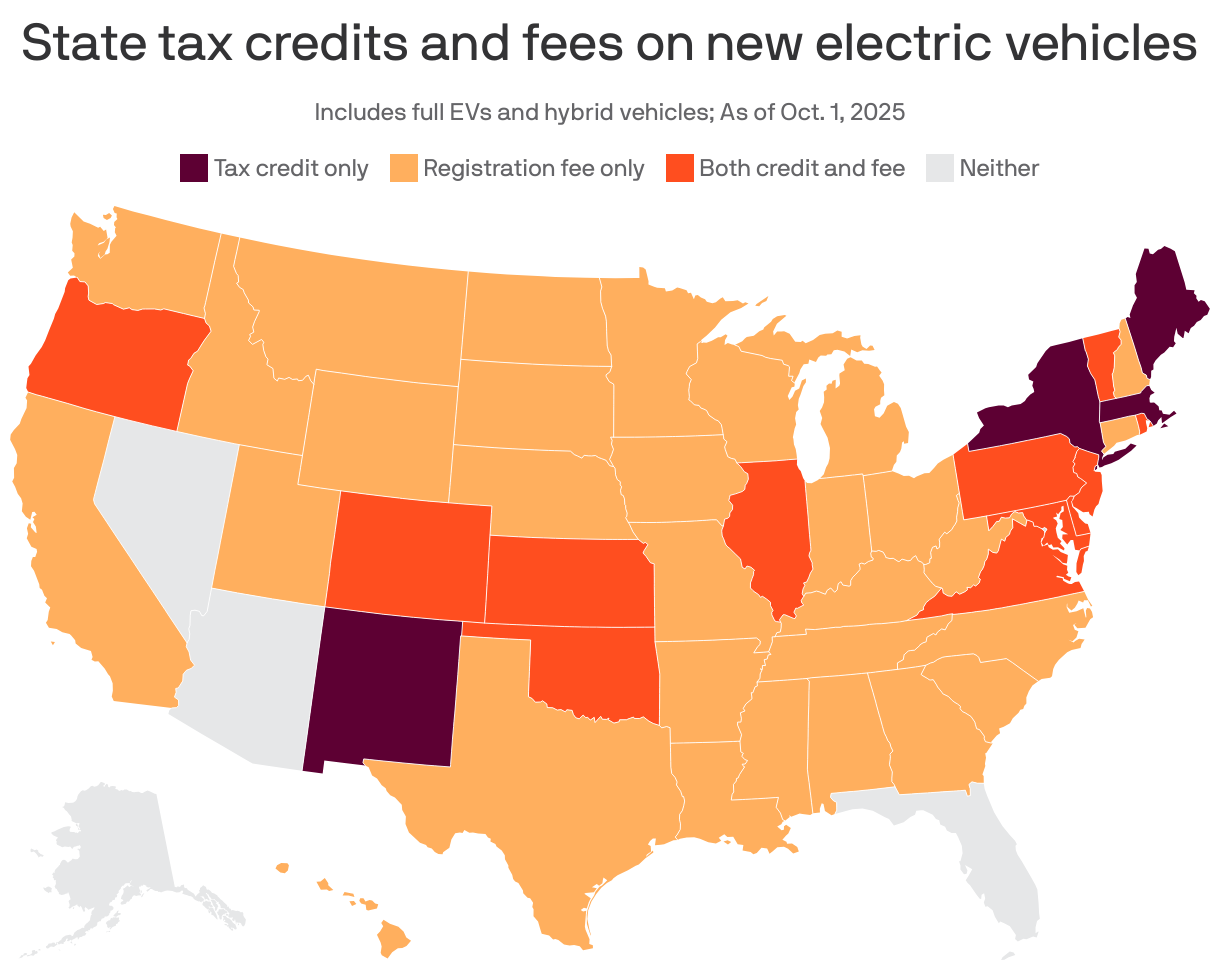
Data: Tax Foundation; Note: Select states offer sales tax rebates or exemptions instead of credits; Map: Axios Visuals
Federal tax credits for electric vehicle purchases may be dead, but depending on where you live, you might still get a sizable state tax break on your EV.
But be prepared to pay a higher vehicle registration fee than your neighbor who drives a gasoline-powered car.
Why it matters: The rewards and penalties on EVs reflect an industry in flux, as policymakers try to balance environmental goals with the need to pay for roads and other critical infrastructure.
If the machines take all the jobs, expect the Federal Reserve to do whatever it can — which may not be much — to ease the pain of the resulting labor market realignment.
The big picture: That is the implication of both the central bank's legal mandate and its past practice in times when economic growth was robust but the job market was weak.
Whole Foods Market says 2026 will be all about fiber, fat and freezer meals — as consumers chase gut health, back-to-basics cooking and restaurant-quality convenience.
Why it matters: The grocer released its annual trends report Wednesday — a forecast that often foreshadows what ends up in grocery aisles and where food brands will chase consumer dollars next.
Gold — typically a safe-haven in times of turmoil — is soaring at the same time the stock market is hitting new highs, an unusual dynamic that is troubling some market insiders.
Why it matters: The rally in gold reflects investors' desire to diversify away from dollar-denominated assets as trust in the U.S. slowly erodes, they say.
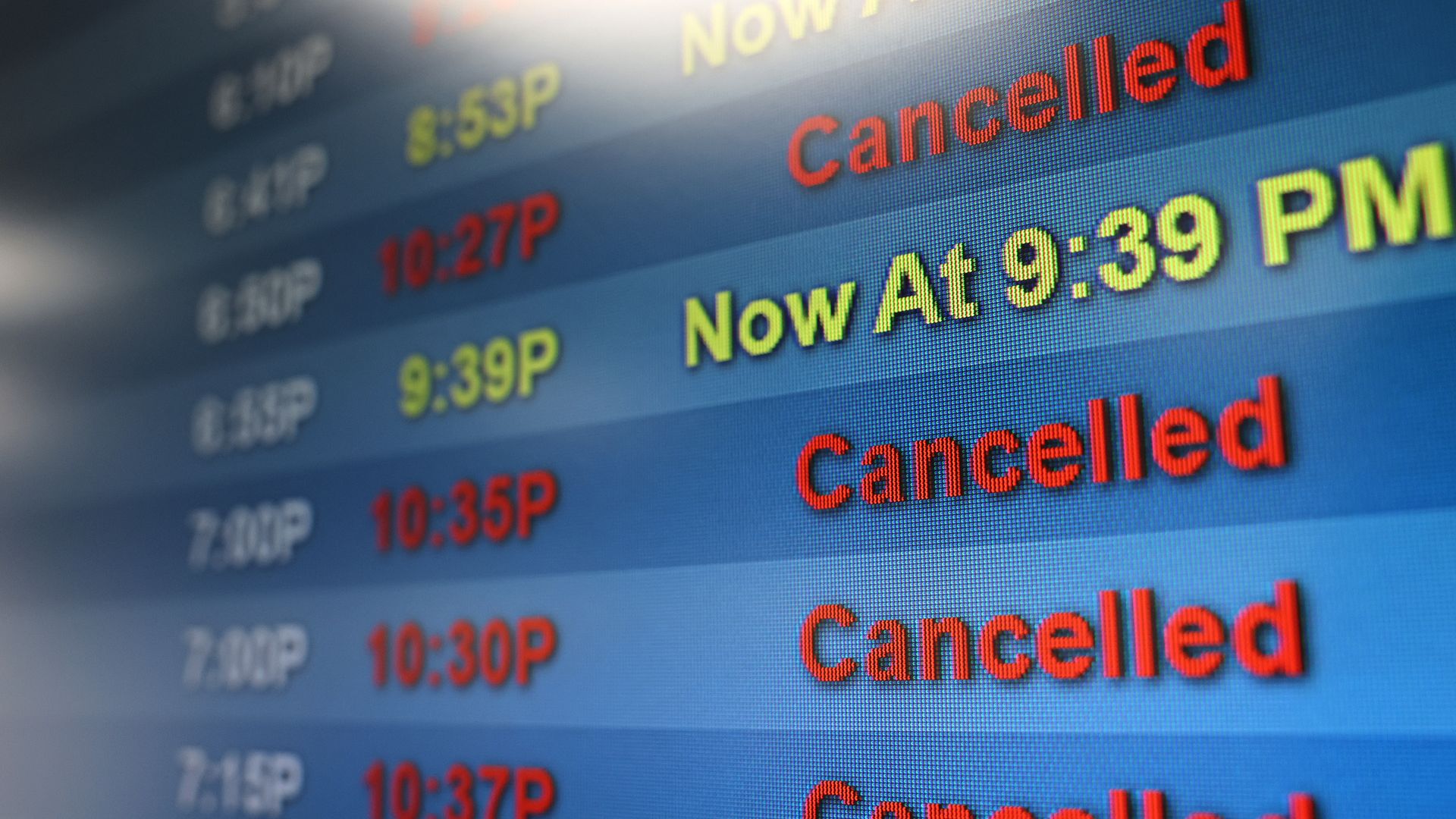
Airport staffing shortages saw thousands of flights delayed across the U.S. on Tuesday night as overstretched air traffic controllers continued to work with no pay during the government shutdown.
The big picture: Seven days into the shutdown, the Federal Aviation Administration reported staffing issues at airports in Chicago, Las Vegas, Nashville and Philadelphia, and at air traffic control centers in the Atlanta, Boston, Dallas and Houston areas.