Rivian CEO: I've never been more confident

Add Axios as your preferred source to
see more of our stories on Google.
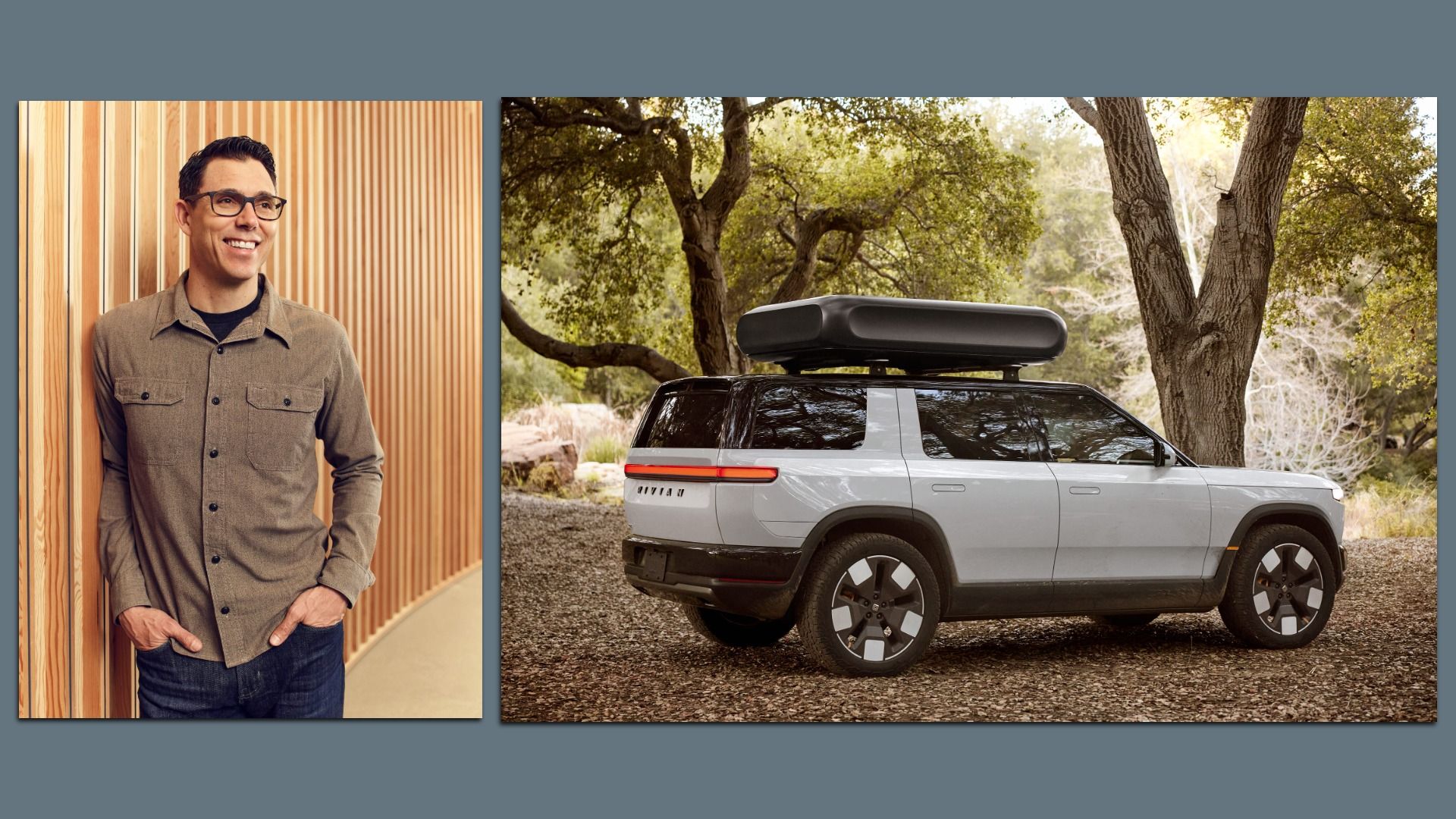
Rivian Founder and CEO RJ Scaringe has a lot riding on next year's launch of its smaller, more affordable R2 electric SUV. Images courtesy of Rivian
Rivian might be facing huge headwinds, but CEO RJ Scaringe is looking forward to 2026 and the launch of the company's next model, the $45,000 R2.
"I've never been more confident in the company than I am today," he told me this week during a fireside chat I moderated for the Automotive Press Association.
- "We've got this product about to launch. It is insanely good. It takes everything that we've learned in launching the R1 and embodies it in a smaller package."
- "The teams are functioning with incredible accuracy and precision, and the way they're working would have been unimaginable 5-10 years ago," he said.
- "And along with that, the brand is resonating in ways that we'd only hoped to achieve."
Why it matters: Skeptics have been predicting Rivian's failure since he founded the company 16 years ago. Backed by Amazon and Volkswagen Group, it's arguably the most competitive U.S. EV manufacturer behind Tesla.
Other highlights from our conversation:
On EV sales trends: Other than Tesla's Model 3 and Model Y, "if I were to look at the list of EV choices there are today, most fall into the category of OK, but not highly compelling, and as a result, they've been unsuccessful in generating sales."
- Better EV options like the R2 will expand the market, he said.
On the Trump administration: "As much as there's been the perception of an anti-EV policy, I think the current administration is very much pro-business and pro-technology, or American technology first."
- Rivian is aligned with that view, he said, noting that 100% of its production is in the U.S., and its supply chain is vertically integrated here.
On Chinese competition: Chinese manufacturers have two key advantages: extremely low cost of capital and very low labor costs. But those advantages would disappear if they tried to sell cars in the U.S. because they're likely to be heavily tariffed.
- Chinese carmakers' technology isn't any better than Tesla's or Rivian's, he said, but it is a threat to legacy automakers that don't switch to modern software-defined platforms.
On autonomy: "This is by far the biggest investment category for us as a company. We're investing more money here than anywhere else in business."
