There's a new fear among investors and CEOs: flying blind on investments without sufficient data on the economy's health.
Why it matters: The U.S. government produces some of the world's premiere economic data. The future of those indicators looks murkier than ever, with no private sector source readily available to replace them.
President Trump's nomination of Heritage Foundation economist E.J. Antoni to head the Bureau of Labor Statistics on Monday drew criticism from economists across the political spectrum.
Why it matters: The growing negative consensus among conservative economists is unusual given Antoni's own conservative pedigree.
If you're a knowledge worker on the job hunt, you might want to upgrade your interview wardrobe to include pants.
Why it matters: Companies are bringing back in-person interviews after years of virtual hiring since the pandemic. That's because artificial intelligence — which is upending the labor market — also makes it easier for candidates to cheat.
Spirit Airlines has warned that it may not survive on its own if it's unable to improve its finances.
Why it matters: The ultra-low-cost carrier emerged from Chapter 11 bankruptcy protection less than six months ago with hopes of becoming a more competitive and financially stable operation.
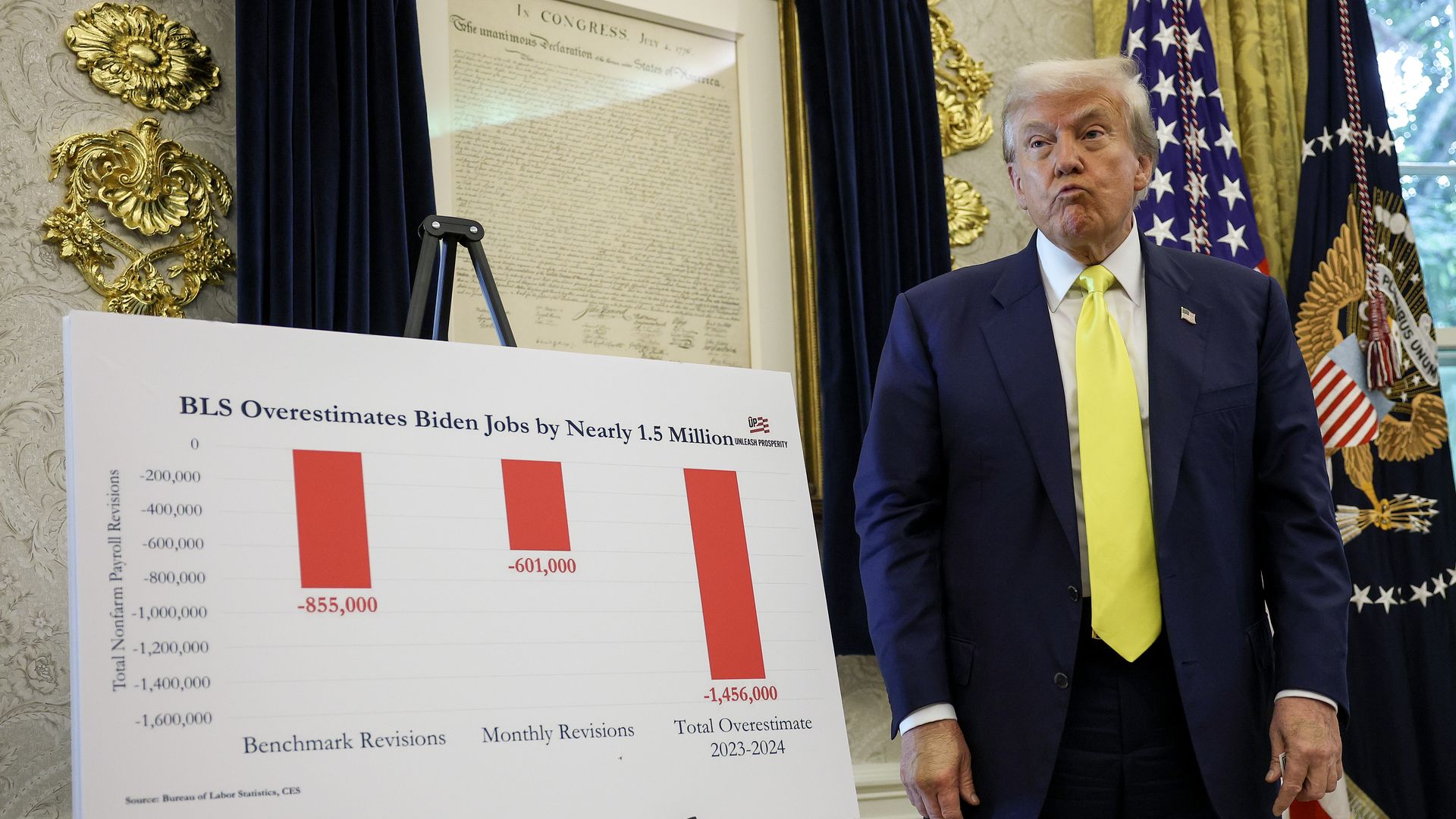
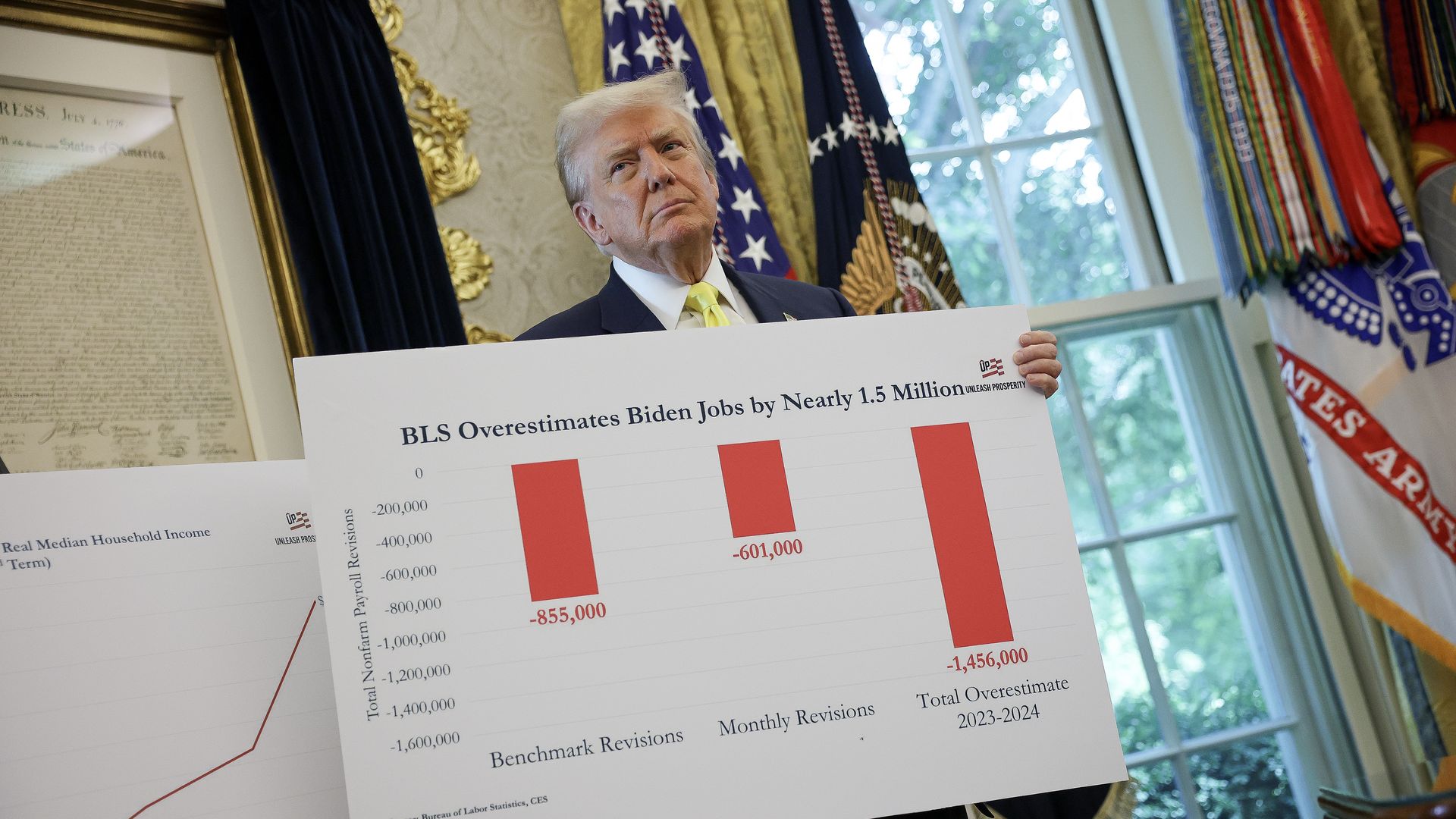
President Trump's nominee to head the Bureau of Labor Statistics, E.J. Antoni, suggested the possibility of suspending the bureau's flagship monthly jobs report.
Why it matters: It's one of the world's most fundamental pieces of data, crucial for investors to understand the health of the U.S. economy.
No longer are America's most important economic institutions politically untouchable.
Why it matters: Econ wonks — those far more comfortable with large datasets than the inner dealings of Washington — won't just question the significance of indicators or policy decisions.
Now they will wonder whether they can trust if data, or monetary policy conclusions, reflect reality or political motivations.
Sinclair has launched a strategic review of its broadcast business, which includes 178 television stations in 81 markets.
Why it matters: The U.S. broadcasting industry appears to be starting a new game of musical chairs, as Sinclair's announcement comes just days after a WSJ report that Nexstar is in talks to acquire Tegna.
Computer-driven traders are jazzed about this bull market, and if you ask ChatGPT, it will quickly tell you to invest in the S&P 500. Machines and AI driven by patterns and data seem to lack what makes human investors more cautious: fear.
Why it matters: Artificial intelligence is to retail traders what computer-guided, algorithmic trades are to financial firms. Both technologies are proving to be more optimistic investors than their real-life counterparts. The consequences of that bullishness could be severe for retail traders.
Ford's decision to invest $5 billion in a new family of electric vehicles might seem crazy at this point, given how much the political winds have shifted against EVs since President Trump took office.
Widen the lens, however, and Ford's big bet is the only natural choice in the face of existential threats to its business.
The big picture: More and more mainstream car buyers can't afford to buy a new Ford, which sells for an average of $56,000.
The U.S. construction, agriculture/mining and accommodation/food services industries have the greatest shares of foreign-born noncitizen workers, per census data.
Why it matters: President Trump earlier this summer acknowledged that his massive immigration crackdown is "taking very good, long time workers away from" the farming and hotel industries, and promised changes.
The Trump administration continues to find new forms of revenue, the latest being a 15% fee on chip sales to China for Nvidia and AMD. The new income could have big implications for the bond market.
Why it matters: The billions of dollars in revenue from tariffs and from companies paying the administration to do business could allow for less Treasury issuance, which would be bullish for the longer end of the yield curve.
The U.S. and China have extended their tariff truce for another 90 days, President Trump confirmed Monday.
Why it matters: The extension comes hours before the truce was set to expire. It pushes off a huge, open question for U.S. businesses and investors on the future of trade with China.