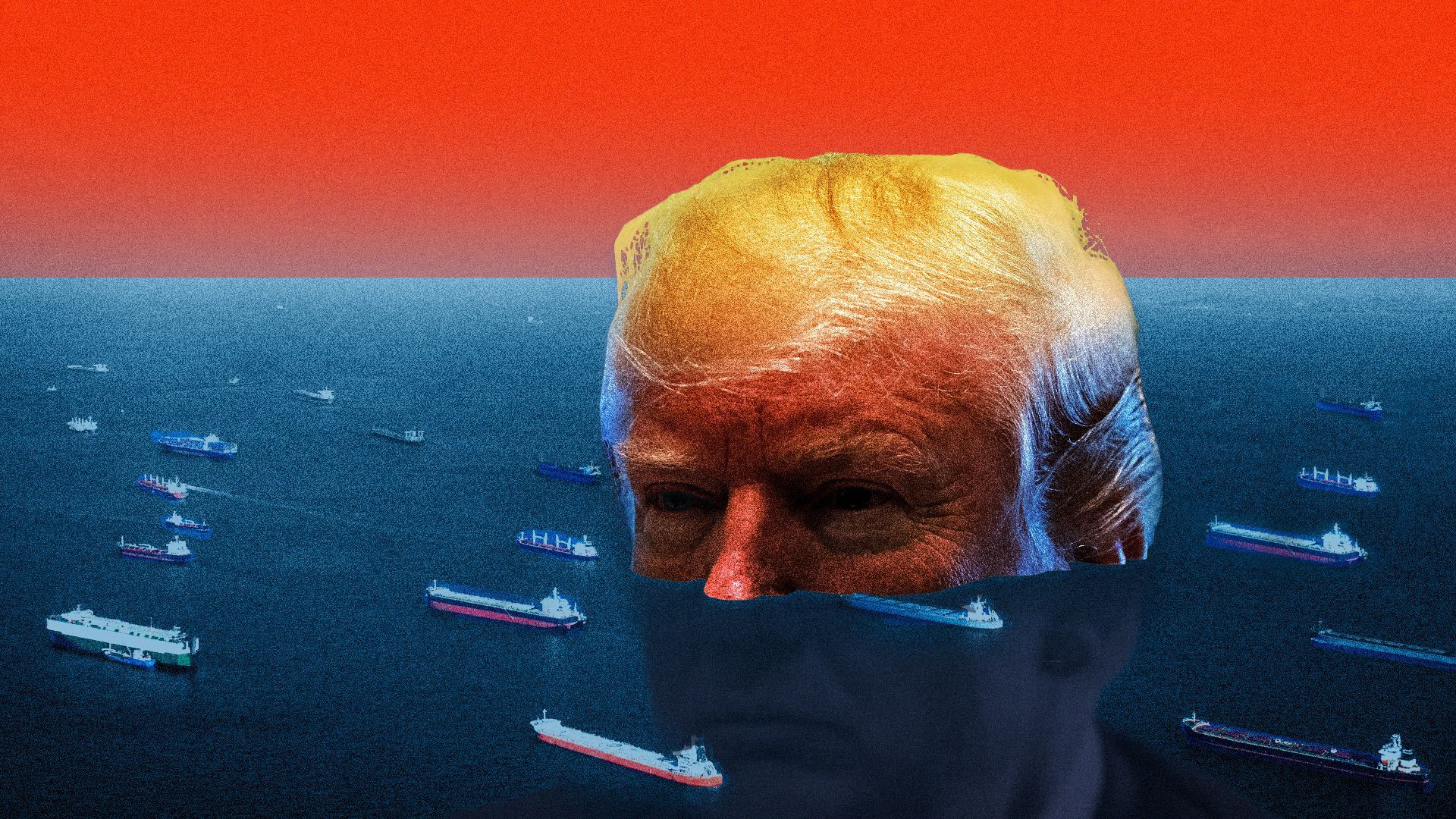
The party seems only to be roaring ahead — Japan's Nikkei index today closed at its highest level since February, and U.S. and European stock markets finished the week up as well. But stubborn trouble in emerging markets has some economists worrying about an eruption of financial contagion resembling past global crises.
What's happening:Plunging currencies and stock markets in the emerging economies suggest a threat to the 9½-year stock market bull run, along with the global economy, with Europe especially in the line of fire, economists say.
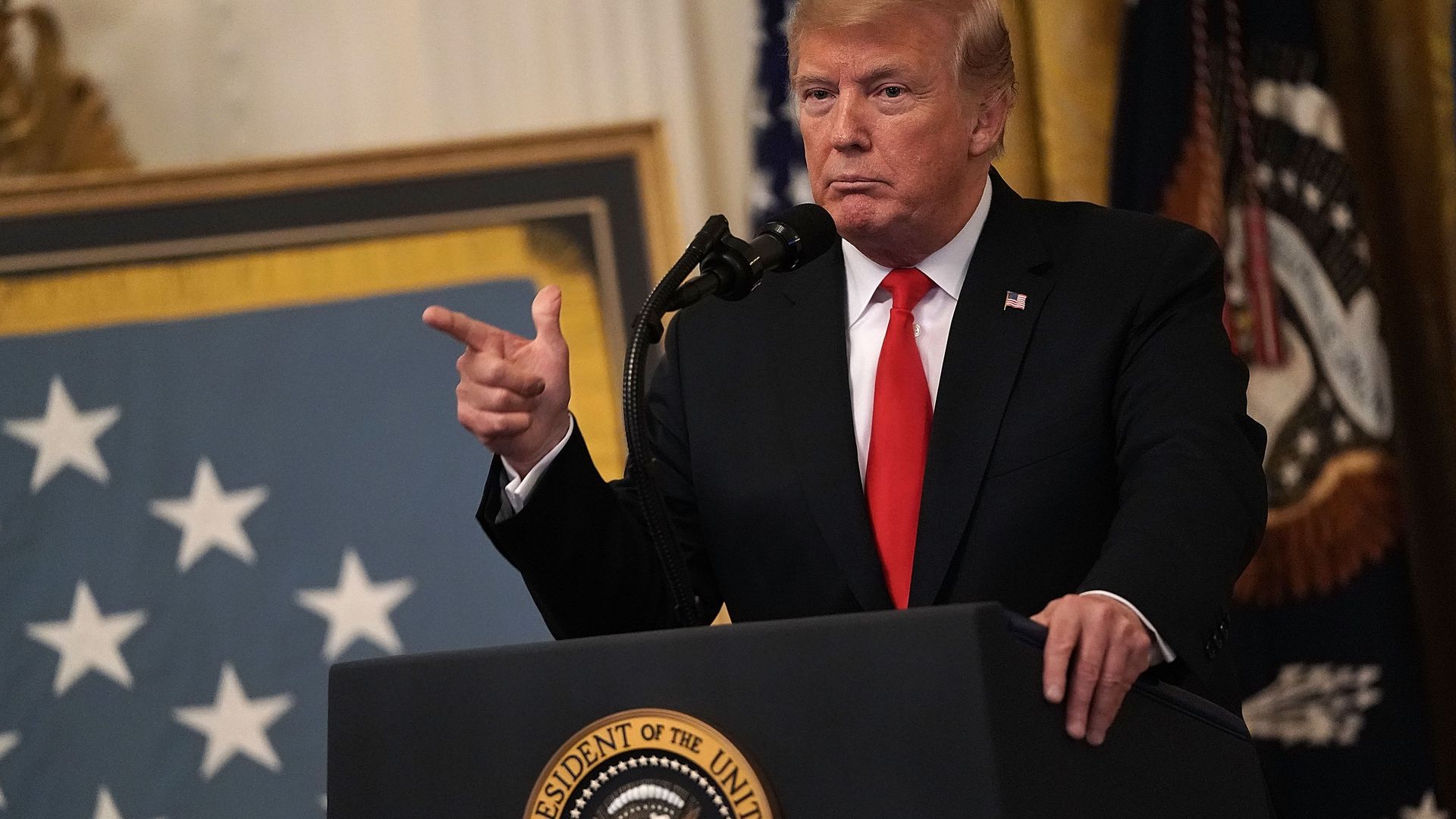
Bloomberg reported at noon today that President Donald Trump has now directed his staff to proceed with the next round of tariffs on $200 billion of Chinese imports.
What's happening: On Thursday, the Wall Street Journal broke the news that Treasury Secretary Steven Mnuchin had extended an invitation to senior economic official Liu He to return to D.C. for another round of talks.
A former U.S. trade negotiator, Jeff Moon, told the Washington Post that the belief that China will cave and make a deal with the U.S. is "a massive miscalculation."
The big picture: President Trump said in a tweet Thursday that China is "under pressure to make a deal with us," while their markets "are collapsing." But analysts note that the volatility of the Chinese stock market doesn't impact the country like it would the U.S. Economist Andrew Polk told the Post, "Trump has less leverage than he thinks," because while the Chinese economy "has its own issues...it's not about to blow up."
Go deeper: Axios' Steve LeVine reported in August that the trade war with China is likely to last "well into the second half of next year and perhaps beyond."
Amazon has beat out most of its competition with a simple philosophy: endless choice at super-low prices. But now, two new trends could be a warning sign for that model.
Why it matters: Food, clothes and makeup firms are among sellers that are becoming either highly customized or, at the other extreme, one-size-fits-all, says CB Insights' Zoe Leavitt. The common goal — the elimination of choice, and the confusion that can accompany it, thus challenging the very calling card of massive retailers like Amazon and Walmart.
Asians tend to be among the best-educated immigrants to the U.S., and also land in some of the most lucrative careers. But, according to U.S. Census data, the image of privilege is true for only some Asians.
The bottom line: Data shows that income inequality is greater among Asian immigrants than for those arriving from anywhere else.
The White House hosted a meeting with industry experts Wednesday to discuss how to change government hiring to develop a more modern workforce with additional technological and cybersecurity expertise, according to an Office of Management and Budget document Axios obtained and an industry source who attended the event.
Why it matters: The government and the private sector alike have been underinvesting in cybersecurity skills, and the effort is now about playing catchup.
Dan looks back at the financial crisis of 2008, including how it impacts today's economy and politics, with Fox News Channel and Fox Business Network's Neil Cavuto. Then, in his Final Two, Dan discusses Apple's product unveil and how 1980's junk bond king Michael Milken is at the center of a new legal battle between startups.
The consumer price index, which measures how much consumers pay for a variety of items, rose at a slower pace in August than economists expected. The cost of apparel and health care services declined, while the price of gasoline increased.
Why it matters: The consumer price index is a key gauge of inflation, which Federal Reserve officials take into account when deciding whether or not to raise interest rates. According to Lee Ferridge, an analyst at State Street, if the lack of inflation continues the Fed may not raise rates as frequently as some have anticipated.

/2018/09/14/1536962504511.gif?w=3840)