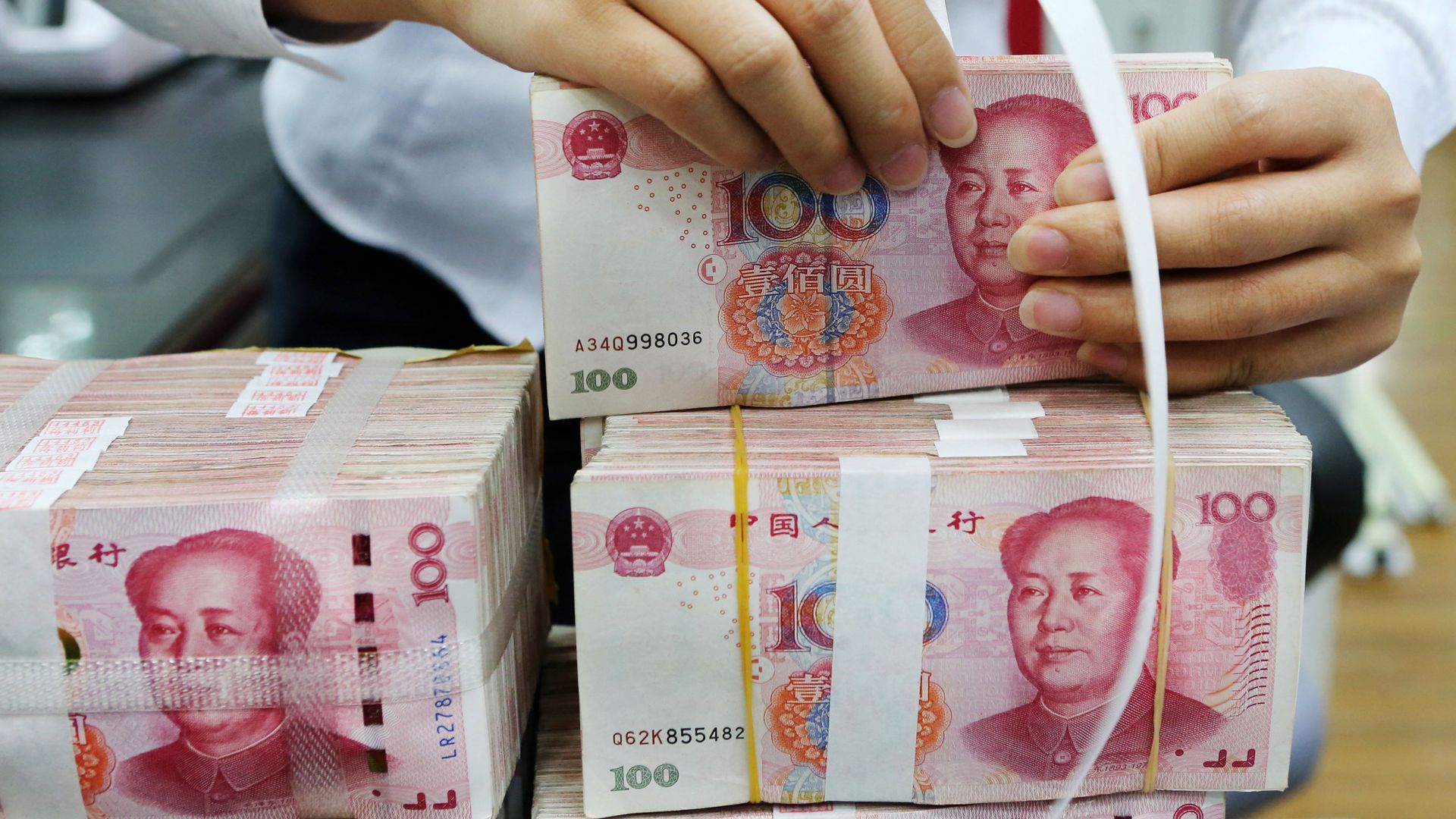
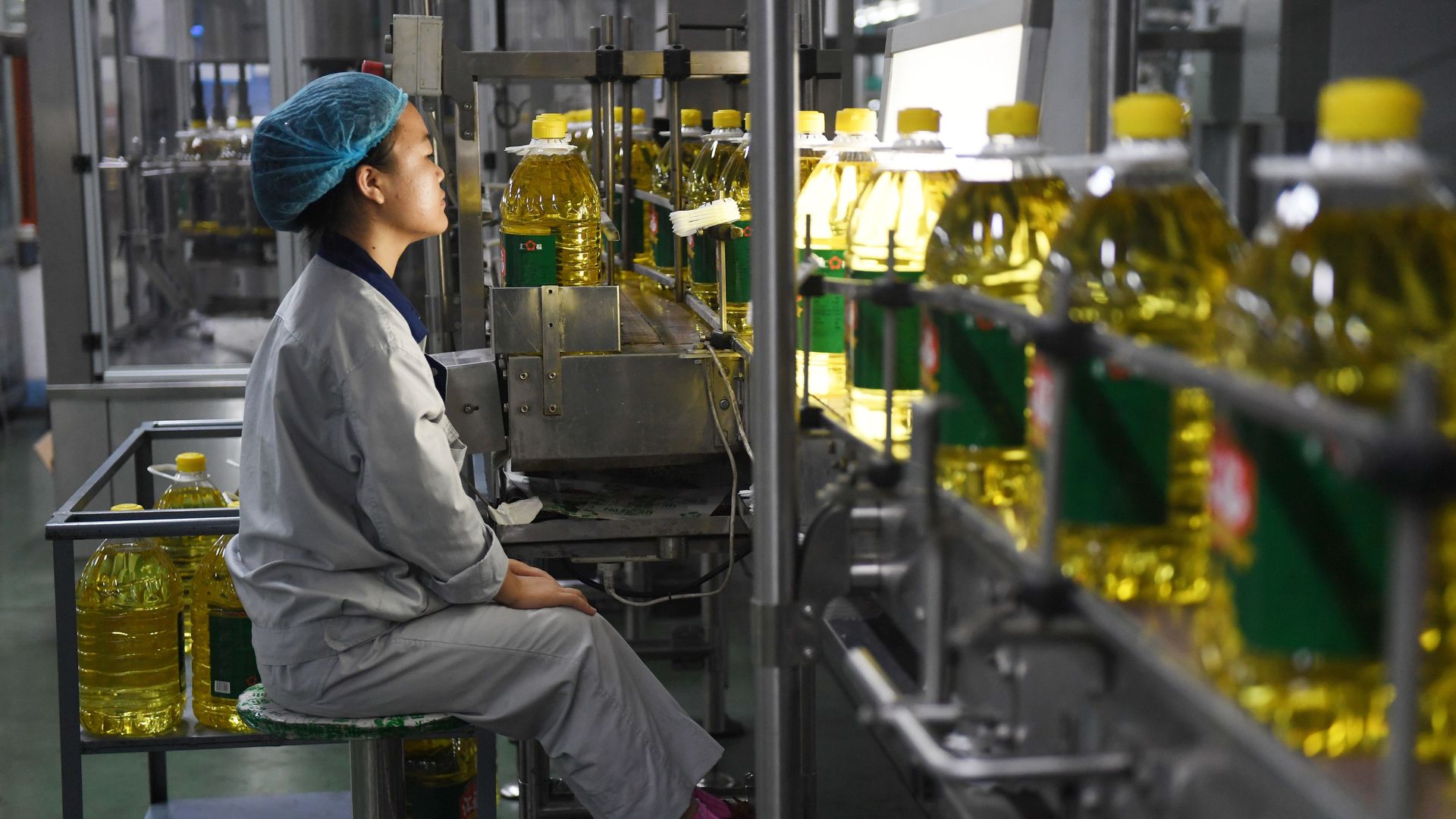
A spokesperson for the Chinese foreign ministry said Beijing has no desire to deliberately manipulate its currency to temper the effect of U.S. tariffs, reports Bloomberg.
“The exchange rate of China’s RMB is determined by the market. There are ups and downs. It’s a two-way float ... The U.S. is bent on provoking this trade war. China does not want a trade war but we are not afraid of one."
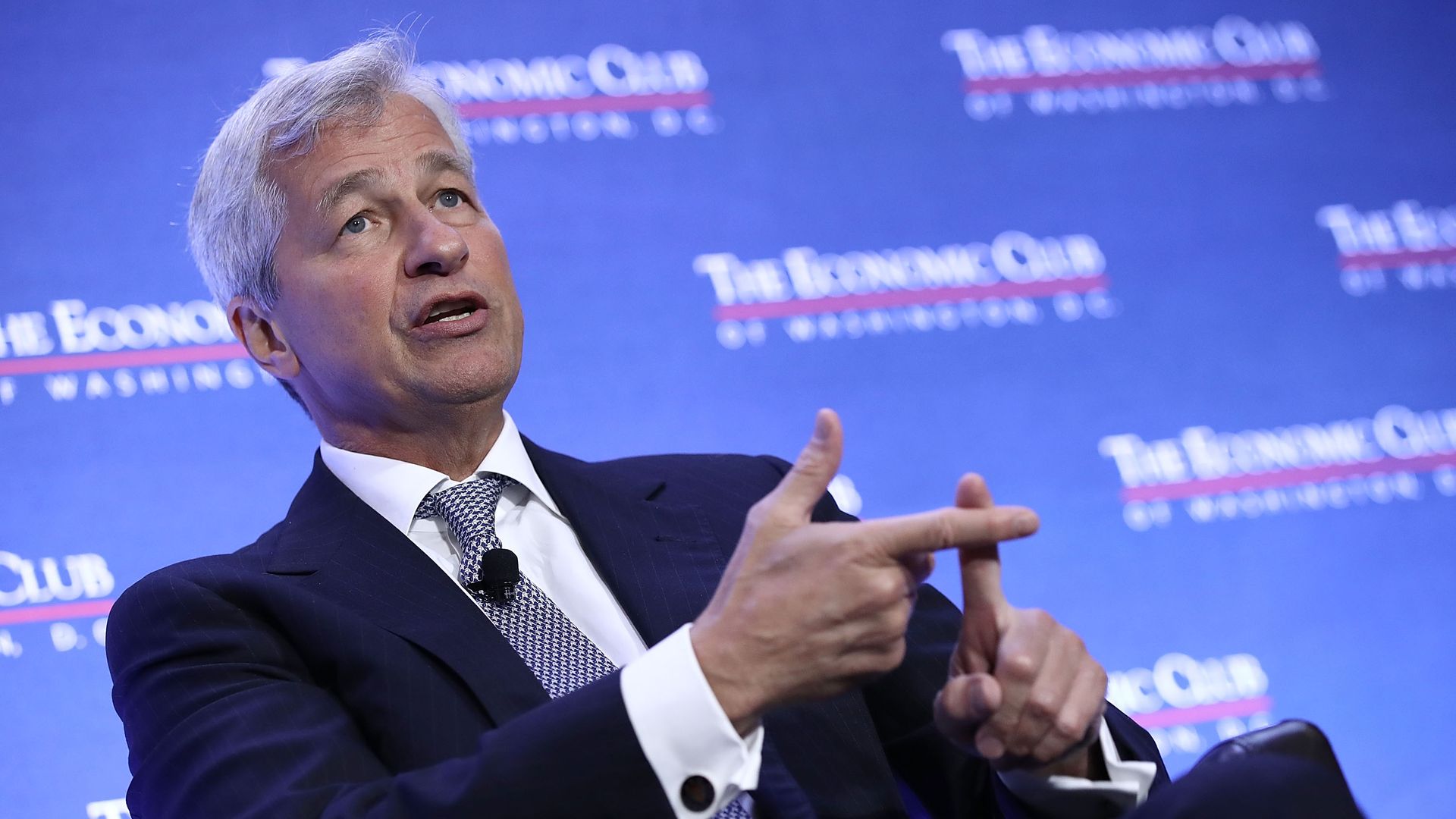
JP Morgan Chase CEO Jamie Dimon said that President Trump's advisers were wrong when they said there would be no retaliation to his tariffs, and that it's "possible" a trade war could undo gains in the economy, according to an interview with CNNMoney.
Why it matters: Dimon is Wall Street's longest serving CEO and the chairman of the influential Business Roundtable. He agreed that the president has raised legitimate issues when it comes to China's unfair trade practices, but questioned Trump's tactics and the uncertainty of what the U.S. will do next.
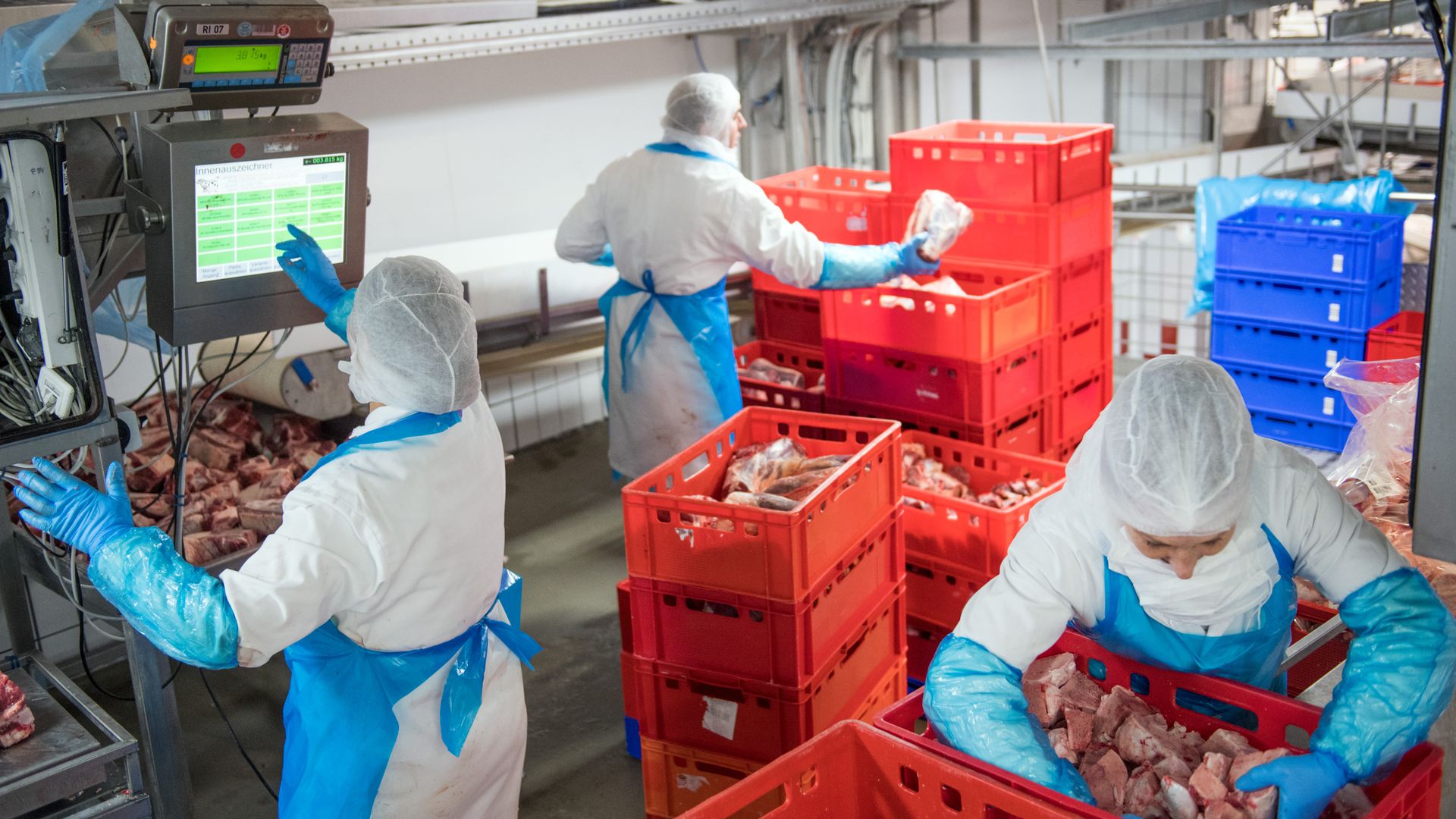
More than 2.5 billion pounds of meat from beef to pork and poultry are being stockpiled in cold-storage warehouses across the country amid ongoing trade disputes with countries that import U.S. meat, reports the Wall Street Journal, citing federal data set to release as early as Monday.
The details: While domestic consumers' demand for meat has increased, it not enough to keep up with record production of hogs and chickens, forcing industry increasingly reply on exports, the report notes. This would drive-down prices for American consumers, restaurants and retailers. But dwindling foreign exports will threaten profits for meat manufacturers, and the report adds that some hog farmers have already started scaling back their operations.
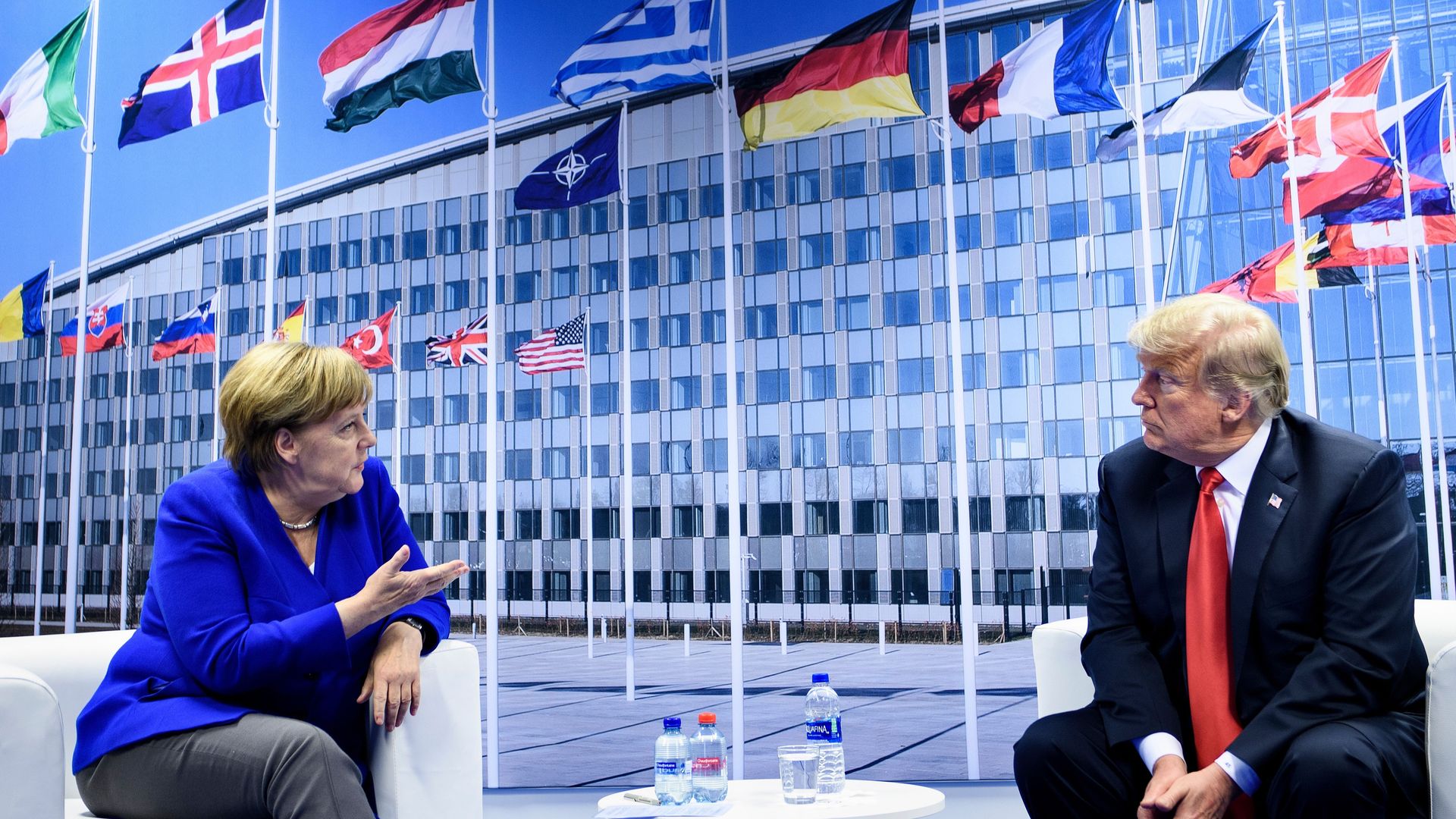
Not every foreign leader is eager to play hardball with Trump. The Germans, in particular, are much more inclined to compromise. Angela Merkel badly wants a trade deal to prevent Trump from carrying out his threat to put 25% tariffs on car imports into the U.S., according to two senior European officials privy to internal discussions.
European Commission President Jean-Claude Juncker plans to meet Trump at the White House on Wednesday. And European officials tell me they expect him to come armed with proposals including a "plurilateral trade deal" that would involve the trade of cars and car parts — an obsession of Trump's.
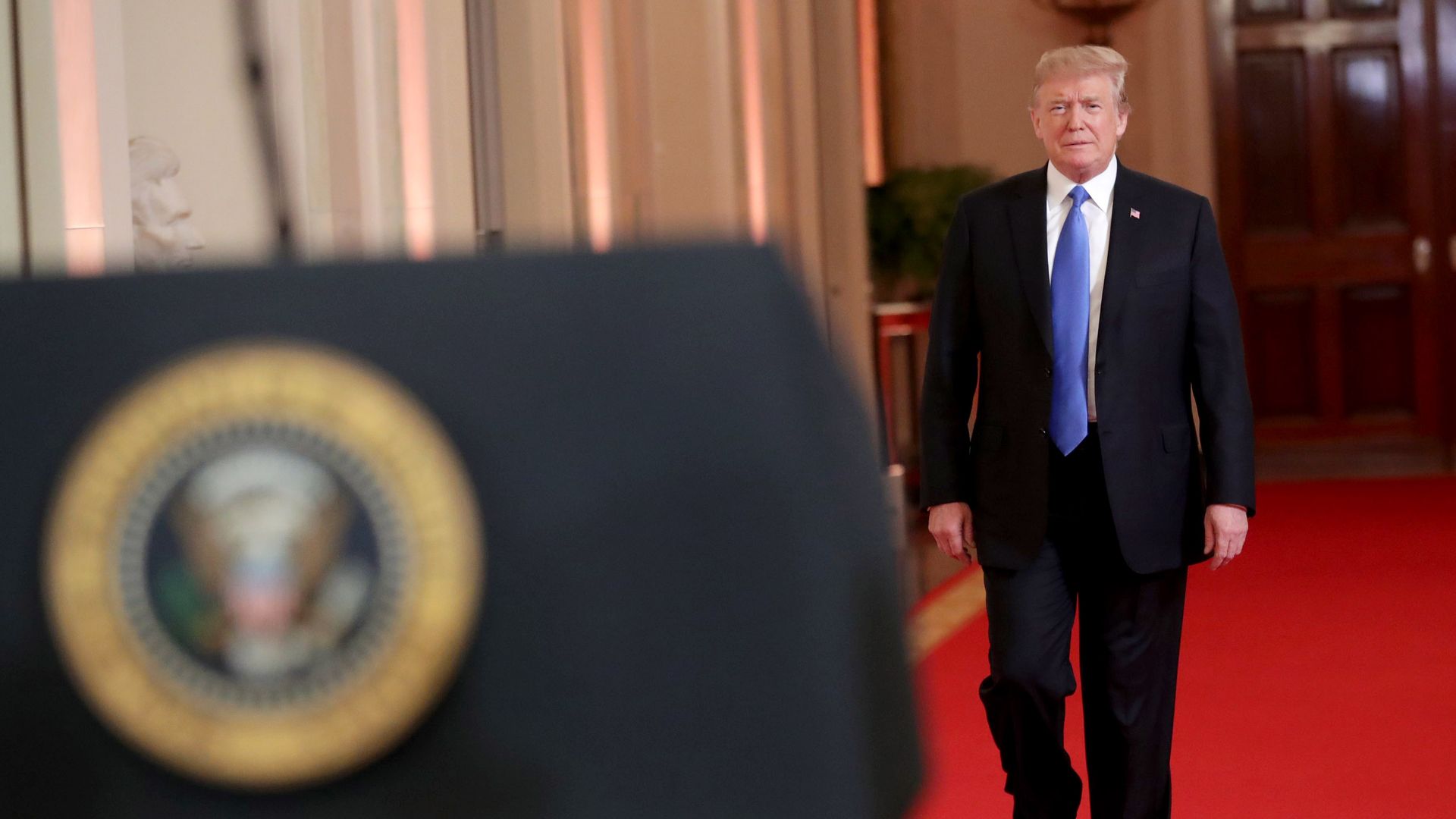
In the early evening of July 9th, Donald Trump stood in the gold draped East Room of the White House with a small group of senior advisers to rehearse his announcement of Judge Brett Kavanaugh as his nominee for the Supreme Court.
Trump stepped on and off the podium, riffing with his aides. While this was going on, Bill Shine, the former co-president of Fox News, was meticulously obsessing over the camera shot which looked out upon a red carpet, according to a source familiar with the situation.
The warning is delivered by a non-threatening soybean, but this talking legume is no weakling: If President Trump persists with his trade war against China, it says, he may lose seats in the coming midterms.
What's going on: The talking soybean appears in an animated video produced by CGTN, the English-language branch of China’s state-owned TV broadcaster. In the middle comes a threat: Hike tariffs too high and China will look to South America to satisfy its humongous soybean appetite.
In the mid-to-late-20th century, the American economy and culture were ripe for 30-year-old men, who — more than European and Japanese — typically landed well-paid careers, bought homes, and supported large families. But since then, getting ahead has become much harder.
Data: College attendance, median income, and home ownership from U.S. Census Bureau; cost of tuition from CollegeBoard; median debt from "The Great American Debt Boom, 1948-2013" by Alina Bartscher, Moritz Kuhn, Moritz Schularick and Ulrike I. Steins; marriage figures from a Pew Research Center analysis of the 1960-2000 decennial censuses and 2010 and 2016 American Community Survey (IPUMS). Note: All dollars are inflation-adjusted to 2016. Chart: Harry Stevens/Axios
The big picture: The Witty investigation was a breakthrough for many photojournalists who had similar experiences of sexual harassment. Now, there's a #MeToo movement in the industry that has been waiting to break out for years, reports Kristen Chick of the Columbia Journalism Review.