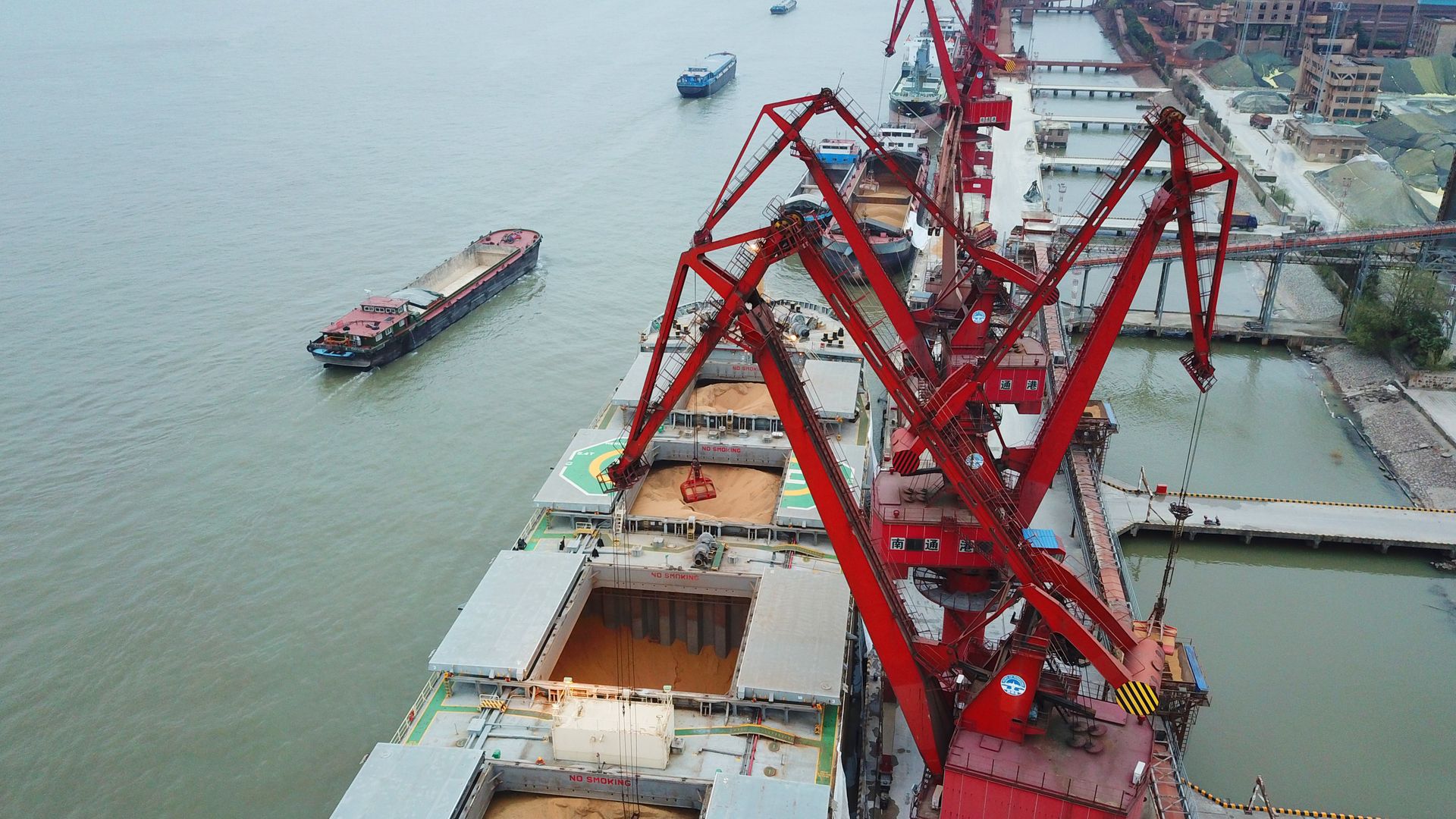
Just after midnight tonight the Trump administration is set to impose tariffs on $34 billion of Chinese goods, escalating a global trade war that has pitted the U.S. against trading partners around the world.
"Businesses are bracing for disruptions in sales and supply chains," the Wall Street Journal reports (subscription), as a Chinese response could hit U.S. producers of "automotive products, farm crops and other goods."
What's next: Already, several U.S. sectors are freaking out — soybean farmers losing business in China, aluminum metal companies hit inadvertently by tariffs, and GM, worried about soaring supply costs. Manufacturers fear the tariff war will prematurely cut short a renaissance triggered by low natural gas prices and tax cuts, reports Ed Crooks at the FT.
Why it matters: Saudi officials had hoped to raise tens of billions of dollars to help fund the kingdom's economic diversification by going public with a small piece of the company.
Mexico is imposing new tariffs on U.S. goods such as apples, cranberries and various cheeses as well as increasing current tariffs on products including pork and whiskey, Politico reports.
The big picture: Mexico has now placed tariffs on $3 billion worth of U.S. products in retaliation to President Trump's tariffs on steel and aluminum. Most products will receive tariffs of 15-25%. Canada and the EU have also imposed retaliatory tariffs on almost $16 billion worth of U.S. products.
Beijing is maintaining that it will not back down in the face of President Trump's trade war. The Trump administration's tariffs on $34 billion worth of Chinese goods will begin at 12:01 a.m. on Friday, and the Chinese have said their retaliatory measures will go into effect immediately after.
“U.S. measures are essentially attacking global supply and value chains. To put it simply, the U.S. is opening fire on the entire world, including itself ... China will not bow down in the face of threats and blackmail and will not falter from its determination to defend free trade and the multilateral system.”
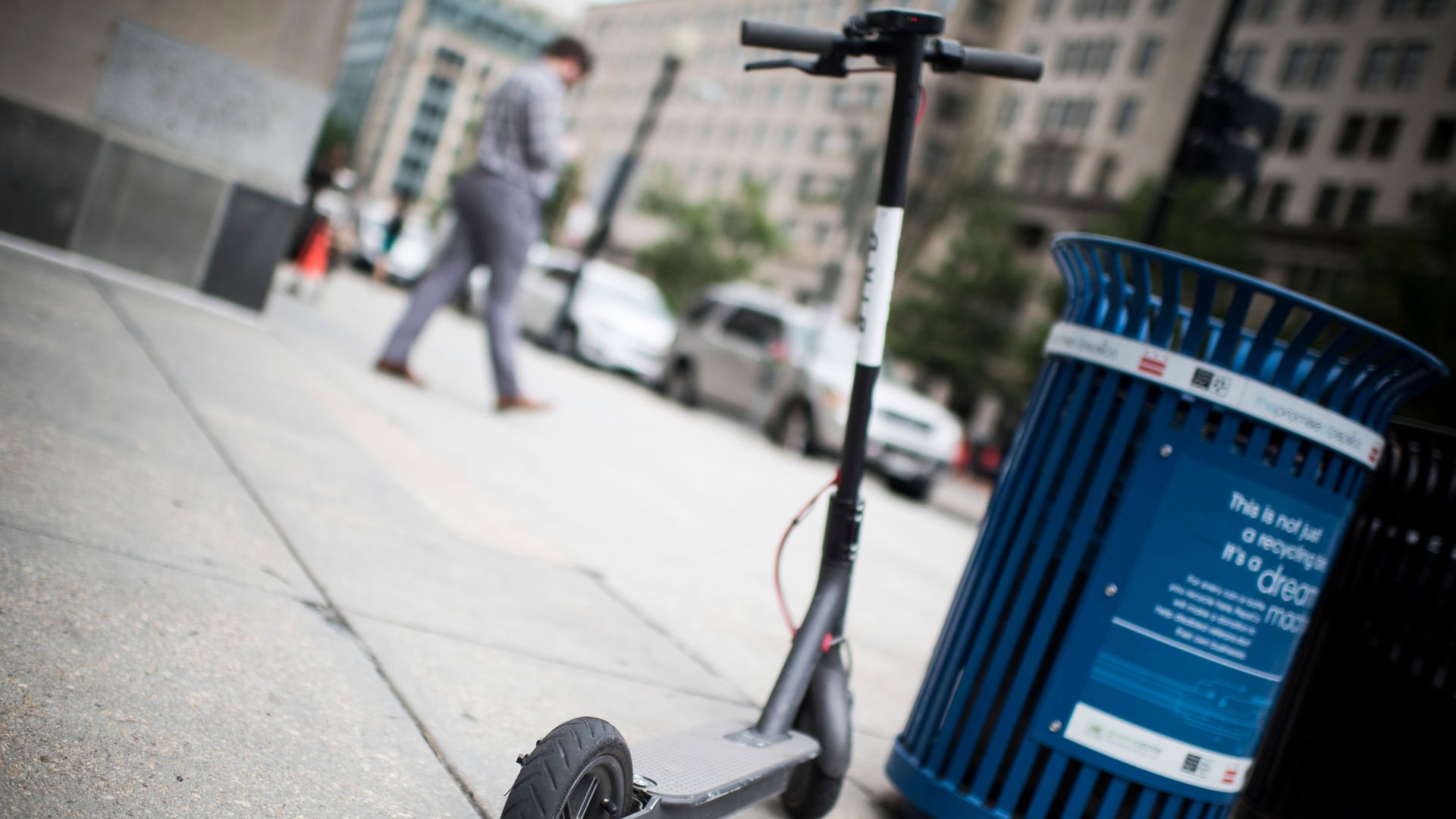
The 818 items on the first round of tariffs for Chinese imports may drive up prices on products popular with American millennials as soon as this week, the Financial Times reports.
Why it matters: Much of the focus on the 25% tax on Chinese imports — and subsequent retaliatory tariffs — was its burden on the U.S. manufacturing and agriculture industries, but products popular with younger generations like vaporizers, electric scooters, and smart home products are caught up in the crossfire, too.
Look for global stock markets to crater and economies to dive into recession if President Trump proceeds with his desire to withdraw from another international accord — this time the World Trade Organization, economic experts tell me.
The big picture: Thus far, Trump has mostly damaged U.S. prestige with his anti-globalization actions, including withdrawing from the Trans-Pacific Partnership and the Paris climate agreement, as well as threatening to pull out of NAFTA. He's also caused global stock markets to gyrate by imposing tariffs on Canada, Europe, and China; and oil prices to rise by pulling out of the Iran nuclear deal. But "the financial shock would be very, very large" should he withdraw from the WTO, said Gary Hufbauer of the Peterson Institute for International Economics.
U.S. workers are quitting their jobs again, a sign of confidence in the economy and a very good reason to feel optimistic on Independence Day.
The big picture: 2018 is the first year on record that the U.S. has more available jobs than people looking for jobs. And at the same time, "workers are choosing to leave their jobs at the fastest rate since the internet boom 17 years ago," the WSJ's David Harrison and Eric Morath report.
With President Trump initiating a trade war with Canada and launching verbal attacks on Canadian Prime Minister Justin Trudeau, Canadian citizens are boycotting U.S. products and trips to the States, reports CTV News.
What they're doing: Canadians have taken to social media with the hashtags #BuyCanadian, #BoycottUSProducts, and #BoycottUSA and are offering tips on how to do their part to defend their country against the Trump administration's actions. The United States exported $207 billion worth of goods to Canada in 2016, per an MIT visualization.
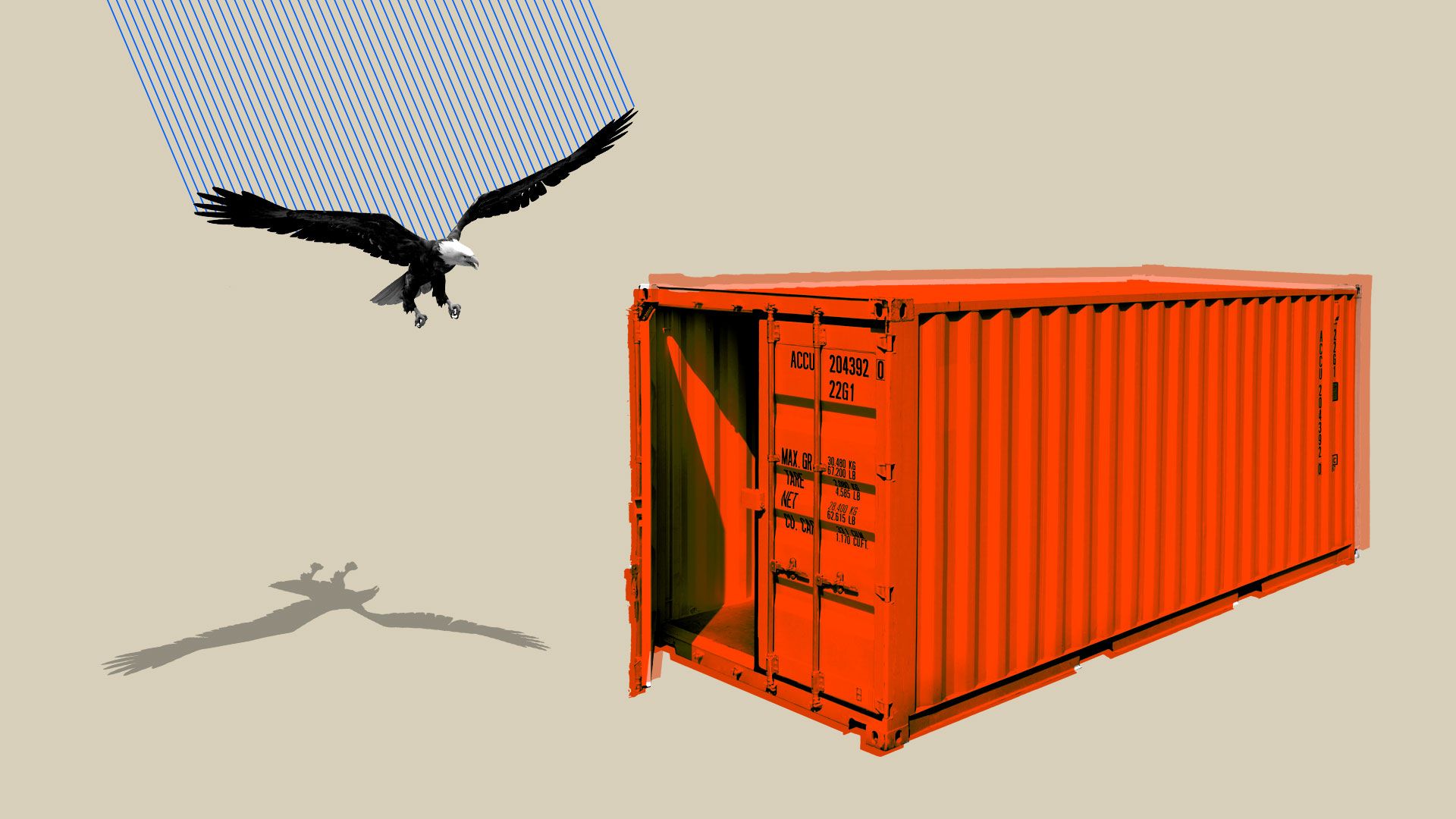
Over 40 members of the World Trade Organization — including all 28 European Union nations, Russia, China, Japan and India — approached the international body about potential Trump administration tariffs against foreign automobiles, according to Reuters.
The backdrop: The U.S. launched a Section 232 national security probe into foreign car imports in May. That's the same law President Trump used to impose sweeping steel and aluminum tariffs on U.S. trading partners, and WTO members warned that similar action against foreign autos "could seriously disrupt the world market and threaten the WTO system, given the importance of cars to world trade," per Reuters.