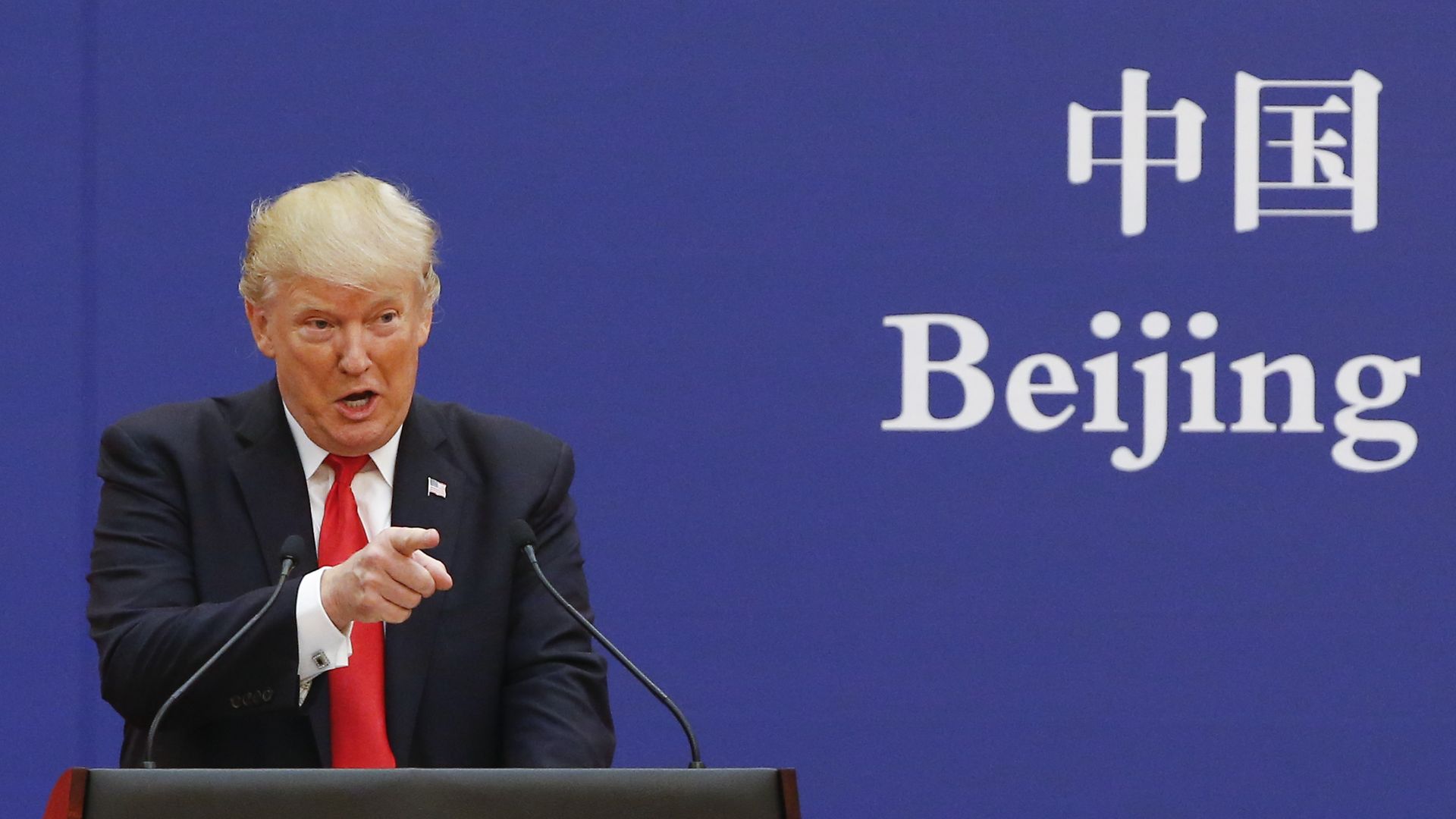
President Trump will depart next week to attend the NATO summit in Brussels, meet with the Queen Elizabeth and Prime Minister May in the U.K., and sit down with Vladimir Putin in Helsinki.
The big picture: He will arrive to face a Europe on edge, as the two foundations on which the NATO alliance has rested for 70 years — European integration, under threat from economic and political strife, and the transatlantic alliance, whose greatest source of turbulence remains the U.S. — are in deep trouble. The possibility of a fractured, more nationalist and less democratic Europe is much greater than anyone imagined as recently as two years ago.
MoviePass announced in an email to its subscribers Thursday that the company is moving toward a "demand-based pricing" business model, which will affect how much subscribers pay to see a movie in theaters.
The big picture: The company, which announced Monday it was filing to sell over $1.2 billion in equity, is still experimenting with new ways to stabilize the financials for its 3 million subscribers and fight off AMC's new Stubs A-List service. Following the latest change, when users log onto MoviePass they could pay an additional $2 to $6 for a movie depending on how the high demand is for the desired time slot.
The big picture: Both countries have enacted tariffs up to $34 billion in value, with additional tariffs expected to rollout shortly. Meanwhile, countries in North America and Europe are retreating into defense mode and taking their own precautionary measures to avoid getting caught in the crossfire.
The Peak Pegasus, a ship moving soybeans from the United States to China, sped to the Chinese port of Dalian on Friday (local time) in a race against the clock to beat China's retaliatory tariffs on U.S. goods. Unfortunately for Peak Pegasus, the ship missed its mark by 30 minutes, per Reuters.
The timing: The ship had to conclude its one-month voyage and arrive at the port before 5 p.m. on Friday to dodge the tariffs deadline. It arrived just after, at 5:30 p.m.
The U.S. added 213,000 jobs last month and the unemployment rate rose to 4% as more people — especially new graduates — entered the labor force. Economists surveyed by Bloomberg forecast 195,000 new jobs and unemployment holding at 3.8%. The U.S. added 223,000 jobs in May.
Why this matters:As the NYT notes, this is the 93rd straight month of job creation — the longest streak on record.