Special Counsel Robert Mueller's investigation — and the reporting around it — is raising new questions about journalistic ethics in an era rife with fake news.
Why it matters: Protecting the relationship between reporter and source is a tenet of good journalism, but secrets and opacity can be tricky in times like these, when public distrust in politics and the media is ever-increasing.
Smart speaker maker Sonos on Friday filed for a $100 million IPO.
Why it's a big deal: Because this will be a test of market appetite for a pure-play hardware maker, at a time when service providers (and Sonos "partners") like Apple, Amazon and Google are also offering smart speakers.
China's sharpest weapon against the U.S. is the volume of soybeans it imports, but it'll be difficult to maintain the war against American agriculture for too long given China's demand for the product.
The big picture: The Chinese are reliant on U.S. soybeans for animal feed — primarily for pigs — and cooking oil. Last year, China spent $14 billion on American soybeans, reports the New York Times' Raymond Zhong.
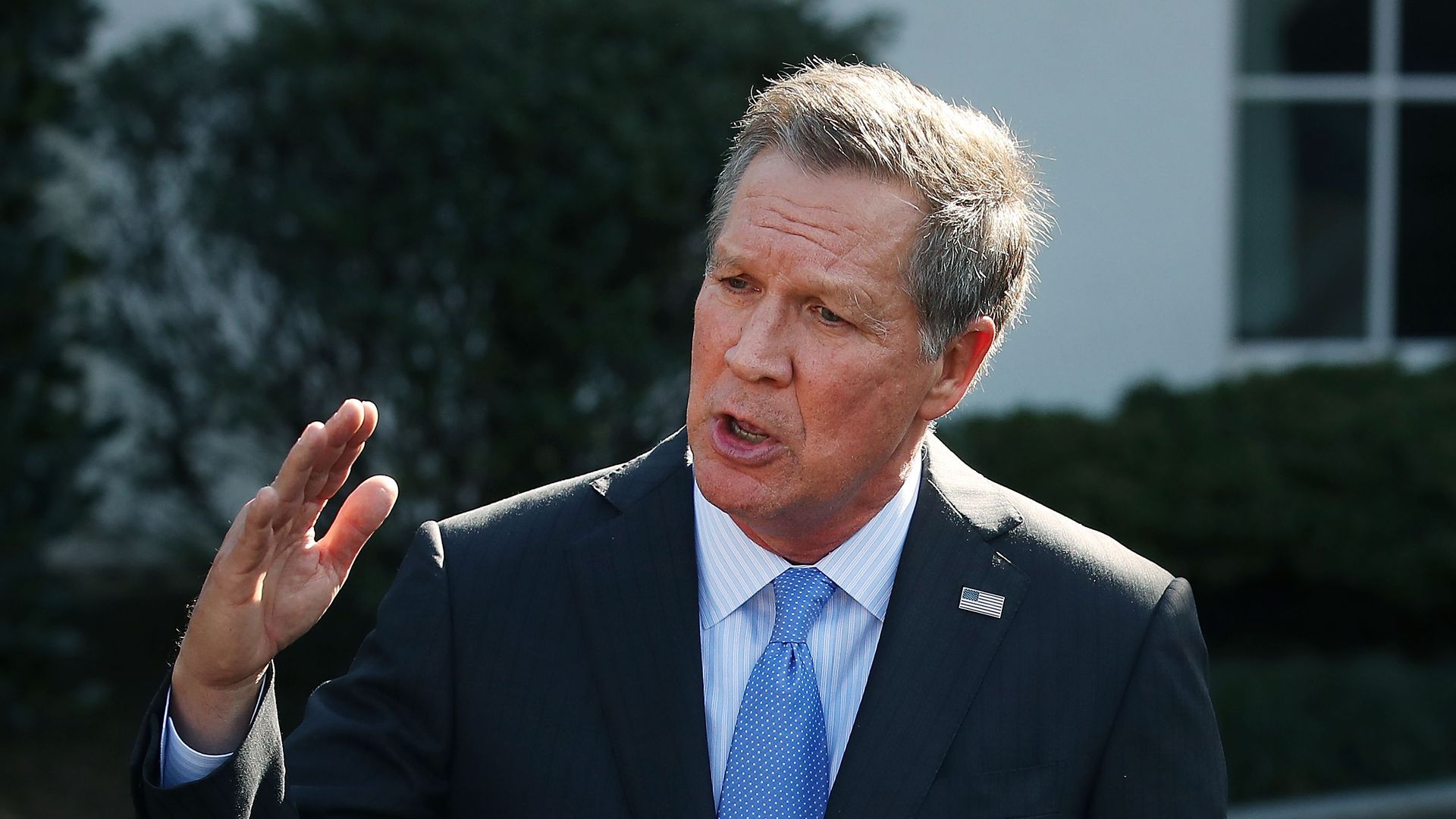
A Thai chemical company, PTT, and its South Korean partner, Daelim, are in talks to build a multi-billion dollar petrochemical plant in eastern Ohio that "would create thousands of construction jobs and hundreds of permanent positions," reports the AP. Ohio Gov. John Kasich has said the project would be a "game changer."
Why it matters: The Appalachian region, where President Trump picked up scores of votes from working-class Americans, is now looking to two Asian companies to save its disappearing manufacturing jobs.
Local agricultural industries caught in the crossfire of President Trump's trade disputes with some of the country's biggest trading partners are increasingly worried that they will suffer from retaliatory tariffs on American goods.
Why it matters: From Florida to Wisconsin to Washington state, Trump risks threatening the very industries he pledged to protect on the campaign trail — and his tariffs could mean a brutal blow for the economy in states that he won in 2016.
Chinese tech giant Tencent is planning an IPO for its music company — Tencent Music Entertainment Group — reports Bloomberg, citing a company filing. Tencent has reportedly been in talks with banks to advise the IPO that could raise $1 billion or more.
The backdrop: Tencent's music platforms are key in connecting popular American artists to China's massive market. Per the Financial Times, Tencent Music Entertainment Group could be worth over $30 billion after its IPO. The company's competitor — and one of its investors — Spotify recently went public and has a valuation of $31 billion.
The big picture: This is the 93rd straight month of job creation, the longest streak to date, but the kind of jobs that are being added benefit more educated and highly-skilled Americans with positions in the health care, educational services, and goods-producing and manufacturing fields.