Investors sent shares in Dollar General higher Thursday after the company announced better-than-expected sales growth and plans to open 900 stores in 2018.
Why it matters: Dollar General avoided the struggles of the broader retail industry by focusing on poor, rural communities overlooked by Walmart, which are home to customers living paycheck-to-paycheck with limited access to credit cards.
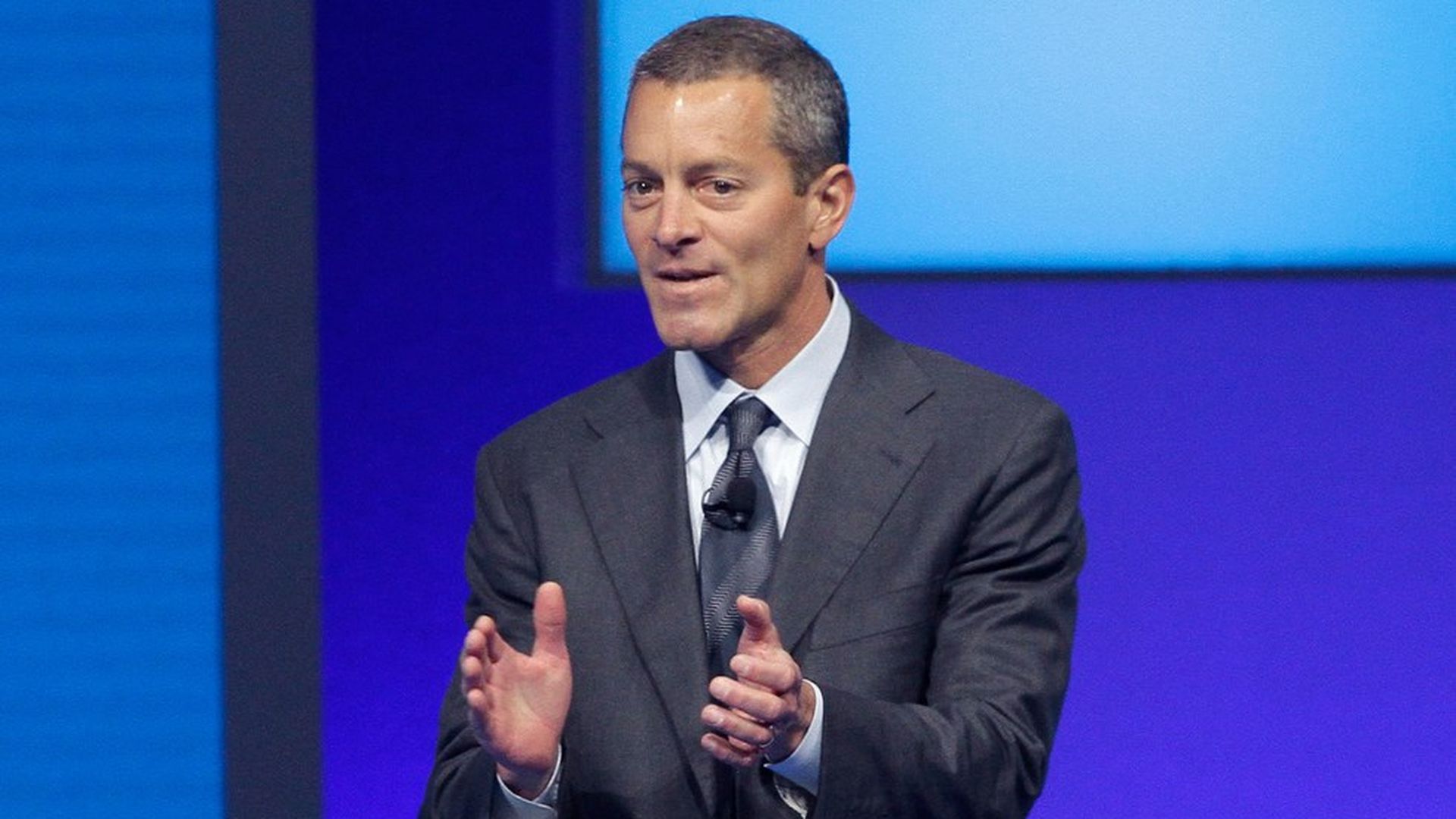
Walmart Chairman Greg Penner told an audience at the Fortune Global Forum in Guangzhou, China, today that "open borders and free trade have been good for our consumers." He added that each of the past 11 presidential administrations has sought out the opinions of the company on such matters due to Walmart's large size and U.S. employee base of more than 2 million.
Why it matters: Walmart has long been associated with red-state America, but the company has recently clashed with the GOP's anti-free trade faction, as evidenced by the lobbying it did to kill proposal earlier this year to increase taxes on companies that import goods from abroad.
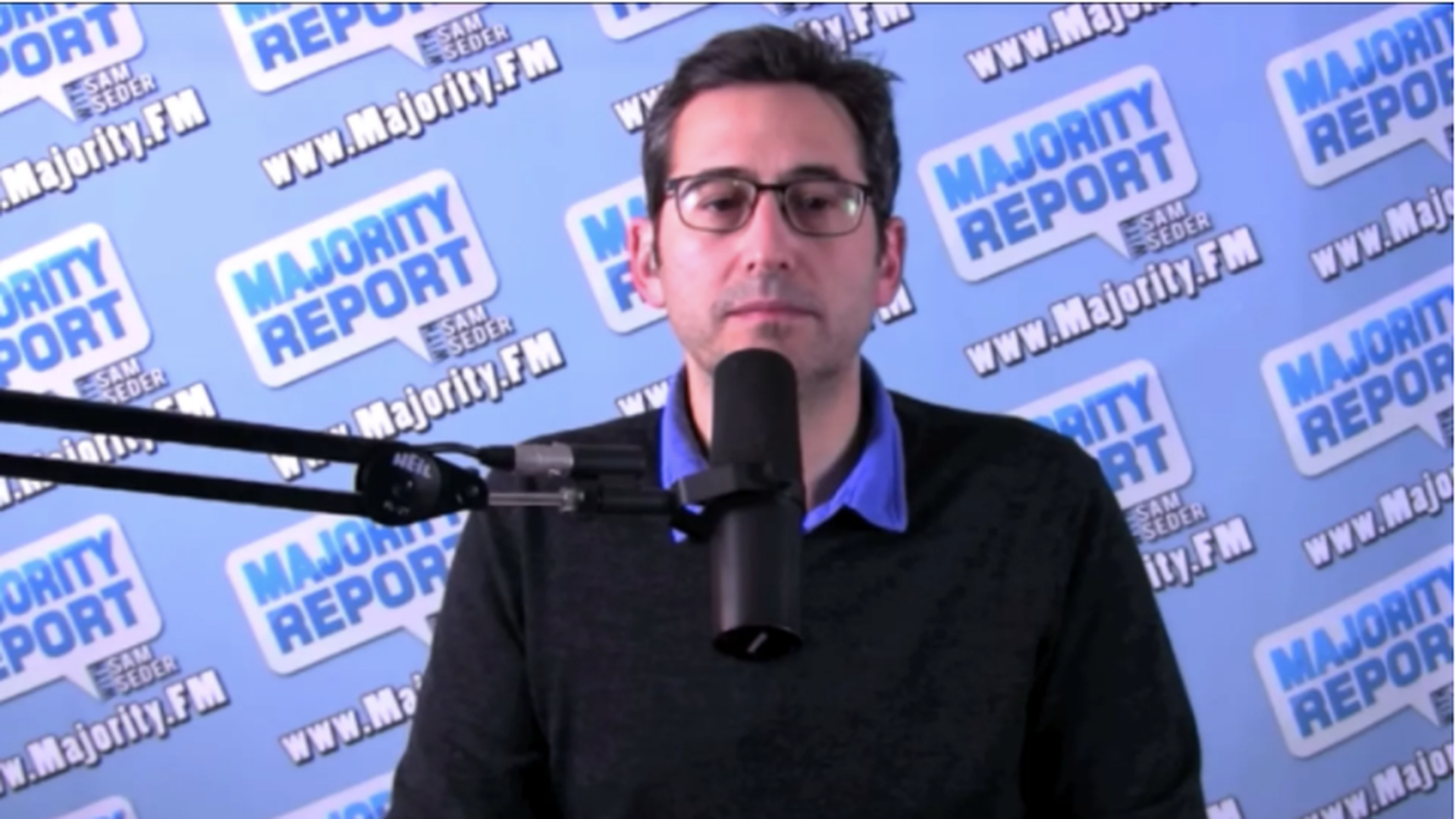
MSNBC is re-hiring radio host and TV personality Sam Seder as a contributor after firing him earlier this week when one of his tweets from 2009 was re-shared by "alt-right" follower Mike Cernovich, according to the Intercept.
Flashback: This isn't the first time that "alt-right" leaders have attempted to smear prominent progressives. The Intercept points out Obama's Department of Agriculture fired Shirley Sherrod after Andrew Breitbart posted clips, out of context, from one of her old speeches. Like Seder, Sherrod was ultimately offered her job back after the full speech was seen.
Seder's tweet: "Don't care re Polanski, but I hope if my daughter is ever raped it is by an older truly talented man w/a great sense of mise en scene." Seder has said the tweet was intended to mock those who advocated for easier sentencing for Roman Polanski, the accomplished film director who pled guilty to raping a 13-year-old and eventually fled to Europe to escape sentencing.
Seder said in a statement, "I appreciate MSNBC's thoughtful reconsideration and willingness to understand the cynical motives of those who intentionally misrepresented my tweet for their own toxic, political purposes."
MSNBC President Phil Griffin explained the decision, "We made our initial decision for the right reasons — because we don't consider rape to be a funny topic to be joked about. But we've heard the feedback, and we understand the point Sam was trying to make in that tweet was actually in line with our values, even though the language was not. Sam will be welcome on our air going forward."
Inthe age of Amazon, the world's largest retailer is changing its legal name from "Wal-Mart Stores Inc." to "Walmart Inc." effective Feb. 1, AP reports. Walmart this year tripled the number of items sold online from a year ago.
Wall Street Journal: "Other big companies have changed names to signal a shift in strategy to customers or investors. Steve Jobs in 2007 decided to shorten Apple Computer Inc.'s name to Apple Inc. as it moved into phones and other devices. Google Inc. became Alphabet Inc. in 2015 as the company branched out into more businesses beyond search, like self-driving cars and robots."
"A vigorous, stirring true-life thriller ... Steven Spielberg's latest film stars Meryl Streep and Tom Hanks in a drama about The Washington Post's role in publishing the Pentagon Papers," the Hollywood Reporter's Todd McCarthy writes (opens Dec. 22).
Income inequality — the stubborn curse of the current era and, many think, a key factor in the global uprising against establishment powers — appears to be on a solid, steady decline in the U.S., according to a new report.
Data: Indeed analysis of BLS monthly jobs data; Chart: Axios Visuals
Quick take: For more than a year, the wage gap has been closing between American workers with the least and the highest education—wages have been going up the most for workers who need it the most, according to Jed Kolko, chief economist for Indeed, the jobs website. And this year, the most chronically unemployed Americans began to return to work.
Retailers think this is the holiday season of the smart speaker, with Google, Amazon, and other tech firms spending big on marketing and discounts to get their voice-assistant technology into as many living rooms as possible.
David Watkins of Strategy Analytics tells Axios that 14 million smart speakers will be sold globally during the final three months of the year, driven by recent, heavy discounting of Google's Home and Amazon's Echo devices, as well as evidence that Alibaba's Genie is outselling expectations in China.
Why it matters: That is a lot of smart speakers: these devices tend to be bought one or two per home, and there are just 125 million households in the U.S.. Amazon and Google are going all out to move them, not because they earn a profit on heavily discounted sales, but to hook consumers and open up e-commerce and advertising revenue down the road.
Why retailers and brands should worry: Those revenues have to come from somewhere. One possibility is that they will be driven by new marketing spending by retailers and brands specifically aimed at these platforms; another is that these devices will motivate shoppers to do more shopping over the Internet.
Thumbs on the scale: According to Suzanne Tager, senior director of Bain & Company's retail and consumer products practices, Alexa-enabled Amazon devices steer customers toward Amazon private-label, in addition to items they have previously bought. Bain conducted a voice-ordering test across categories using Amazon Echo and found:
If a search falls within a category in which Amazon offers private label products, "Alexa first recommends the private-label products, even though these products represent only about 2%" of the total good sold from Amazon inventory, Tager says. Amazon did not respond to emails.
RBC Capital estimates that by 2020, 128 million Alexa-enabled devices will be active globally, meaning that a bias towards Amazon or other products on this platform could have a serious effect on the retail industry.
Google to the rescue? Chris Taylor, who formerly ran Target's experimental Store of the Future, cites retail partnerships involving Google Assistant as an example of what might work.
Walmart, Costco, Home Depot and Target all allow purchases through Google Assistant.
In a test, Gene Munster of Loup Ventures said he found that the Google Assistant's AI seems superior to Alexa's. He said Assistant understood questions better, and that it is rapidly improving. This will become more important as these companies attempt to add capabilities, like complex queries and understanding conversations with multiple participants.
But Amazon is not without partners of its own—Best Buy and Starbucks are working with Alexa to sell their products. Pop up stores that Amazon is opening with Calvin Klein in New York and Los Angeles also feature Echo in the dressing rooms.
And so far Amazon's lead in the smart speaker race is a commanding 71% market share to Google's 26%. And according to Technalysis Research, 69% of users detect little to no accuracy differences between the assistants.
A rock and a hard place: Tager says that competition resembles "the early days of a classic platform race," where tech companies compete to lock in both users and providers of goods and services.
The creation of dominant, high-tech platforms should be eyed warily by those who will be forced to compete or collaborate with those platforms, Tager said.
If voice becomes a truly popular means of commerce, brands and retailers will have to figure out how to negotiate yet another layer of technology inserted between them and the customer. "Instead of making sure you're on the first page of search results, you'll have to make sure you're the one or two items that Alexa suggests you buy," she said.
Taylor said voice may follow a track similar to the invention of social media—remaining a curiosity for many but a crucial promotional tool for those who figure out how to best reach its most dedicated users.
South African retail conglomerate Steinhoff, which owns the U.S.-based MattressFirm, announced Wednesday that CEO Markus Jooste had tendered his resignation from the company after the board learned of information relating to "accounting irregularities requiring further investigation." Steinhoff is the world's second-largest furniture dealer with operations in Europe, Africa, Australia, and the U.S.
Why it matters: The company's stock fell more than 60% during trading Wednesday in Frankfurt, where the stock is listed. "This story has the smell of Enron, which rocked financial markets, starting in 2000," Writes Raymond James analyst Budd Bugatch in a note to clients Wendesday. "It is too soon, obviously, to know the ultimate impact of this mess."
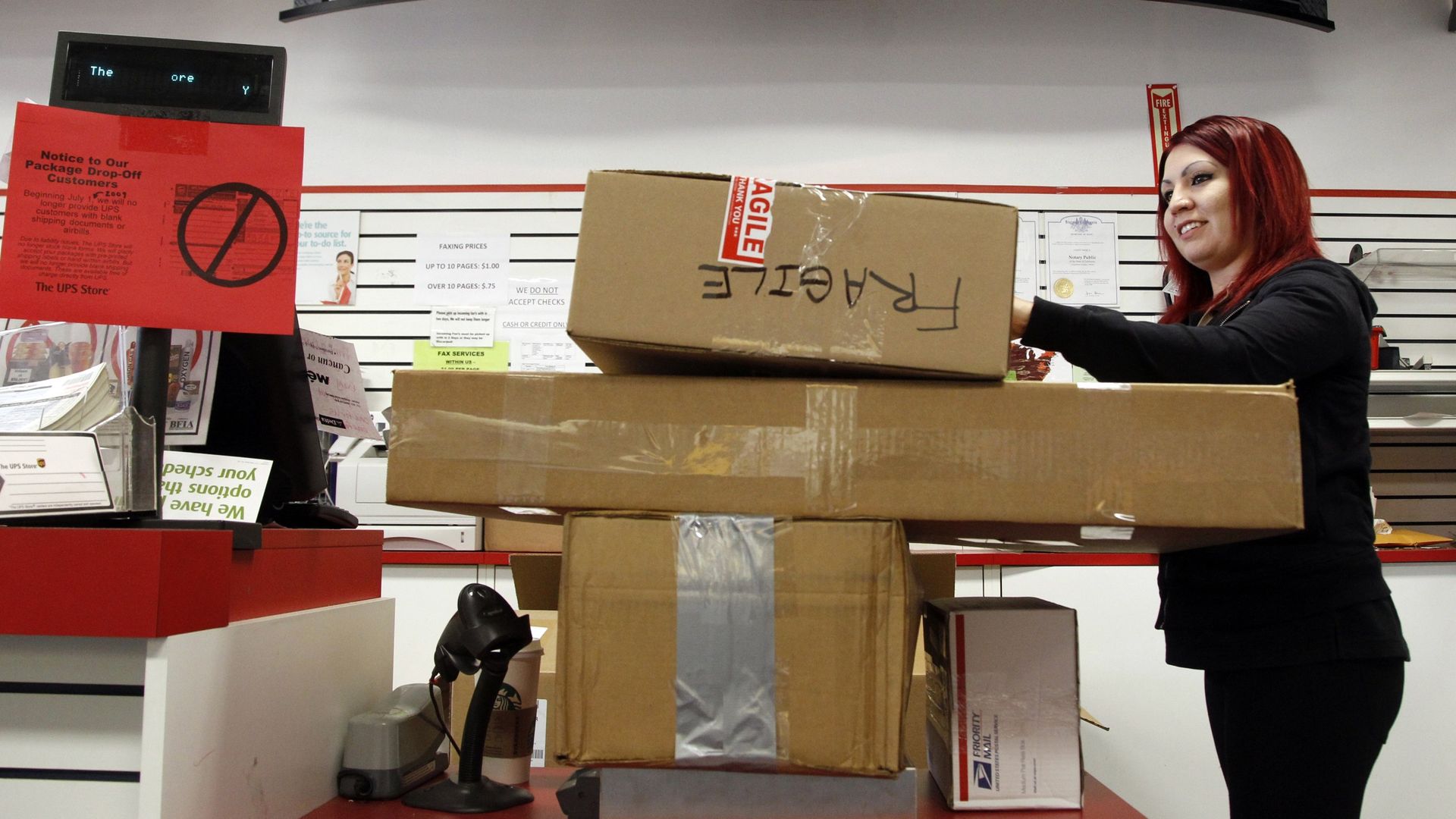
To cope with the surge of online holiday shopping and lagging delivery, the United Parcel Service has told drivers at more than 100 different centers that they may ask them to work 70 hours over 8 days instead of 60 over 7 days. UPS has also added 1-2 days to some transit times and surcharges for packages shipped during peak times, according to Wall Street Journal.
Why it matters: In order for the online shopping boom to last, delivery services have to keep up with the demand. UPS has already invested billions in new warehouses and automation, but ShipMatrix, a company that analyzes shipping data, said that only 89.2% of UPS packages arrived on time last week.