Saturday's economy stories

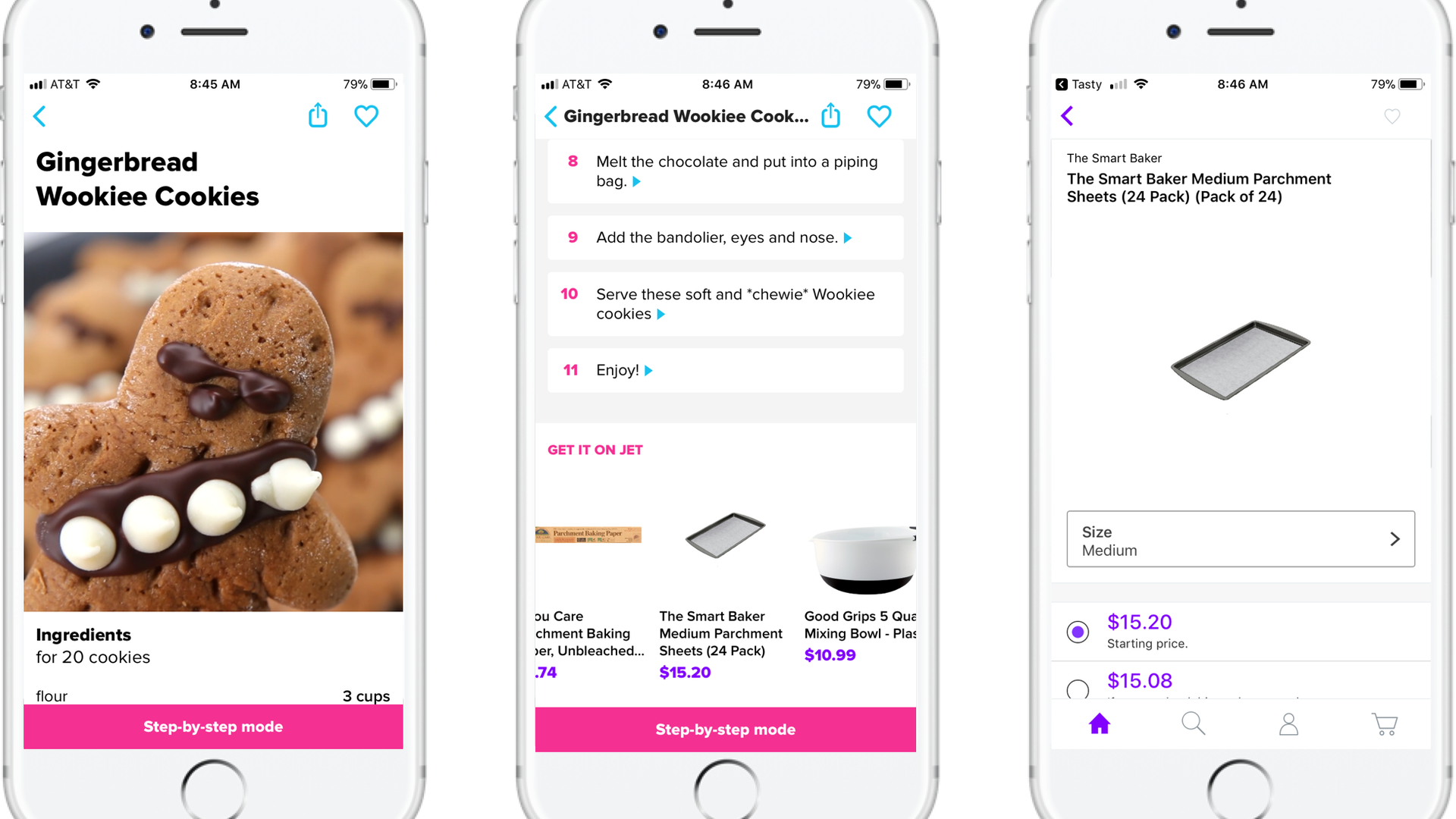
The tech behind Tasty's deal to sell cooking items via Walmart
Behind Walmart and Jet.com's new deal with Tasty, the BuzzFeed-owned app for recipes and food videos, is an e-commerce tech startup named Button.
- How it works: Button, a three-year-old startup based in New York, is connecting Tasty's app to Walmart via deep-linking, a mobile app technology akin to hyperlinks for web pages. Through deep-linking, tapping on an item in Tasty's app leads directly to its purchase page in Walmart or Jet's apps, avoiding the need to search for it there.
- Why it matters: Though critical in connecting mobile apps to each other and to websites for growth (e.g., app downloads, referrals, better attribution) and commerce, few companies have succeeded at building a business out of the technology. While some like Button and Branch seem to have cracked it, many others like URX (acqui-hired by Pinterest) and Quixey just couldn't.

YouTube will launch a new music subscription service
YouTube, the Google-owned video platform, plans to launch a new music subscription service in March 2018, Lucas Shaw of Bloomberg reports. Warner Music Group, has already signed on, sources tell Shaw, and YouTube is already in talks with other major record labels, like Sony Music Entertainment and Universal Music Group.
Why it matters: It's a foray into the subscription music scene that's primarily been dominated by Googls's biggest competitors in the space: Apple, Spotify and to an extent, Amazon. YouTube's biggest challenge will be striking deals with music groups, which in the past have argued that they have not been fairly compensated in deals with YouTube. Roughly 25% of music streaming happens on YouTube.

Tencent and Spotify swap stakes
Music streaming services Spotify and Tencent Music Holdings have agreed to invest minority stakes in one another, both companies announced on Friday.
Why it matters: The investments could allow each company to expand their global footprints. Tencent Music's parent company is a dominant force in China's social internet economy, and has recently made investments in American companies like Snapchat. Spotify has been working to go public through a direct listing, and an investment from Tencent could help convinvce shareholders that it has global appeal.
An industry-level look at the U.S. economy
This interactive chart shows a sector-by-sector look at the U.S. economy, tracking employment and wages since 2006, just before the crash.
How to read it: The circles indicate industries, sized by their average number of employees over time. From there, the chart is doing two things — tracking jobs and earnings from 2006 to 2017 (the up and down movement of the circles shows the change in number of jobs; left to right is the change in earnings), and projecting forward from 2014 to 2024 (signified by the intensity of the colors of the circles).
Data: Bureau of Labor Statistics; Note: Most growth projections are made at the same level of industry detail shown here. In cases where no growth projection exists, the number shown represents one detail level up; Chart: Chris Canipe / Axios
Go deeper: A snapshot of the jobs malaise