The number of major worker strikes in the U.S. rose to its second highest level in two decades in 2022, per a government report out Wednesday.
Why it matters: The strength of the labor market and the rise in popularity of unions drove up the numbers. COVID-era issues, like short-staffing, burnout and pay that didn't keep up with inflation, also pushed workers to the picket lines.
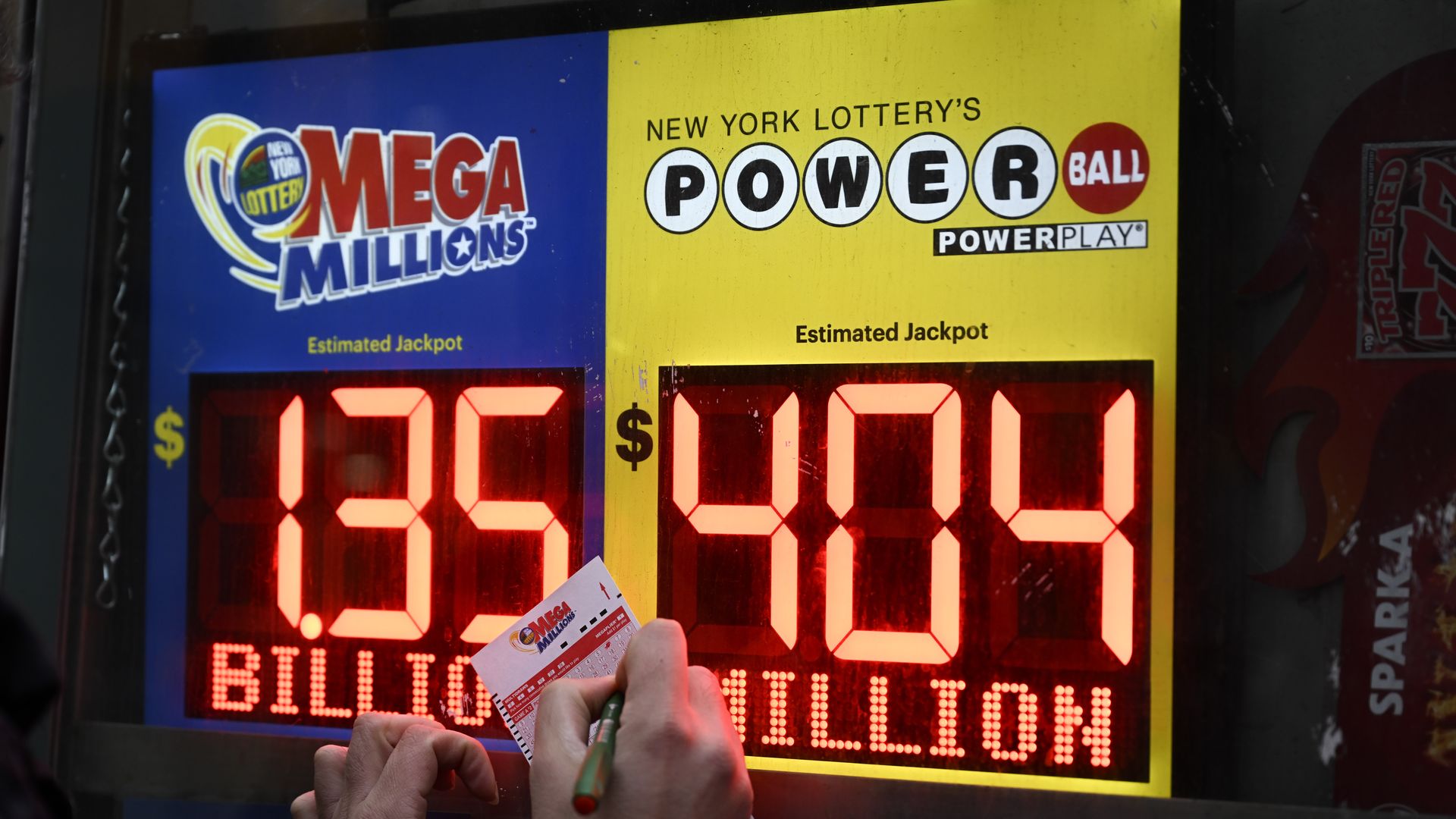
The sole winner of the $1.35 billion Mega Millions jackpot has claimed the winning ticket but remains anonymous, lottery officials announced Wednesday.
Driving the news: The winner of the Jan. 13 drawing — the fourth largest jackpot in U.S. history — chose the cash option, a one-time, lump-sum payment of approximately $723.6 million before taxes.
A protracted showdown over the federal debt ceiling could "pose significant risks to the financial system and the broader economy," according to minutes of a closed-door meeting of Federal Reserve officials earlier this month.
Why it matters: In the event of a prolonged debt ceiling standoff, the market for U.S. Treasury bonds could face severe strains.
The Information is launching a new premium subscription offering for professionals that includes access to exclusive charts, proprietary data and reader surveys.
The big picture: Thebusiness and tech-focused digital publication's latest addition to itssubscription portfolio is meant to add value for readers and drive revenue, the company's CEO and founder Jessica Lessin told Axios.
Starbucks announced Oleato — a new line of beverages infused with a spoonful of Partanna cold-pressed, extra virgin olive oil — is rolling out in Italy this week.
Driving the news: The Seattle-based coffee giant calls the addition of the unexpected ingredient a "transformational innovation."
There's a showdown brewing between the U.S.'s largest crypto exchange and its main regulator, the Securities and Exchange Commission (SEC).
Driving the news: Coinbase Global's earnings report Tuesday night delivered what was largely expected—revenue eroded by crypto winter and net profit losses. The surprise was buried in the exchange's annual filing, and it signals that it's digging in for a fight.
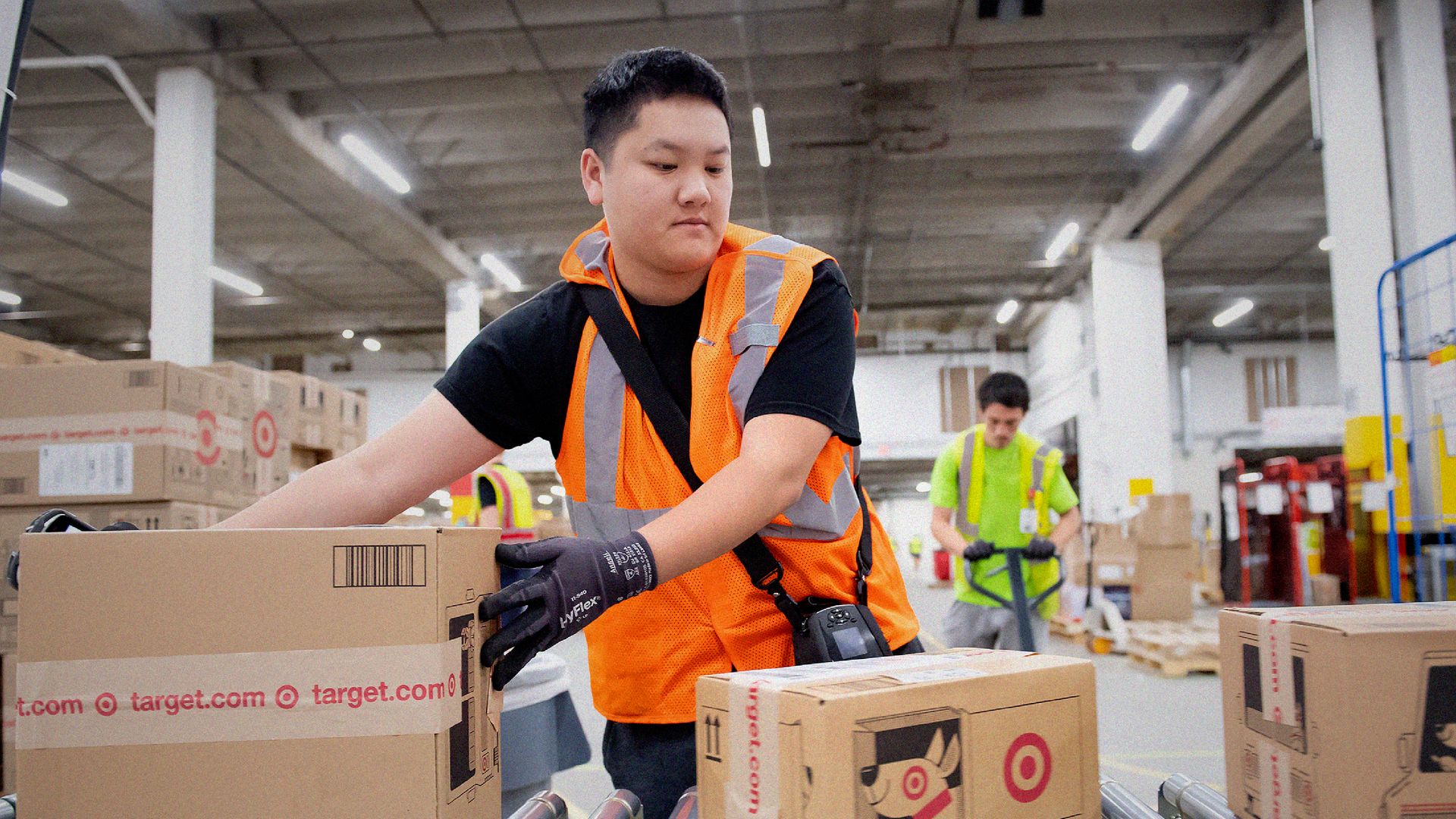
Target is looking to get online orders to customers faster by expanding next-day delivery across the country.
Driving the news: The Minneapolis-based retailer announced Wednesday that it will invest $100 million to scale its supply chain sortation center network by opening six additional centers by the end of 2026.
Mortgage rates have risen sharply in recent weeks, reversing what had been a steady drop from nosebleed levels. One result, predictably, appears to be a stomping out of what little activity was starting to emerge in the housing market.
That's one takeaway from the latest index of mortgage applications — released by the Mortgage Bankers Association — which recorded the biggest weekly drop (down 18% from the prior week) in eight years. The index is at its lowest level since 1995.
By the numbers: At the beginning of February, the 30-year fixed rate was 6.19%. Since then, it has jumped almost a half percentage point to 6.62%, as of last week, according to the MBA. That's the highest since November.
What they're saying: "This time of the year is typically when purchase activity ramps up, but over the past two weeks, rates have increased significantly as financial markets digest data on inflation cooling at a slower pace than expected," Joel Kan, the group's deputy chief economist, said in a release.
"The increase in mortgages rates has put many homebuyers back on the sidelines once again, especially first-time homebuyers who are most sensitive to affordability challenges and the impact of higher rates."
One piece of anecdata: Speaking to investors Wednesday morning, Toll Brothers CEO Douglas Yearley said that over the past week, the homebuilder has seen the most deposits in a month, even as rates rise.
"Traffic is really good. Web activity is really good. We have continued to create urgency in the sales center because we are dropping incentives. We are raising prices, and the buyers are out," Yearley said.
You may recall the news last week of a blockbuster 3% surge in January's retail sales, which rippled across global markets. But that report actually showed retailers had $121 billion less in January sales than they did in December — a 16% drop.
The difference is a result of the seasonal adjustment process that is applied to most major data — and right now, it may be sending misleading signals about how the economy is doing at the start of 2023.
Why it matters: A series of hot reads on growth and inflation have sent markets reeling this month. But at least part of that heat appears to come from shifts in seasonal patterns, making this winter's numbers look gaudier than they are.
There's little doubt that the economy has gained momentum so far this year, but it's less clear how much of that is real.
How it works: If statistical agencies didn't undertake seasonal adjustments, the numbers they produced would be highly misleading.
For example, there would be an apparent boom in consumer spending and hiring every November and December, tied to the holiday season — and then a depression each January as sales fall back to earth and seasonal help is dismissed.
But those adjustments are based on past results, meaning they are slow to catch on if seasonal patterns change.
So, for example, if 2020-21's pandemic supply shortages caused people to start their holiday shopping earlier than usual, the seasonal adjustment would exaggerate the strength of October's retail sales number and depress November and December.
It would also make January's figures look much stronger than the reality, because the falloff in spending from December to January would be less pronounced than seasonal models predict.
That looks to be exactly what happened in last week's retail data, which after seasonal adjustments was negative in November and December, and then sharply positive in January.
Overall retail sales in January were 0.7% higher than in October and, after seasonal adjustment, more consistent with steady gains than a January boom.
Between the lines: Weather can compound seasonal distortions. In a normal January, frigid temperatures and snowstorms disrupt economic activity in large parts of the country. Seasonal adjustments account for that.
But this has been an uncommonly warm winter, which means seasonal adjustments increase reported activity above and beyond the true underlying trend.
A San Francisco Fed model that adjusts reported jobs numbers for weather effects found the nation would have added around 390,000 jobs in January — not the 517,000 the Labor Department reported — had it not been a warm winter.
The bottom line: "Right now, it's difficult to ascertain whether COVID-induced consumer behavior changes and business practices are altering seasonal data adjustments, or if the real underlying economic activity is as strong as some recent economic indicators suggest," said Doug Duncan, chief economist at Fannie Mae.
JPMorgan Chase is restricting its staff's use of OpenAI's ChatGPT chatbot, a person familiar with the matter confirmed to Axios.
Why it matters: ChatGPT has generated buzz over its potential for countless applications, but it's also raising concerns about its capability to fuel online misinformation.
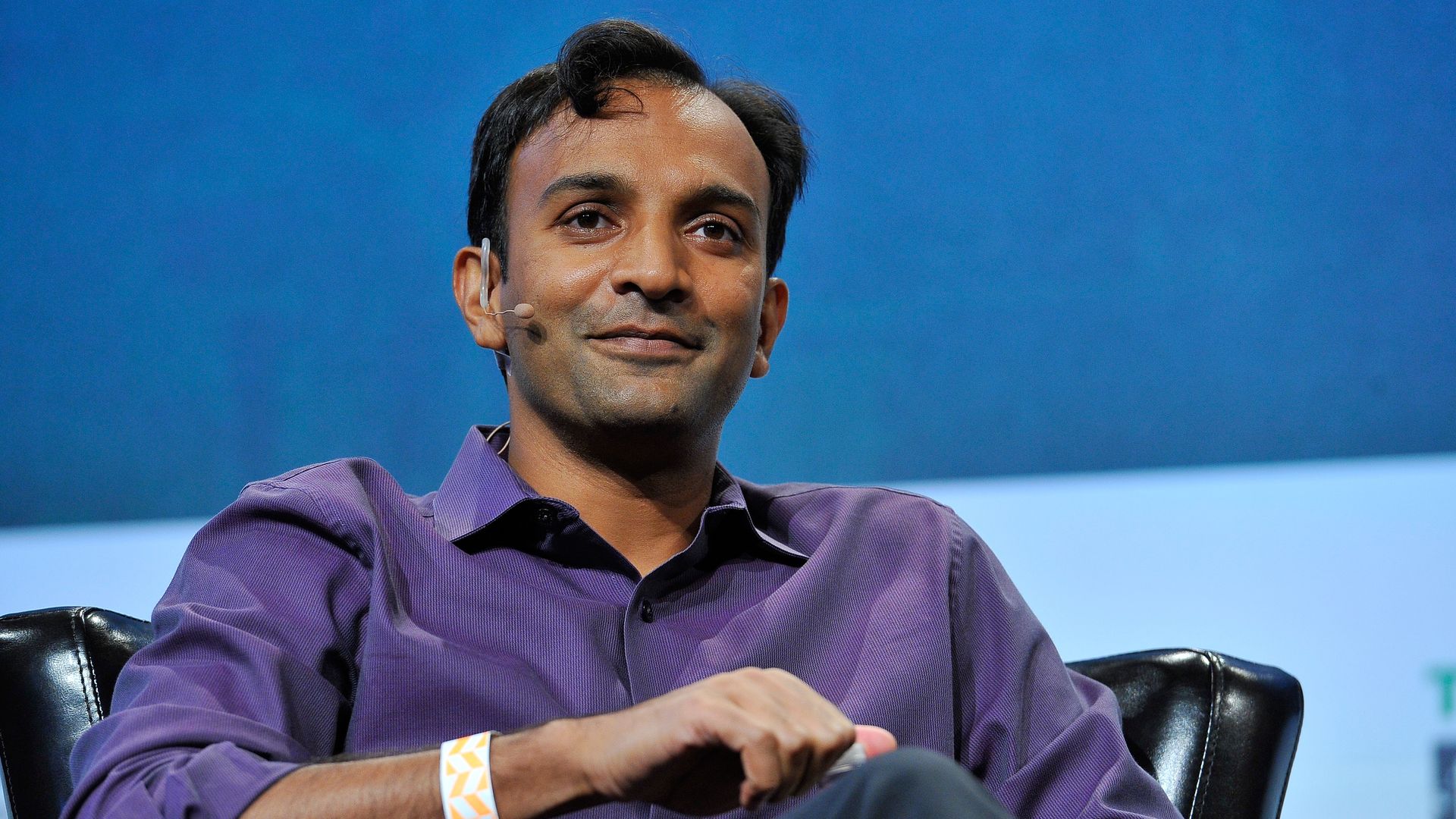
DJ Patil, the first person to serve as U.S. chief data scientist, tells Axios that he's joining venture capital firm GreatPoint Ventures as a general partner.
Why it matters: Patil has long floated around the periphery of the VC industry. He's been an advisor and angel investor who wrote an early check into Figma (being acquired for $20 billion by Adobe), but this is the first time he's taken a full-time position in the sector.
Looks likea lot of folks may be getting raises this year, according to a Payscale survey out Wednesday morning.
Why it matters: Who doesn't love a salary increase? These numbers look big, but more employers are unsure about their plans in 2023 than last year. And with inflation running at around 6% in the U.S. year over year, some workers are barely keeping pace.
Coveting a pair of Travis Scott Jordans or Panda Dunks? You just might be able to snag them for a reasonable price in the resale market — quite a turnaround from a year ago.
Why it matters: Price declines are signaling that the froth has left the market, leading sneaker heads and analysts alike to wonder if the market is crashing — or just normalizing.