Data: Insurance Institute for Highway Safety; Chart: Erin Davis/Axios Visuals
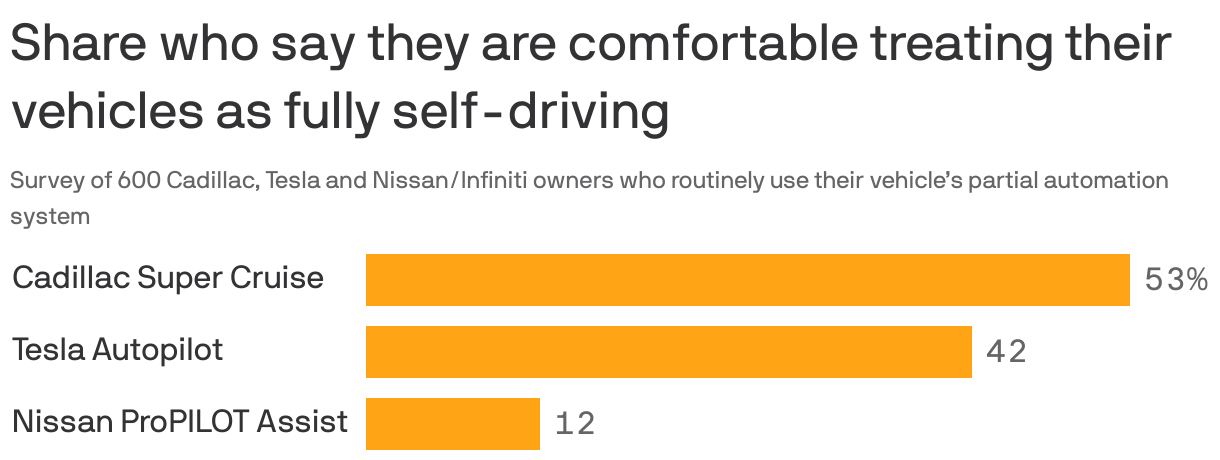
Drivers are putting too much faith in systems designed only to help them navigate the road, according to an automotive safety group.
Driving the news: The Insurance Institute for Highway Safety reports that 53% of users of Cadillac's hands-free Super Cruise are comfortable treating it like a full self-driving system, while 42% of users of Tesla's semi-autonomous Autopilot system do the same.
Consumers are stomaching steep price increases in junk food — if PepsiCo's earnings are any indication.
Why it matters: The effect of inflation on people's spending is a key determinant in the economy's well-being — and we'll find out the latest on Thursday when the federal government reports the Consumer Price Index figures for September.
Coin Center filed suit against the U.S. Treasury on Wednesday alleging that it has exceeded its authority in sanctioning the Ethereum-based privacy app, Tornado Cash.
Why it matters: Treasury's Office of Foreign Asset Control set up a legal quandary when it treated Tornado Cash, which is an autonomous smart contract that runs itself on the Ethereum blockchain, like a person or organization. Coin Center's suit will test the U.S. government's reasoning.
Roboadvisors aim to take the guesswork out of portfolio management, using a computer algorithm to determine the makeup of an individual's investments like stocks and bonds. And now they're picking up crypto.
Driving the news: Betterment — one such roboadvisor with more than $30 billion in assets under management — rolled out a set of four crypto portfolios this week, aimed at "the crypto curious," Jesse Proudman, vice president of crypto investing at Betterment, tells Axios.
Google has approved Donald Trump’s Twitter-like social media app Truth Social for distribution in the Google Play Store, Axios has learned.
Why it matters: Nearly half of U.S. smartphone users rely on Google’s Android operating system, and the Google Play Store is the primary way Android users can access – and download – apps to their phones.
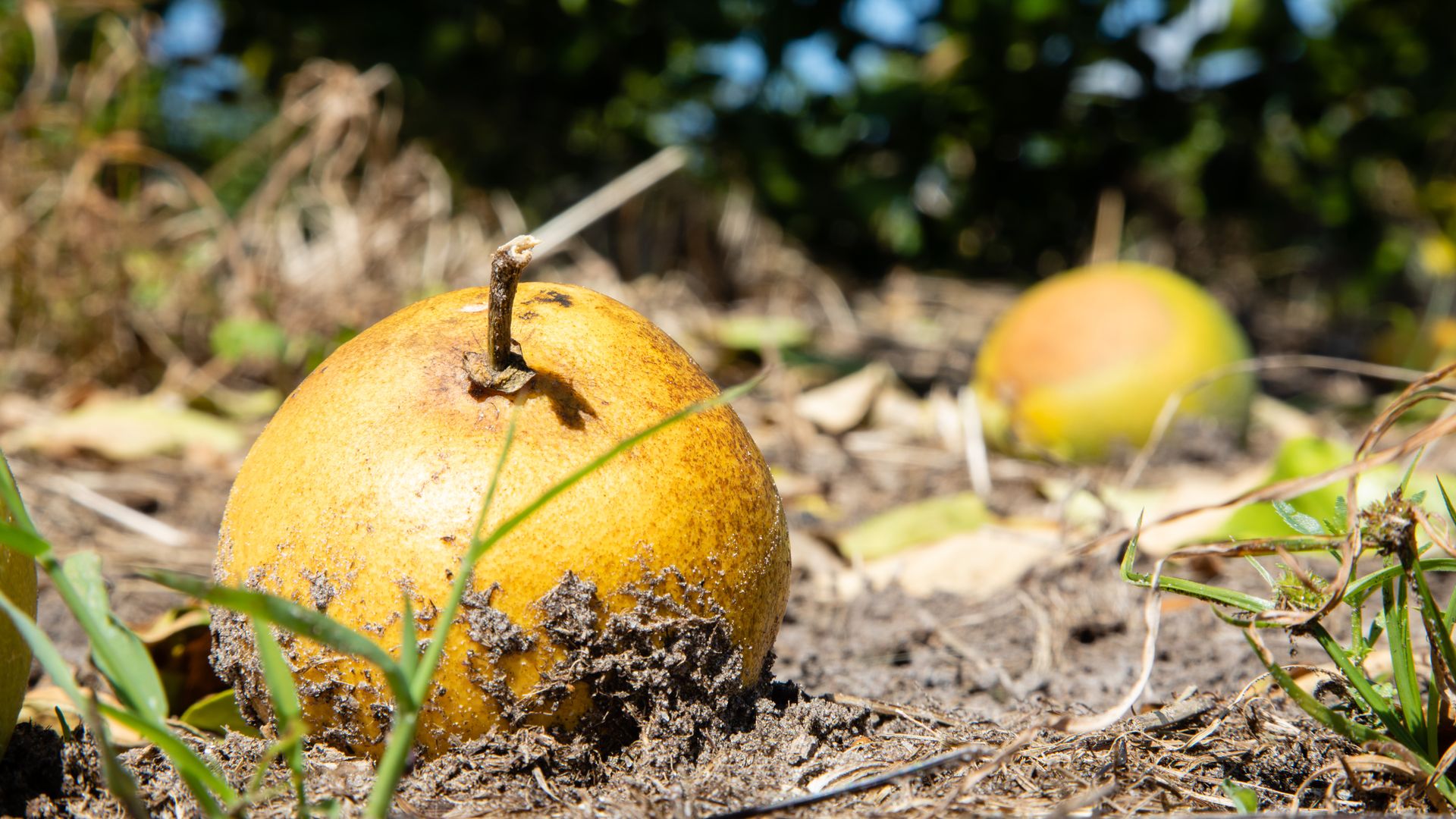
Florida’s orange crop this year will be nearly a third smaller than last year, and one of the smallest in decades after Hurricane Ian devastated citrus groves last month, the U.S. Department of Agriculture said Wednesday.
Why it matters: A smaller citrus crop could lead to higher prices, and orange prices have already increased 14.4% over the past year with inflation as of August, according to the Consumer Price Index.
Federal funds "helped save American cities" after the COVID-19 pandemic sapped their tax revenue, but inflation is tempering their financial health, the National League of Cities (NLC) said in a Wednesday report.
Why it matters: The American Rescue Plan Act (ARPA) and the new infrastructure law have been political footballs, but U.S. cities would be in a recession without them, according to the prominent lobby group.
Thursday's consumer price index data is more important than most for millions of retirees and other Social Security recipients. That's because, under federal law, it will determine how large a cost-of-living adjustment (COLA) they will receive at the start of 2023.
Why it matters: The adjustments were created to ensure that Social Security beneficiaries don't see their monthly checks eaten away by inflation. But in the past year, that hasn't happened: Prices have risen at a blistering pace since the last COLA — a huge blow for recipients facing rising costs for food, medical care and other expenses.
Global wealth is on course to decline more than 2% in 2022, marking its first significant decrease since the 2008 financial crisis, according to a new report published by Allianz on Wednesday.
Driving the news: Noting that the war in Ukraine has “choked” the post-pandemic economic recovery, the report stated that 2022 will mark a definite “turning point.”
Brookfield Renewable Partners and uranium fuel supplier Cameco said that they've agreed to buy Pennsylvania-based nuclear power company Westinghouse Electric for $7.9 billion from Brookfield Business Partners.
Why it matters: This reflects renewed global interest in nuclear power, including new U.S. federalincentives, driven by both geopolitical and climate concerns.
Private equity firm Thoma Bravo on Tuesday announced plans to buy identity management firm ForgeRock for $2.3 billion. And then both parties kept their mouths curiously closed.
Why it matters: This could be the latest building block of a digital identity giant, but right now we're left with more questions than answers.
Scribble Ventures, a two-year-old early-stage Silicon Valley firm, has raised about $55 million for its second fund and just over $29 million for an opportunities fund.
Why it matters: Scribble founder and managing director Elizabeth Weil is still one of the few female solo general partners and she has been in the industry for nearly two decades.
Why it matters:Free coffee and miles. Delta SkyMiles and Starbucks Rewards members can get more value with added benefits by linking their loyalty accounts together, the companies said Wednesday.
Germany's once-massive trade surplus has all but melted away, as a result of surging energy costs and the weak economies of its main European trade partners.
Why it matters: The declining surplus shows how disruptions over the last year — Russia's invasion of Ukraine, the related energy shock, and China's COVID lockdowns — are upending the basic rules of how the global economy has worked in recent decades.
The rental market is chilling out after an explosive run last year.
Why it matters: Soaring rent prices have been a major driver of inflation. This could be a sign that those price pressures are starting to ease — but it could take time before the consumer price index numbers reflect the shift.
Building wealth via homeownership is a time-tested American tradition. Now a new project is trying to replicate that mechanism in the rental market.
Why it matters: Most people who rent homes in the U.S. do so because they're priced out of the housing market. That excludes them from the forced-savings device that is a mortgage.
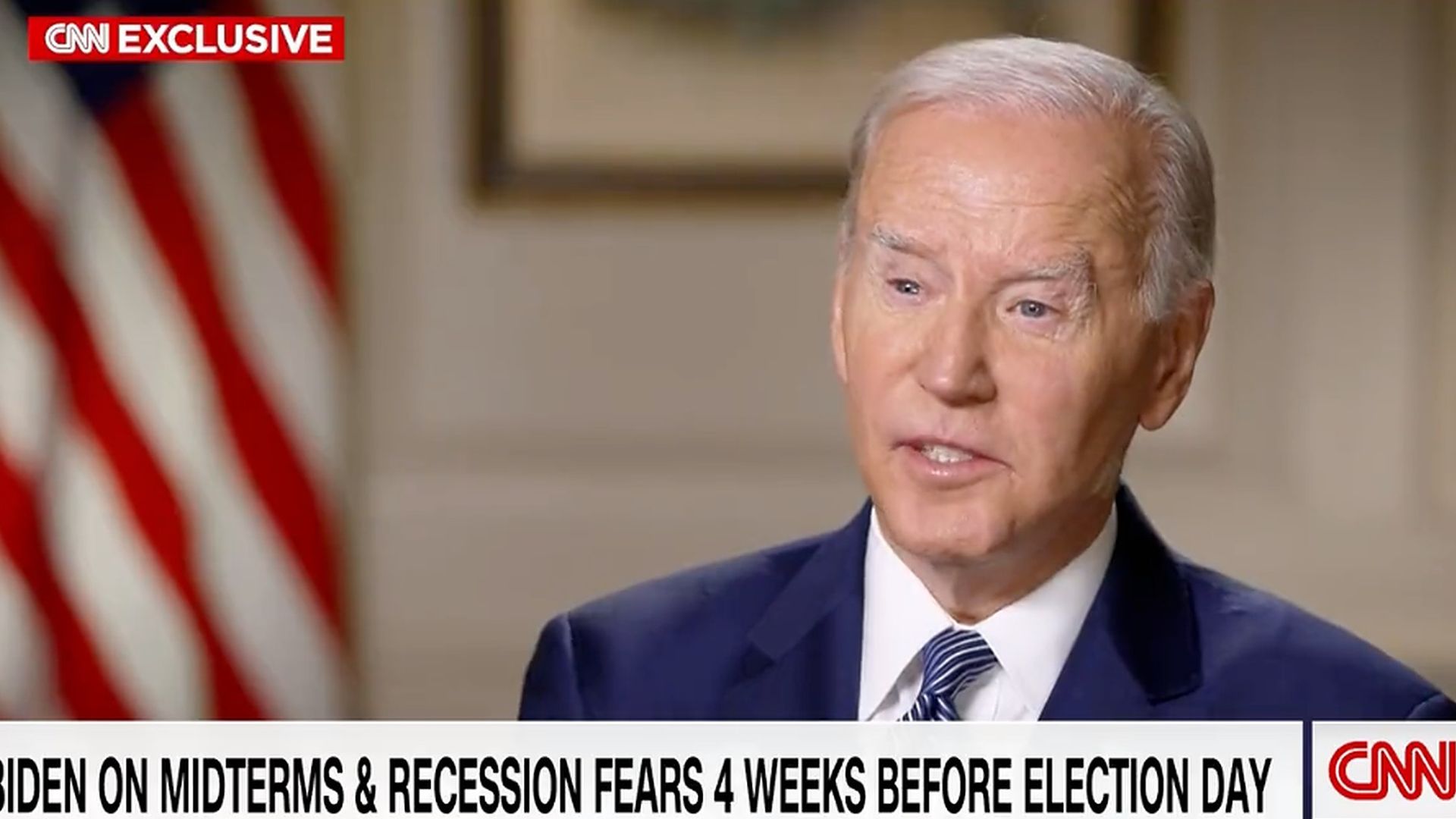
President Biden said during a CNN interview broadcast Tuesday night "a very slight recession" is possible for the U.S., but he doesn't think it will happen.
Why it matters: With fewer than 30 days until the midterm elections, Biden and the Democrats have a shrinking window of time to assure Americans that the economy remains healthy.



/2022/10/12/1665602635648.gif?w=3840)