What’s happening: Candymaker Mars Wrigley is giving its fictitious M&M's characters a makeover. Most notably, the green M&M is ditching high heels for sneakers in the redesign.
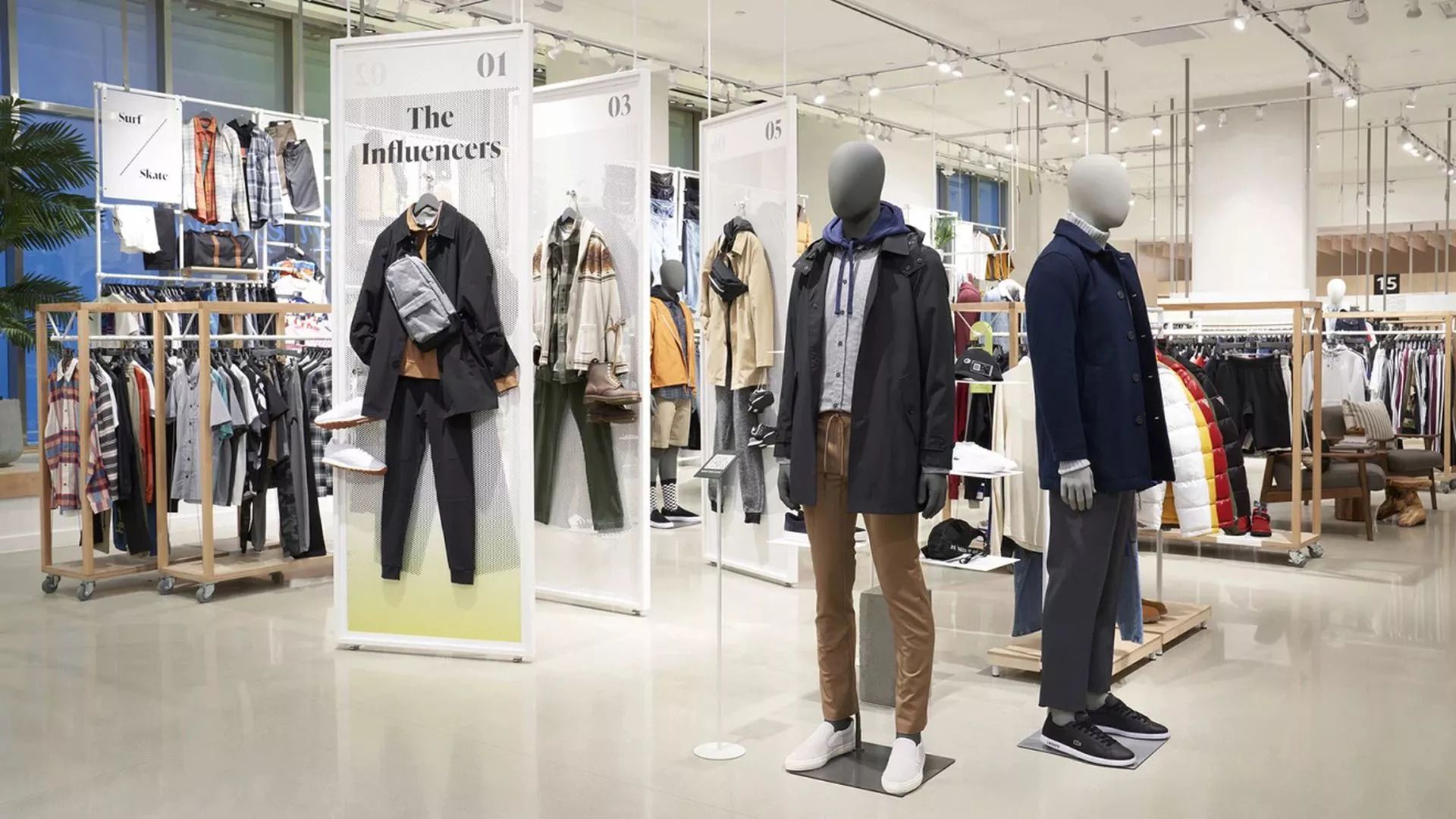
Having already launched physical bookstores and grocery stores despite upending those fields online, Amazon is now opening a clothing store.
Why it matters: The move to open the store, which Amazons calls its first, in Los Angeles later this year underscores the company's ambition to continue expanding its physical footprint, building lucrative connections between its digital platform and new brick-and-mortar locations.
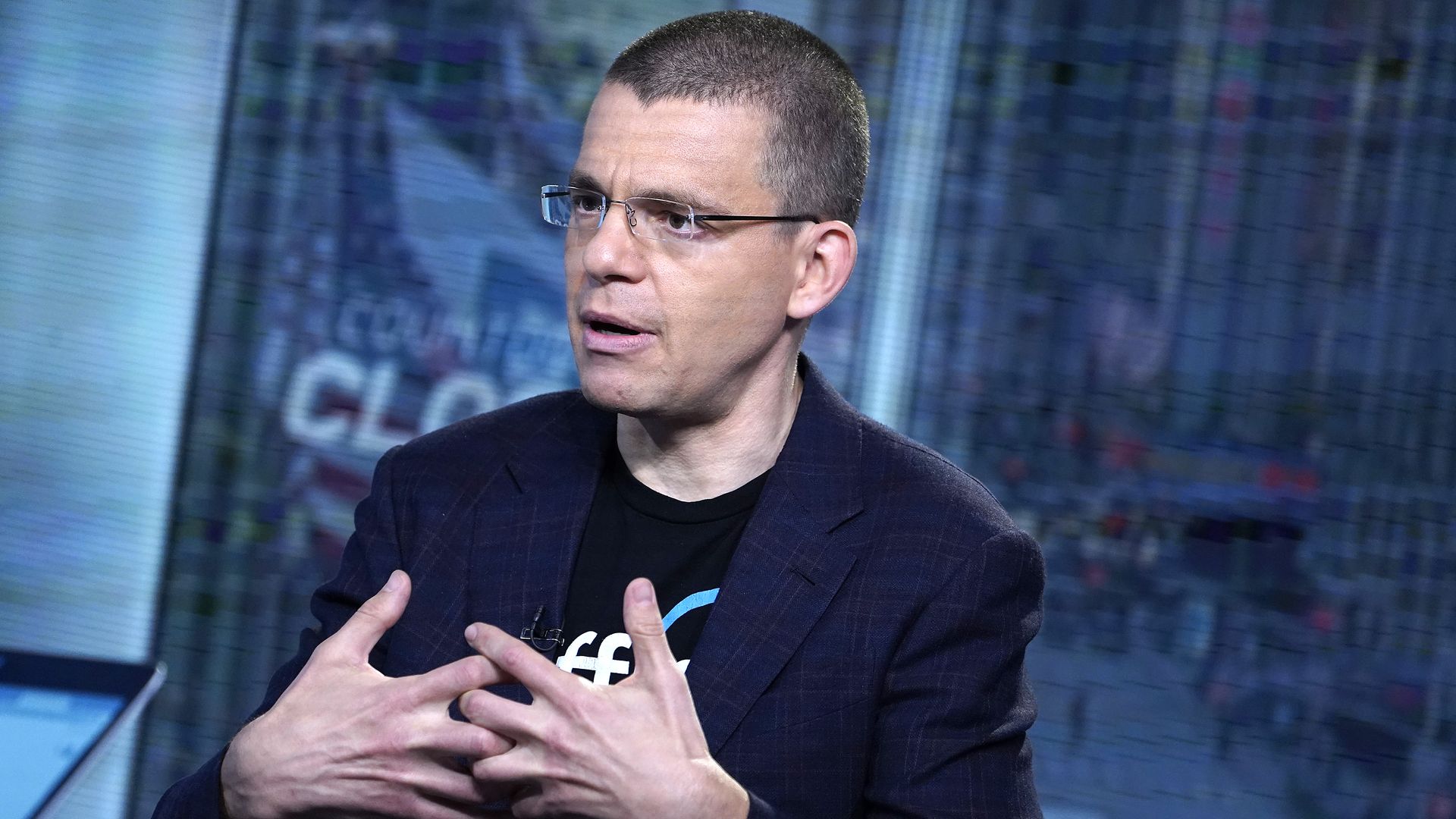
Max Levchin, the PayPal co-founder who now runs buy-now-pay-later pioneer Affirm, says he doesn't understand the stock market's ups and downs. But he isn't sweating it.
What he's saying: "In terms of operating as a public company, I heard lots of CEOs tell me everything changes or everything's very different," Levchin told Axios' Ryan Lawler during the Axios Pro kickoff event on Thursday. "I think we're one of the exceptions, in the sense that we were already a very regulated entity, we were already auditing ourselves."
Netflix's stock was down nearly 20% in after-hours trading Thursday, after the tech giant forecasted slowed user growth for the first quarter of 2022.
Why it matters: The slowed user growth suggests Netflix's enormous investment in new content may not be able to drive as many new subscribers as it used to amid increased streaming competition, especially in the U.S.
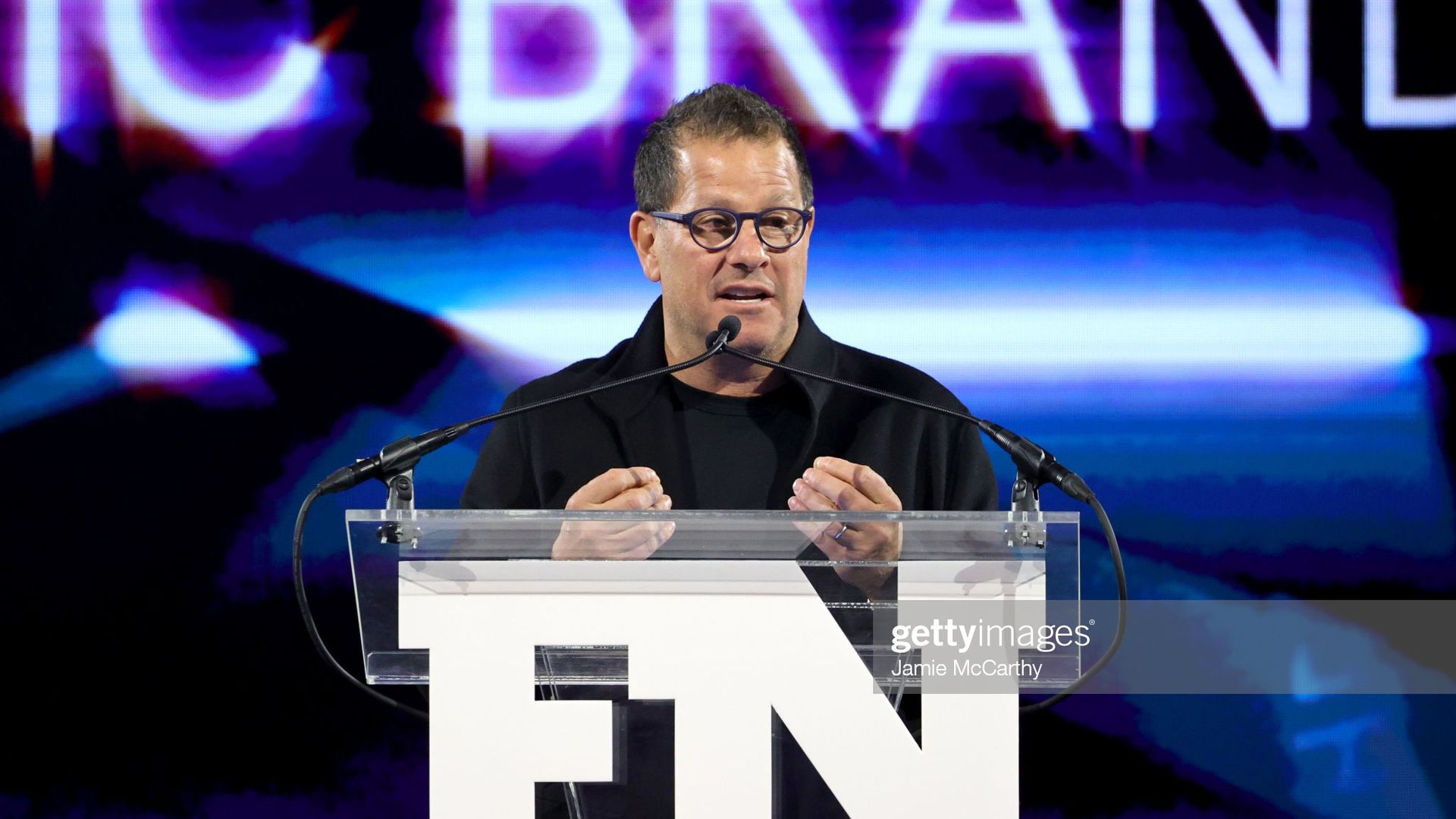
Authentic Brands Group plans to let "Reebok be Reebok" after acquiring the sneaker brand from Adidas on March 1, ABG founder and CEO Jamie Salter told Axios' Richard Collings during Thursday's Axios Pro kickoff event.
What he's saying: "We're going to focus very big on the classic entertainment fashion side and the other 50% on the athletic side," Salter said.
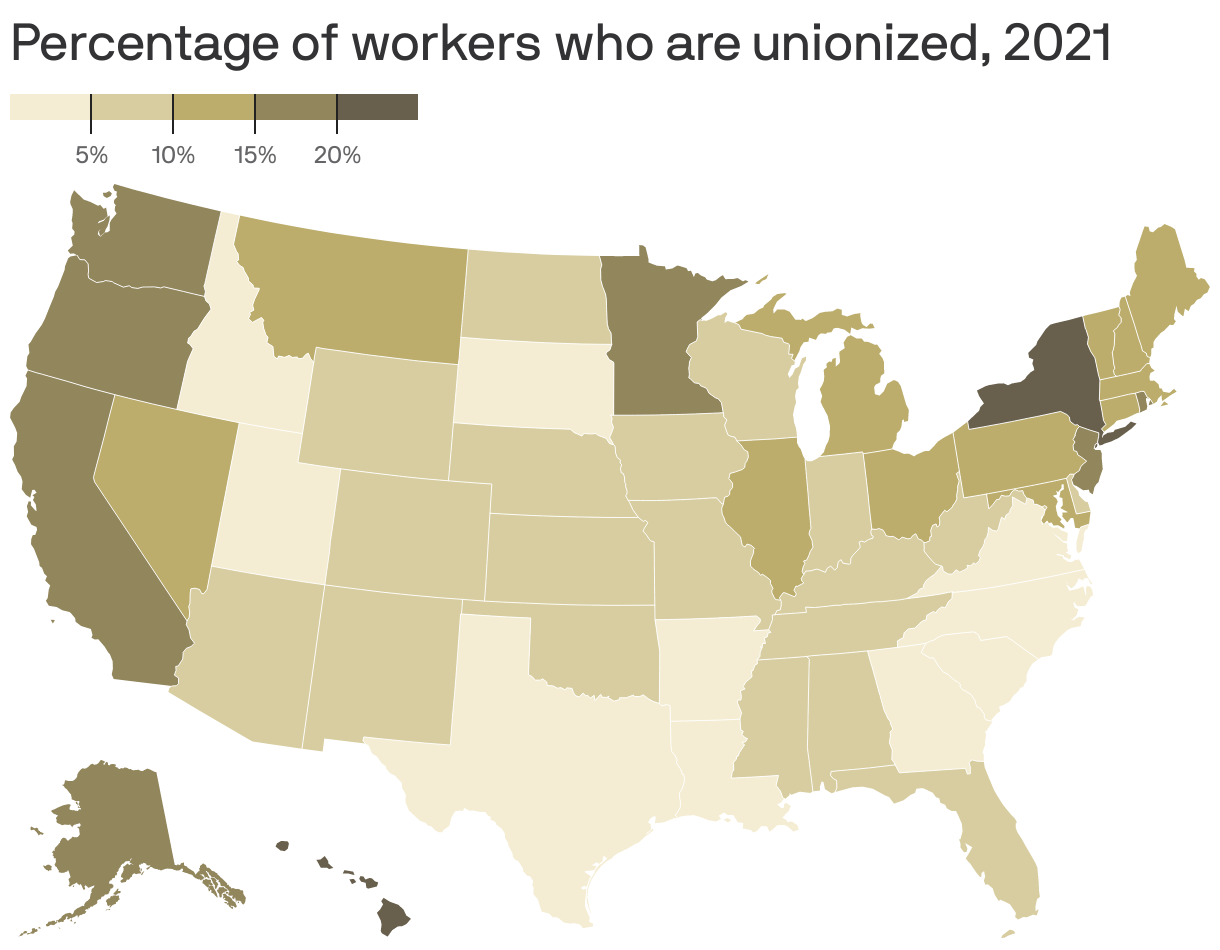
Note: Unionized workers are members of a labor union or similar employee association; Data: BLS ; Map: Baidi Wang/Axios
The number of wage and salary workers belonging to unions declined by nearly 241,000 people in 2021, according to Bureau of Labor Statistics data out Thursday.
Why it matters: The union membership rate declined back to 2019 levels in 2021 to 10.3%, from 10.8% in 2020.
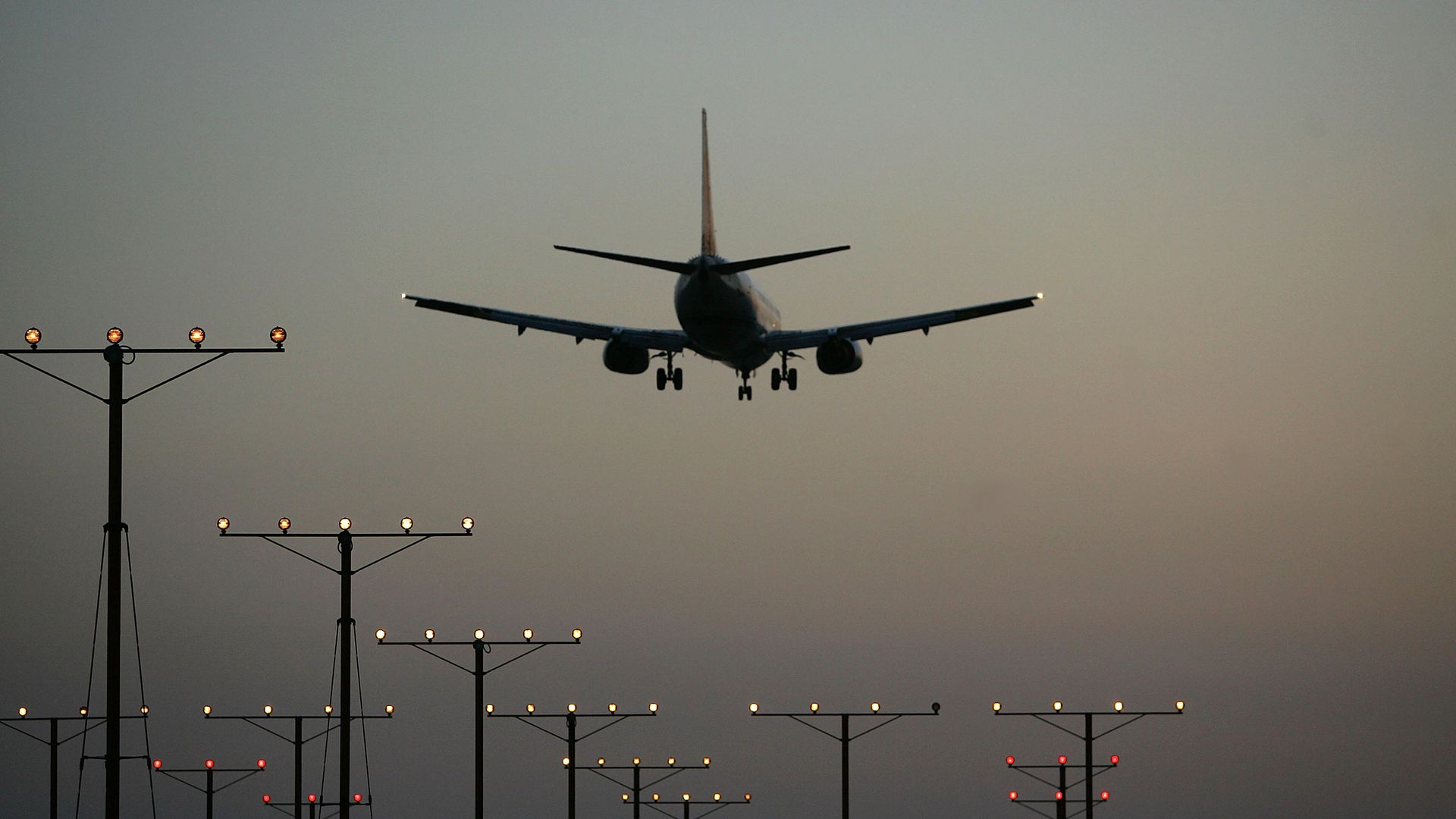
The Federal Aviation Administration said Thursday it had approved nearly 80% of the U.S. commercial fleet to perform low-visibility landings at airports with new 5G services after fears of signal interference limited 5G rollout.
Why it matters: The FAA approvals will help provide more certainty after the agency raised fears that 5G signals could reduce the accuracy of certain equipment, known as radio altimeters, that helps planes land and take off in inclement weather.
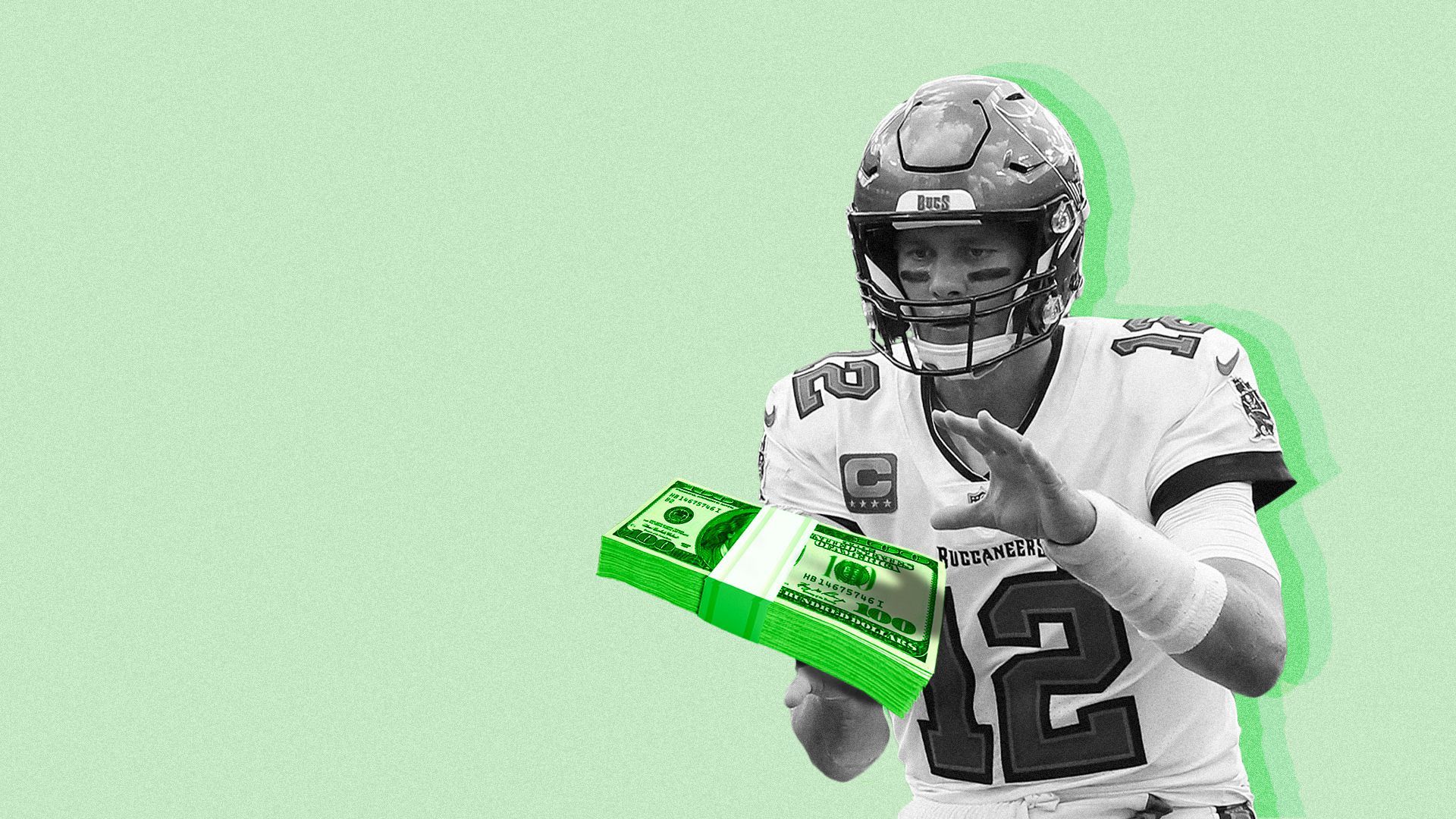
Autograph, an NFT collections startup, announced that it's raised $170 million in new venture capital funding co-led by Andreessen Horowitz and Kleiner Perkins.
Why it matters: If the dollar amount isn't enough — after all, it seems as if every NFT-based startup is raising money right now — the company is co-founded by Tom Brady.
Jared Kushner appears to have convinced the private equity market that he'll stick with his new firm, called Affinity Partners, even if his father-in-law returns to the White House.
The big picture: Private equity is littered with former presidential advisers and cabinet officials, and Trump's is proving to be no different.
Unilever said it's abandoned its $68 billion pursuit of GlaxoSmithKline's consumer unit, which includes Advil painkillers and Sensodyne toothpaste.
Why it matters: This is a jarring U-turn from Unilever's position of just a few days ago, when it said it was undeterred by GSK's rejection of three takeover offers, and raises. One possibility is that Unilever thinks it's calling GSK's bluff, or that it has an alternate acquisition target in mind.
Citigroup and BlackRock, two major financial players with far-reaching climate goals, took similar stances this week on divesting from fossil fuel companies. They're against it, at least for now.
Why it matters: Both Citi and BlackRock see potential downsides to withdrawing their funds from fossil fuel companies. And it's not all about profits, but rather having a say over how those firms navigate what may be a rocky clean energy transition, they said.
New home constructionramped up in December, with housing starts hitting the highest rate since March.
Why it matters: Demand for new homes rose amid the great reshuffling brought on by the pandemic. The resulting home price growth is stimulating the most active run for homebuilders since the boom years of the mid-2000s, a potential source of strength for the economy.
Rising rates on the German bund reflect how central banks are now backing off on the help — essentially super-low interest rates — they used to cushion their economies during the pandemic.
Tech stocks are bearing the brunt of the current sell-off — and the tech-heavy Nasdaq composite index officially slipped into a correction after another decline on Wednesday.
Why it matters: A correction is a term of art Wall Street applies to a sell-off that pushes prices down 10% from a recent high. It’s a shorthand way of describing a market drop that’s more serious than your run-of-the-mill dip.
The second year of the pandemic did not dampen UnitedHealth Group's finances, and the company actually surpassed its initial 2021 revenue and profit projections.
The big picture: UnitedHealth's revenue has tripled from 2010 to 2021, and profit has almost quadrupled. The company continues to make more of its money from owning doctor groups and controlling pharmacy benefits instead of relying on health insurance.
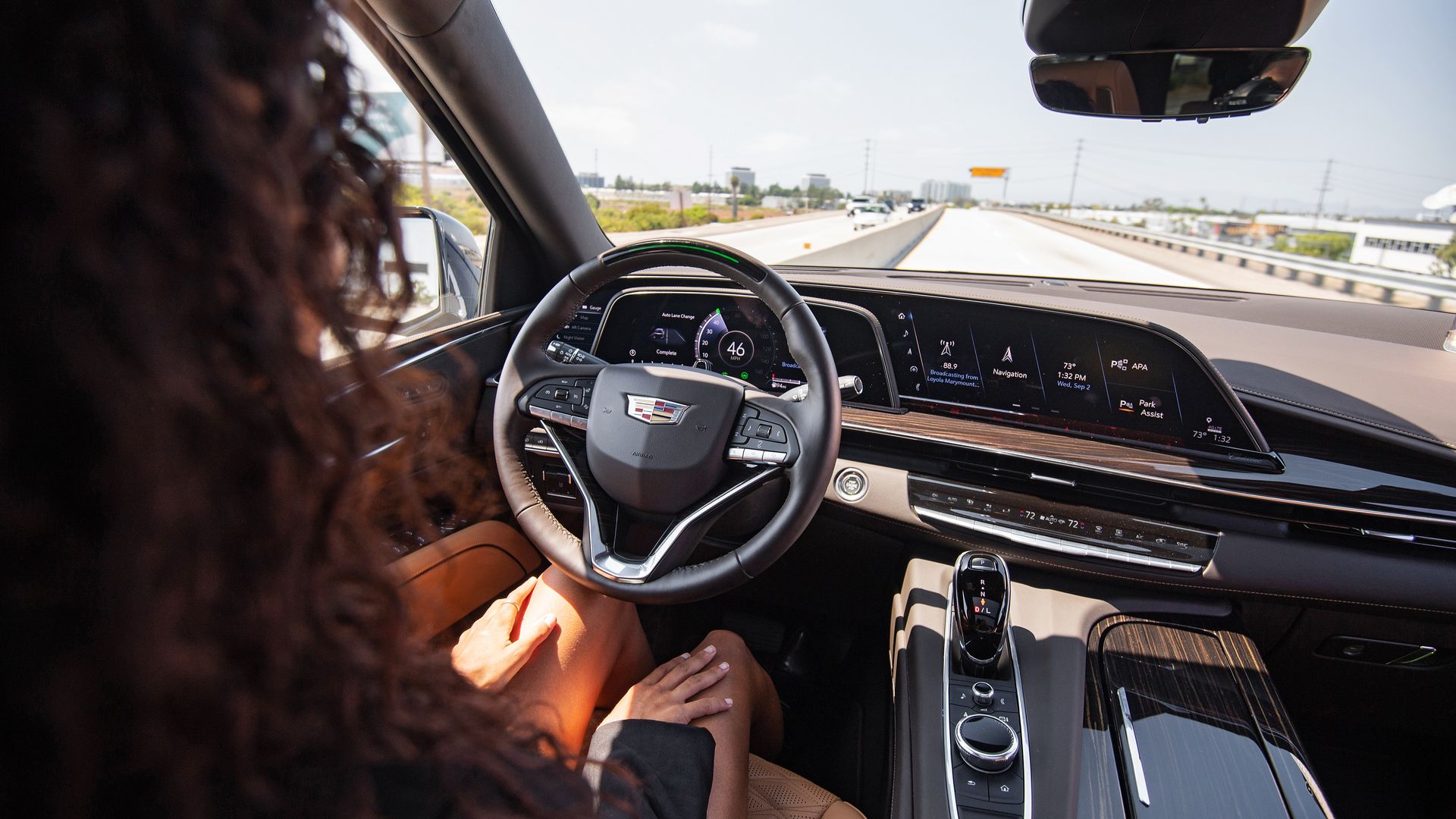
Consumer Reports tested the driver monitoring systems in today's cars and "uncovered some serious flaws," finding that most "don’t do enough to encourage safe driving."
Only GM and Ford are getting it right, according to CR, which comes out with its annual car rankings on. Feb. 17 — and will, for the first time this year, factor in these particular safety features.
Why it matters: Driver monitoring systems are new features that carmakers are adding alongside assisted-driving technology like adaptive cruise control and lane-centering. These camera-based systems are intended to make sure drivers who use the automated features are still paying attention.
Only five companies have driver monitoring so far, but it'll soon be commonplace in most cars with assisted driving tech.
What they're saying: “We believe it's time to recognize vehicles that have found a safer way to deploy this technology,” said Jake Fisher, senior director of CR’s Auto Test Center.
“GM's Super Cruise and now Ford's BlueCruise both have the right combination of helping drivers enjoy the convenience of automation while verifying that they're keeping their eyes on the road."
Where it stands: About half of new models now offer active driving assistance systems, per a CR analysis.
But only five automakers—BMW, Ford, GM, Tesla, and Subaru—have added driver monitoring alongside the technology.
How it works: Most driver monitoring systems use infrared cameras that can track head or eye movements.
If the driver turns away for a certain amount of time, they may sound an audible alarm.
Ford’s BlueCruise will tap the brakes to “jolt” an inattentive driver. In GM vehicles, a light on the steering wheel will flash.
If, after multiple alerts, the driver doesn't react, the system will bring the vehicle to a safe stop.
Details: In tallying its rankings, Consumer Reports gave extra points to GM and Ford — the only automakers whose monitoring systems prevent use of the technology if drivers aren't paying attention.
The systems from BMW, Subaru and Tesla all allowed drivers to keep using assisted-driving features even if the monitoring camera was blocked, or shut off, CR found.
What to watch: Beginning with the 2024 model year, CR said it will deduct points from cars with assisted-driving features that lack adequate driver monitoring.
The bottom line: The Biden administration is stepping up its scrutiny of assisted-driving systems, too.
NHTSA has also opened a formal investigation into Tesla Autopilot after a series of crashes involving emergency vehicles.
U.S. stocks markets performed worse during the first year of Joe Biden's presidency than during the first year of Donald Trump's presidency.
By the numbers: The S&P 500 rose 19.3% between the market close before Biden's inauguration and yesterday's market close, compared to a 24.1% increase for Trump during the similar period.
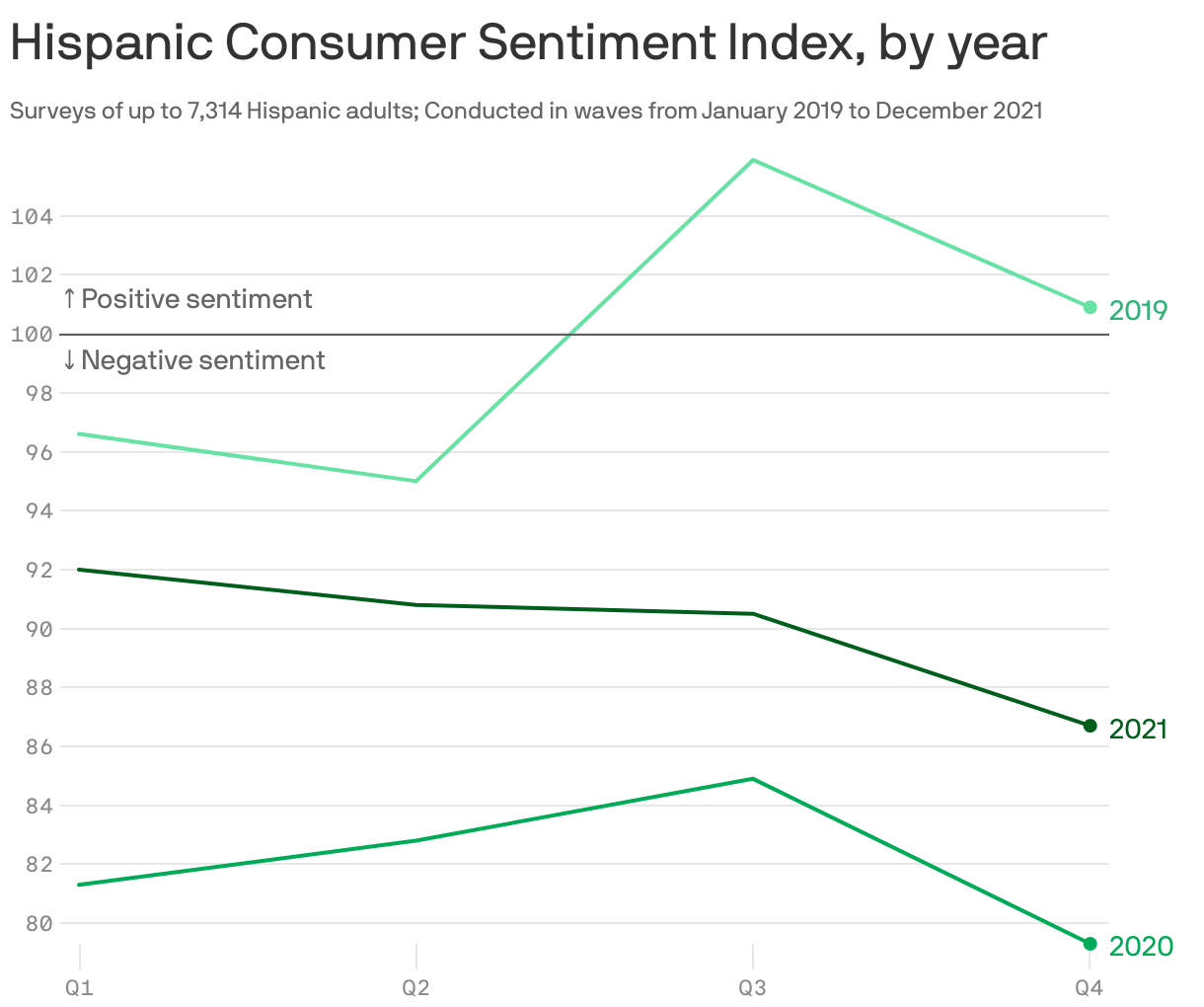
Data: Hispanic Index of Consumer Sentiment; Chart: Jacque Schrag/Axios
Latinos in the U.S. are less optimistic about the economy than they were a year ago as inflation threatens to cut into their buying power.
Why it matters: Latinos have been economic growth drivers for the past decade, opening new businesses at faster rates than other groups and increasing their homeownership rates. The group's overall output would make them the seventh-largest GDP in the world if they were a country.
Patients who take pre-exposure prophylaxis (PrEP), a medication that prevents HIV, should not be paying anything out of pocket for the drug — or for any blood work or doctor visits associated with getting PrEP.
The big picture: The federal government specifically reminded health insurers last year to make sure those types of ancillary services for PrEP were free at the point of care, but some patients are getting hit with bills anyway.









/2022/01/20/1642691579725.gif?w=3840)