"Saturday Night Live" comic Pete Davidson is known for his love of New York’s Staten Island. He just doubled down.
The big picture: Davidson, fellow SNL’er Colin Jost, and comedy club owner Paul Italia just bought a decommissioned Staten Island Ferry, with plans to convert it into a club, the AP reported.
The Biden administration is widening the scope on STEM student visas.
Why it matters: Higher education enrollment has continued to decline in the U.S. as the country looks to stay competitive in science and technology on the global stage.
U.S. venture capitalists raised a record $128.3 billion in 2021, and it’s no wonder given the prior year's near-record returns of 50.1%, per Cambridge Associates.
Why it matters: The last 18 months have shattered startup fundraising records, but the latest venture performance data suggests the public listing boom has made it an equally fruitful period for their investors.
A steady drumbeat of investments in new American semiconductor factories should help solve the chip shortage in the long run — but for now, the problem persists.
Why it matters: The chip crisis has rippled through the economy, triggering price increases and product shortages and exposed an economic security issue.
With $30 million in fresh funds, health monitoring startup Casana is readying to debut a toilet seat that takes your vitals.
Why it matters: Casana’s clinical commode is part of a broader trend that is seeing health care move out of the doctor’s office and into the home — or bathroom.
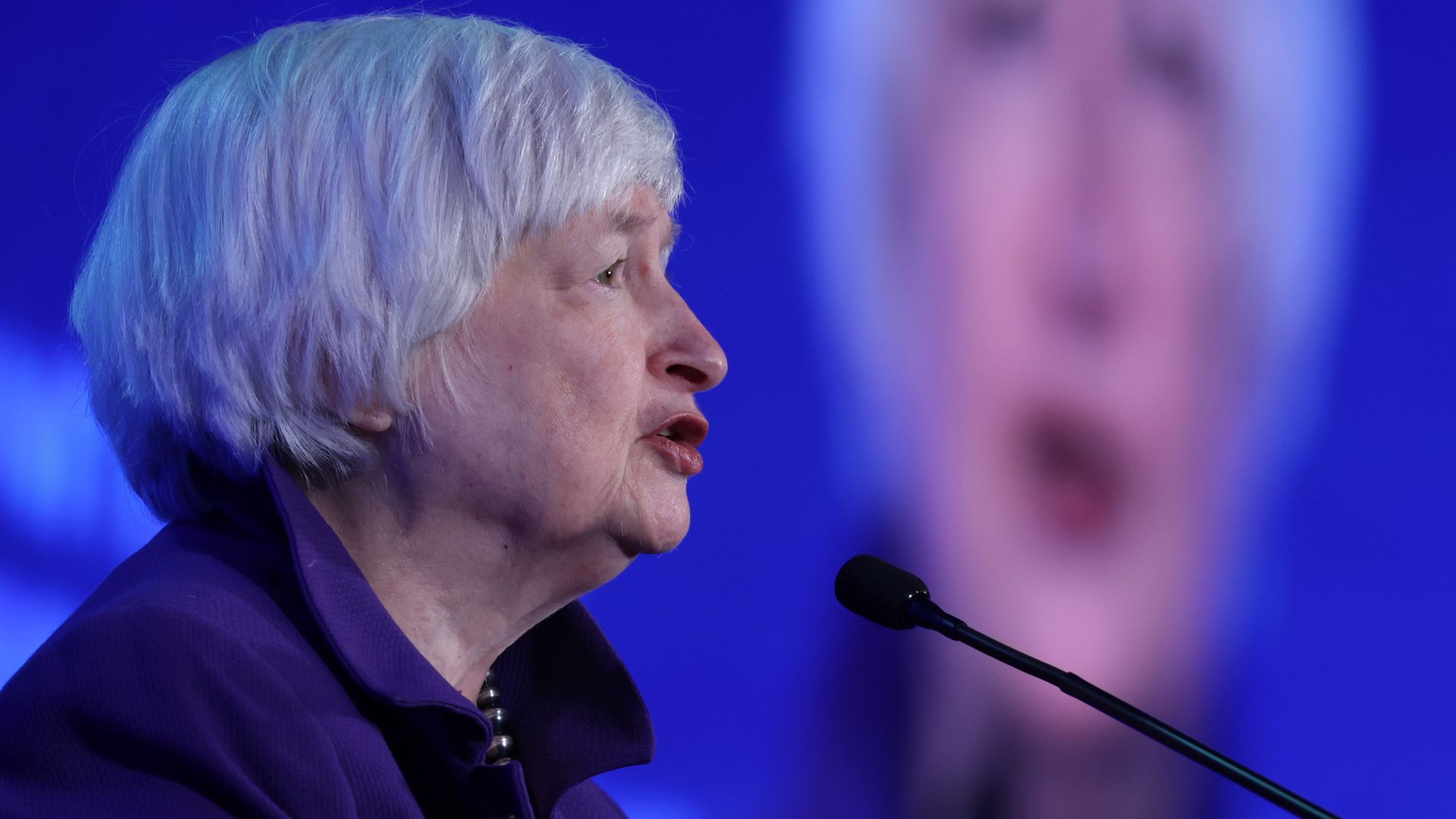
The U.S. needs to focus on increasing its productive potential, Treasury Secretary Janet Yellen told world leaders Friday, calling for what she terms "modern supply side economics."
Why it matters: She co-opted a phrase traditionally used by political conservatives to describe low-tax and deregulatory policies — and framed the Biden administration's initiatives as the best path forward to achieve greater national prosperity.
Workers are in the driver's seat in the labor market, and that doesn't look likely to change anytime soon. It's also starting to alter the competitive landscape across the business world.
Driving the news: The terms of competition are shifting, especially in labor-intensive industries. Companies that have some distinct advantage in their ability to attract the best workers are likely to fare better.
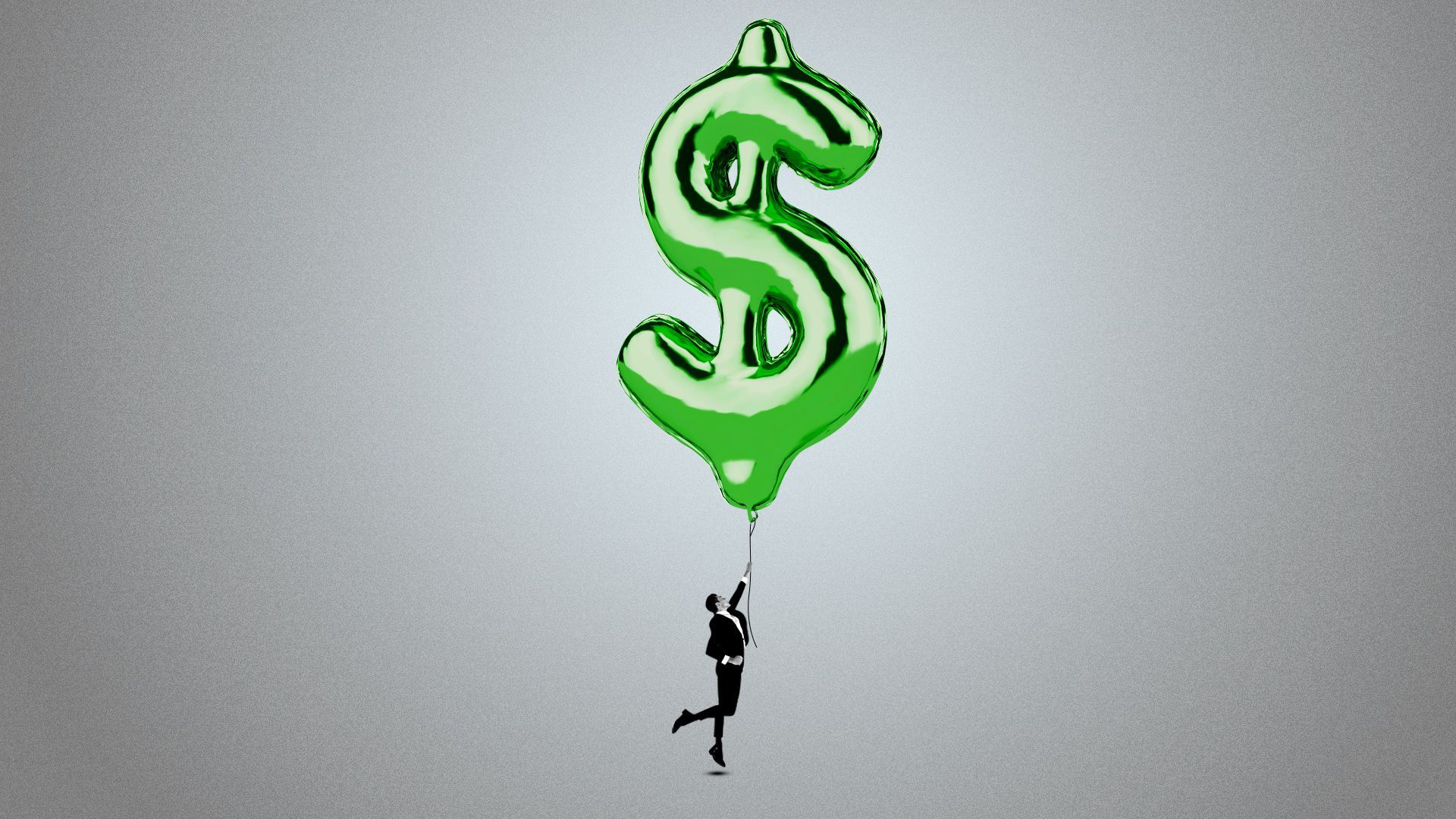
Anyone who's called a private market peak over the last decade, or even suggested that air was leaking out of the balloon, has been swiftly humbled. "Nothing matters" has consistently proven to be the only thing that matters.
Our thought bubble: The go-go era is history, even if the economy and new company formations remain strong.
PetSmart, the Phoenix-based pet supplies retailer owned by BC Partners, is in talks to go public via a KKR-sponsored SPAC, at around a $14 billion implied valuation, per Bloomberg.
Why it matters: BC Partners may be pulling a rabbit out of its in-store cage. The firm's $8.7 billion buyout of PetSmart in 2015, and debt-laden $3.4 billion add-on of DTC retailer Chewy, looked too clever by half — as the tie-up failed strategically and subsequent recap efforts caused lenders to cry fraud. But now Chewy is public with a $17 billion market cap and PetSmart may have a buyer.
Google Health formally disbanded last year, with the unit instead choosing to spread its efforts across the organization. In this iteration, the company is working to imbue each of its numerous divisions with health expertise, Google chief medical officer Karen DeSalvo said during the Axios Pro kickoff event.
Why it matters: Google isn’t backing away from health, but rather deepening its investment in the category by infusing its work into virtually every sector of the company, from wearables to partnerships with hospitals and health systems.
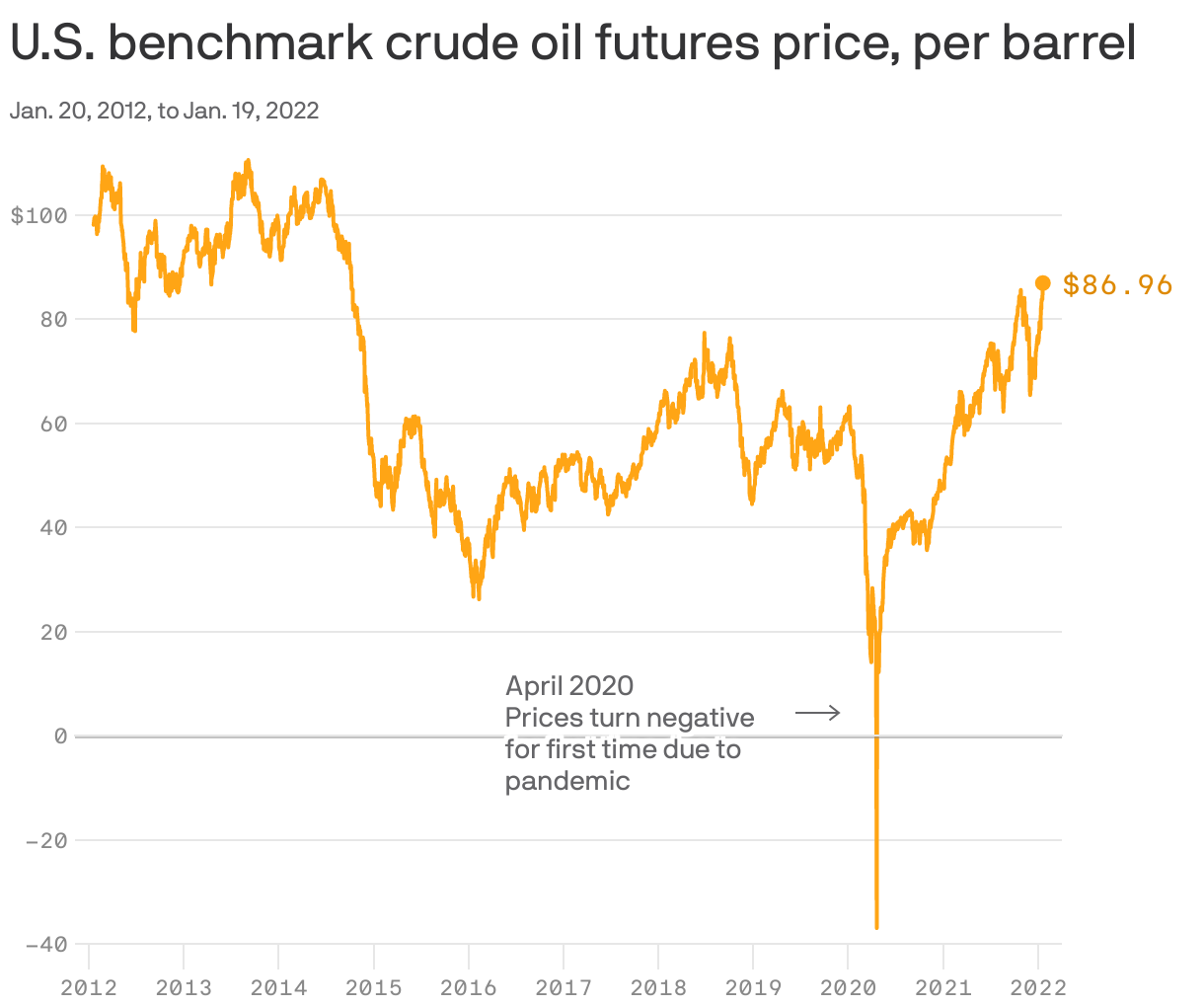
U.S. crude oil prices reached the highest level in seven years this week, amid supply disruptions and geopolitical jitters.
Why it matters: The climbing cost of crude — which is an input cost into virtually everything that is transported — will add to the inflationary pressures that are bedeviling politicians, policymakers and consumers.
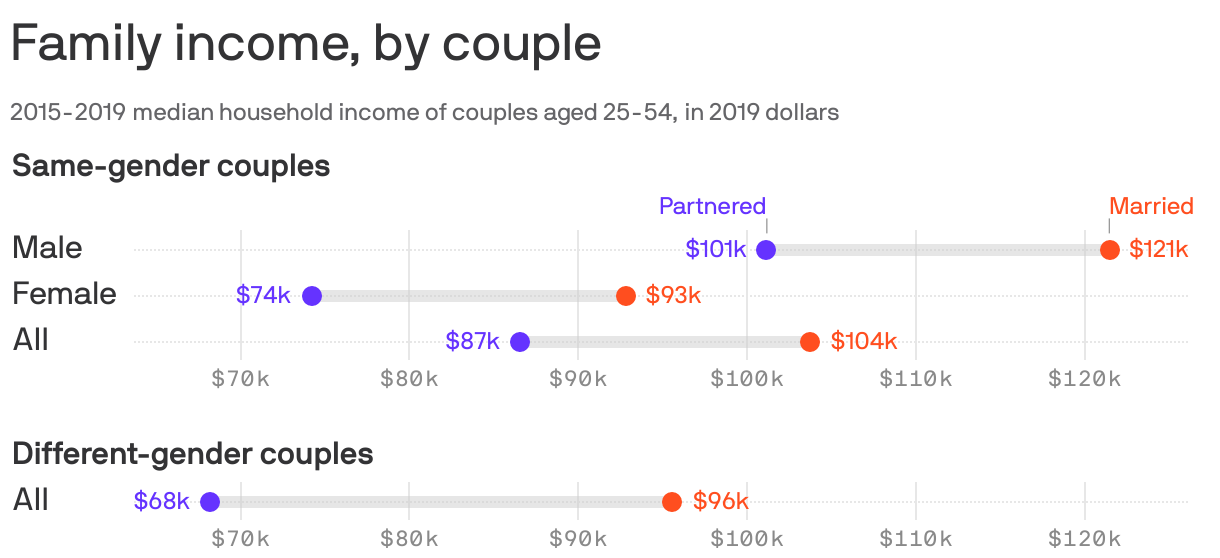
Data: The Hamilton Project; Chart: Kavya Beheraj/Axios
A married female couple will bring home lower wages, on average, than an opposite-gender married couple or a same-gender male couple.
Why it matters: Women in same-gender partnerships can experience (at least) two kinds of discrimination, based on their gender and on their sexual orientation.
Suppose the Federal Reserve had perfect foresight last year, and set out to keep inflation at its 2% target anyway — despite supply disruptions and labor shortages. What would that have looked like?
The answer: A catastrophe for growth, according to new research from the BlackRock Investment Institute. The Fed would have had to crater demand in the economy so much, that it would have pushed the unemployment rate to nearly 10%, the researchers estimate.
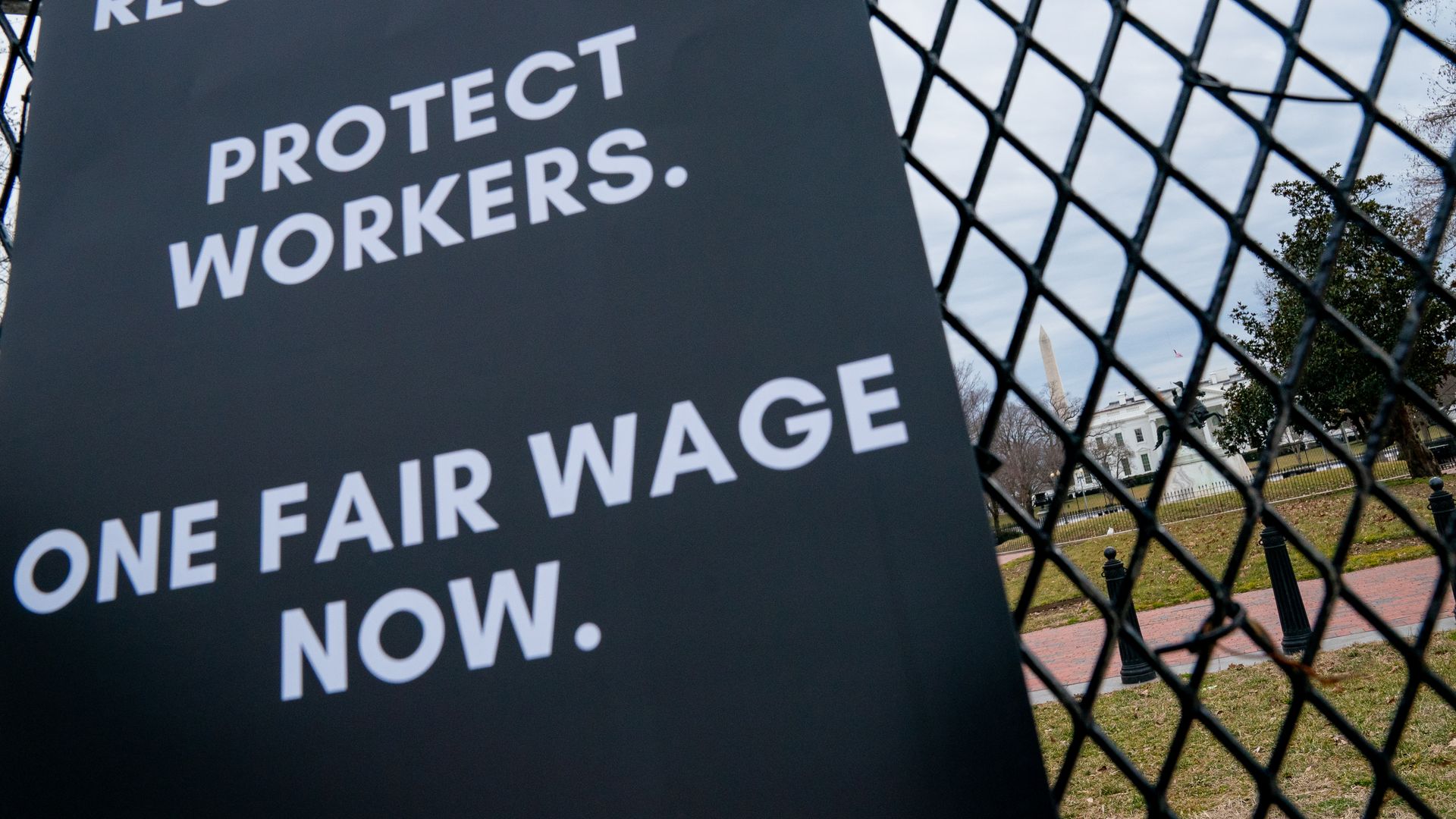
Federal agencies are being directed to raise the minimum wages for government employees to $15 an hour, according to new guidance from the Office of Personnel Management shared first with Axios.
Why it matters: The guidance will impact almost 70,000 federal employees, most of which work at the Departments of Agriculture, Defense and Veterans Affairs. OPM is directing agencies to implement the new wage by Jan. 30.
The Federal Reserve finally released a much-delayed paper yesterday opining on the pros and cons of developing its own central bank digital currency (CBDC), but without coming to any firm conclusions.
Why it matters: Around the world, there are now 23 CBDCs either in pilot or formally launched. They have morphed from a theoretical concept into real-world digital cash, changing the way governments and millions of people use money — but not in the U.S.
Peloton’s popularity is falling as swiftly as it shot up.
Why it matters: Not all pandemic habits stick around. Peloton's trajectory over the past two years exemplifies how challenging it's been for companies to gauge shifts in consumer demand — particularly in sectors heavily altered by the pandemic.
Peloton stock fell by as much as 25% on Thursday, following a CNBC report that the connected fitness company will temporarily halt production on its bikes and treadmills.
Why it matters: Peloton is viewed by many as a proxy for consumer behavior in the pandemic era, as its popularity surged when gyms closed and people wanted to exercise at home.