Climbing crude oil heads for reckoning

Add Axios as your preferred source to
see more of our stories on Google.
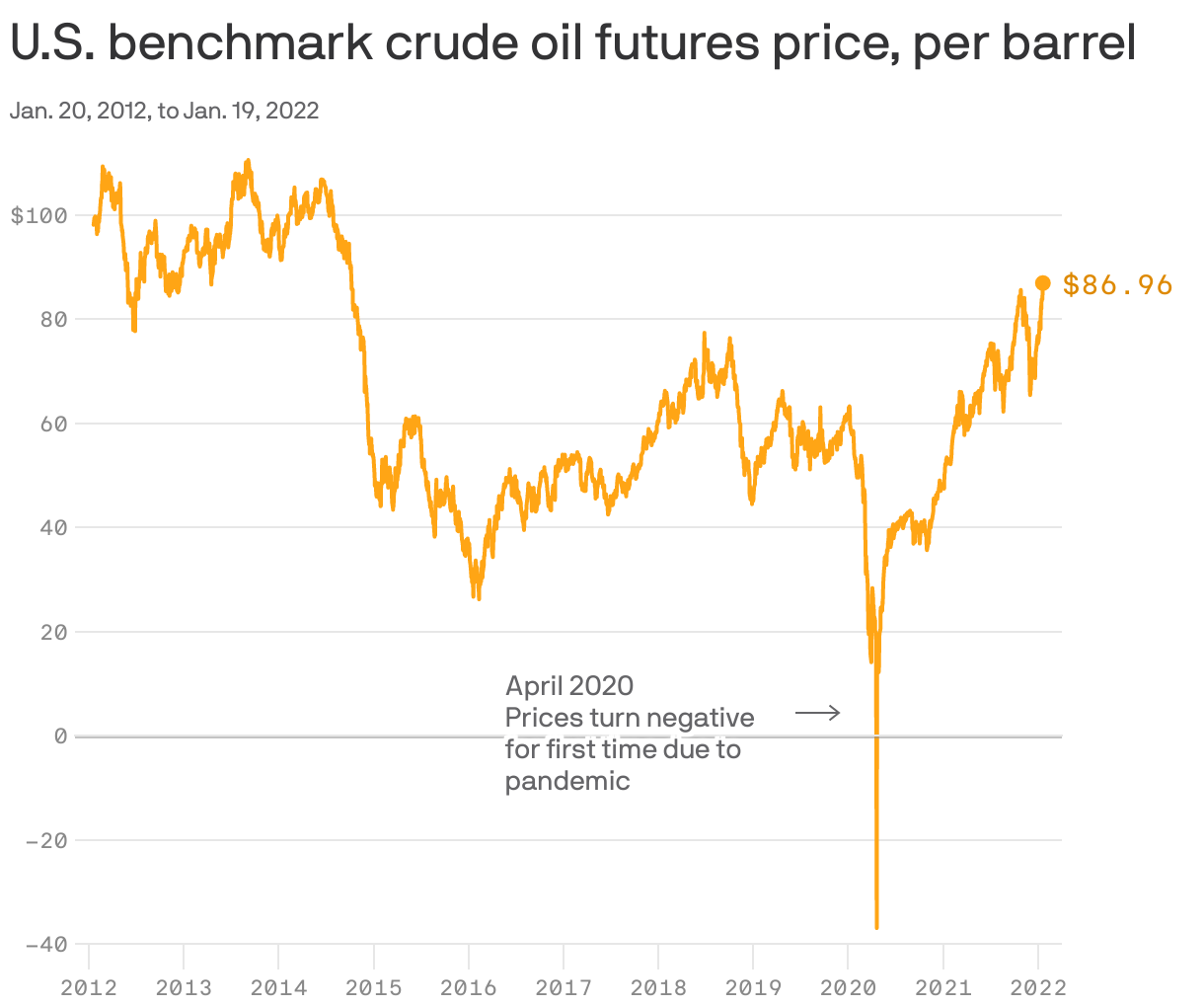
U.S. crude oil prices reached the highest level in seven years this week, amid supply disruptions and geopolitical jitters.
Why it matters: The climbing cost of crude — which is an input cost into virtually everything that is transported — will add to the inflationary pressures that are bedeviling politicians, policymakers and consumers.
What happened: On Monday, Yemen’s Houthi rebels used drones to destroy fuel tankers in the United Arab Emirates. The U.A.E. is OPEC’s third-largest producer.
- A fire-induced outage temporarily halted the flow of crude through a pipeline connecting Iraq to Turkey on Tuesday.
- Tensions between Russia — the world’s third-largest oil producer — and the west continue to build over Ukraine, with the U.S. on Thursday promising a “swift, severe” response to a military incursion.
What’s next: Analysts and traders are beginning to think that crude-consuming countries may move toward another coordinated release of strategic reserves to quell the rise in crude.
- President Biden said Wednesday, “There's going to be a reckoning along the line here as to whether or not we're going to continue to see oil prices continue to go up.”
Go deeper ... IEA: Oil is back and 2022 could be volatile
