Retailers have gotten really good at selling stuff online. So much so, investors want them to separate from the business units that do just that.
Why it matters: Spinning off these crown jewels may jeopardize both the physical and e-commerce sides of the companies in the long run by breaking the benefits of hybrid operations, analysts say.
Treasury Secretary Janet Yellen warned congressional leaders in a letter Monday that the Treasury will take "extraordinary measures" to manage its cash and not exceed the debt limit through Dec. 3, the earliest deadline for lawmakers to once again raise the debt limit or risk a default.
Driving the news: Congress last week averted a government default by raising the borrowing cap by $480 billion, after a protracted partisan battle.
New York Attorney General Letitia James on Monday ordered two unregistered cryptocurrency lending platforms to cease operating in the state within 10 days and requested three other platforms to send her office information about their activities and products.
Why it matters: Due in part to a lack of clear regulations, crypto companies have been making various moves — and finding out that not all regulators agree with them.
In 2008, a box of 30 anti-inflammatory rectal suppositories that treats arthritis, called Indocin, had a price tag of $198. As of Oct. 1, the price of that same box was 52 times higher, totaling $10,350.
Why it matters: As federal lawmakers continue to waver on drug price reforms, Indocin is another example of how nothing prevents drug companies from hiking prices at will and selling them within a broken supply chain.
ProShares will debut Tuesday on the New York Stock Exchange an exchange-traded fund linked to bitcoin futures that trade on the Chicago Mercantile Exchange, according to the New York Times.
Why it matters: While it's not a true "Bitcoin ETF," with direct holdings of the digital token, ProShares' fund could be a first step in the SEC finally approving one after years of passing on or delaying all proposals.
Massive venture rounds into fintech companies have ballooned this year, pushing up total dollars invested — in just the first three quarters of 2021 — to nearly double the amount in all of 2020, per new PitchBook data.
Why it matters: The maturing of fintech startups means a growing number of companies are able to raise huge later-stage funding rounds as investors look to lock-in their bets.
Sinclair Broadcast Group, one of the country’s largest local broadcast companies, said Monday that it had fallen victim to a cyberattack that left some servers and workstations "encrypted with ransomware."
Why it matters: The incident comes just days after Cox Media Group, another local broadcast company, acknowledged a that cyberattack it experienced this past summer was ransomware.
Oil and gas production is a key part of the Texas economy. But the state is poised to perform well even if tackling global warming sends the sector into decline, a Dallas Fed analysis argues.
The big picture: Energy price swings have long affected Texas' financial fortunes, with sharp declines "depressing broader activity."
The strength of retail sales data has shocked prognosticators for the second month in a row.
What’s new: Although September spending was lower than the peaks reached in the post-vax, pre-Delta variant honeymoon economy of the spring, consumers still spent more defiantly than economists had expected.
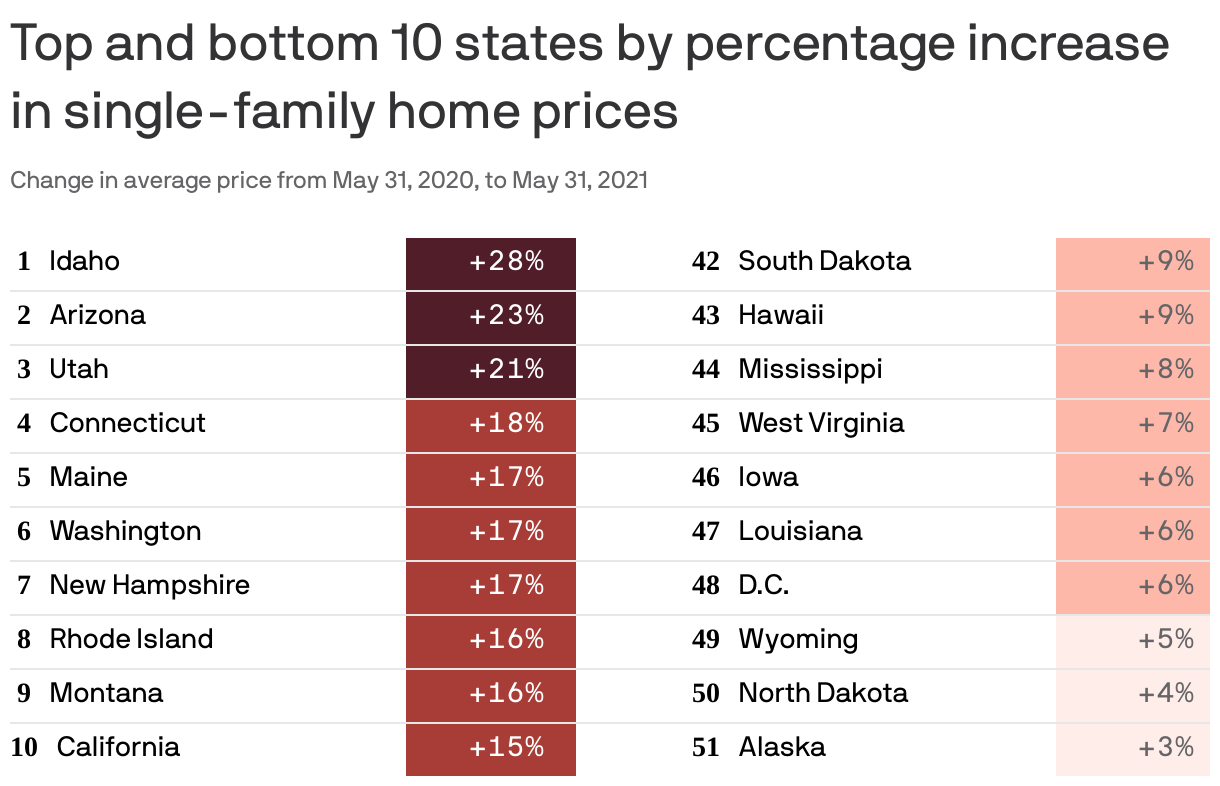
On average, the price of a single-family home rose 12.4% in the year ending May 31, to $301,855 — though the figure is much higher in hot-market states like Idaho, Arizona and Utah.
Why it matters: The pandemic fervor for real estate continues to overheat the housing market, making homeownership elusive for many and keeping others stuck in living situations they'd prefer to upgrade or otherwise change.
Marketers are pouring money into figuring out the tastes and habits of Generation Alpha — kids born from 2010 through 2024 — who are unprecedented in the extent they're growing up online.
Why it matters: They're weaned on TikTok, Amazon and in-app purchases. They're learning from their millennial parents to hold brands accountable for causes like social justice and sustainability. And no prior age cohort will be as large in size or marketing power.
China's economy grew 4.9% in the third quarter of 2021 compared with a year earlier, the country's National Bureau of Statistics announced Monday.
Why it matters: The gross domestic product growth in the July-September period in the world’s second-largest economy marked the "weakest pace since the third quarter of 2020 and slowing from 7.9% in the second quarter," Reuters notes.