Longtime "Jeopardy!" executive producer Mike Richards and popular actor Mayim Bialik have been named co-hosts of "Jeopardy!," according to a statement from Sony Pictures Entertainment, which produces the show.
Why it matters: The decision was made to split the hosting roles in order to broaden the "Jeopardy!" franchise following the passing of Alex Trebek, who hosted the iconic program for 37 seasons.
Amtrak told its employees Wednesday that they must be fully vaccinated by Nov. 1 or agree to submit to weekly testing, Axios has confirmed.
State of play: Starting on Oct. 4, new hires will need to show proof of vaccination before their first day of employment. Employees will not be required to return to in-person work until Nov. 1.
While Softbank's first Vision Fund was all about "picking winners" in a sector and arming them with a lot of capital to fend off their rivals, the Japanese giant's second Vision Fund has a different strategy: backing as many worthy startups as possible, as early as possible.
Why it matters: Diversified portfolios have been a fixture of seed investing for a while, but with the entrance of investors like Tiger Global into the startup scene, it’s a strategy no longer confined to the earliest stages of venture.
The core Consumer Price Index (CPI), which tracks prices of goods and services excluding food and energy, rose by 0.3% in July on a month-over-month basis.
Why it matters: The reading shows a slowdown in the rate at which inflation has been rising, after a 0.9% increase in June and 0.7% in May.
Leisure air travel is booming, but with COVID-19 cases soaring in the U.S., the airline industry can expect a slowdown after Labor Day — and that might actually be a good thing.
Why it matters: Airlines have struggled to keep up with the unexpectedly strong rebound in travel demand this summer, with Spirit Airlines' chaotic, cancellation-filled episode last week as the most extreme example.
Investors are getting negative yields on €180 billion worth of bonds issued by dozens of America's largest corporations, including some that are junk-rated.
Why it matters: The European Central Bank has lowered interest rates so far into negative territory that investors can get a significant pick-up in yield even when buying at negative yields. There’s speculative value to these bonds too — once they’ve broken the zero bound, yields can always fall further, meaning a bond bought at a negative yield can still be sold at a profit.
The pandemic’s acceleration of all things digital could not be more clear to MoneyGram CEO Alex Holmes.
Driving the news: Holmes oversees a global money transfer business that operates in 200 countries. The company's digital transactions skyrocketed 44% year over year in Q2 2021, on top of what it described as "astounding" 106% digital transaction growth in Q2 2020.
Media that were once free or easily accessible — including news websites, podcasts, TV shows and games — rushed to get behind paywalls during the pandemic.
Why it matters: This accelerating trend is carving the internet into many niche audiences, Balkanizing our collective media diets.
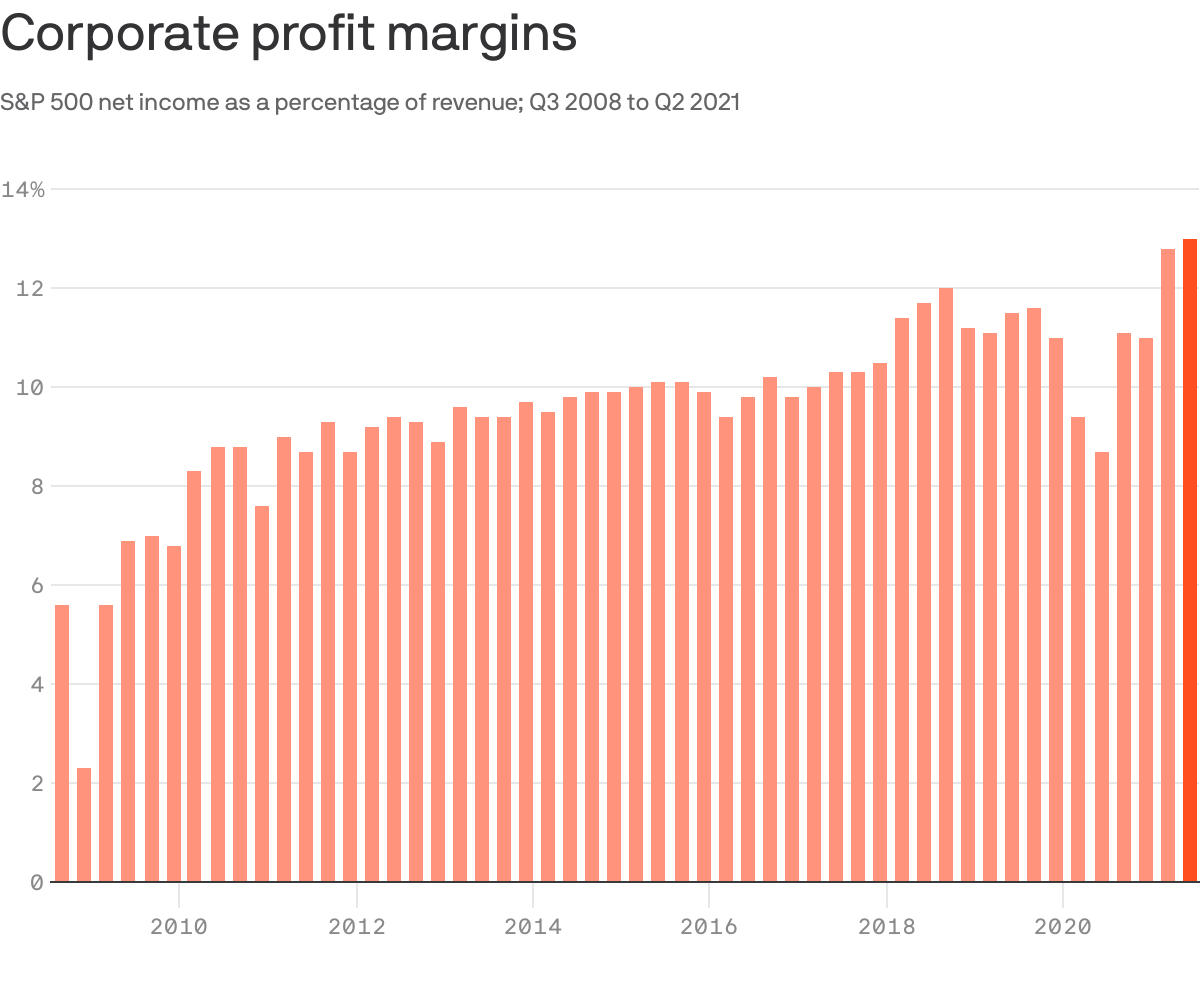
America’s biggest companies have managed to achieve record-high profit margins, despite rising input costs.
Why it matters: Raw materials inflation and wage hikes have had almost no noticeable effect on corporate earnings. Still, analysts warn it may just be a matter of time before those costs catch up with margins.
Medicare's open enrollment will kick off in two months, leading to the health insurance industry's annual marketing blitz that entices seniors with Medicare Advantage plans that tout capped out-of-pocket costs, vision and dental benefits, and fitness classes.
Why it matters: Medicare Advantage continued to grow during the pandemic, and it's increasingly likely a majority of all Medicare enrollees will be in private plans in a few years despite Medicare Advantage's deep, longstanding problems.
Bitcoin is becoming part of the dollar-based financial system it once sought to displace.
Why it matters: Cryptocurrency is beloved by people who want to transact outside the reach of any government. But it's gotten mainstream enough that politicians and regulators want to co-opt it and bring it squarely within their own fields of influence — even using it to help pay for an infrastructure bill.
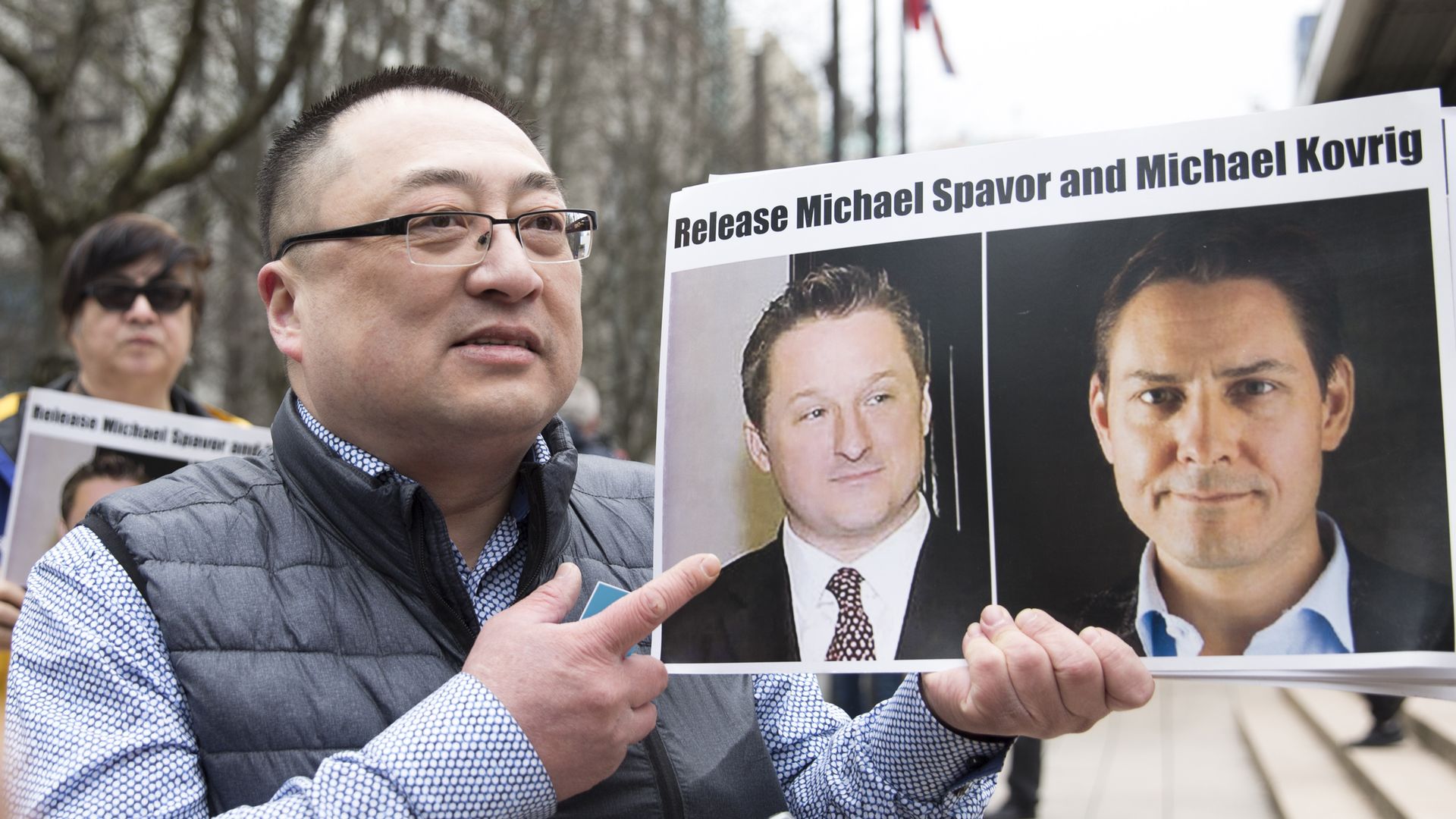
A court in Dandong, China, sentenced Canadian businessman Michael Spavor to 11 years in prison Wednesday after finding him guilty of espionage. Canada's Prime Minister Justin Trudeau denounced the sentence as "unacceptable and unjust."
Why it matters: The detention of Spavor, along with former diplomat Michael Kovrig following their 2018 arrests, is widely viewed as retaliatory action by the Chinese government for Canada's detention of Huawei executive Meng Wanzhou, who's accused of violating U.S. sanctions on Iran.