It hasn’t been this easy to get a car loan in years.
Why it matters: It comes amid a demand bonanza that got underway at the onset of the pandemic — when traveling by car became the more appealing mode of transportation.
In a sign of the times, cryptocurrency regulations held up a massive infrastructure bill in the U.S. Senate.
Catch up quick: A crypto tax reporting amendment to the $1 trillion package sought to bring in some $28 billion in new tax revenue.
A vote was held today at around 4:30 p.m. ET, potentially determining how the crypto industry evolves in the U.S. — in a bill completely unrelated to crypto. The amendment needed unanimous consent to make the cut, but an objection from Sen. Richard Shelby (R-Ala.) prevented it from being adopted.
The big picture: As CoinDesk’s Nikhilesh De reports, the crypto industry fears the passage of the bill might lead to businesses and developers leaving the U.S.
At issue is a provision that would broadly define the term "broker," leading to fears that non-broker entities would be forced to shut down for non-compliance.
Brokers specifically need identifying information from customers when facilitating crypto transactions, which miners, validators, developers and hardware manufacturers – the firms and individuals undergirding the crypto economy – may not have.
These companies may choose to leave the U.S., lock out U.S. customers or just shut down their operations if forced to comply with these regulations, putting a dent in a rapidly-growing industry within the U.S.
The latest: Despite much angst on crypto Twitter, the Senate rejected a compromise on Monday to narrow the scope of the rule to only those entities that actually facilitate transactions for customers.
The industry's eyes now turn to the House of Representatives, which could modify the language before passing the bill.
Philip Morris International has raised its bid against Carlyle to acquire Vectura, a U.K.-based drug manufacturer specializing in inhaled medicines, to 1.02 billion pounds ($1.41 billion). The U.K.'s Takeover Panel said that the deal could enter a rare head-to-head auction.
Why it matters: The Swiss spinoff from the Big Tobacco company is on a quest to remake its image, and its investments range from cigarette alternatives to treatments for respiratory illnesses.
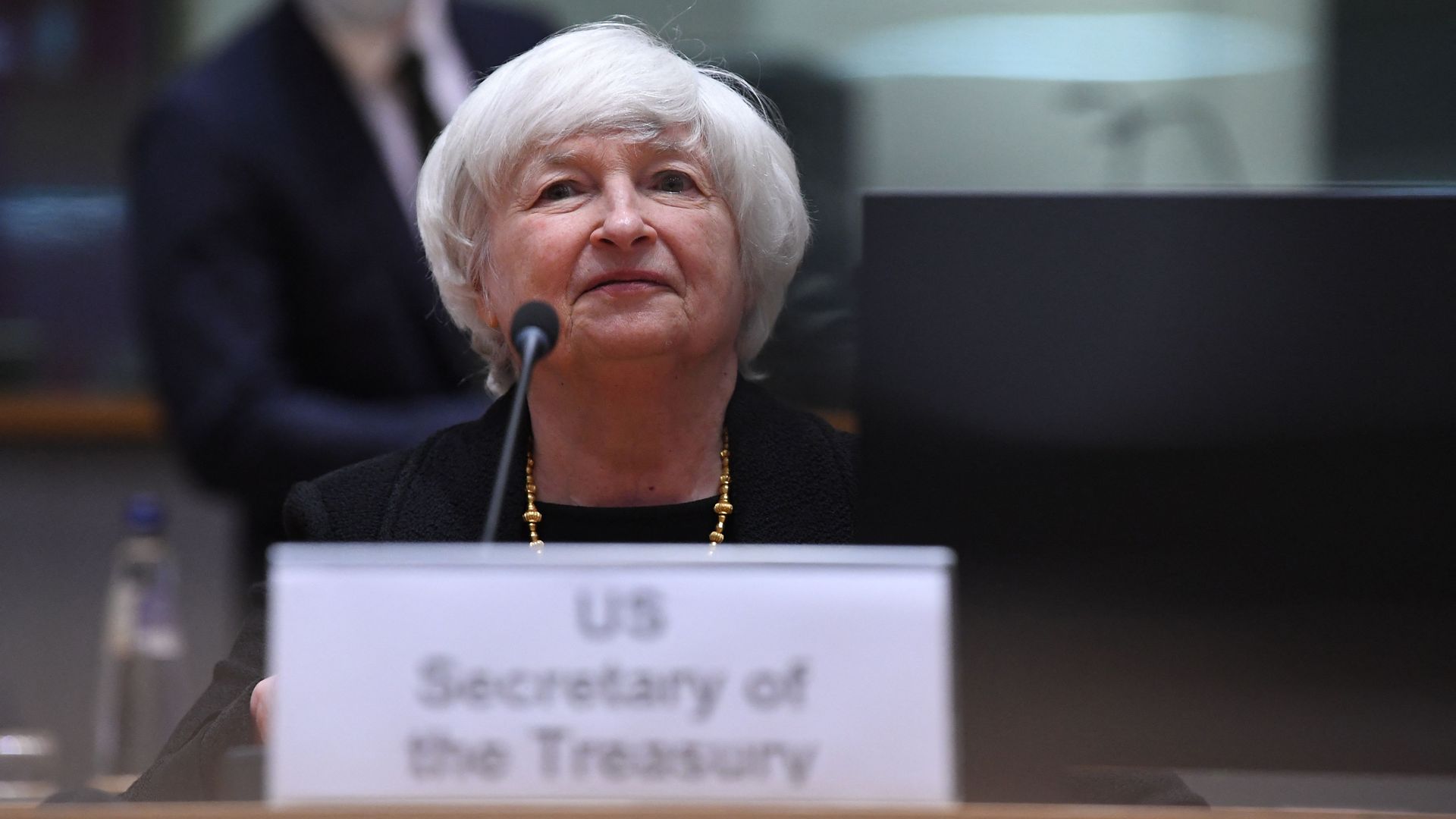
Treasury Secretary Janet Yellen urged Congress on Monday to pass a bipartisan resolution to raise the amount of money the U.S. government can borrow, saying failing to increase the debt ceiling would "cause irreparable harm" to the economy.
Why it matters: Republican lawmakers, led by Senate Minority Leader Mitch McConnell (R-Ky.), have threatened to refuse to vote for raising the debt ceiling, which came back into force on Aug. 1.
In 2019, Wall Street’s forecasters had high hopes for 2021 earnings. But when the pandemic hit, those expectations collapsed. The recovery has now brought expectations back to pre-pandemic levels.
Why it matters:Expected earnings are the key driver of stock prices in the long run.
Credit card transaction data suggest the recent surge in COVID-19 infections is starting to impact parts of the economy.
Why it matters: The economy’s been on a robust upward trajectory, generating almost a million jobs in July alone.
The big unknown is how much the spread of the Delta variant could derail that recovery.
What they’re saying: Looking at Chase debit and credit card transaction data, JPMorgan economist Jesse Edgerton observed spending in travel and entertainment softened in early July as infections accelerated.
"Most notably, airline spending has fallen almost 20% from a recent peak in mid-July, a larger decline than during the severe winter COVID wave, when spending was at much lower levels," he wrote on Friday.
Bank of America saw a similar pattern in its own debit and credit card data.
"The slowing in air travel is not just a story for this week: the 2-year growth rate of air travel peaked four weeks ago and has taken a turn lower, potentially reflecting the risks from the Delta variant," the bank wrote on Thursday.
Zoom out: This is just one category of spending. In fact, Bank of America card spending levels for the week ending July 31 were 10% above 2019 levels.
What to watch: The details of the July retail sales report bear watching when they’re released on Aug. 17 for further clues about which categories are getting hit by the rise in infections.
The July U.S. jobs report was a blockbuster, but there’s still progress to be made in the labor market and the recent spike in COVID-19 cases means it’s too early to celebrate.
Why it matters: The U.S. economy continues to show great momentum, which puts more pressure on the Federal Reserve to scale back its emergency monetary policies. However, doing so too early risks having the economy backslide.
Self-driving vehicles may be loaded with sensors and artificial intelligence, but they're limited without a really good map.
Why it matters: High-definition maps are critical to the safe, wide-scale deployment of autonomous vehicles. More accurate than satellite-based GPS, they provide richly detailed models of the operating environment and important context to help AVs avoid mistakes.
An urban laboratory is opening inside a Detroit garage to let researchers test new parking technologies for cities coping with shifting priorities.
Why it matters: Parking is a hassle for drivers in most cities, with experts attributing as much as 30% of traffic and emissions to cars searching for a parking spot. If cars could park themselves efficiently, it would ease some of those problems.

/2021/08/09/1628544895771.gif?w=3840)