Facebook's market value surpassed $1 trillion for the first time Monday, after a federal judge dismissed an antitrust complaint from the Federal Trade Commission. The move pushed shares up nearly 5%.
Why it matters: Despite a record level of regulatory scrutiny, Facebook's value continues to soar. The company has experienced enormous growth over the past year, as more people turned to its services to communicate and shop during the pandemic.
Mark Walter and Todd Boehly agreed to buy a 27% stake in the Los Angeles Lakers from Philip Anschutz at around a $5.5 billion enterprise value. The franchise continues to be majority owned by the Buss family.
Why it matters: This may be more about the next deal than the current one. Financiers Walter and Boehly are part of the Los Angeles Dodgers ownership group, and now are well-positioned to buy out the Buss family were it to want to sell. Kind of like Laurene Powell Jobs did several years ago with the Washington Wizards.
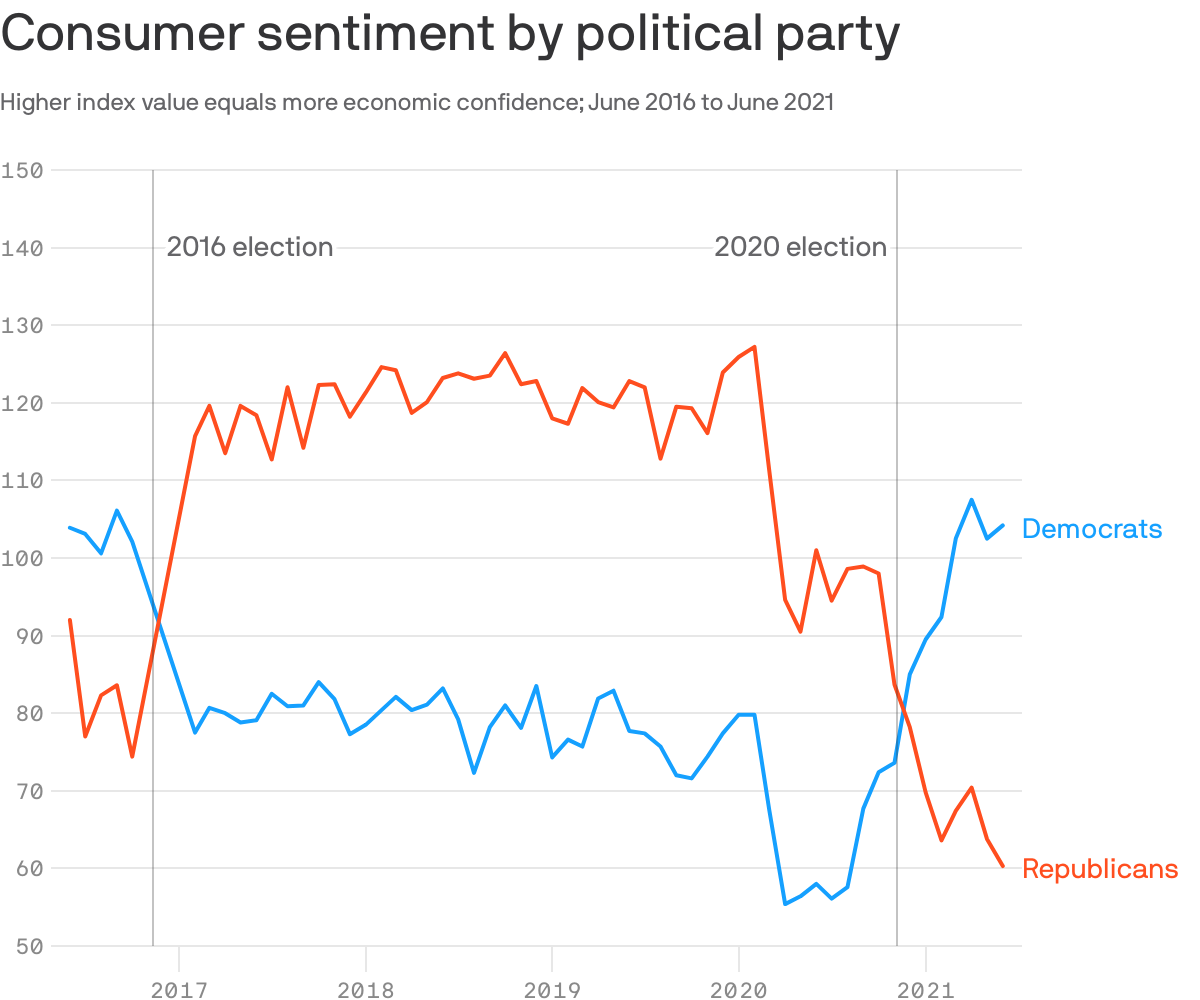
Data: University of Michigan; Chart: Connor Rothschild/Axios
Consumer sentiment is trending higher for Democrats, while tumbling for Republicans, according to survey data released Friday by the University of Michigan.
Why it matters: Economic conditions have trended higher nationally, but only half feel good about it.
The core PCEprice index in May was increasing at the highest yearly rate since 1992. But this may be the top.
Why it matters: Core PCE, which was updated Friday, is the Federal Reserve's preferred measure of inflation. High inflation means your money is worth less, and it could force the Fed to tighten its easy monetary policy.
Americans with limited options to spend during the pandemic saved more than usual. And while it’s unclear how this money will be spent, everyone agrees this is awesome for the economy.
Why it matters: Wells Fargo estimates $2.4 trillion in excess savings has been accumulated by consumers since the beginning of the pandemic. And consumer spending accounts for about 68% of GDP.
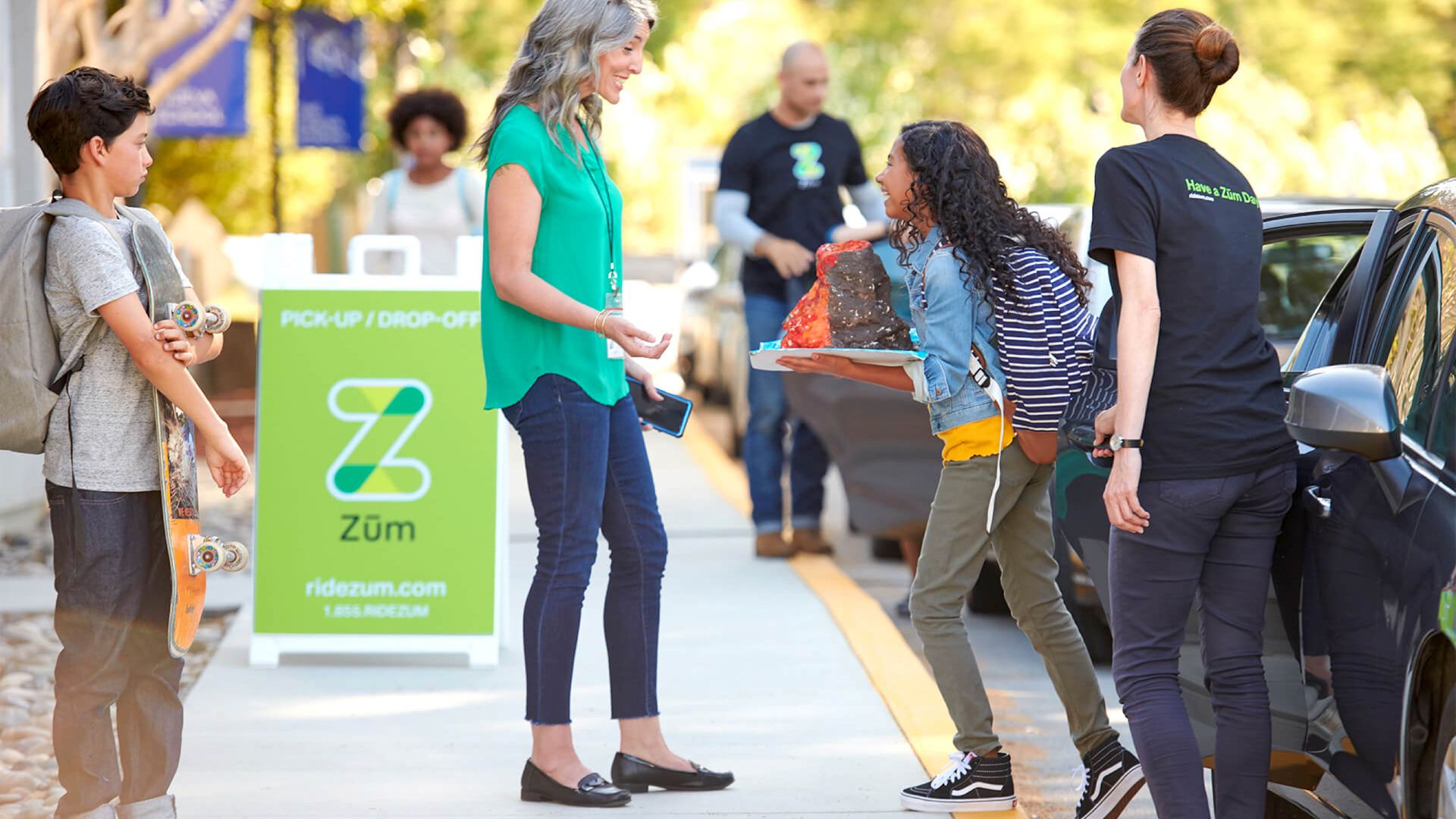
The pandemic accelerated changes in the education system, and now that many U.S. school systems are reopening or planning onsite teaching for the fall, the school transit system is evolving, too.
What's happening: Zum, a California-based startup that launched six years ago as an Uber-like ride service for families with children, is now working directly with school districts to modernize student transportation.
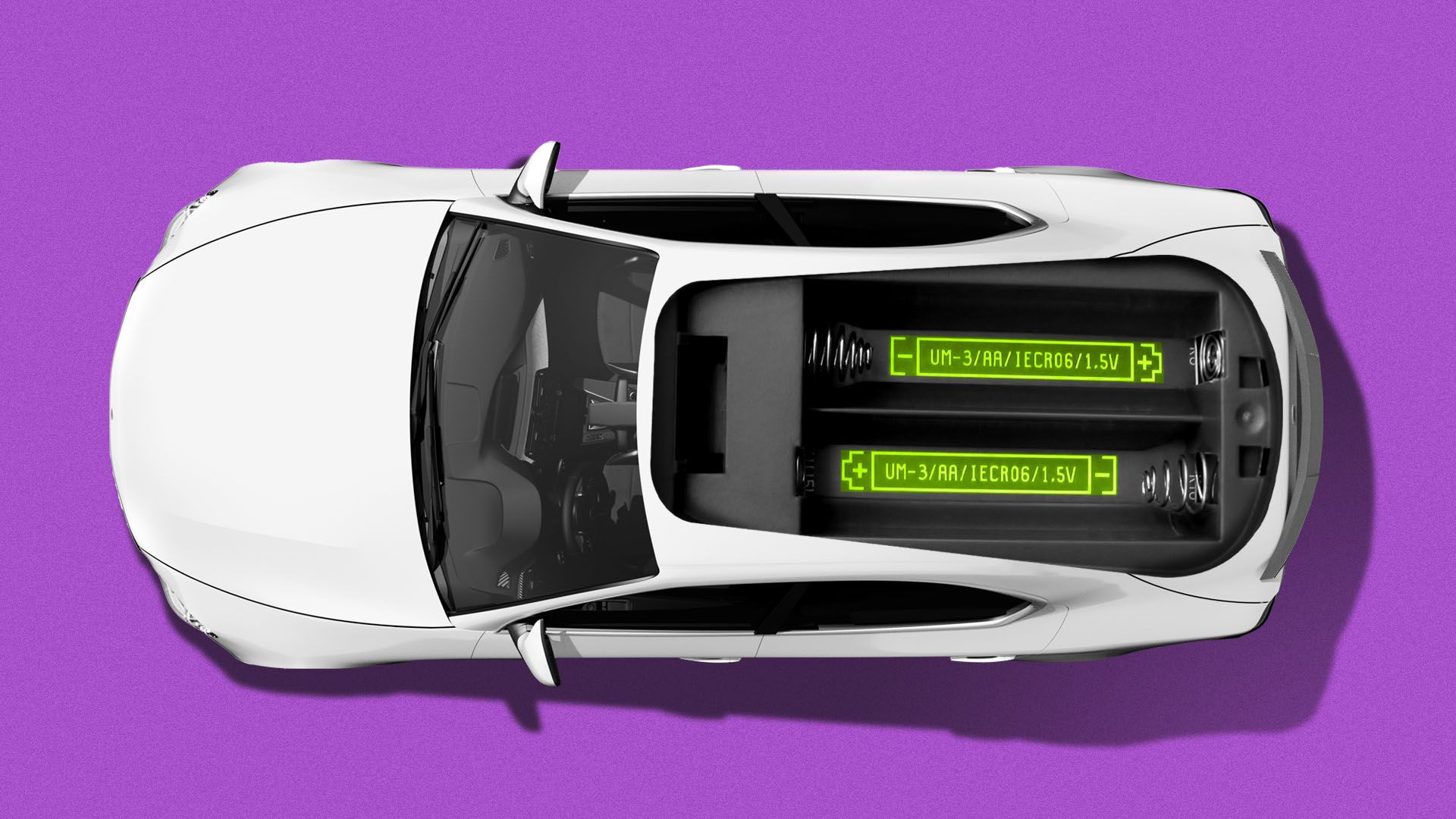
At the very moment the United States is ramping up electric vehicle development manufacturers are running up against the weakest link in the supply chain — a shortage of battery materials.
Why it matters: The bottleneck puts the United States at a major disadvantage to China, which controls most of the world's battery minerals mining and processing.
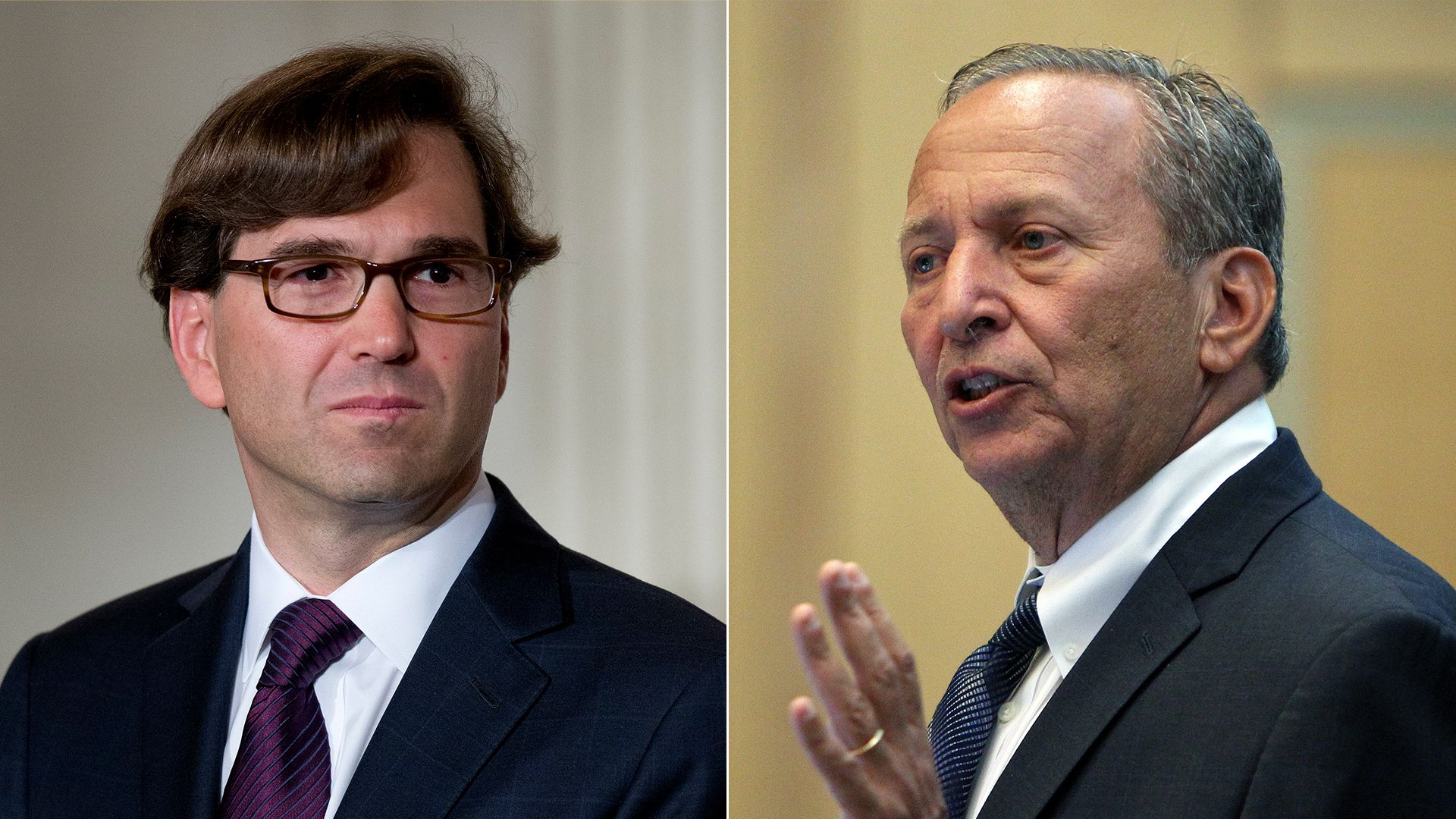
Some Democratic economists who questioned the size of President Biden’s $1.9 trillion coronavirus relief bill — including Larry Summers — are now offering their full-throated support for his bipartisan infrastructure proposal.
Why it matters: Support for the package, undercut when Biden issued a veto threat last week, is fickle. Endorsements from both the political and policy worlds will be key to convincing nervous lawmakers to back or stick with it.
Nearly three-dozen corporate PACs have donated at least $5,000 to Republicans who objected to certifying the 2020 election, yet Toyota leads by a substantial margin.
Why it matters: Following Jan. 6, huge segments of corporate America rethought their political-giving programs. The new numbers suggest some large companies have decided to maintain support — even for members of Congress deeply enmeshed in the pro-Trump conspiracy theories that fueled the Capitol attack.
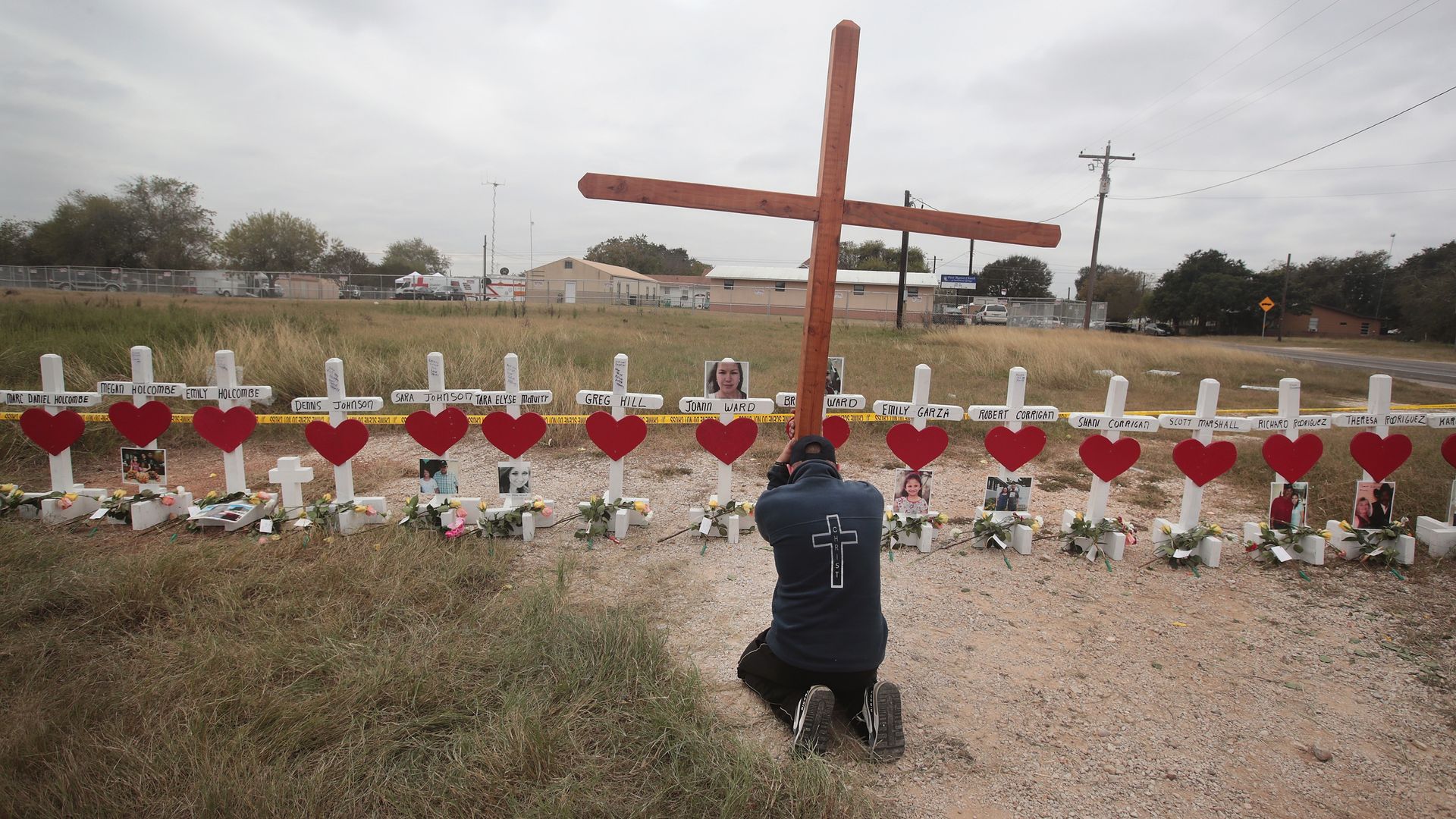
Survivors and families of victims of a 2017 mass shooting in a Texas church can't sue the gun retailer that sold the weapon used in the attack, the state's supreme court has ruled.
The big picture: Plaintiffs alleged in four lawsuits against Academy Sports and Outdoors that the San Antonio-area store negligently sold the gun to Devin Kelley in 2016, who went on to kill 25 people at the First Baptist Church in Sutherland Springs before killing himself.