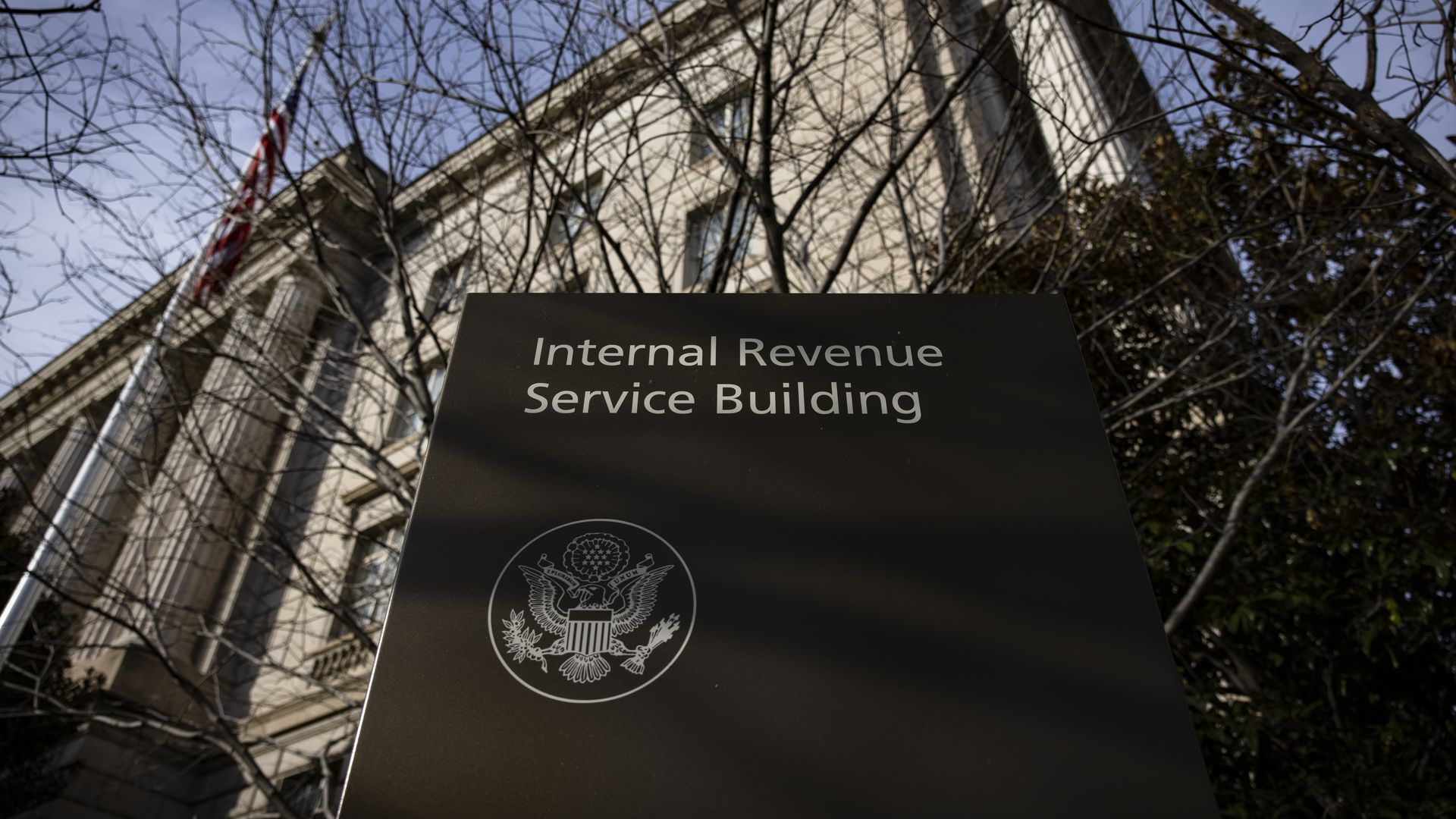
The IRS will push its April 15 tax filing deadline to May 17, the agency and Treasury Department announced in a joint statement out Wednesday evening.
Why it matters: The decision comes after lawmakers have asked the agency to postpone the deadline due to "what is becoming one of the most complicated tax seasons in decades" due to the coronavirus pandemic, Bloomberg writes.
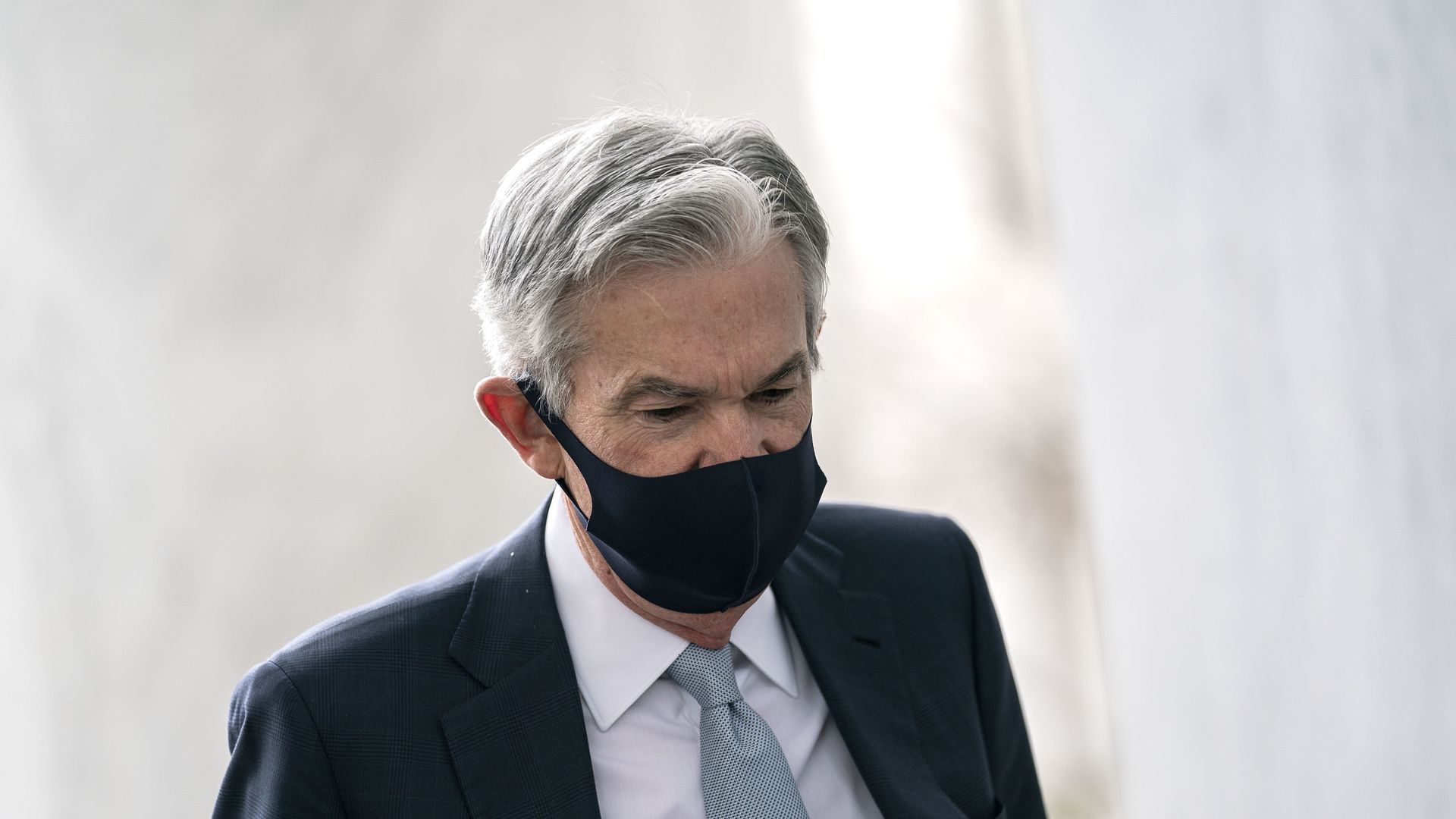
The Federal Reserve kept its policy rate unchanged on Wednesday but sharply ramped up its expectations for economic growth — while affirming that it does not plan to raise interest rates until 2023. The central bank also curiously reworded the public statement accompanying its decision.
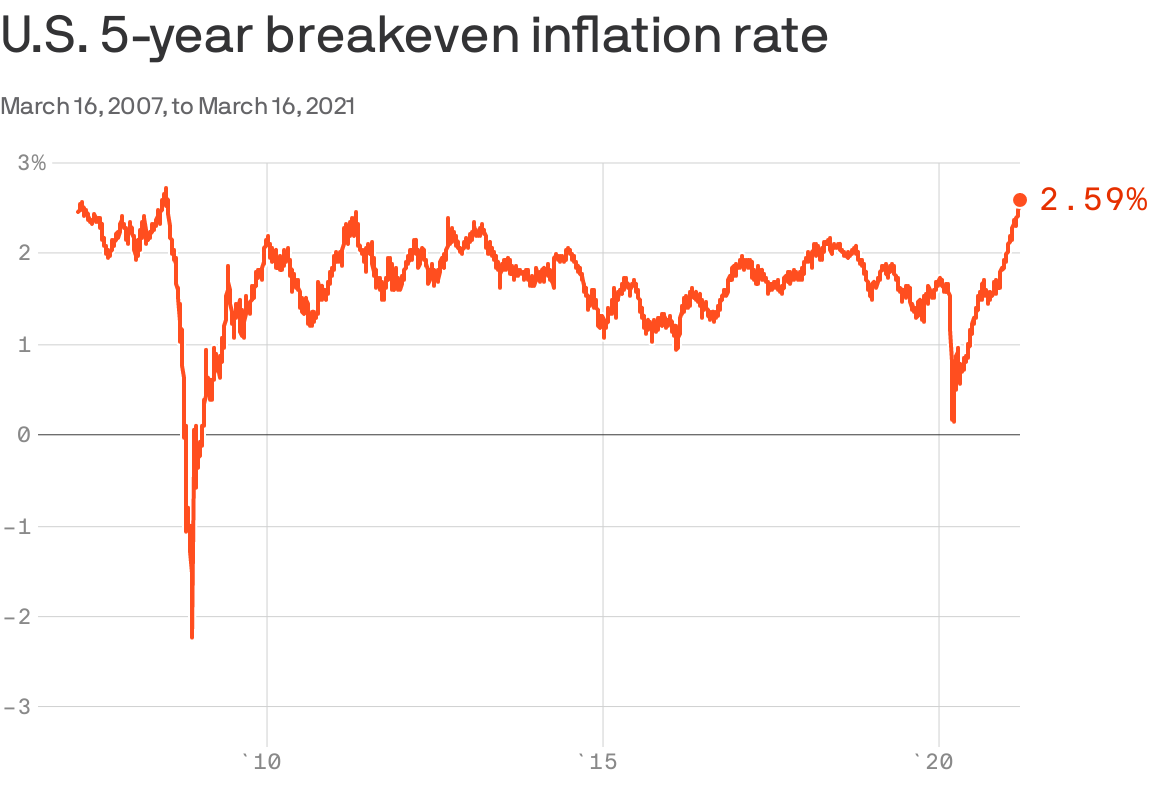
Why it matters: U.S. inflation expectations have shot up in recent months while unemployment remains historically high, making guidance on the Fed's next steps particularly important.
Venture capitalists Keith Rabois has teamed up with Atomic's Jack Abraham as founders of OpenStore, a stealthy company that plans to acquire a number of small e-commerce businesses, Axios has learned.
Why it matters: The last startup Rabois formed was Opendoor, a home buying and selling platform that was initially ridiculed by some top real estate industry execs. Then companies like Zillow copied the model and Opendoor eventually went public via SPAC, with a current market cap north of $15 billion.
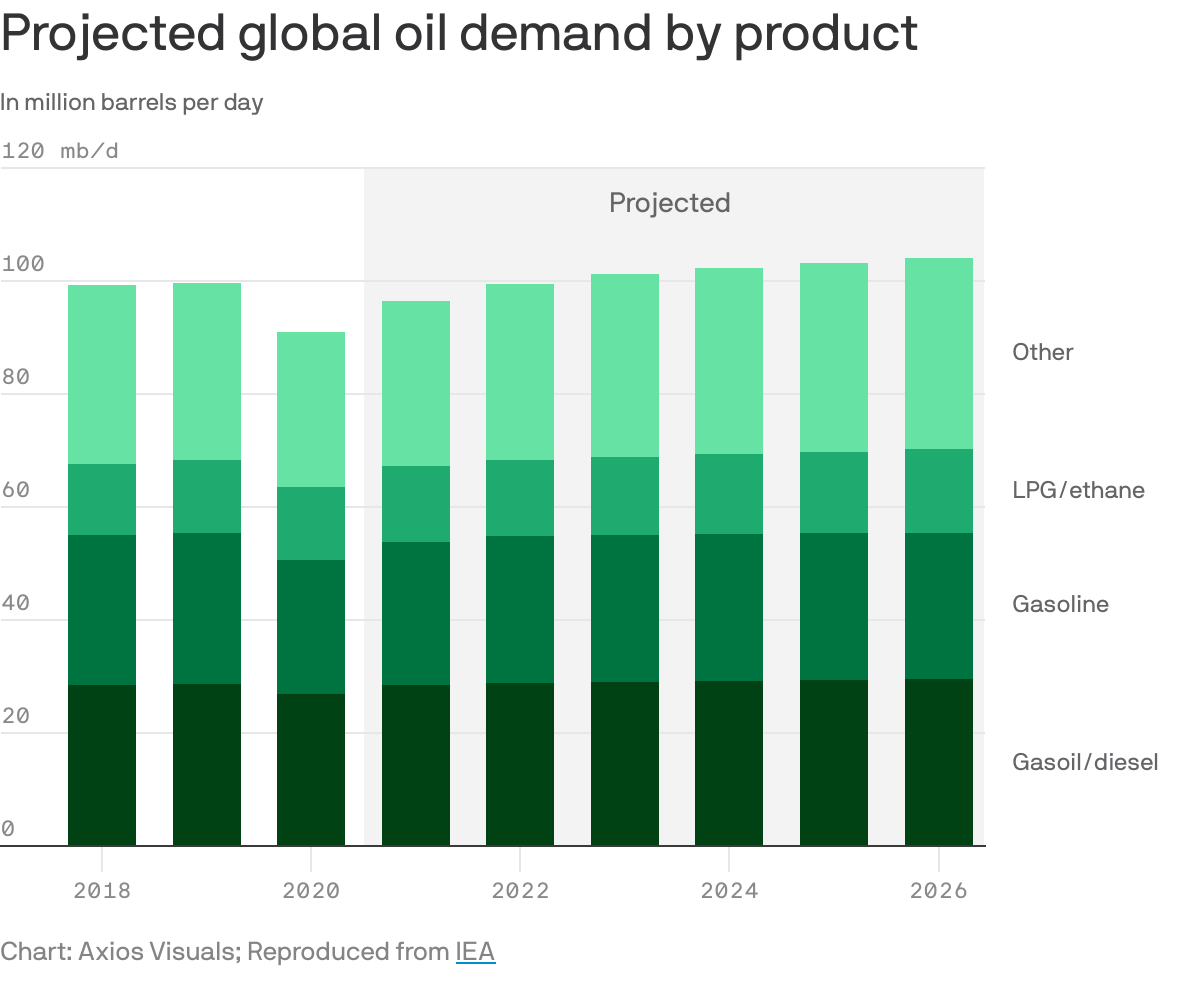
Global oil demand is slated to rise above pre-pandemic levels over the next few years but nonetheless remain lower than it would have been absent COVID-19's emergence, a new International Energy Agency analysis project.
Why it matters: The pandemic is certainly having a lasting effect — its mid-decade demand estimate is 2.5 million barrels per day lower than the growth level expected before the crisis.
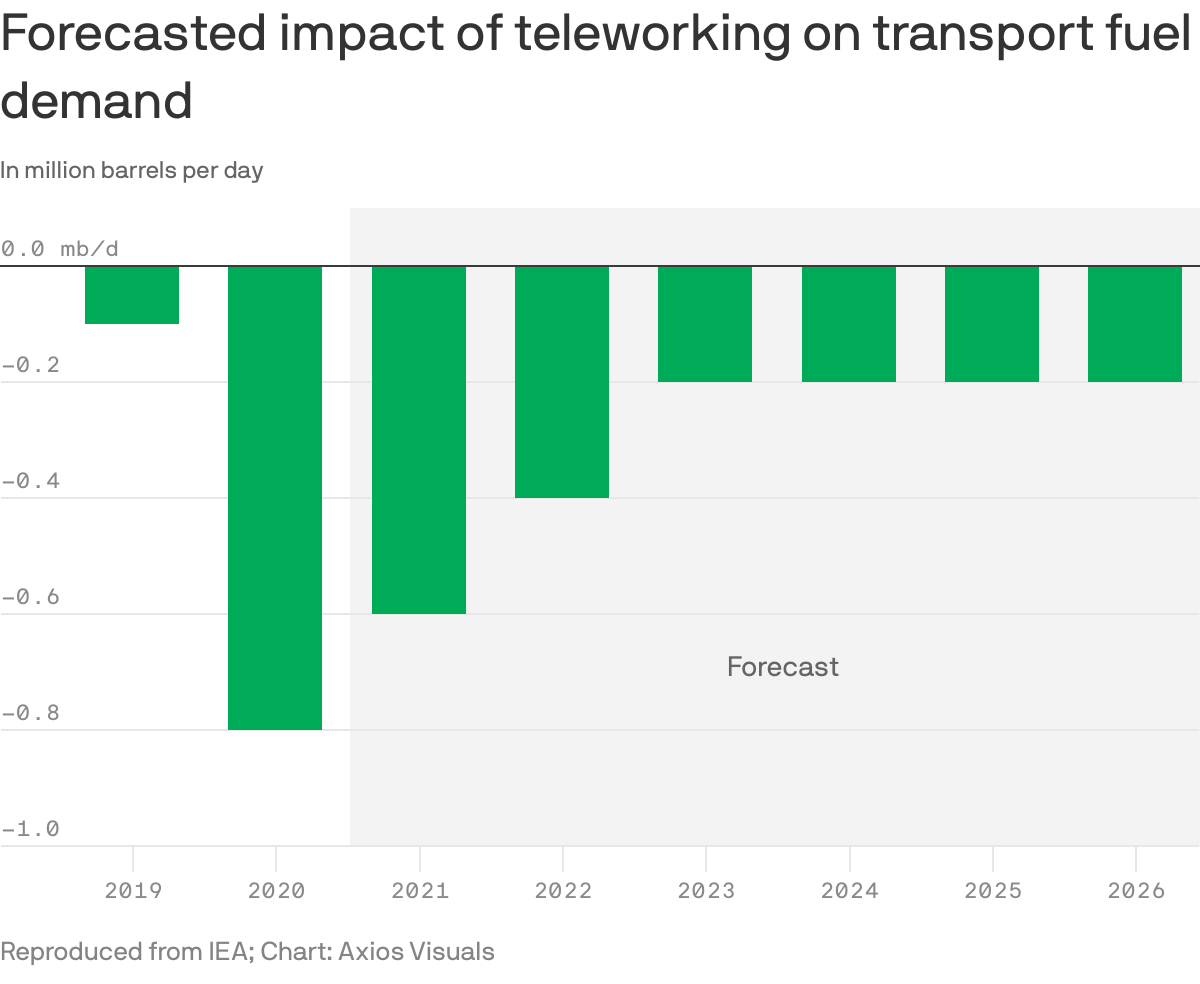
IEA's new multiyear oil outlook estimates that working from home isn't widespread or sticky enough globally to have much lasting effect on oil consumption absent much stronger pro-telework policies.
Why it matters: COVID-19 prompted speculation (from yours truly and others) about whether behavioral changes happening for tragic reasons might have long-term effects on various kinds of energy demand.
Roundhill Investments is launching a new thematic ETF designed to give everyday investors exposure to the world of professional sports.
Details: The Roundhill MVP ETF (NYSE: MVP), which launches Wednesday, consists of teams like the Knicks (via shares in MSG), leagues like Formula One (via shares in Liberty Media) and brands like Nike and Adidas.
Inflation is the number one risk for the market, according to a monthly survey of global asset managers commissioned by Bank of America, displacing COVID-19 for the first time since February 2020.
Details: Both inflation (37% of respondents) and the risk of a market taper tantrum (35%) beat out the pandemic as the top risk for investors.
Having been battered and bruised by the broad rally in stocks this year and the meme stock resurgence, bearish investors are holding onto and even increasing their short bets, wagering even more money that stocks like GameStop and AMC will sink along with the broader market.
Background: Hedge funds got burned on short positions earlier this year as meme stocks jumped by hundreds of percentage points in just weeks, and then scrambled to reduce risk and square their positions.
The total number of U.S. mortgage applications declined again for the week ending March 12, the fifth time in six weeks that overall mortgage applications have fallen and the seventh in the past nine, according to data from the Mortgage Bankers Association.
Why it matters: The decline shows that rising U.S. interest rates are having a significant impact on the mortgage market, weakening demand, especially for refinance applications.
Tech's burgeoning new labor movement has its own class divide — between a conventional organizing push among blue collar employees and an effort among white collar employees that's based on a different set of concerns and goals.
Why it matters: The tech industry rose to power and wealth largely union-free. But a recent wave of labor organizing catches tech's biggest companies at a vulnerable moment, when they're being challenged by antitrust suits, hostile regulators and doubts among their workforce.
Why it matters: With Silicon Valley homogeneity not changing very quickly, some are hopeful that emerging tech centers elsewhere will be more inclusive for workers.But this aspiration could be easily thwarted if local tech workers lack supportive laws.
Office workers around the world are being told they can work from home forever. But that doesn't mean they should.
Why it matters: Even though work is possible from anywhere, most companies are sticky, and they will hold onto their in-person cultures. That means those who stay home might be out of sight and out of mind when it comes to promotions and other opportunities.













/2021/03/16/1615932688586.gif?w=3840)