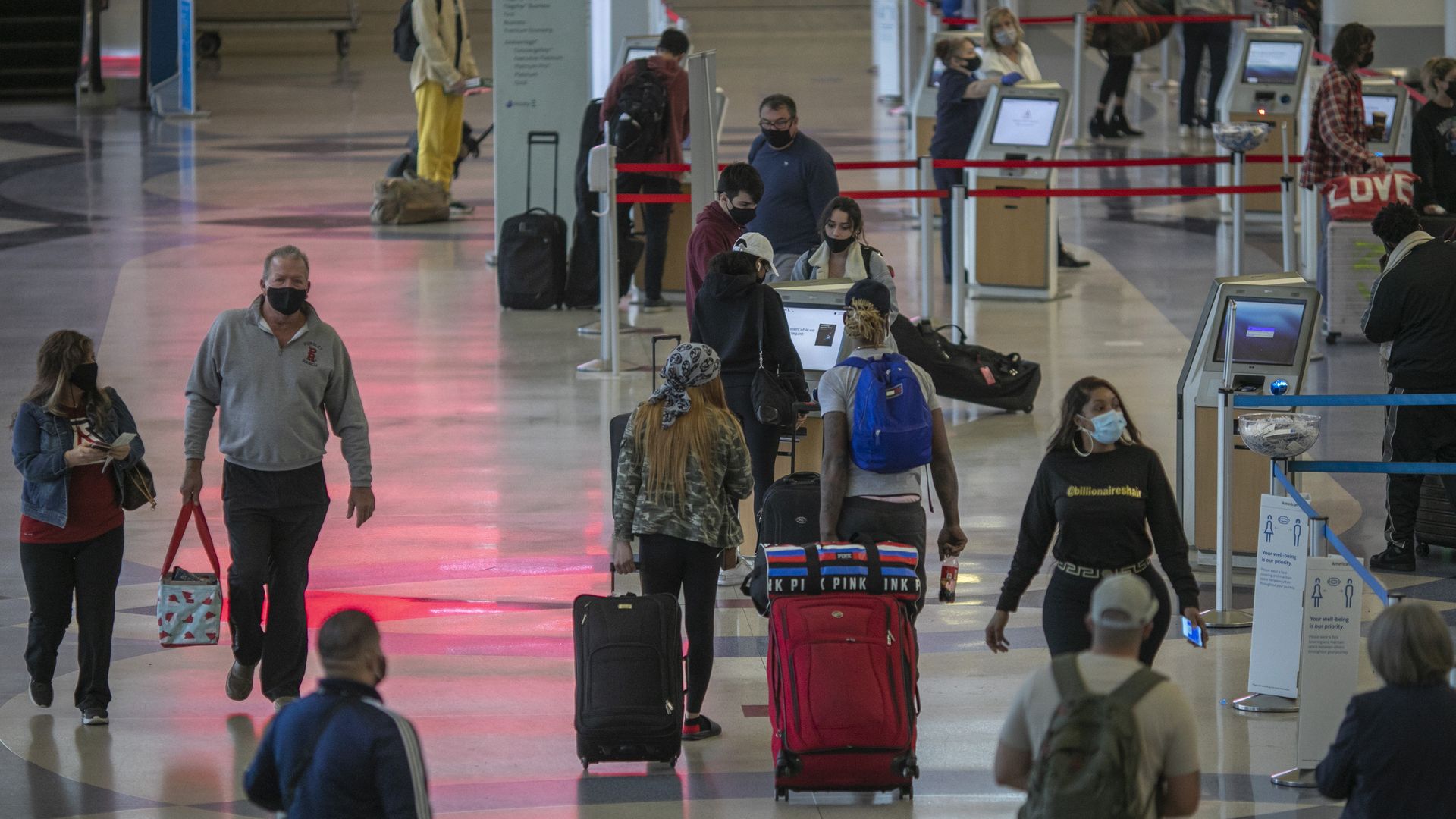
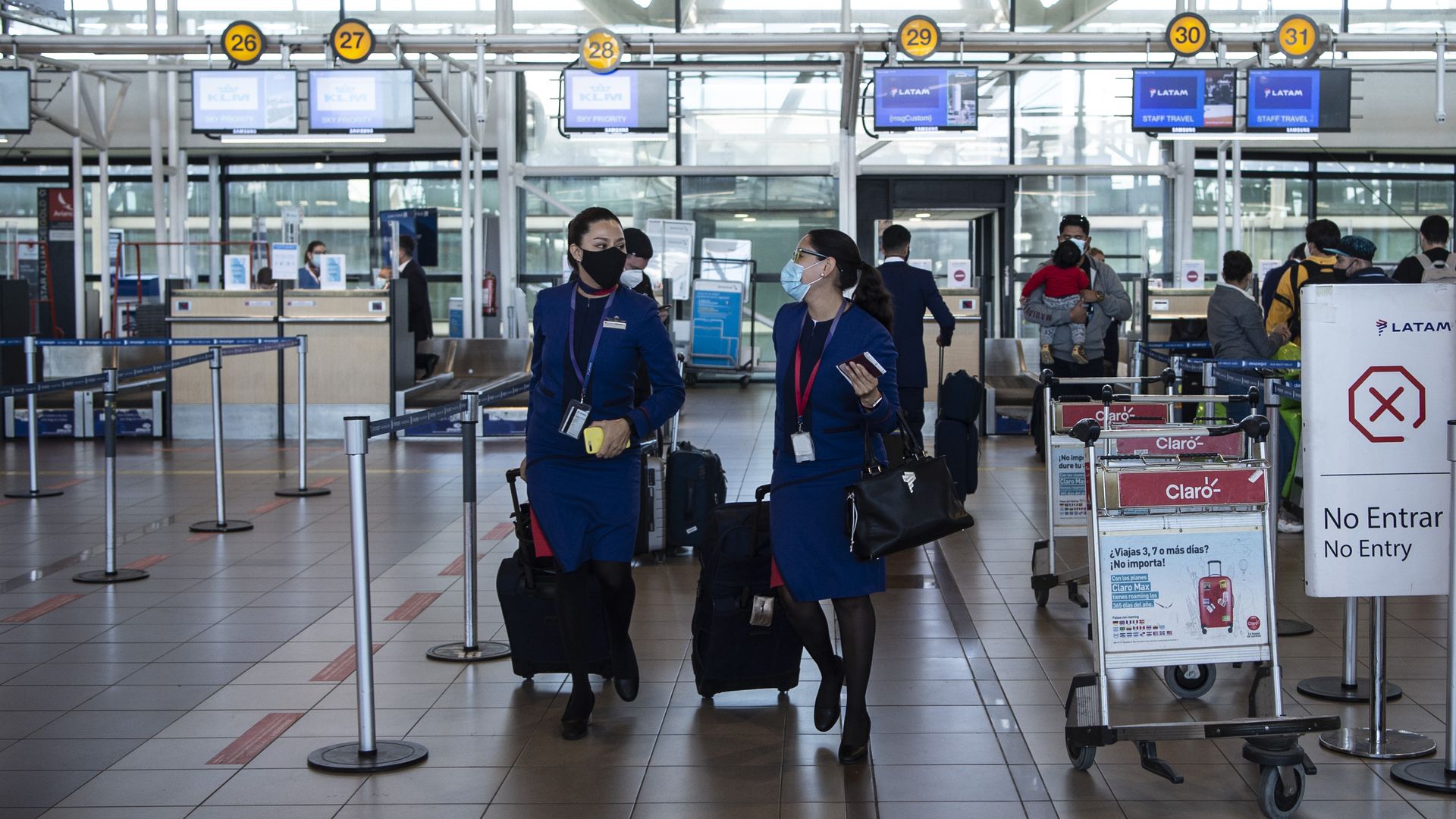
Many Americans chose to travel by plane ahead of the Thanksgiving holiday.
Why it matters: The CDC advised Americans on Nov. 19 not to travel for Thanksgiving, and that doing so may increase the chance of contracting and spreading COVID-19. The U.S. is currently seeing the most coronavirus cases and the greatest strain on hospitals since the start of the pandemic.
Stripe, a San Francisco-based digital payments infrastructure company, is in talks to raise new private funding at a valuation of at least $70 billion, and perhaps as high as $100 billion, per Bloomberg.
Why it matters: This would make Stripe the world's second-most valuable venture-backed company, or maybe the most valuable if ByteDance divests its majority stake in TikTok by this Friday's CFIUS deadline. It's also another indication that Stripe's founding Collison brothers are reticent to bring the company public.
ViacomCBS said Wednesday it is selling book publishing behemoth Simon & Schuster to Penguin Random House, a subsidiary of German media giant Bertelsmann SE & Co., for $2.175 billion in an all-cash deal.
Why it matters: The deal brings together the biggest and third-biggest book publishers in the U.S., which means it could be met with antitrust scrutiny.
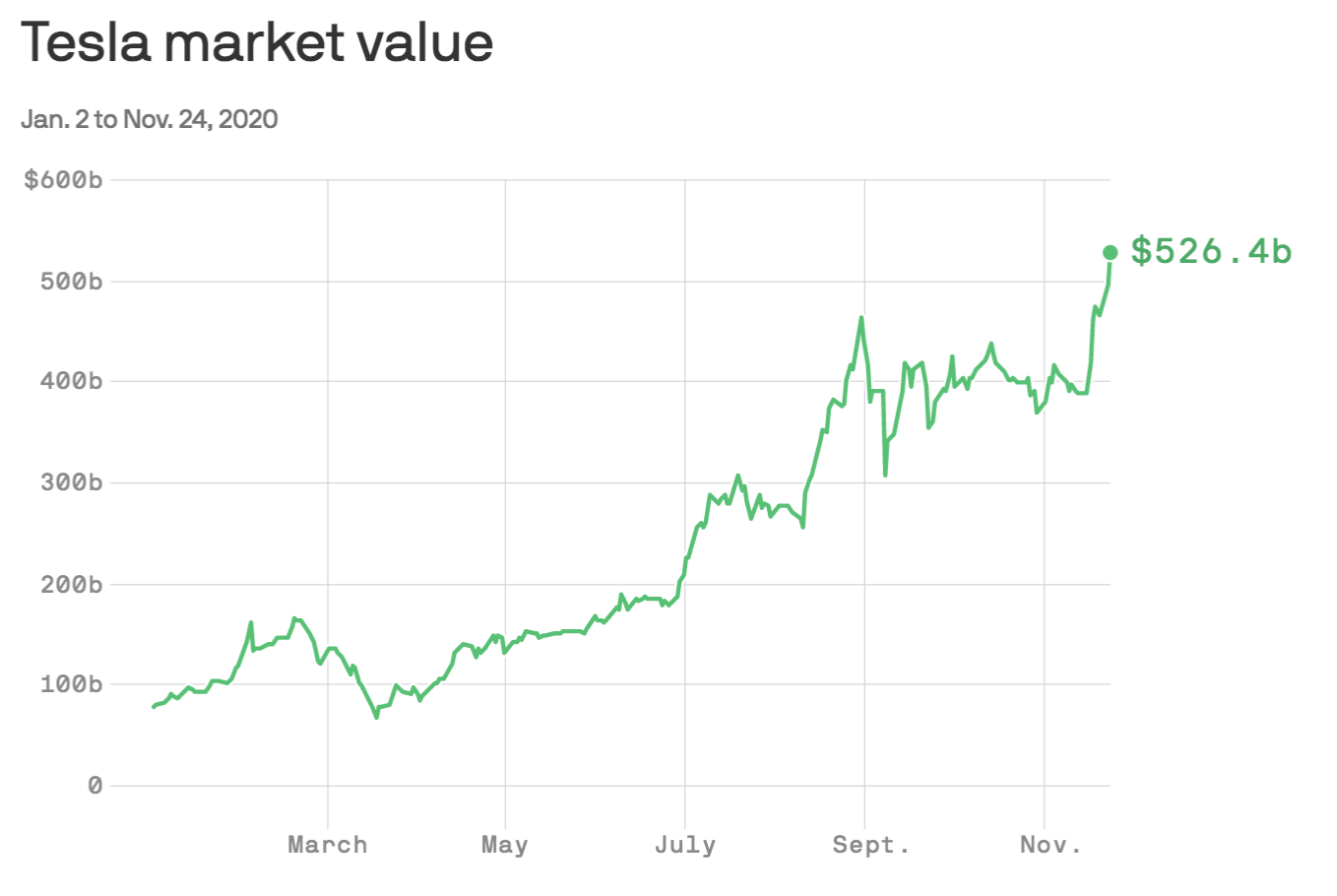
Tesla's market capitalization blew past $500 billion for the first time Tuesday.
Why it matters: It's just a number, but kind of a wild one. Consider, via CNN: "Tesla is now worth more than the combined market value of most of the world's major automakers: Toyota, Volkswagen, GM, Ford, Fiat Chrysler and its merger partner PSA Group."
A move by Treasury Secretary Steven Mnuchin could handcuff his likely successor Janet Yellen's ability to immediately restart Fed economic programs.
Driving the news: Mnuchin is planning to shift $455 billion in unspent CARES Act funds into a special account that would require Congress' permission to access, Bloomberg reports.
It's the time of year when Wall Street shops are rolling out predictions for where they see the stock market headed in the coming year. There's one common theme: Widespread distribution of a vaccine is the reason to be bullish.
Why it matters: Analysts say vaccines will help the economy heal, corporate profits rebound and stock market continue its upward trajectory.
Amazon may get more media buzz, but there is simply no retailer, or grocer, in America that does more business than does Walmart. And that gives John Furner, its head of U.S. operations, one of the best views into Black Friday and Thanksgiving grocery shopping.
Axios Re:Cap talks to Furner about what he's seeing from his unique perch, and what pandemic-driven changes he expects will outlast the virus.
The U.S. Securities and Exchange Commission has proposed rule changes that would make it possible for gig companies to give equity to their workers as part of their compensation if they meet certain requirements.
Why it matters: This is something gig companies including Uber and Airbnb have asked the SEC to do over the years as a way to share their companies' upside with these non-employees.
The global adoption of remote work may leave the rising powers in the East behind.
The big picture: Despite India's and China's economic might, these countries have far fewer remote jobs than the U.S. or Europe. That's affecting the emerging economies' resilience amid the pandemic.
The food service sector — which was dealt a massive blow during the pandemic — is coming back, but not all jobs are experiencing the same recovery.
The big picture: While restaurants are hiring almost as many cooks as they did last year, job openings for bartenders and banquet servers have plummeted, according to an analysis of job postings by Indeed economist AnnElizabeth Konkel.
If you're going to be working remotely for the foreseeable future and want to save some money on rent, you could move to Tulsa — and get paid $10,000 to do so.
Why it matters: Tulsa Remote — the Kaiser Family Foundation-funded program that's offering this perk to teleworkers — is a prime example of smaller cities attempting to leverage remote work to draw in talented professionals from the big, coastal metros.
People of color, women and LGBTQ+ employees report greater difficulties working during the pandemic, according to a McKinsey report released last week.
Why it matters: Existing inequities have only been exacerbated by the pandemic. The disproportionate effects on these communities won't disappear as COVID-19 continues to ravage the world.
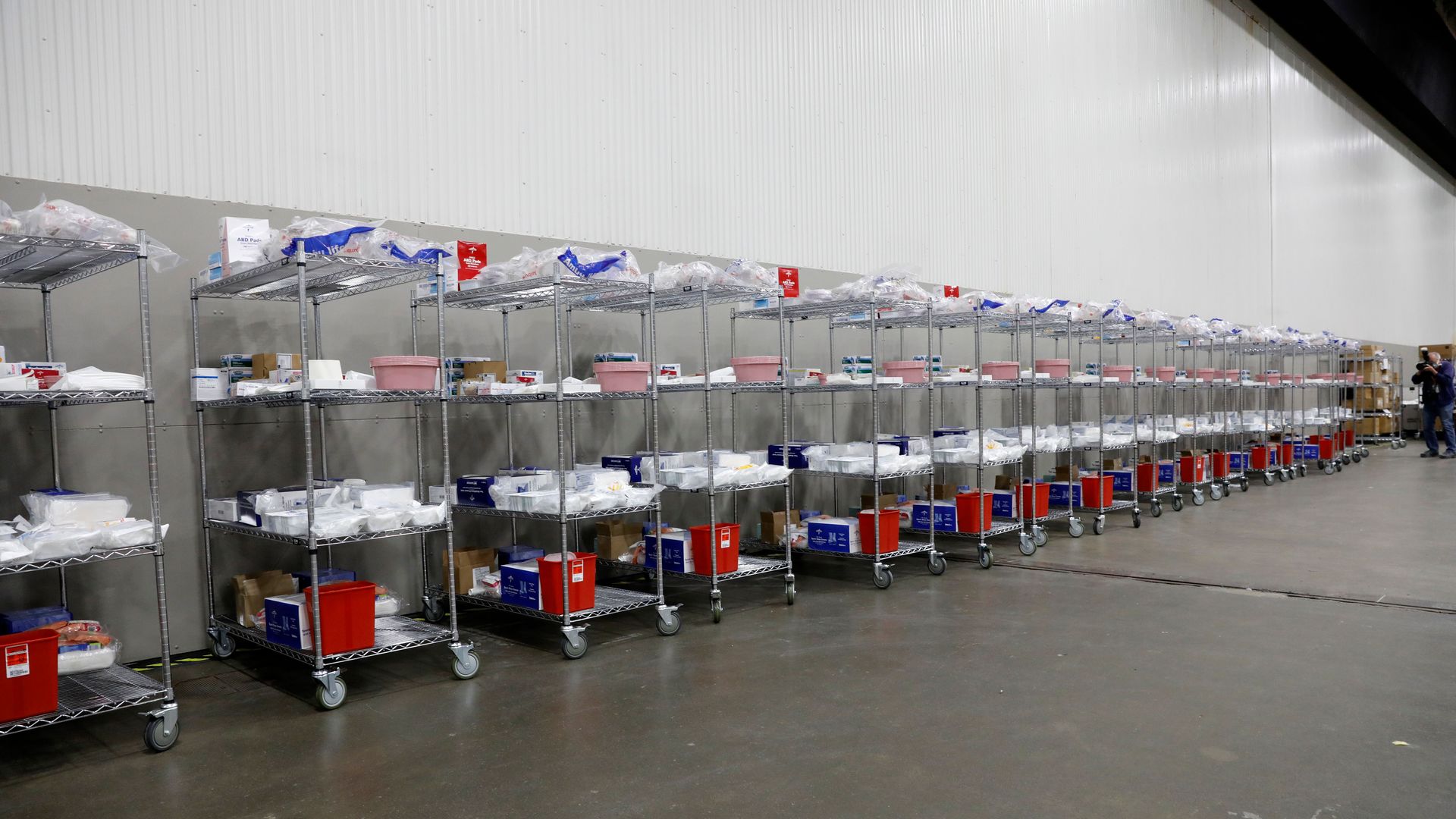
UPS and Ford Motor Company have both announced they ordered portable, ultra-low temperature freezers for storing coronavirus vaccines when they become available.
Why it matters: While the promising vaccine developed by Pfizer and BioNTech is 95% effective, it can only be stored at or around -70 degrees Celsius.
Butterball estimates that it sells one out of every three Thanksgiving turkeys, but knows that this year's celebrations will be different than years past.
Axios Re:Cap talks with the turkey giant's CEO Jay Jandrain about what people are buying, what they're asking the "Turkey Talkline" and what the pandemic has meant for his business.
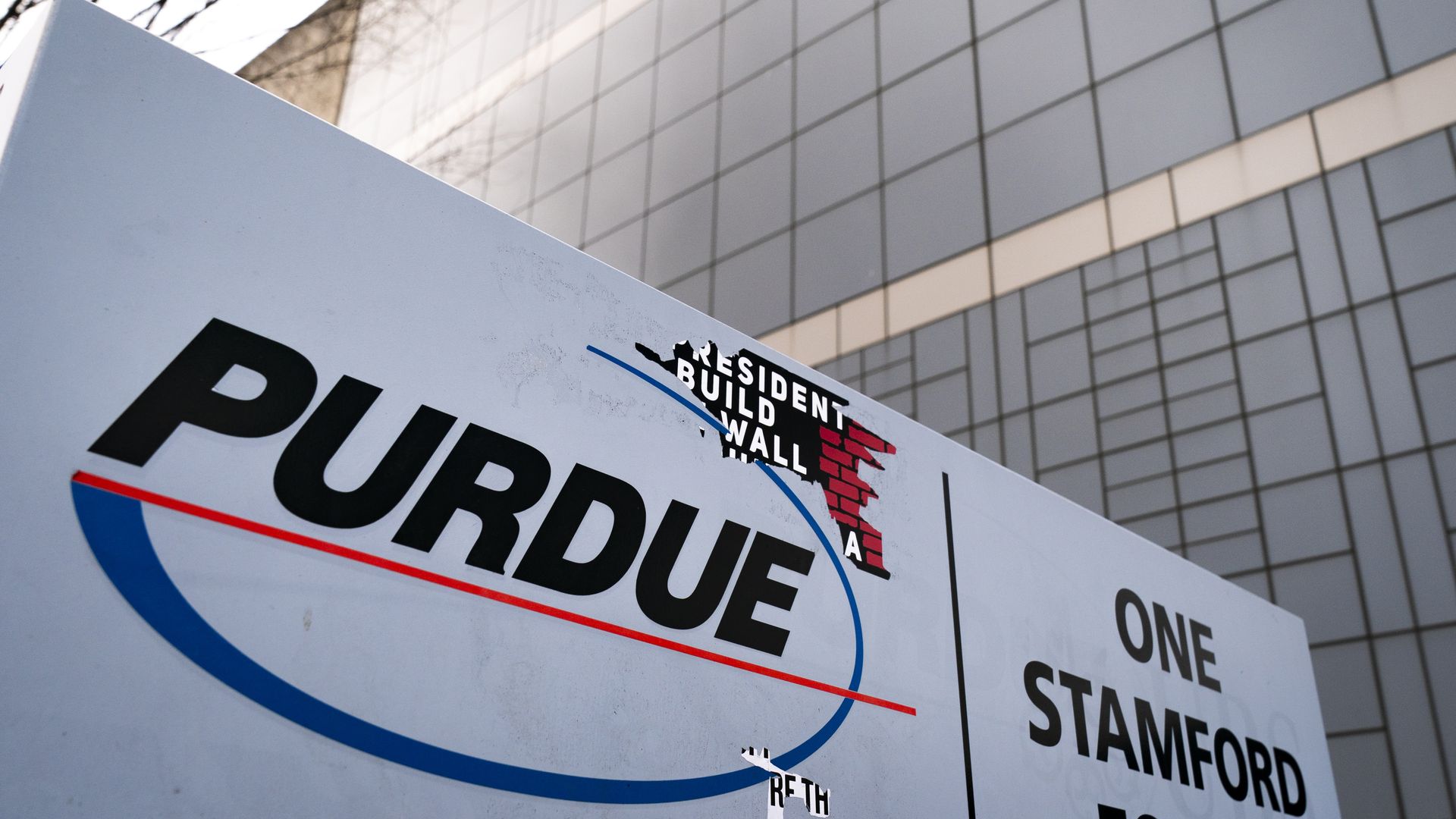
Purdue Pharma, the maker of the highly addictive painkiller OxyContin, pleaded guilty on Tuesday to three criminal charges, AP reports.
Why it matters: The plea signals the company's admission it played a role in the opioid epidemic that has contributed to nearly half a million deaths over the past two decades.
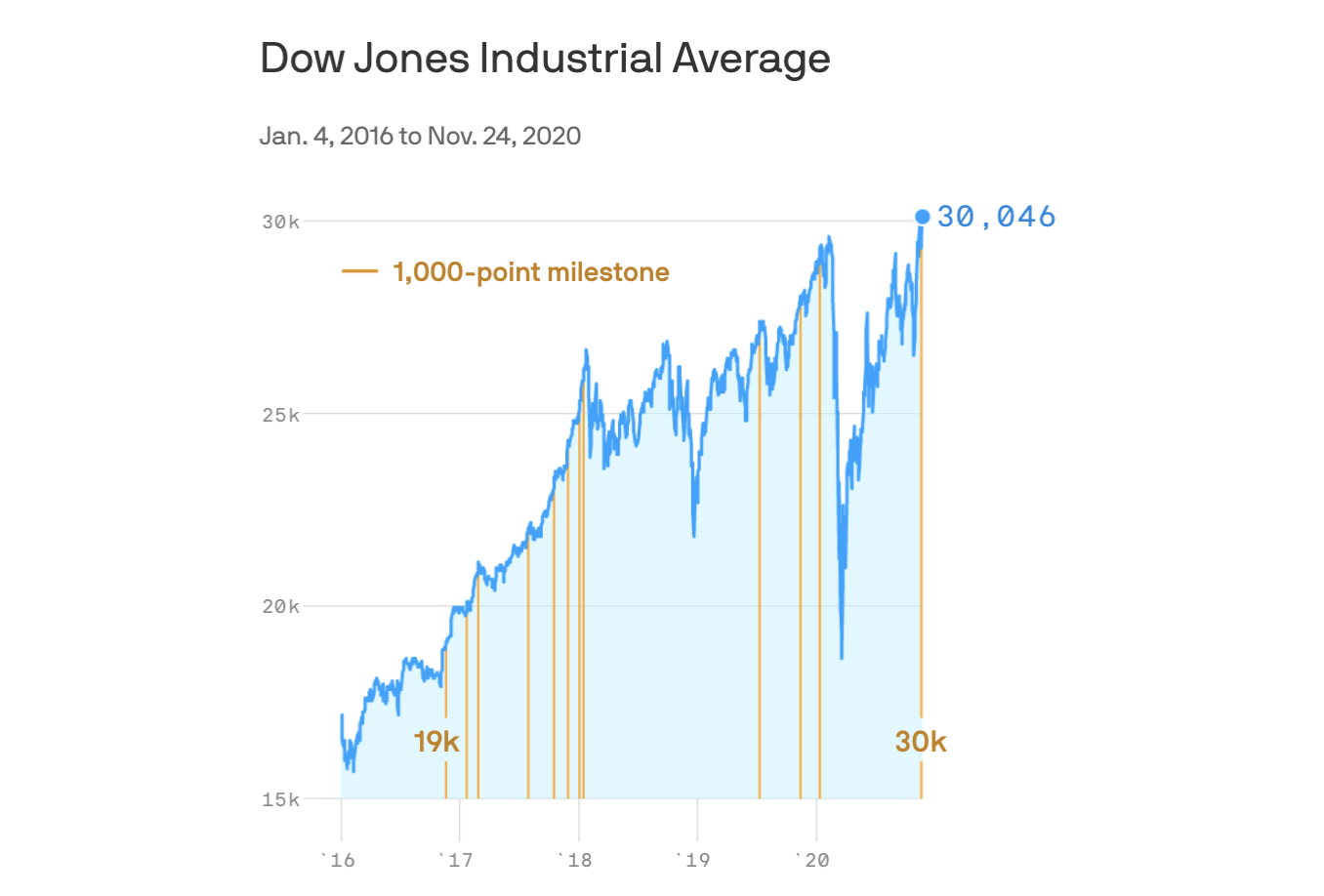
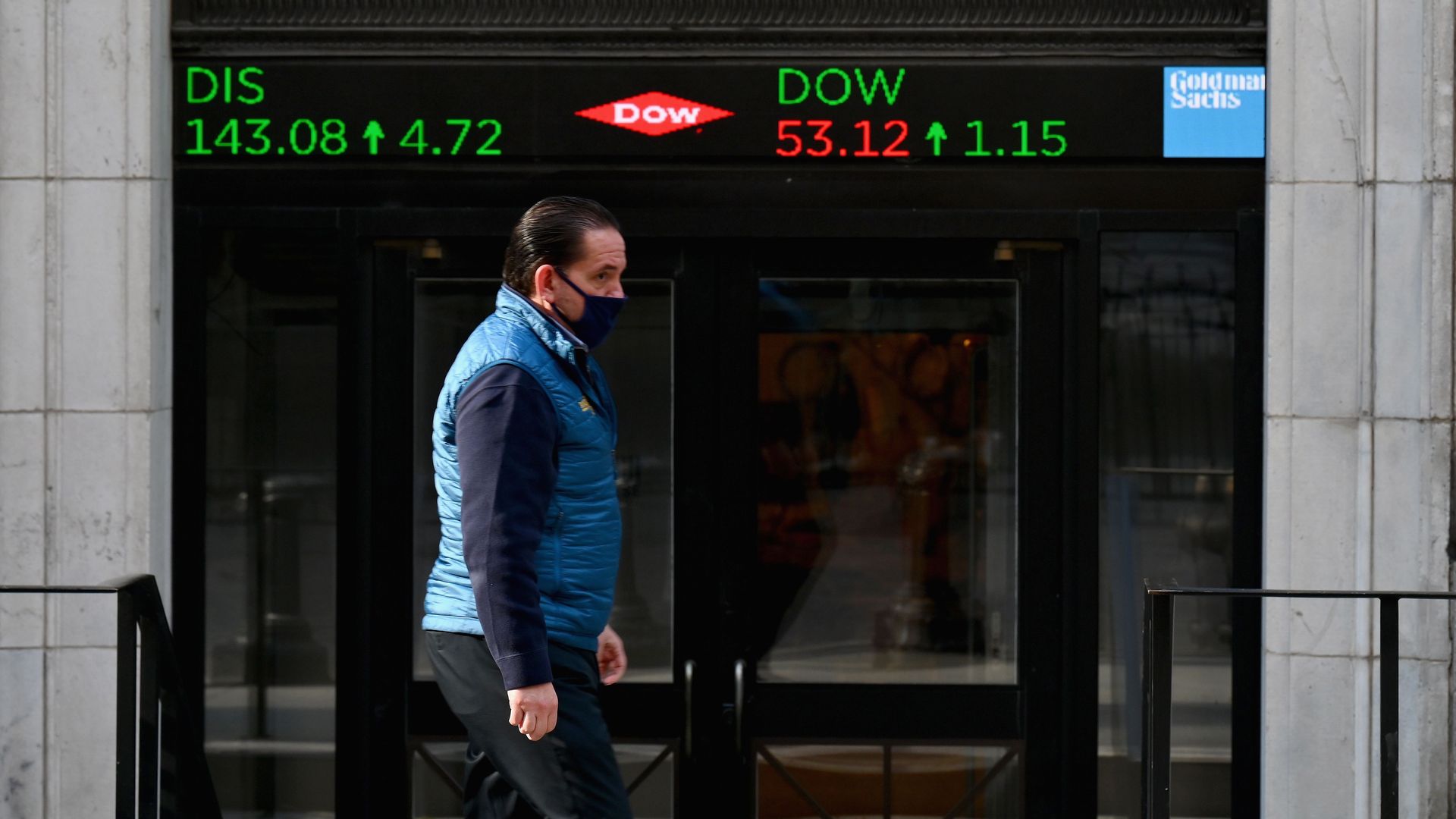
The Dow Jones Industrial Average traded above 30,000 for the first time ever on Tuesday.
Between the lines: The milestone is symbolic — the Dow hitting 30,001, for instance, is no less significant. However, it underscores the stock market's meteoric rebound from the onset of the coronavirus pandemic: just 8 months ago, the Dow traded below 19,000.
The Congressional Hispanic Caucus on Monday met with The New York Times to discuss the lack of Latino representation at the paper.
The big picture: Leaders in the Hispanic community have for years been putting pressure on U.S. media companies to include more Hispanic representation in their coverage. The election has served as a wake-up call for many news outlets to take those calls seriously.
Nielsen, the decades-old TV and radio measurement company, is pushing to position itself to be the top vendor for streaming TV measurement.
Why it matters: The industry loves to rag on Nielsen for being outdated, but it's still the most authoritative vendor in measuring tune-in for live television, and increasingly streaming TV content.
The New York Times and The Washington Post have very different strategies for building the subscription news company of the future.
The big picture: Sources tell Axios that the Post is nearing 3 million digital subscribers, a 50% year-over-year growth in subscriptions and more than 3x the number of digital-only subscribers it had in 2016. The New York Times now has more than 6 million digital-only subscribers, nearly 3x its number from 2016.
A gauge of business activity in the U.S. continued to soar past pre-pandemic levels, while Europe's lockdown hurt its activity further in November, according to preliminary data from IHS Markit.
Why it matters: The index is a closely watched measure of the manufacturing and services sectors across the globe.
In his first on-camera interview in four years,Charles Koch told "Axios on HBO" that he "screwed up by being partisan," rather than approaching his network's big-spending political action in a more nonpartisan way.
Why it matters: Koch — chairman and CEO of Koch Industries, which Forbes yesterday designated as America's largest private company — has been the left's favorite face of big-spending political action.
The official guidance of the CDC says that "postponing travel and staying home is the best way to protect yourself and others this year."
Southwest Airlines CEO Gary Kelly, however, took the opposing position when he was interviewed by "Axios on HBO." "You should fly," he told me, adding that "we need to have as much commerce and business and movement as is safe to do."
The International Air Transport Association (IATA) announced Monday that it's "in the final development phase" of a "digital passport" mobile app that would receive COVID-19 test and vaccination certificates.
Why it matters: Pera statement from Nick Careen, IATA's senior vice president of airport, passenger, cargo and security, the app would "get people traveling again safely," as the airline industry seeks to recover from the pandemic.
Southwest Airlines will start flying the 737 MAX aircraft "as quickly as is efficient and cost effective," its CEO Gary Kelly told "Axios on HBO." Still, he said, "it'll be well into next year before we have a revenue flight."
Why it matters: The airline says 25% of its passengers have indicated that they are not comfortable flying on the aircraft. But Kelly says "the Max is a great airplane," with "a wonderful customer experience."