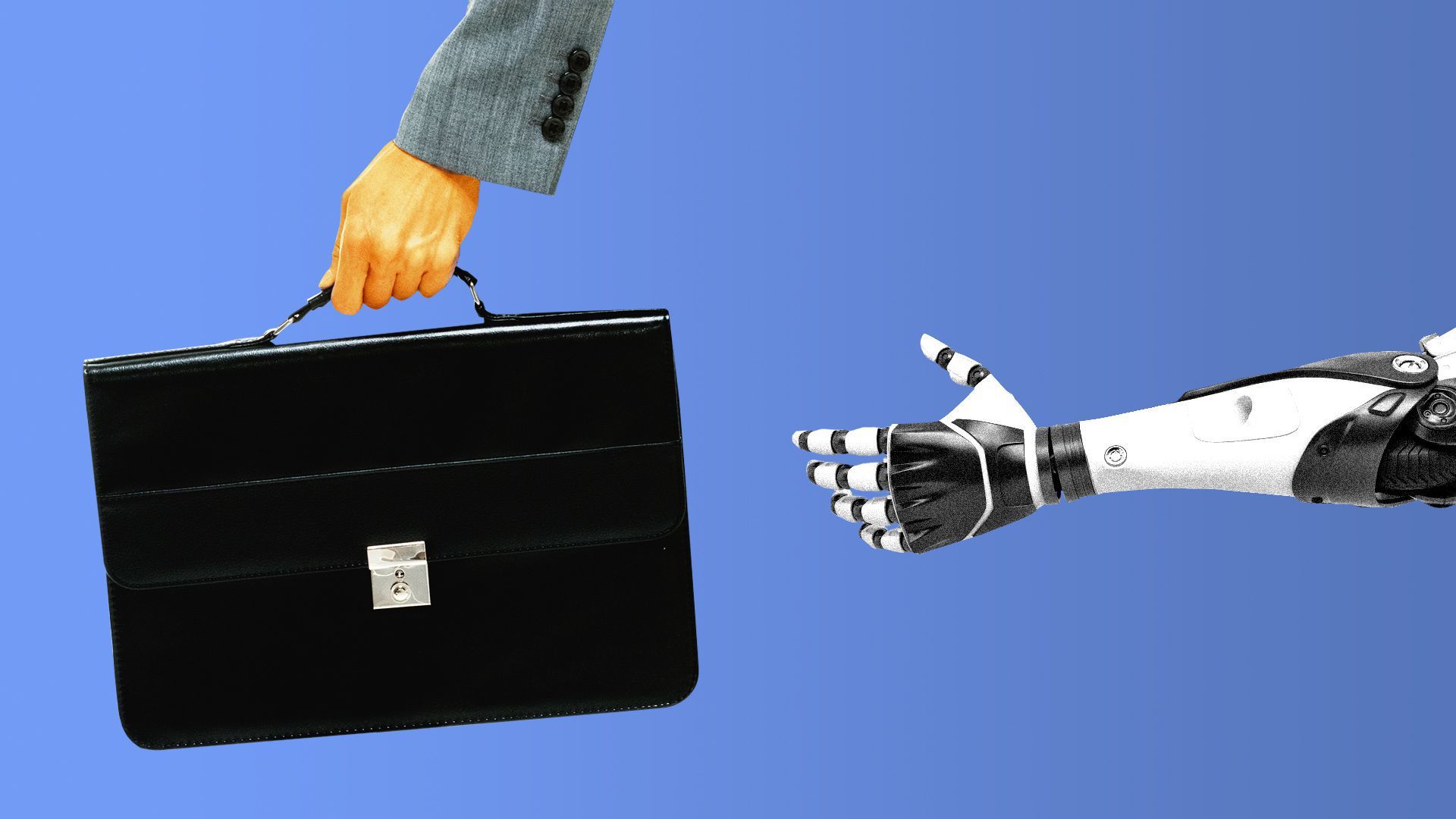
XPRIZE, a nonprofit organization that holds grand competitions to inspire innovation, announced this week that it would launch a $5 million contest to help retrain workers who lost employment to automation.
Why it matters: The pandemic has only accelerated the job-destroying effects of automation. As the U.S. looks to put tens of millions of people back to work, truly big solutions will be needed.
A career Justice Department official on Wednesday testified that Attorney General Bill Barr abused his power by directing investigations of marijuana company mergers because of his personal dislike of the industry.
Today's episode of Axios Re:Cap includes the person who led one of the companies cited in the complaint. We talk to him to find out what he thought then and what he thinks now.
Bayer has agreed to pay just over $10 billion in order to settle roughly 125,000 claims that its Roundup weedkiller cases cancer and resolve potential future litigation, the company announced on Wednesday.
The big picture: The settlement includes a $1.25 billion deal for possible future litigation against the company by people who report being diagnosed with non-Hodgkin's lymphoma (NHL) after using Roundup.
Sana Biotechnology, a Seattle gene regulation startup led by several co-founders of Juno Therapeutics, announced that it raised $700 million in first-round funding.
Why it matters: Juno followed a similar funding strategy, snaring a massive Series A round from some of the same backers, before quickly going public and then being acquired for $9 billion by Celgene.
A career Justice Department official named John Elias today will testify that Attorney General William Barr directed improper antitrust reviews of marijuana industry mergers, because of his personal animus toward cannabis.
Why it matters: This isn't the first time that President Trump's DOJ has been accused of letting bias drive antitrust decisions. But it's the first time that a DOJ attorney is the one making the allegations, and it could have consequences for antitrust investigations into other industries.
Chinese tech giant Lenovo is joining a growing list of tech firms that see a business in helping other companies reopen amid the COVID-19 pandemic.
Why it matters: Technology can't address all the issues related to a return to office life, but there are lots of opportunities in the software and hardware needed to detect fevers, keep workers physically separated and track which workers have been in contact with one another.
The dollar is falling back toward its March lows, moving lower against all six of the world's major currencies on Tuesday. The decline has been spurred by rising stock markets around the globe, which have unwound the dollar's safe-haven appeal.
What's happening: Improving data in Europe and the U.S. have bolstered risk-on sentiment.
Consumer confidence had its first major decline since March 31 as a new round of coronavirus cases have spiked, according to the HPS-CivicScience Economic Sentiment Index.
By the numbers: Consumer confidence fell 1.3 points to 47.8. The index's previous reading showed a record increase in confidence in finding a new job and the overall U.S. economy, but both indicators fell — dropping by 2.4 and 2.5 points, respectively — in the latest survey. Confidence in making a major purchase also declined by 1.5 points. ESI's two other indicators, confidence in the housing market and confidence in personal finances, were flat.
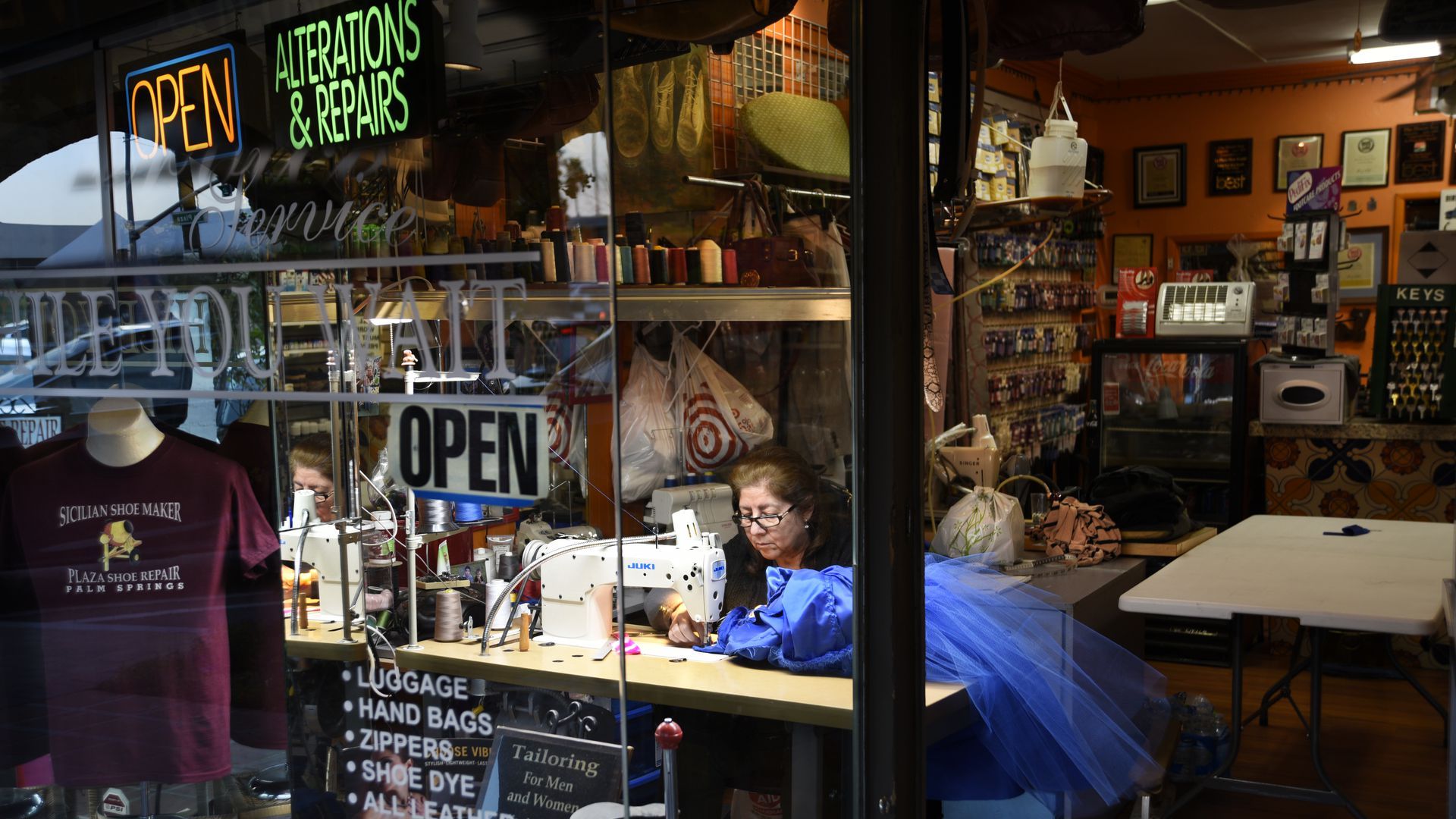
U.S. macroeconomic data is broadly improving but many small businesses are facing a perilous recovery as they attempt to stay afloat after coronavirus-driven lockdowns throughout the country. That's true even for the many that received government assistance.
By the numbers: A recent poll of 7,317 small business owners by Alignable finds that 43% of firms that received money through the Paycheck Protection Program (PPP) say they could be out of cash in a month or less.
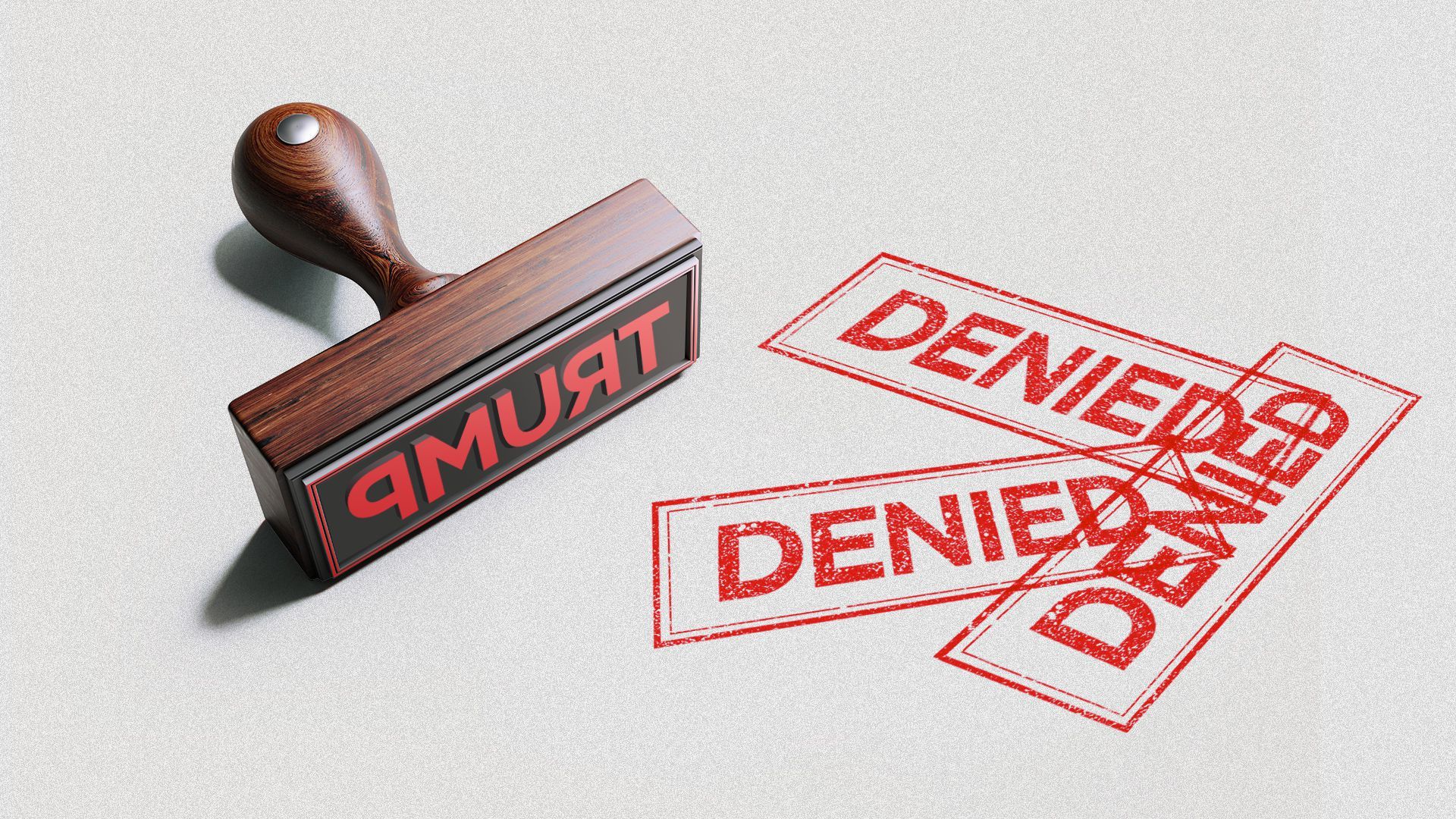
As loud as the fight has been between the Trump administration and Big Tech over charges the industry censors conservatives, the White House's move to extend a ban on skilled-worker visas used widely by tech companies hits Silicon Valley closer to home.
The big picture: In a global tech economy where China and other countries threaten to surpass the U.S. in fields like artificial intelligence, 5G networking and automation, American CEOs treasure what they see as Silicon Valley's brain-and-innovation edge, and fear Trump's order will undermine that advantage.
In February, the U.S. job market was at a 60-year peak. Now, months into a pandemic and an economic recession, many of the job losses are more permanent than previously thought. The pandemic will shift what kinds of work will be available and the skills required to do it.
Even while still living in the midst of the coronavirus pandemic, we're starting to see the long-term effects of lost schooling, curtailed travel and shuttered businesses.
Why it matters: The U.S. will see some $7.9 trillion in lost economic growth through this decade, according to the Congressional Budget Office. The World Bank, meanwhile, predicts global gross domestic product will shrink by 5.2% in 2020 alone — nearly three times as much as the 2009 recession.
Lingering post-pandemic remote work could redistribute some New York City and Silicon Valley jobs to the American heartland, and smaller cities are already competing to attract talent — but it won't be so easy.
The big picture: Although U.S. workers will have the option to scatter and get out of the crowded and expensive metros, the pull of those places may be too strong for the second-tier cities to win out.