Verizon announced on Thursday it will pull advertisements from Facebook and Instagram, per the company's chief media officer.
Why it matters: Verizon is one of the largest companies to join a growing boycott of the social network over its content moderation policies, including how it polices misinformation about Black Lives Matter protests, and handles content posted by President Trump..
Lists of Black-owned bookstores and anti-racism books have circulated on Instagram since the recent reboot of Black Lives Matter protests. Some of those good intentions have had unintended consequences, as a small group of books have quickly run out of stock — sparking frustration for both customers and proprietors.
Axios Re:Cap talks with Danielle Mullen, the founder of Chicago's Semicolon Books, about what's happening with her store, how she's handling orders and what books people should be buying.
The best way to avoid a W-shaped double-dip recession is to ensure that fiscal stimulus continues past July. Many members of Congress, however, worry about the effect of multi-trillion-dollar deficits on the national debt.
What they're saying: The solution, per Stony Brook economics professor Stephanie Kelton: Run deficits without issuing any debt at all. Kelton suggests we should just monetize the deficit instead — fund it by printing dollars rather than issuing Treasury bonds.
The V-shaped recovery is starkest in the stock market, where the Nasdaq has overtaken its pre-virus highs and where the S&P 500 is back to its frothy levels of last November.
The big picture: The health of the stock market provides reassurance that our current crisis will pass without the major loss of wealth that we saw in 2008-09.
The movement of workers across borders shows no sign of recovery, especially coming into and leaving the U.S.
Why it matters: Multinational U.S. corporations are built on international travel. Apple spends $150 million a year on air travel, for instance, and pre-coronavirus was buying 50 business class seats per day just from San Francisco to Shanghai. That level of investment in cross-border ties helped to create a company that's now worth $1.6 trillion.
Country group Dixie Chicks changed their name Thursday to simply The Chicks due to the word's connection to a Civil War-era song linked to the Confederacy.
Why it matters: It comes amid a nationwide cultural shift, which has seen governments, companies and individuals around the country rethink names and symbols with links to racism.
Disney will rebrand the popular ride Splash Mountain at its theme parks in Florida and California because of its connection to the racist 1946 film, "Song of the South," the company announced Thursday.
Why it matters: It comes amid a nationwide cultural shift, which has seen governments, companies and individuals around the country rethink names and symbols with links to racism.
Small businesses are powerful engines of local economies, and they've been hit hard since the onset of COVID-19, according to a JPMorgan Chase Institute analysis of nearly 1.3 million de-identified small firms nationwide.
Why it matters: Cash balances provide liquidity that businesses need to get through a financial shock.
Cities should ease rigid permitting and zoning rules to help businesses and residents recover during the coronavirus pandemic, according to a trio of policy briefs out today by researchers at the Mercatus Center at George Mason University.
Why it matters: They are among the dullest City Hall tasks, but these decisions determine significant outcomes such as where housing can be built and whether restaurants are allowed to open in a particular neighborhood.
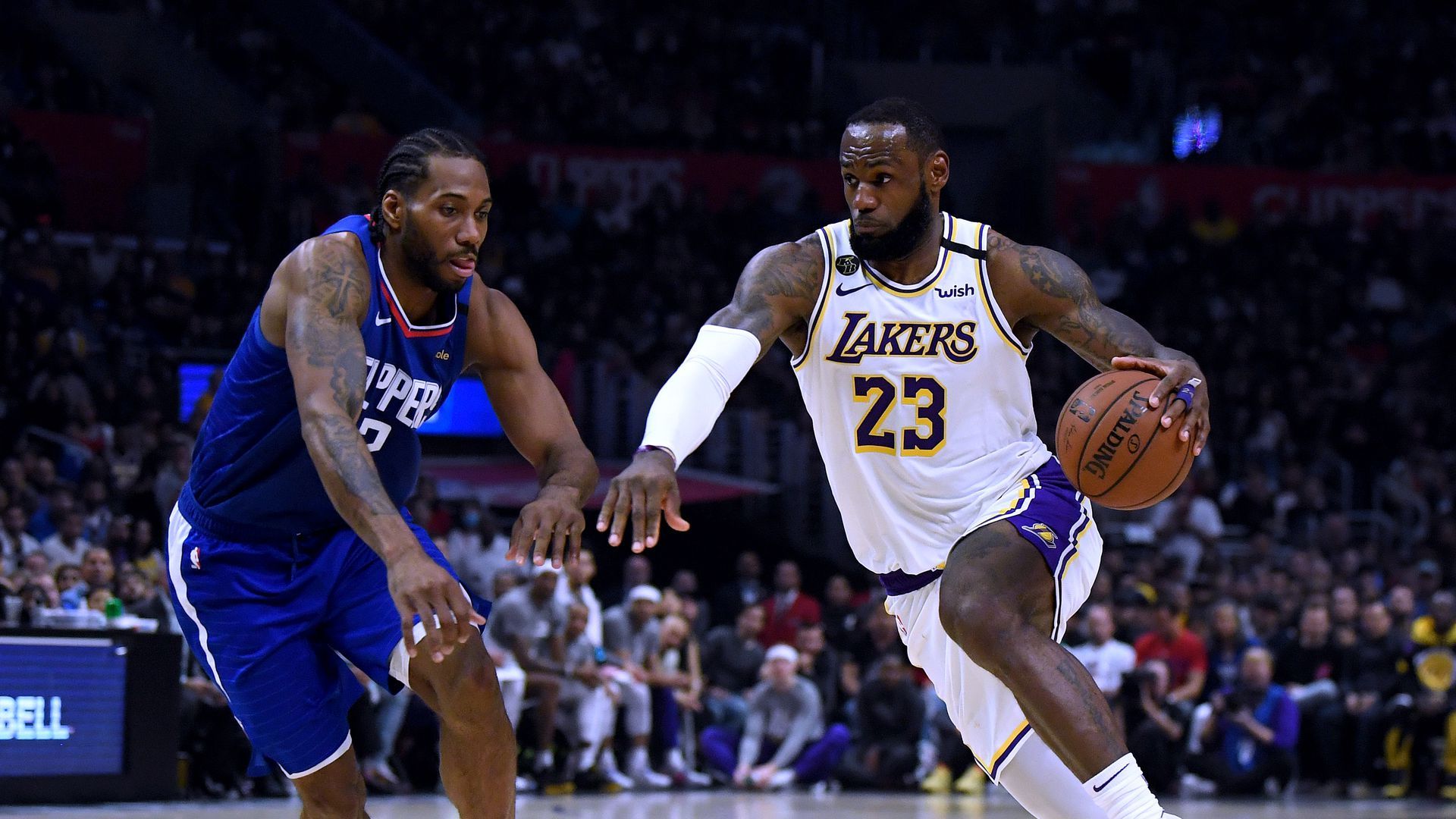
SpringHill, a new media company co-founded by LeBron James and Maverick Carter, raised $100 million from Guggenheim Partners, UC Investments, Elisabeth Murdoch, and SC.Holdings.
Why it matters: James is viewed as the entrepreneurial role model by many of his NBA peers, helping spark league-wide interest in investing and starting new businesses.
A new platform launches today to make connections between Black founders and a select group of top-tier venture capitalists, two groups that too rarely find themselves on the same term sheets.
Driving the news: It's part of Valence, a LinkedIn-type social network for Black professionals. Valence today also will announce a new CEO: Guy Primus, founder and former CEO of The Virtual Reality Co.
The long-term costs of owning an electric car in the U.S. are thousands of dollars lower than gasoline-powered models, a detailed new study by Energy Department researchers finds.
Why it matters: The peer-reviewed paper in Joule adds to the literature on costs by providing a granular, state-level look at power rates (including hourly variations), charging infrastructure types, regional gasoline price differences and other variables.
Another 1.5 million Americans filed for unemployment benefits last week, the Labor Department announced Thursday.
Why it matters: The number of newly filed jobless claims has steadily dropped since peaking in March, but the pandemic is still forcing more than a million workers to the ranks of unemployment each week — over twice the all-time record seen before the coronavirus hit.
The federal government spent $8.55 billion on Supplemental Nutrition Assistance Program (SNAP) benefits last month, a 62% increase from what it spent just two months earlier in March, new analysis from the Peterson Foundation shows.
Details: The coronavirus pandemic increased federal spending on the program by an average of 28% per month in April and May, nearly double the largest monthly growth seen during the Great Recession.
Coronavirus infections are rising in emerging countries like Brazil, Russia and India, which are now three of the five countries with the highest number of confirmed cases.
Why it matters: To offset some of the negative economic impact from the pandemic, governments have announced massive fiscal packages and new borrowing that threatens their credit ratings and the sustainability of their budgets, the IMF warned in its latest World Economic Outlook.
The coronavirus pandemic's spread around the globe looks to be intensifying, bringing closer a worst-case scenario in which many of the world's developing countries are left with economic damage that is deep and long-lasting.
Why it matters: The Great Lockdown, as the IMF calls it, is pushing the world into a synchronized recession unlike any seen before.
More than 90% of college students say they should pay less in tuition if schools are only offering online classes, per a College Pulse survey of 5,000 full-time undergraduate college students across 215 universities.
Why it matters: Higher education institutions across the country are planning to rely heavily on remote learning this fall as the nation continues to grapple with COVID-19.
What started out as a few whispers about advertisers pulling Facebook ads has turned into a growing boycott of the social network over its content moderation policies — a situation the company is now describing as a "trust deficit."
Why it matters: Given Facebook's size, the boycott likely won't hurt the company's bottom line in the short term, but it turns up the political pressure on Facebook ahead of the 2020 election and underscores the company's challenges managing its public image.
It's not a U, it's not an L, and it's definitely not an I. America's economic recovery from the coronavirus shutdown has already started. In economists' shorthand, that means it's a V (a sharp rebound), a W (a nasty double-dip), or, most likely, something in between.
Why it matters: The shape of the recovery will directly affect the future of millions of unemployed Americans. It will also determine whether small business owners, in particular, will be able to restart their entrepreneurial careers after being forced to shut down during the pandemic.
Why it matters: Because the federal government has an actual stake in this vaccine, it could try to make the vaccine a free or low-cost public good with wide distribution, if the product turns out to be safe and effective.
In a major departure from its long-standing practice of not paying publishers directly to distribute their work, Google executives tell Axios that the search giant is creating a licensing program to pay publishers "for high-quality content" as a part of a new news product launching later this year.
Why it matters: Regulators around the world have been threatening Google with broad-based policies that would force it to pay publishers on policymakers' terms. Google aims to get ahead of that threat by introducing its own payout terms, while also strengthening its relationship with the embattled publishing community.