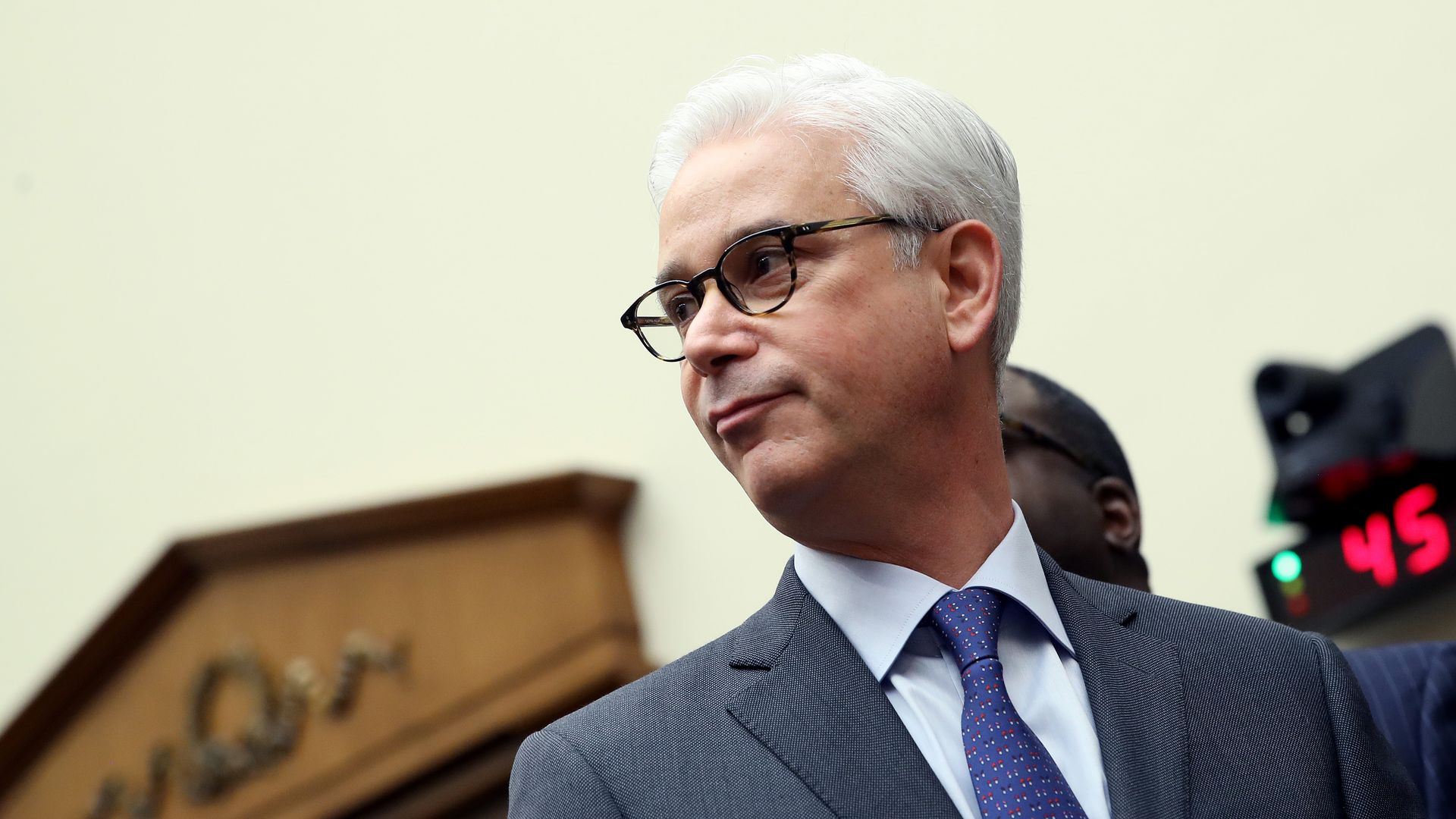
Charlie Scharf is the third CEO in three years to try to wrangle Wells Fargo out of the bad graces of regulators, lawmakers and consumers.
The big picture: Wells Fargo is facing bipartisan anger over its fake accounts scandal. Scharf spent four hours in front of Congress on Tuesday pitching a new vision of the bank, with the worst behind it.
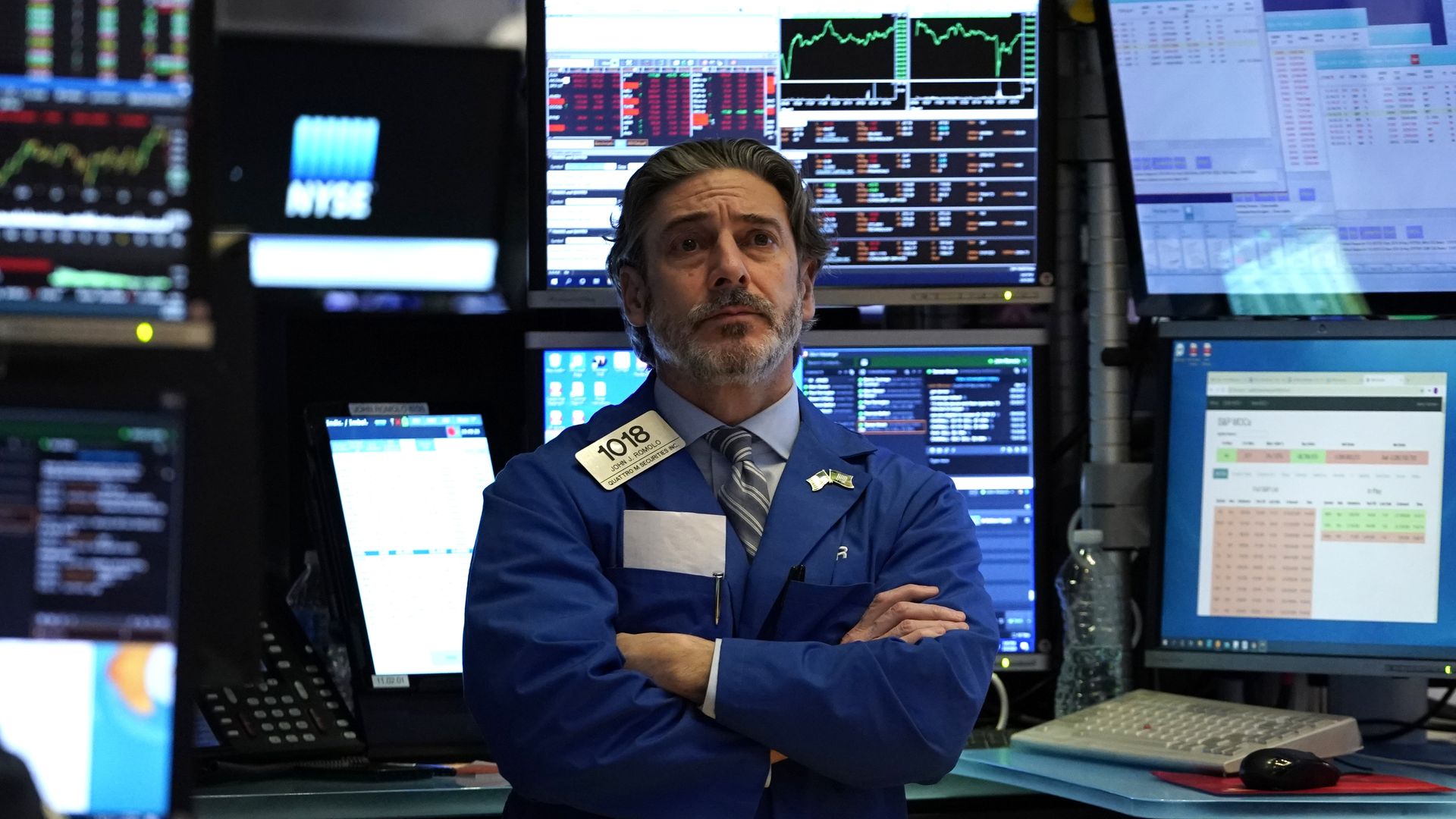
The stock market closed up more than 4% on Tuesday, recovering half of the losses from Monday's sell-off.
Between the lines: The Trump administration signaled it will work with Congress to try to shore up the economy amid concerns about the effects of the spreading coronavirus and collapsing oil prices.
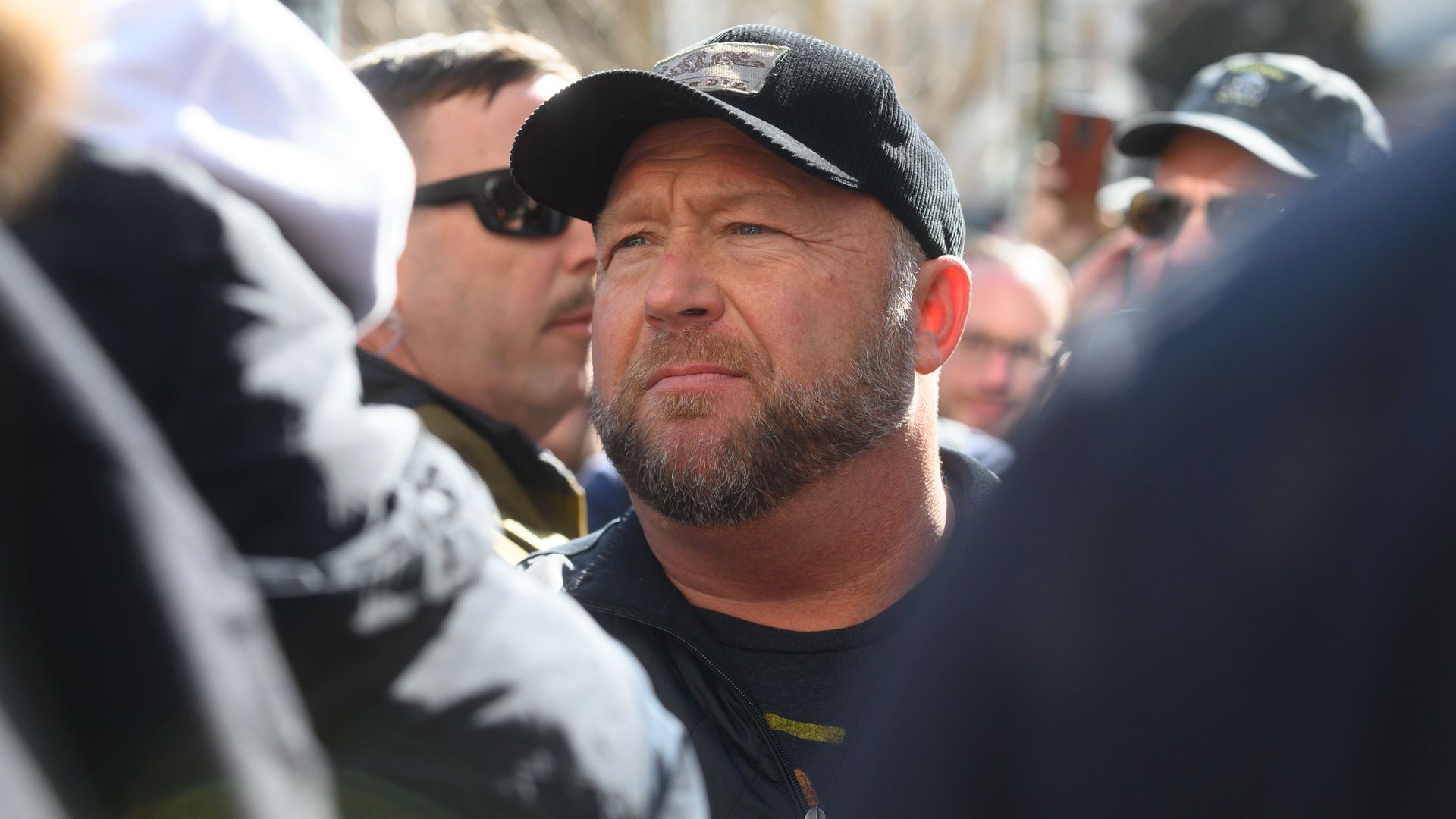
InfoWars host and conspiracy theorist Alex Jones was arrested early Tuesday and charged with driving while intoxicated in Travis County, Texas, the Austin-American Statesman reports.
Details: The 46-year-old radio host, who has been banned from most major Big Tech platforms, was released on bail almost four hours after his arrest. In December, a judge ordered him to pay $100,000 in court costs and legal fees in a case brought by a Sandy Hook family after his unsubstantiated conspiracy theories about the mass shooting.
Bolt, a hardware-focused venture capital firm whose portfolio includes Desktop Metal and SpinLaunch, is at risk of losing its charge.
Driving the news: Bolt is locked in bitter litigation with co-founder Ben Einstein, and privately told investors that one of its two remaining general partners, Greg McAdoo, will not participate in future funds.
Aon agreed to buy rival insurance broker Willis Towers Watson for nearly $30 billion in stock.
Why it matters: It's the largest merger so far in 2020, and the insurance sector's largest-ever merger. The combined company would become the world's most valuable broker, topping current market leader Marsh & McLennan.
Tech companies like Twitter and Facebook have struggled with ways label misinformation without appearing biased or without baiting users to game the system.
Why it matters: It may seem obvious that tech companies should let users know when something is false, but sometimes, calling out false content can have unintended consequences.
With TV viewership down, the NBA is weighing all kinds of ideas to rejuvenate its regular season — like fewer games or a midseason tournament — and it's even open to making basketball more of a summer sport.
Driving the news: During a panel at this past weekend's MIT Sloan Sports Analytics Conference, Atlanta Hawks CEO Steve Koonin proposed starting the NBA season in mid-December rather than mid-October.
The PGA Tour has struck a 9-year rights deal with CBS Sports, NBC Sports and ESPN for around $680 million, Variety reports.
Why it matters: The value of distributing professional golf in the U.S. is increasing as more TV networks clamor to hold live sports rights. In the streaming era, live sports are keeping traditional TV alive.
Pricey mergers are forcing some of the biggest media giants to shed assets that are no longer necessary to their core business.
Why it matters: Once sexy investments in new media companies are beginning to feel like expensive burdens on corporate giants looking to offload unnecessary debt.
The Washington Post is tripling investment in Zeus, its revenue technology arm, sources tell Axios. The Post licenses Zeus products to other media companies to help them drive more ad revenue and create better user experiences.
Why it matters: The ad tech ecosystem for publishers for so long has been dominated by tech companies that don't know a lot about journalism or media. Now, media companies are creating their own tech solutions to become less reliant on them.
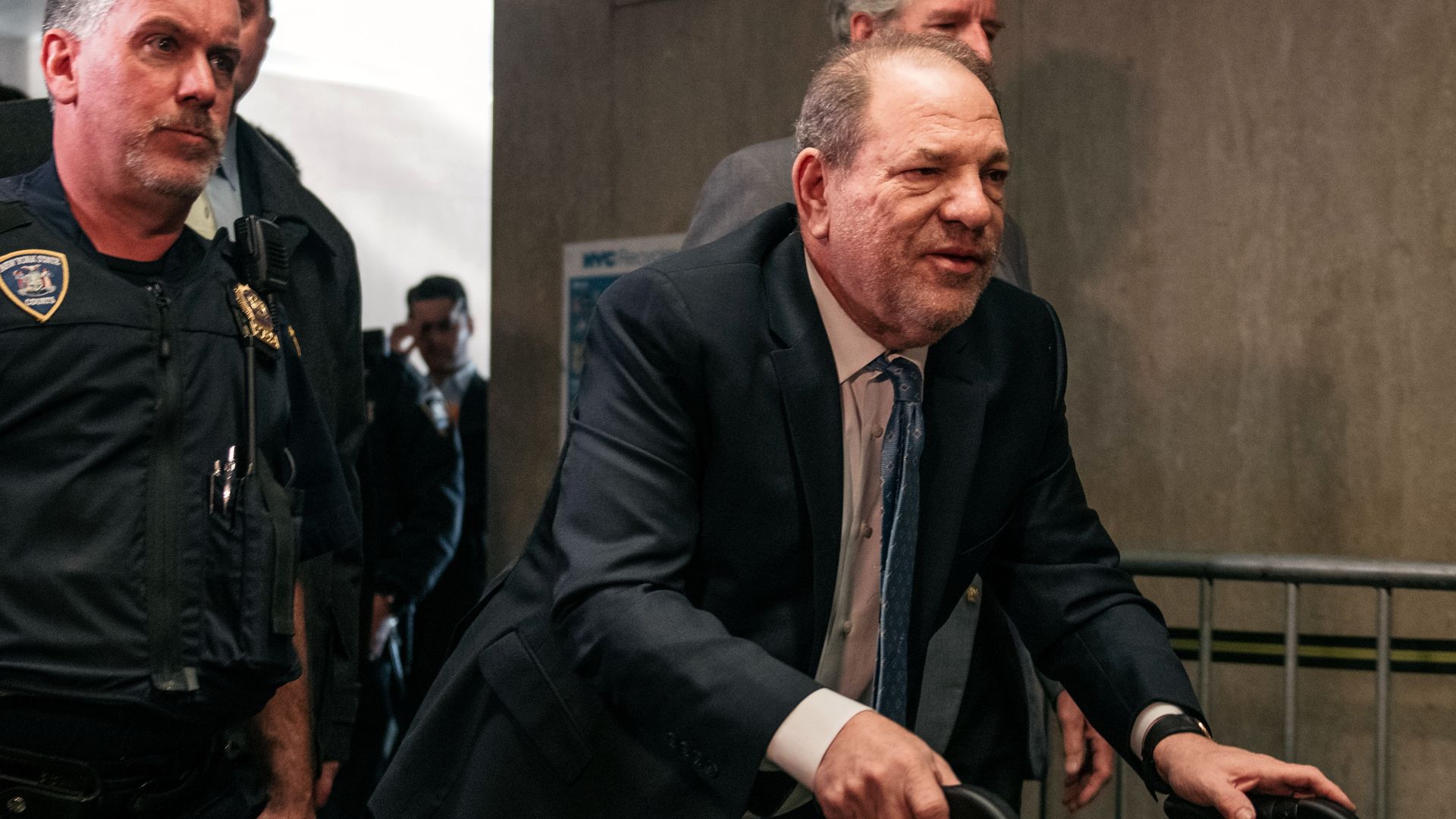
Lawyers for disgraced Hollywood producer Harvey Weinstein are asking a New York court to consider a five-year sentence for their client due to his health and age, Reuters reports.
Backdrop: Weinstein, 67, faces up to 29 years in prison after a Manhattan jury foundhim guilty of a criminal sexual act in the first degree and rape in the third degree. Allegations that Weinstein sexually assaulted and harassed women in Hollywood came to light nearly three years ago and helped spark the global #MeToo movement. He still faces charges of sexual assault in Los Angeles.
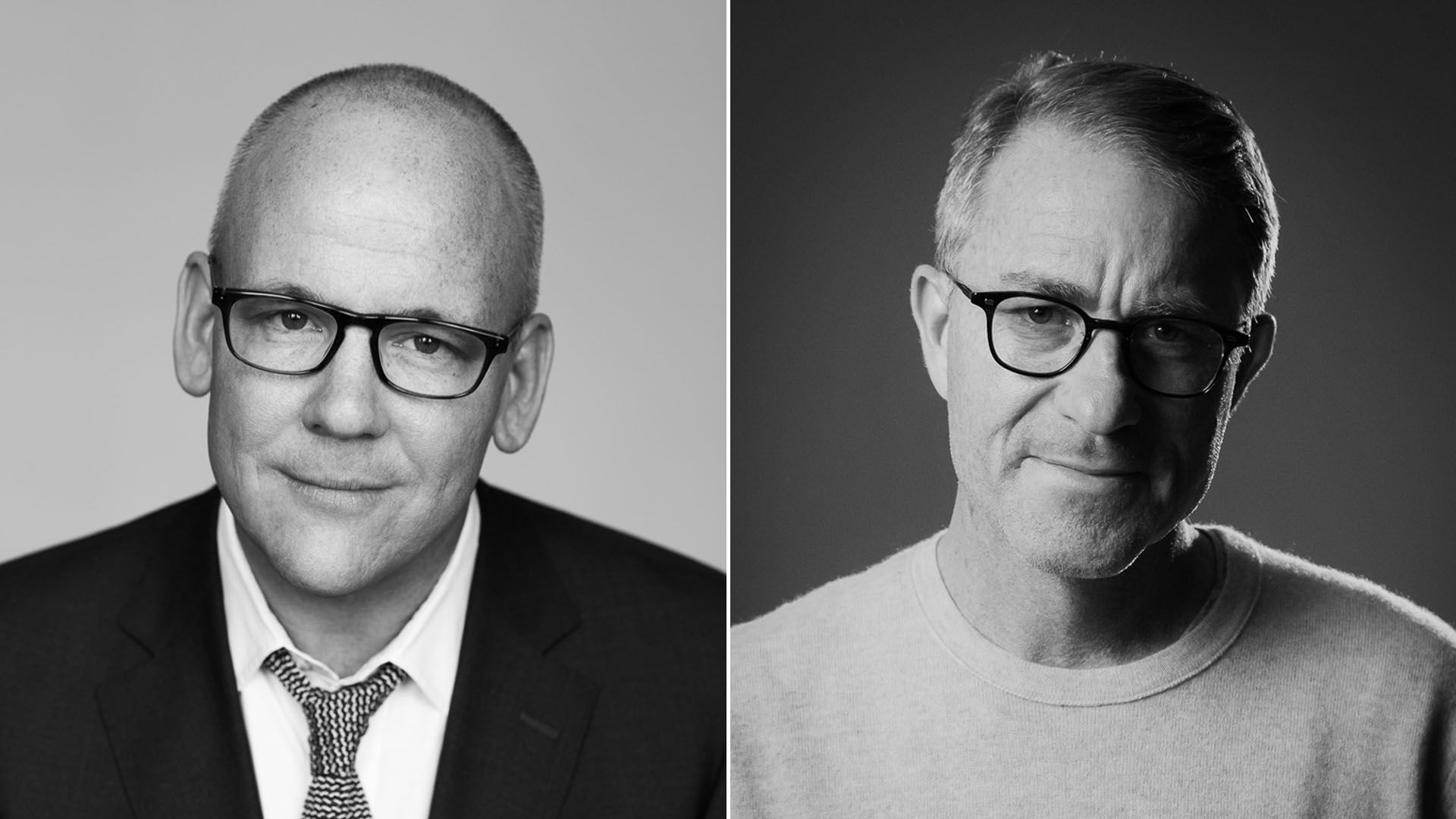
Recount Media, a short-form political video startup created by veteran journalists John Battelle and John Heilemann, has raised $13 million its Series A funding round, executives tell Axios.
Why it matters: The round includes strategic media companies as partners, instead of just financial investors. "It's better to have big companies looking out for us and rooting for us than a bunch of purely financial investors around the table," Battelle tells Axios.
Vox Media, the parent company to brands like The Verge, SB Nation, GrubStreet and more, is partnering with Google to create a local advertising network called "Concert Local."
By the numbers: While neither party would confirm the amount, it's understood that the investment is over $1 million.
Quibi, the mobile video streaming service set to launch next month, has capped its ad partnerships for its first year at 10 companies, according to executives.
Why it matters: Quibi has sold out its first year in ads — $150 million in revenue — ahead of its April 6 launch. That number is fixed via pre-sold ad agreements with those 10 companies.
The acronym TINA (There Is No Alternative) had long been used to explain why investors piled into U.S. equities, but it may now apply to U.S. Treasuries.
State of play: After Monday's sell-off, the S&P 500 has erased all of its gains dating back a year, and the dollar, emerging market equities and oil are all negative during that period.
The U.S. fixed income and Fed fund futures markets are not only pricing in a U.S. recession and the Fed cutting interest rates to zero, they are now pricing in quantitative easing and asset purchases, analysts tell Axios.
What's happening: After U.S. 10-year yields fell to 0.32%, their lowest level on record, and yields on the 30-year bond dropped to 0.72%, investors began pricing in a bond-buying program from the Fed that would target longer-dated Treasuries.
Coronavirus is already the most serious threat to the U.S. economy since the financial crisis, and the dominoes are aligned for a severe recession that could erase much of the 11-year recovery.
What's happening: While the outbreak itself is unlikely to drive an economic collapse, the U.S. has been something of a ticking time bomb for some time.
Federal regulators are cracking down on scams advertising unproven coronavirus treatments, and those frauds are likely to continue.
The big picture: Disease outbreaks have long created fertile ground for fraudsters to prey on the public's fears with fake or unproven treatments. COVID-19 is no different.




/2020/03/10/1583850847455.gif?w=3840)

/2020/03/10/1583846921590.gif?w=3840)

/2020/03/10/1583847091760.gif?w=3840)




/2020/03/10/1583809177546.gif?w=3840)