The year I graduated high school, economic anxiety was cresting: The Great Recession was at its worst, and unemployment was hurtling toward 10%.
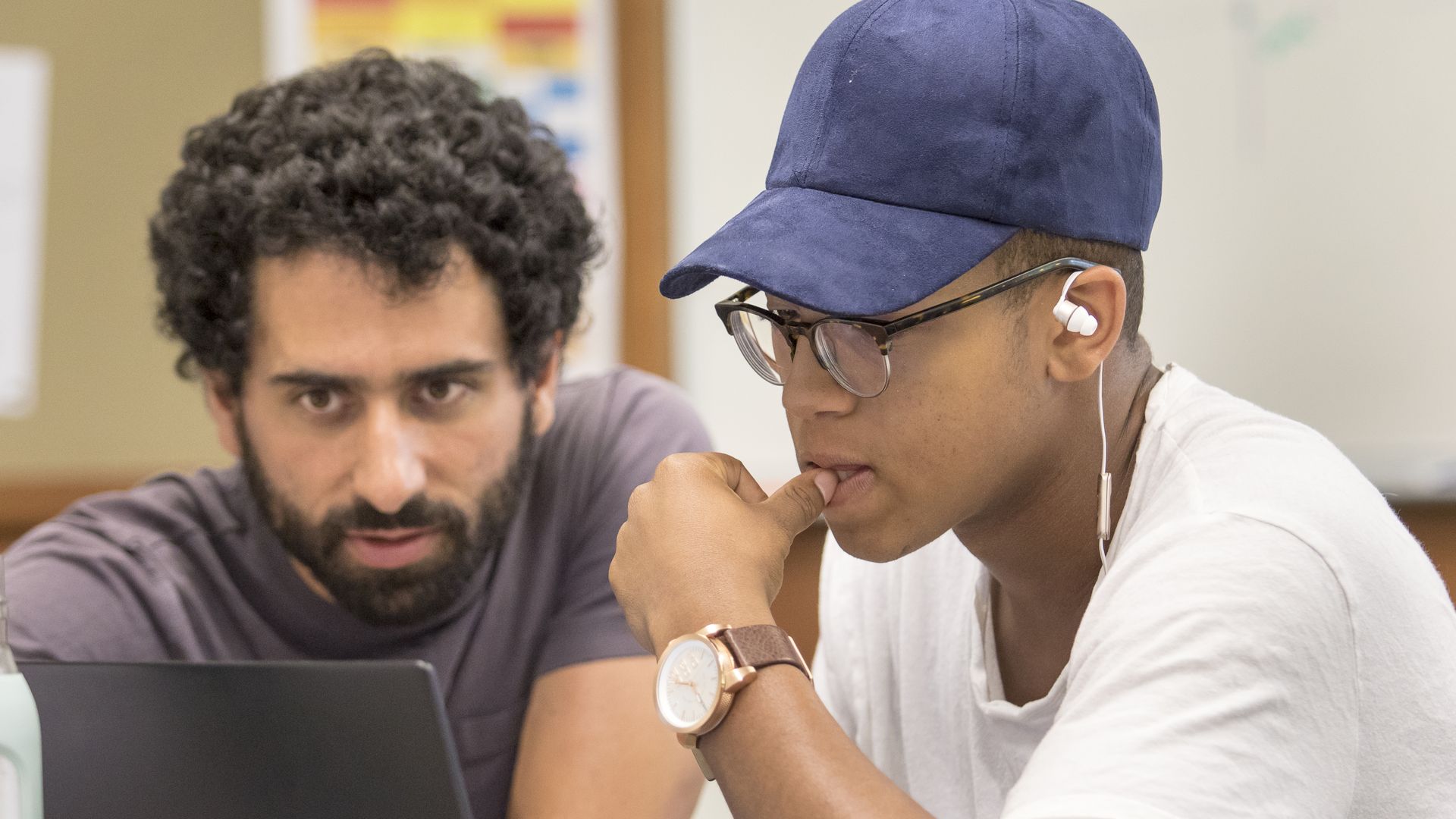
Now, a decade later, there's a new distant shadow hanging over high schoolers: the prospect of an uncertain, topsy-turvy job market turned on its head by the likes of robots and AI.
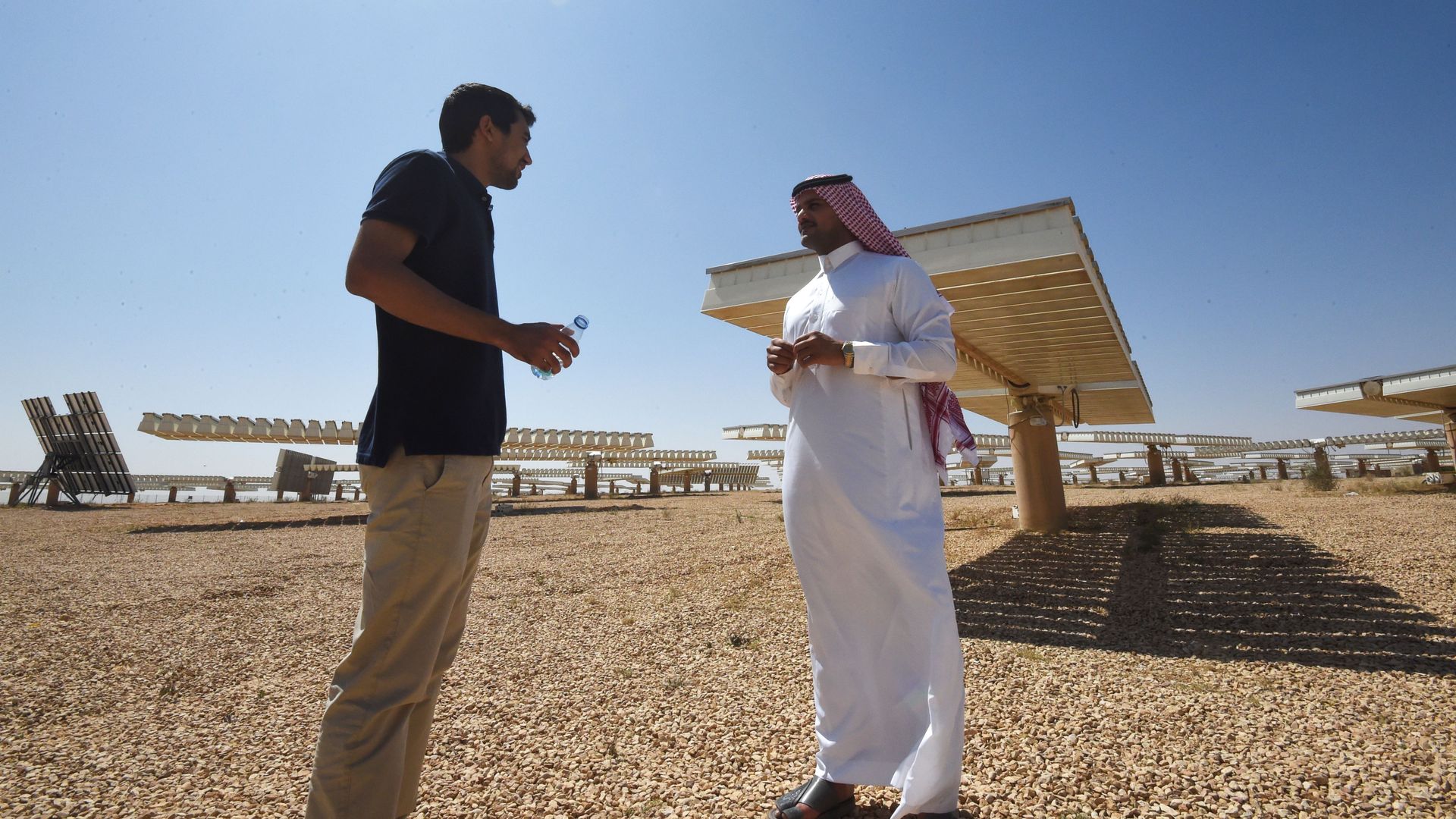
The big picture: Uneasy about its oil dependence and lack of domestic manufacturing capabilities, Saudi Arabia has long looked to partner with China to develop its burgeoning green industries. But while the U.S.–China trade war has given the kingdom a chance to fortify that collaboration, it also puts Riyadh in the tough position of choosing between the world's largest solar manufacturer and its most important geopolitical ally.
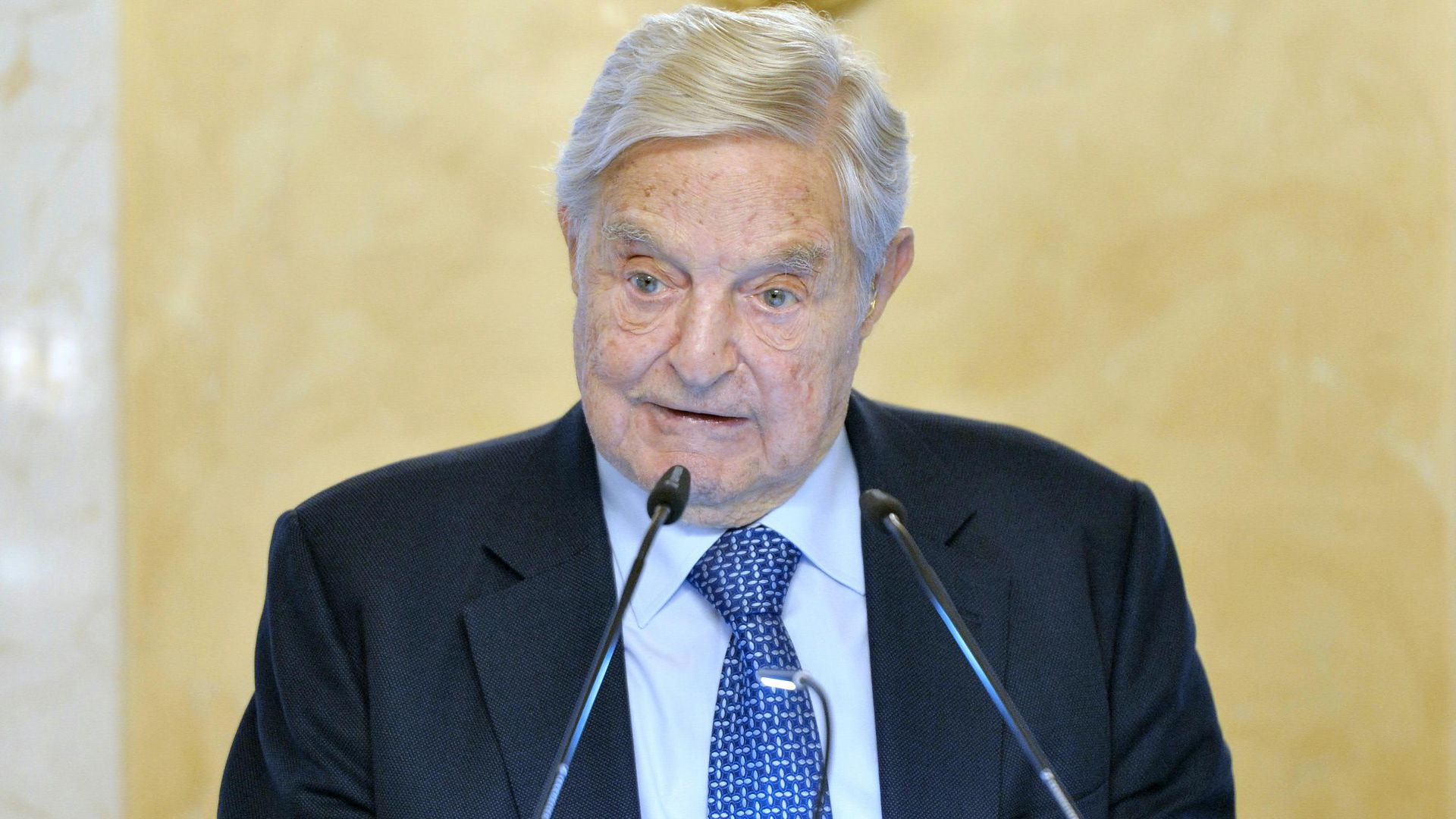
Speaking at at a private dinner at the World Economic Forum in Davos Thursday, billionaire investor George Soros labeled Chinese President Xi Jinping the world’s "most dangerous opponent of open societies," calling specific attention to China's quest to become an AI superpower, BuzzFeed News reports.
"What I find particularly disturbing is the instruments of control that give an inherent advantage to authoritarian regimes over open societies."
Why it matters: As the Financial Times notes, Soros often uses his Davos appearances to warn of "dangers to the rules-based democratic world order," having called for tech platforms like Facebook and Google to be more strictly regulated at last year's speech. This year, the liberal activist singled out China as the most technologically advanced authoritarian regime in the world, criticizing its controversial state-sanctioned social credit score system as one of the ways Xi is seeking to exercise "total control" over the Chinese people.
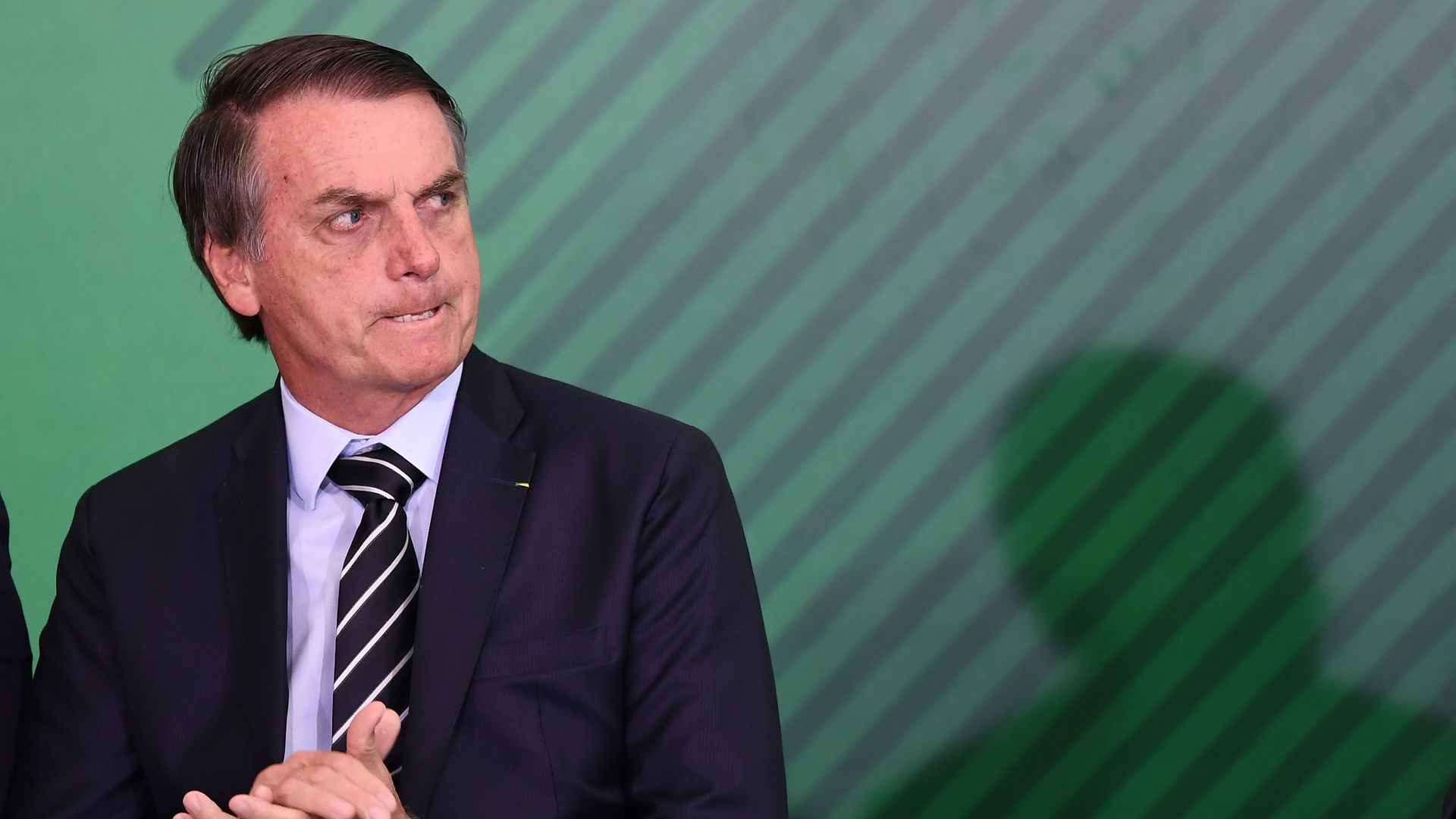
Brazilian President Jair Bolsonaro brushed off a series of questions about his history of sexist, homophobic comments in an interview with the Washington Post in Davos, Switzerland, calling them "just playful remarks" and asking how he could have won his election otherwise.
"Do you really believe in printed media? Do you really believe in it blindly? ... I’m not casting any doubt on your media. In Brazil, they’re all one and the same — the newspapers."
The big picture: Bolsonaro has been called the "Trump of the Tropics" for his populist and nationalist views as well as his predilection to attack news outlets for critical coverage and occasionally spread fake news on social media to propagate controversial stances.
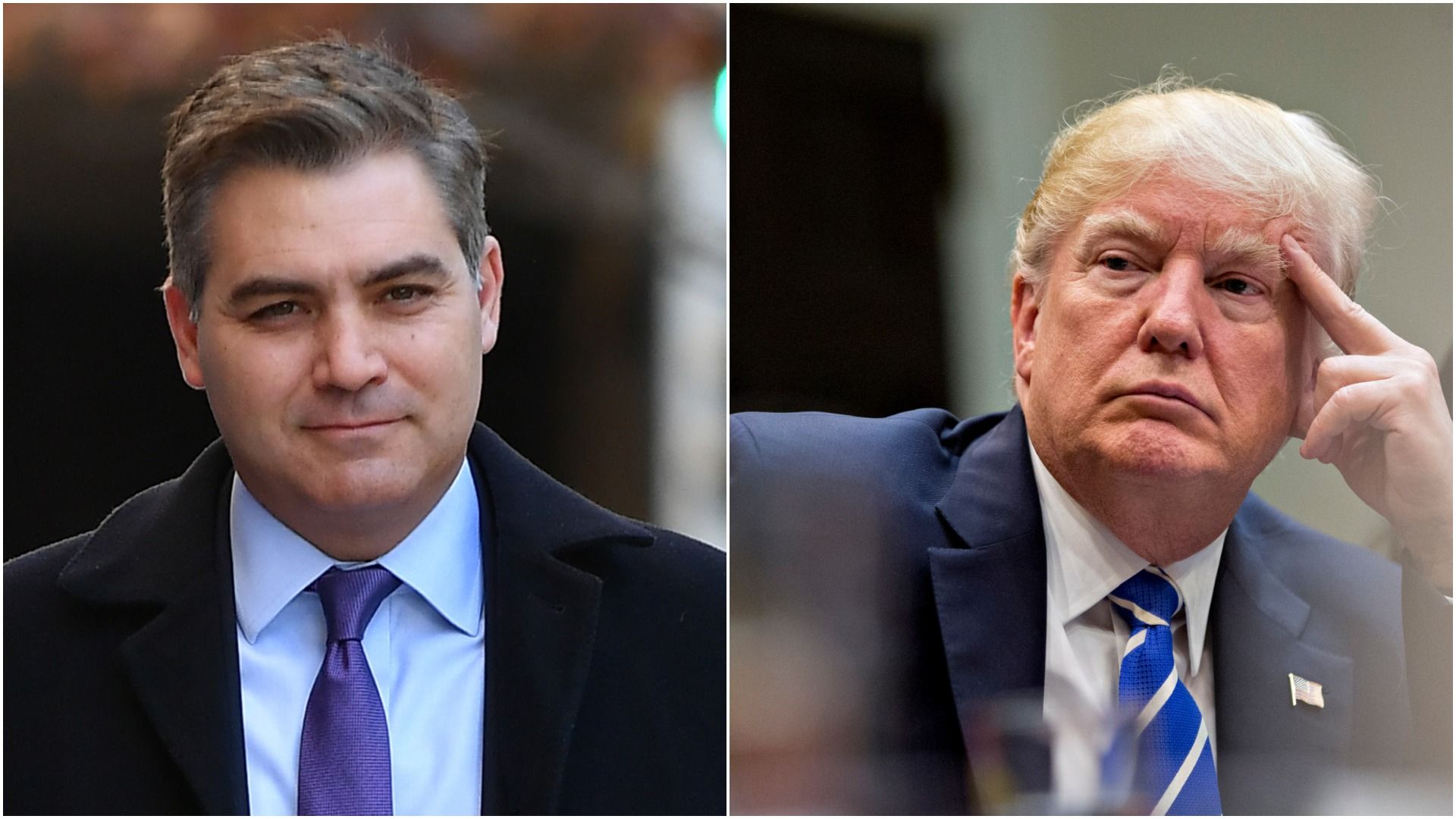
CNN's Chief White House Correspondent Jim Acosta is writing a book titled, "The Enemy of the People: A Dangerous Time to Tell the Truth in America," about the Trump White House and its combative and deteriorating relationship with the news media.
Details: Acosta, who won a lawsuit against the White House in November after having his press credentials revoked, will write about his encounters with Trump and other administration officials, including Sarah Sanders and Stephen Miller. HarperCollins Publishers, which will release the book on June 11, said in a statement: "Acosta ... presents a damning vision of bureaucratic dysfunction, deception, and danger, offering a fly on the wall view of the White House communications during one of the most dramatic and contentious, but consequential, times in the country’s history."
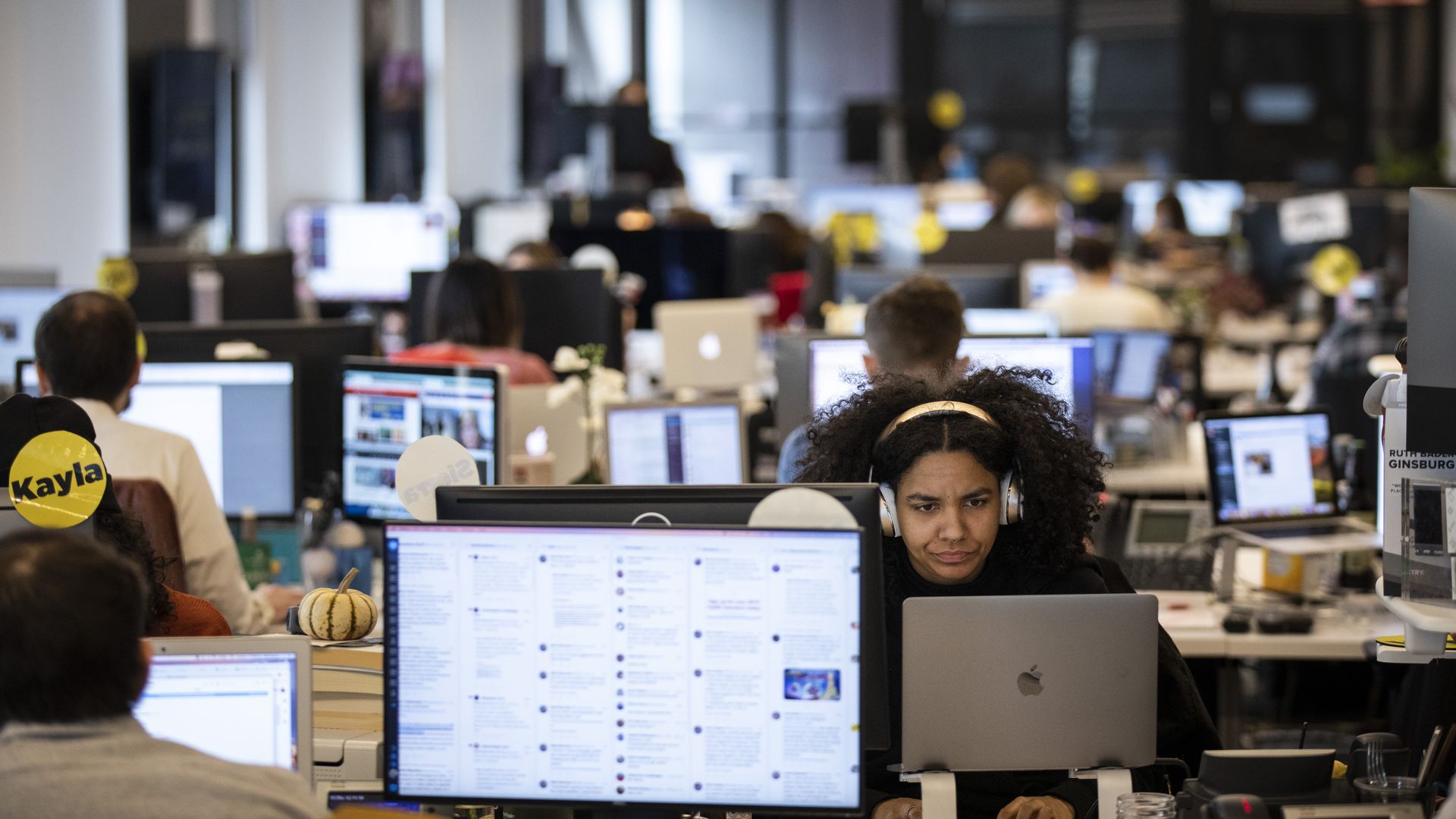
The media industry's current round of cuts and consolidation is accelerating. Sizable layoffs at Buzzfeed, Gannett and Verizon Media (home of AOL, Yahoo, HuffPost and others) were announced Wednesday, totaling over 1,000 jobs cut.
Why it matters: If the headlines signal anything, it's that the news media will continue to struggle to find a sustainable business model in an advertising and attention ecosystem dominated by tech companies like Google, Facebook and Netflix.
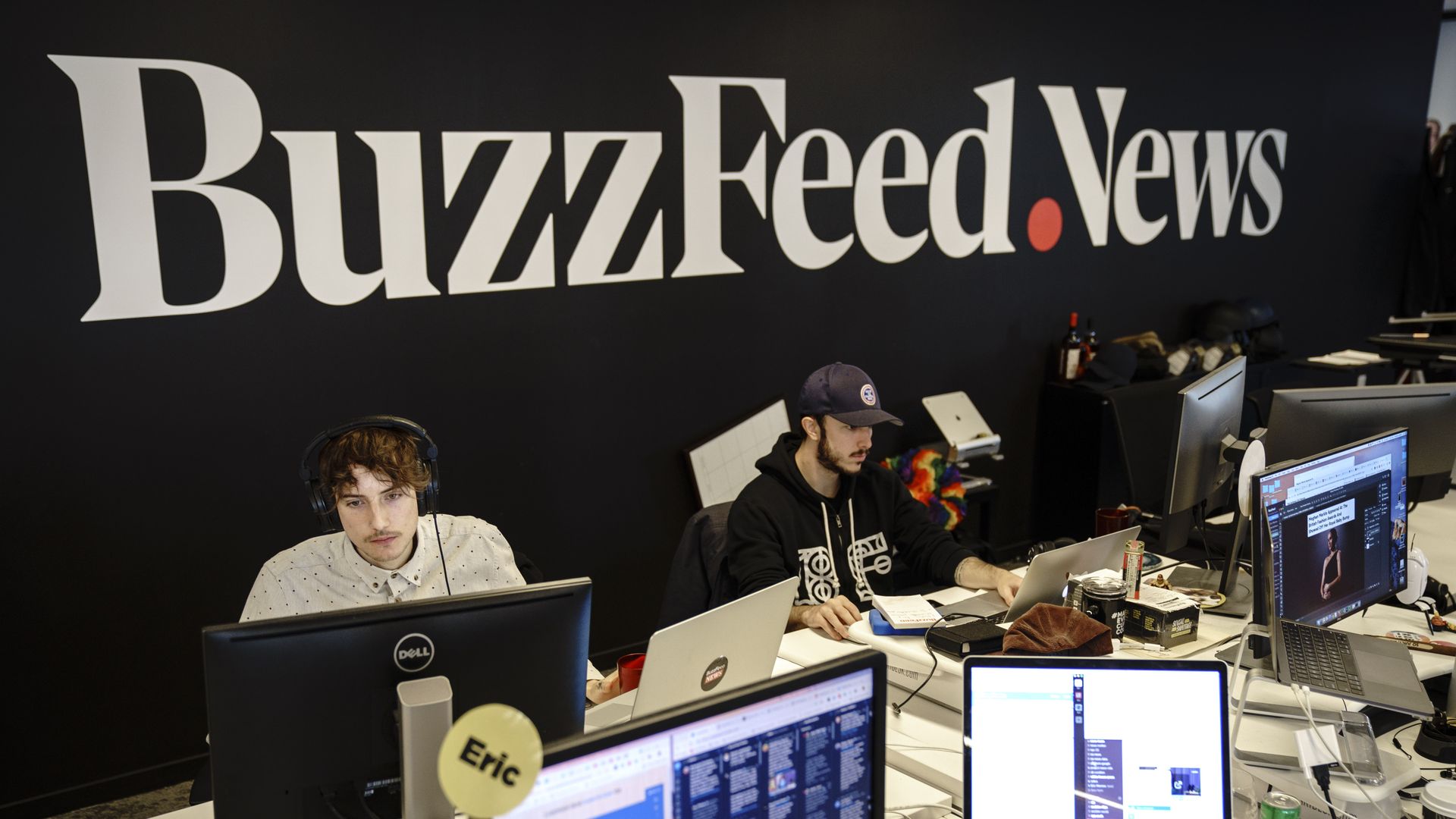
BuzzFeed will lay off 15% of its staff, or about 250 employees, according to an internal memo first reported by the Wall Street Journal and confirmed by Axios.
Why it matters: Like other venture capital-backed digital media companies, BuzzFeed has struggled to increase revenue to meet growth expectations, although sources tell Axios that the company is profitable.
The phrase "future of retail" conjures images of cashier-less groceries, super-fast drone delivery and interactive shopping. But it's instead set to look very different depending on where you live — some Americans will have an array of choice and convenience while others will live in zones barren of retail.
Why it matters: The future of retail will worsen inequality. The affluent will stroll through beautifully designed brick-and-mortar shops injected with state-of-the-art tech. Meanwhile, consumers in lower-income areas and in smaller towns face a future of big-box retailers and basic dollar stores as their local malls decay.
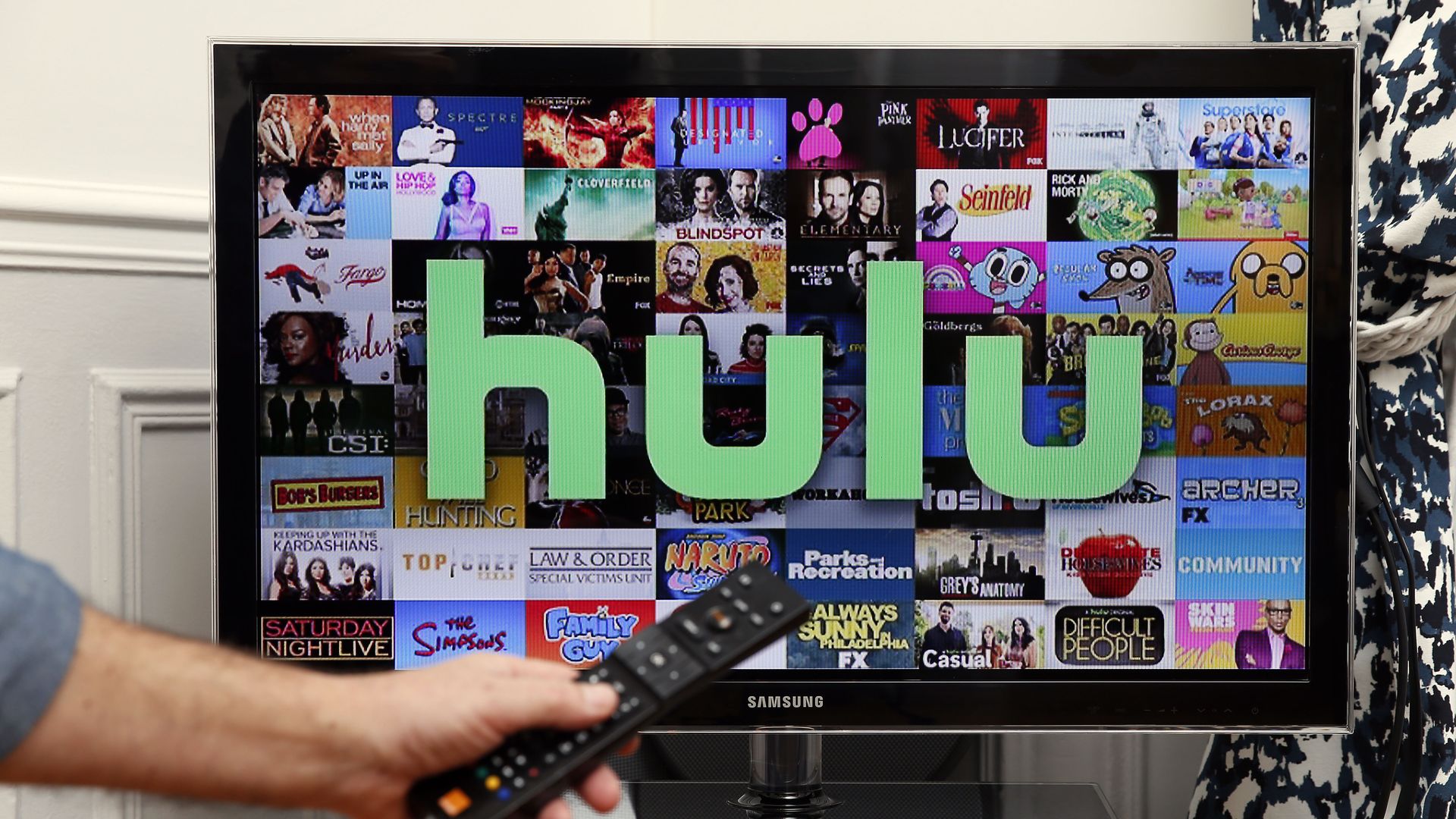
Hulu is steering customers toward its ad-supported, on-demand streaming package by lowering the price.
Why it matters: When the digital ad market fell to Google and Facebook, there was a rush by streamers and publishers make money off of subscriptions. But Google and Facebook haven’t really penetrated the digital TV ad market yet, so now everyone else is racing to get a piece of it.
Viacom agreed to buy Pluto TV, a Los Angeles-based free internet TV service, for $340 million in cash.
Why it matters: It's a sizable bet against the growing wave of paid subscription content. Plus, it's a sizable payout for early Pluto TV investors, who in 2014 bucked conventional wisdom that TV viewership would be decimated by social media and mobile content.
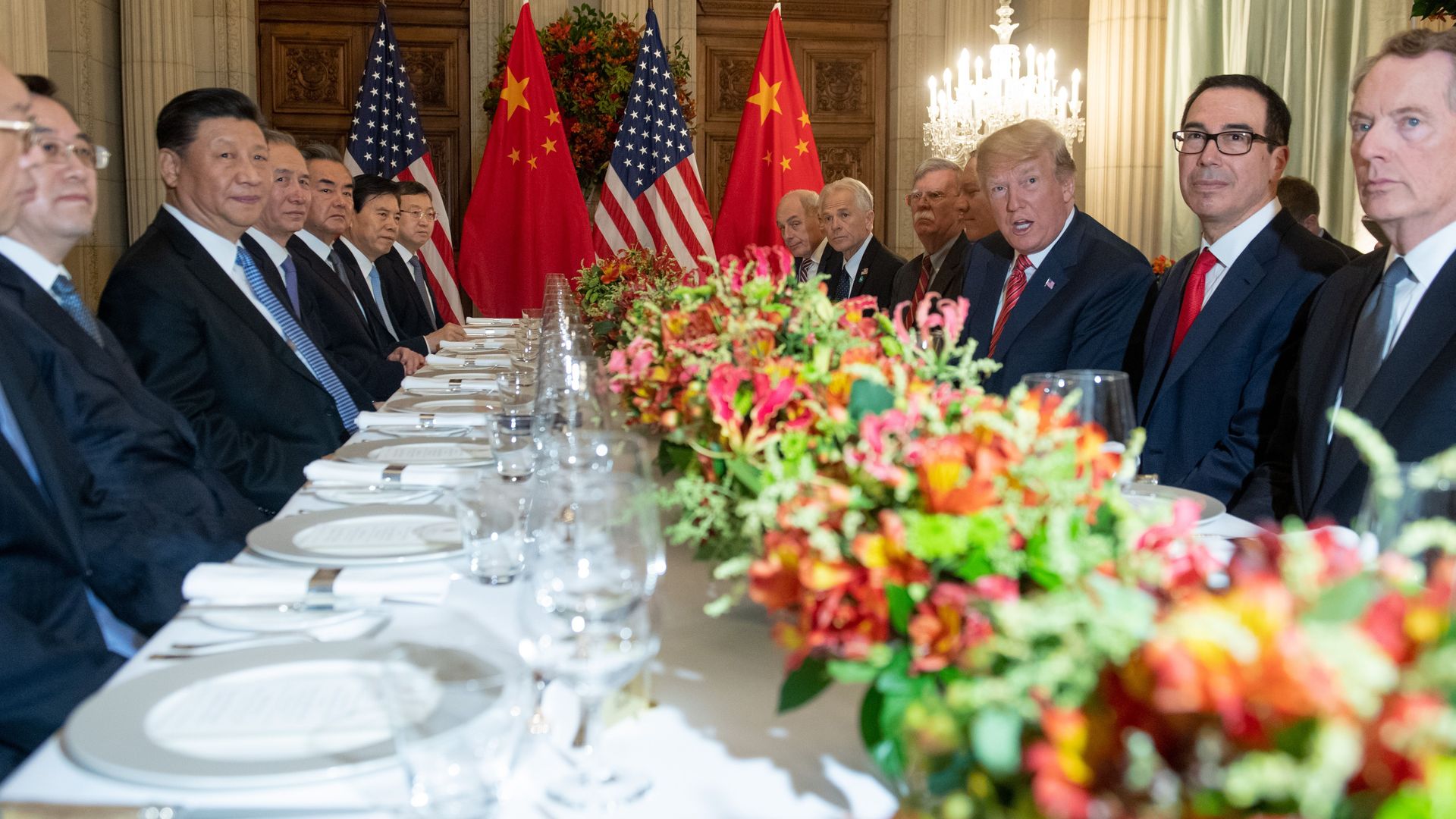
While some had suggested China could cut its purchases of U.S. Treasury bonds as a way to retaliate or escalate its trade war with the U.S., Fang Xinghai, the vice chairman of the China Securities Regulatory Commission, said such a move is unlikely.
Companies around the world are changing their tunes and addresses — uprooting supply chains and moving their headquarters to get ahead of unsettled global chaos.
Driving the news: Dyson said Tuesday it would move its headquarters from the U.K. to Singapore — not because of Brexit, according to its founder, leading Brexit advocate Sir James Dyson, but to "future-proof" the business.
A study from Pew Research Center out last week finds that a vast majority of Republicans (73%) feels that news organizations don’t understand them. This stands in stark contrast to the percentage of Democrats (40%) who say they feel the same way.
Adapted from a Pew Research Center report; Chart: Axios Visuals
Republicans vary little across various demographics in saying they are misunderstood by the media. Republicans with a college degree, for example, are just as likely, if not slightly more likely, to say they're misunderstood than those with a high school education or less. Similar patterns follow gender and age lines.






/2019/01/22/1548187228720.gif?w=3840)