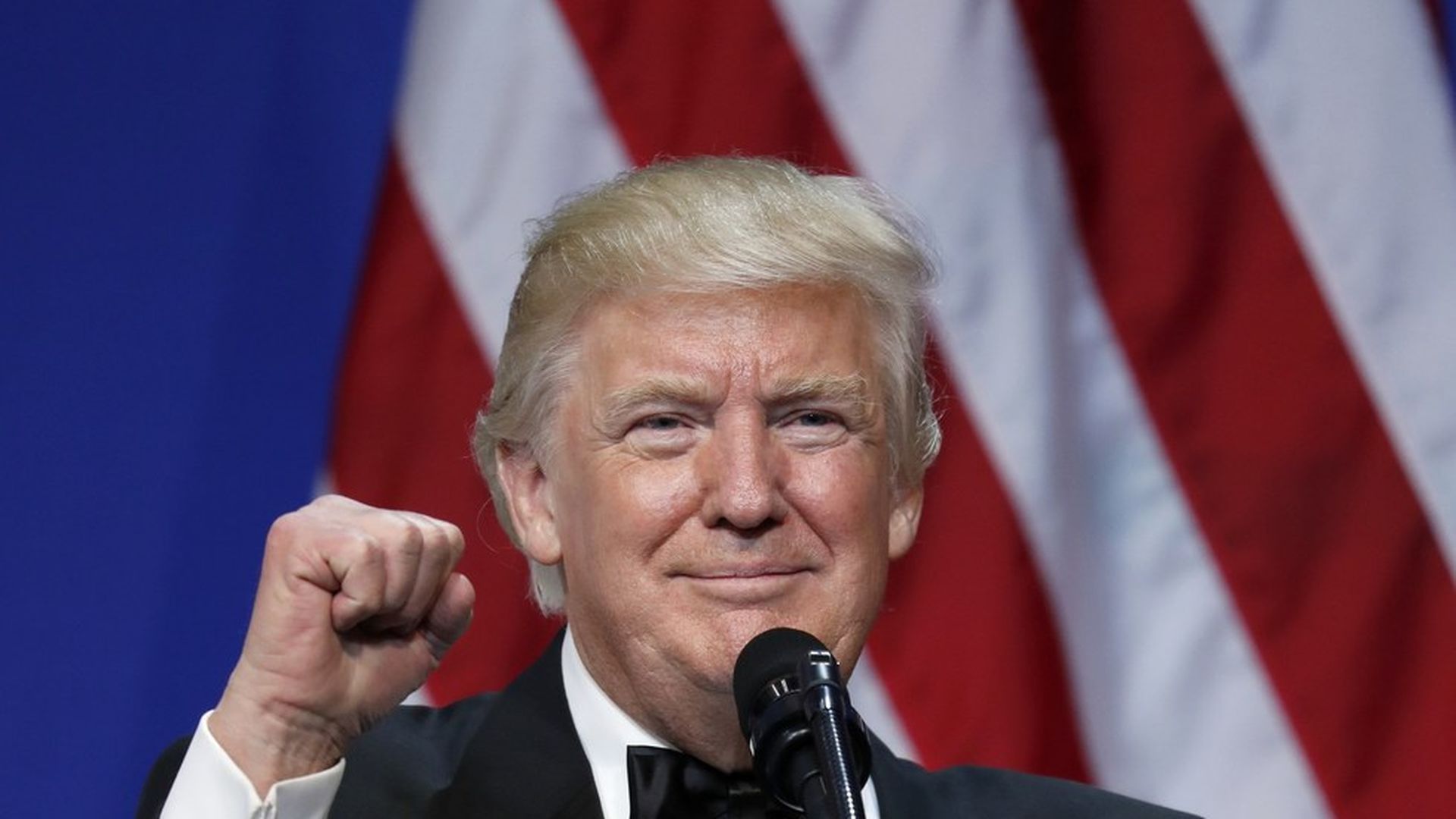
The S&P 500 has surged 5.4% since election day. It's the "Trump Rally."
But a closer look at the individual companies that are driving the stock market surge, and broader economic data, paint a more complicated picture:
(function () { var attempt = 0, init = function(){ if (window.pym) { var pymParent = new pym.Parent("g-increase-01-box", "https://graphics.axios.com/2017-01-25-stocks-increase/increase-01.html", {}); } else if (attempt++ & 40) { setTimeout(init, 50); } }; init(); })();
Data: Money.net; Chart: Andrew Witherspoon / Axios
Sure, investors like what Trump's saying: Corporate tax cuts, less regulation, and infrastructure spending will all be good for corporate profits. But Trump is not the only game in the global economy.
Other drivers of the rally include:
A stronger dollar: While this hurts multinationals who do business in foreign countries, a stronger dollar generally means that American companies are more valuable relative to foreign assets.
Signs of life abroad: China has long-term problems, but the government there has been able to prop up growth for the time being. Even Europe is perking up, with Germany announcing this month that 2016 growth was the fastest in five years.
Agriculture companies: They're benefiting from being oversold in 2015 and 2016 out of fears of a global slowdown. But developing economies have kept their heads above water, and everyone's gotta eat.
The S&P 500 has climbed 5.4% since Donald Trump was elected president. Not everyone has gotten in on the party.
Retail stocks have taken a beating because fewer people are going to offline stores and and investors are predicting that tax reform will hurt those who sell imported goods. The worst performers since November 8th:
(function () { var attempt = 0, init = function(){ if (window.pym) { var pymParent = new pym.Parent("g-decrease-01-box", "https://graphics.axios.com/2017-01-25-stocks-decrease/decrease-01.html", {}); } else if (attempt++ < 40) { setTimeout(init, 50); } }; init(); })();
Data: Money.net; Chart: Andrew Witherspoon / Axios
President Trump's recent fascination with his inaugural crowd size shouldn't be a surprise. Going back to the very height of his business career, he's always been obsessed with demonstrably proving his popularity, especially through television ratings. The problem? Historically, he hasn't been very good at interpreting them.
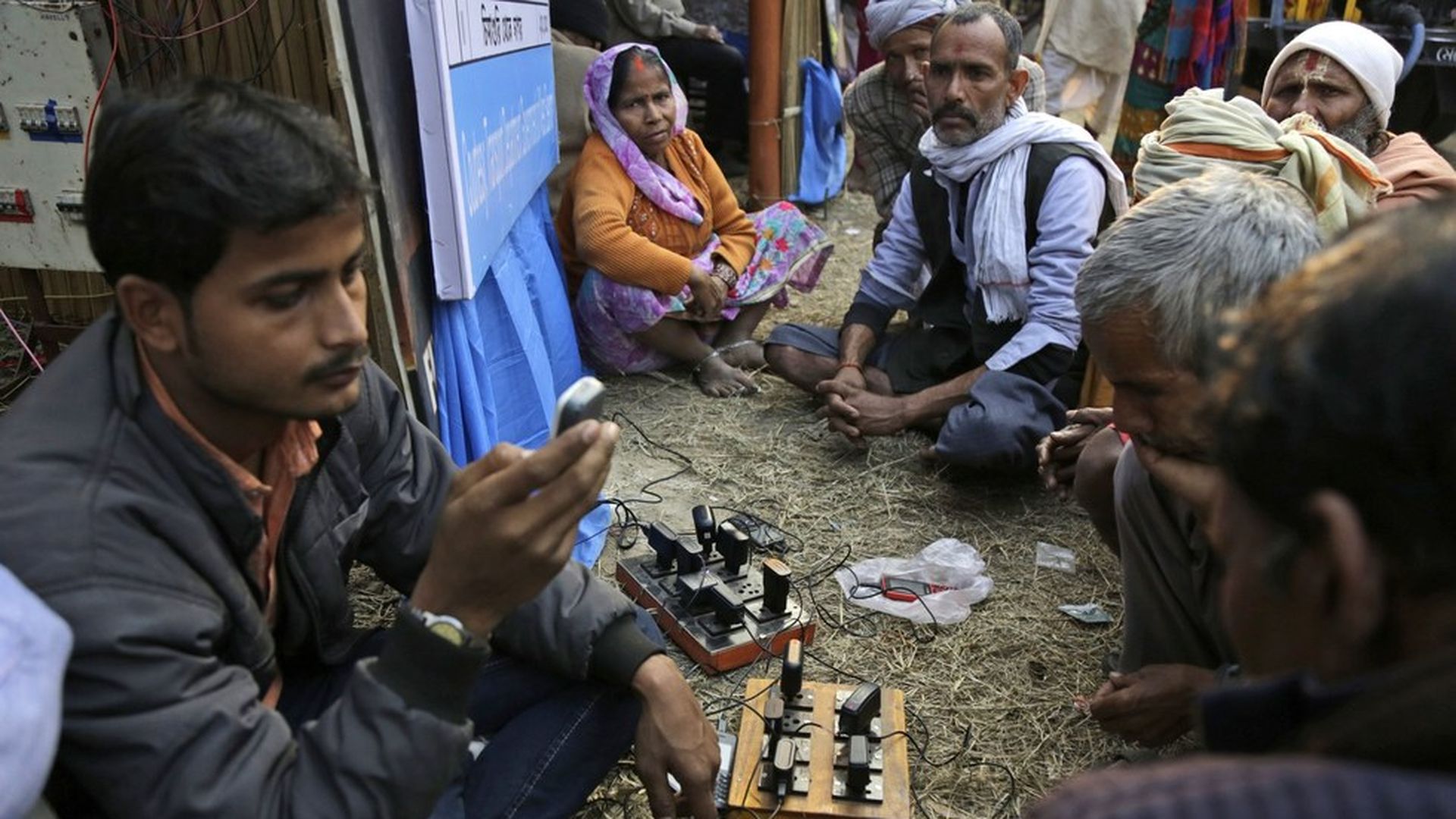
Apple is getting close to finalizing a deal to manufacture its products in India, which could help the company get around the country's tax and tariff laws, according to the WSJ. A team of company execs led by Apple VP Priya Balasubramaniam met with senior Indian government officials in New Delhi on Wednesday to negotiate how to move forward. One official said, "It's almost a done deal."
Smart take: The deal could help Apple strengthen its brand in a country where it has less than 5% share of a thriving smartphone market. Smartphone shipments in India grew 18% last year, compared with just 3% globally, according to Counterpoint Research.
Where there's trouble: Trump told Axios that he "really believes" Apple CEO Tim Cook will move iPhone production back to the U.S. because he "loves this country." It appears that Cook and the president are not on the same page.
Snap is expected to publicly file its IPO documents any day now, which would start the official clock on an offering that is most likely to occur at the beginning of March. If successful (i.e., raises up to $5 billion at around a $20 billion valuation, and then trades higher), then there will be much rejoicing among Snap execs, employees and venture capitalists.
But that's it. Don't expect Snap to spark a broader tech IPO rally, despite the fever dreams of some in Silicon Valley.
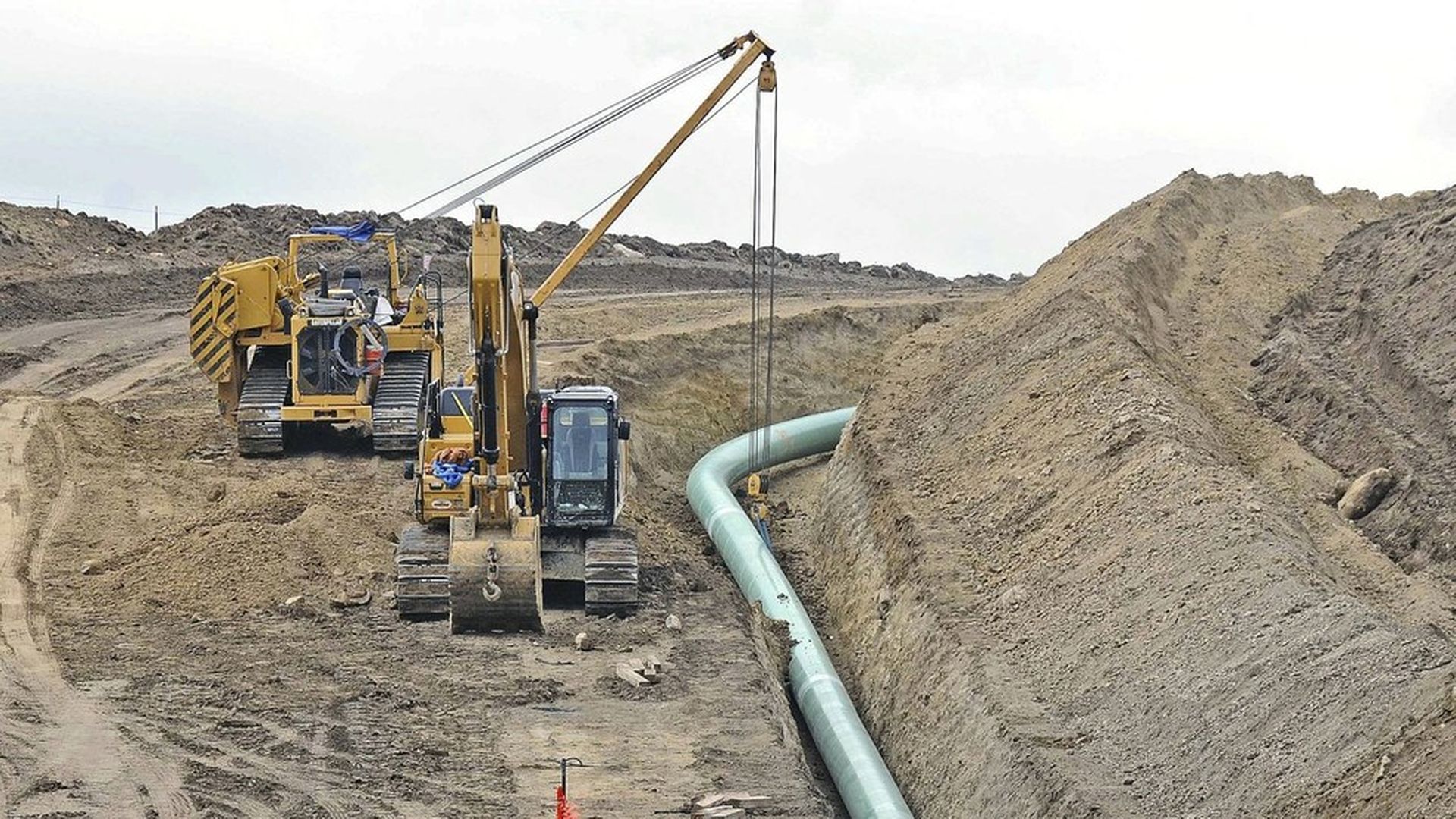
The companies involved in the Dakota Access Pipeline and the Keystone XL all jumped on news today Trump is signing executive orders to push the projects forward.
(function () { var attempt = 0, init = function(){ if (window.pym) { var pymParent = new pym.Parent("g-oil-stocks-01242017", "https://graphics.axios.com/2017-01-24-oil-stocks-chart/oilstocks.html", {}); } else if (attempt++ < 40) { setTimeout(init, 50); } }; init(); })();
Glassdoor's best jobs of the year include titles like Data Scientist, Data Engineer and Analytics Manager. The rankings were determined by the combination of three factors: number of job openings, salary and overall job satisfaction.
The other quality they all have in common? These jobs are less likely to fall victim to automation. That's because they require "soft-skills" like creativity, judgement and flexibility, which are all extremely difficult to automate, Glassdoor Chief Economist Andrew Chamberlain told Business Insider. "Having them allows workers to team up with technology to be more productive, rather than simply being replaced by it."
Why it matters: The Trump administration is concerned about jobs — particularly lower-skilled jobs — disappearing as technology advances. It's also pushing companies to hire U.S. workers for highly-skilled jobs rather than relying on temporary visas to bring in foreign workers with advanced degrees. These automation-resistant jobs will help fuel the urgency around creating a stronger pipeline of U.S. workers who have the engineering skills to fill these roles domestically.
As NYT's Andrew Ross Sorkin said, "For years, chief executive officers lived in fear they would become a target of the activist investor Carl Icahn. Now, they live in dread of a different and somewhat more unexpected kind of activist: President Donald J. Trump."
On one hand: CEOs of big companies are stoked for Trump's regulation slashing, corporate tax cutting approach to boosting the economy.
On the other: They fear Trump's market-crashing tweets.
AppDynamics, a software company designed to help businesses spot and fix bugs in their applications, will be the first big tech IPO of 2017. The company originally filed to sell shares at $10-$12, but thanks to strong investor demand they're now selling at $12-$14 per share.
Expect to see prices tomorrow night. The company will begin trading Thursday.
Why this matters: 2016 was the slowest year for tech IPOs since the Great Recession. AppDynamics' optimistic IPO indicates that the market expects more companies to go public this year.
Here's the Paper of Record, saying the president lied:
Why it matters: The Times is famously hesitant to say a politician lied, with executive editor Dean Baquet telling NPR it needs to be far more egregious than normal political misdirection. But they first slapped Trump with the term in September, and don't seem to be looking back.
President Trump spends substantial time and energy ridiculing the media. He spends even more time consuming —and obsessing about — it.
Print copies of three newspapers. When Billy Bush was on, "Access Hollywood" every night. TiVo of the morning and evening news shows so he can watch the tops of all of them. Always "60 Minutes." Often "Meet the Press." Lots of New York talk radio.