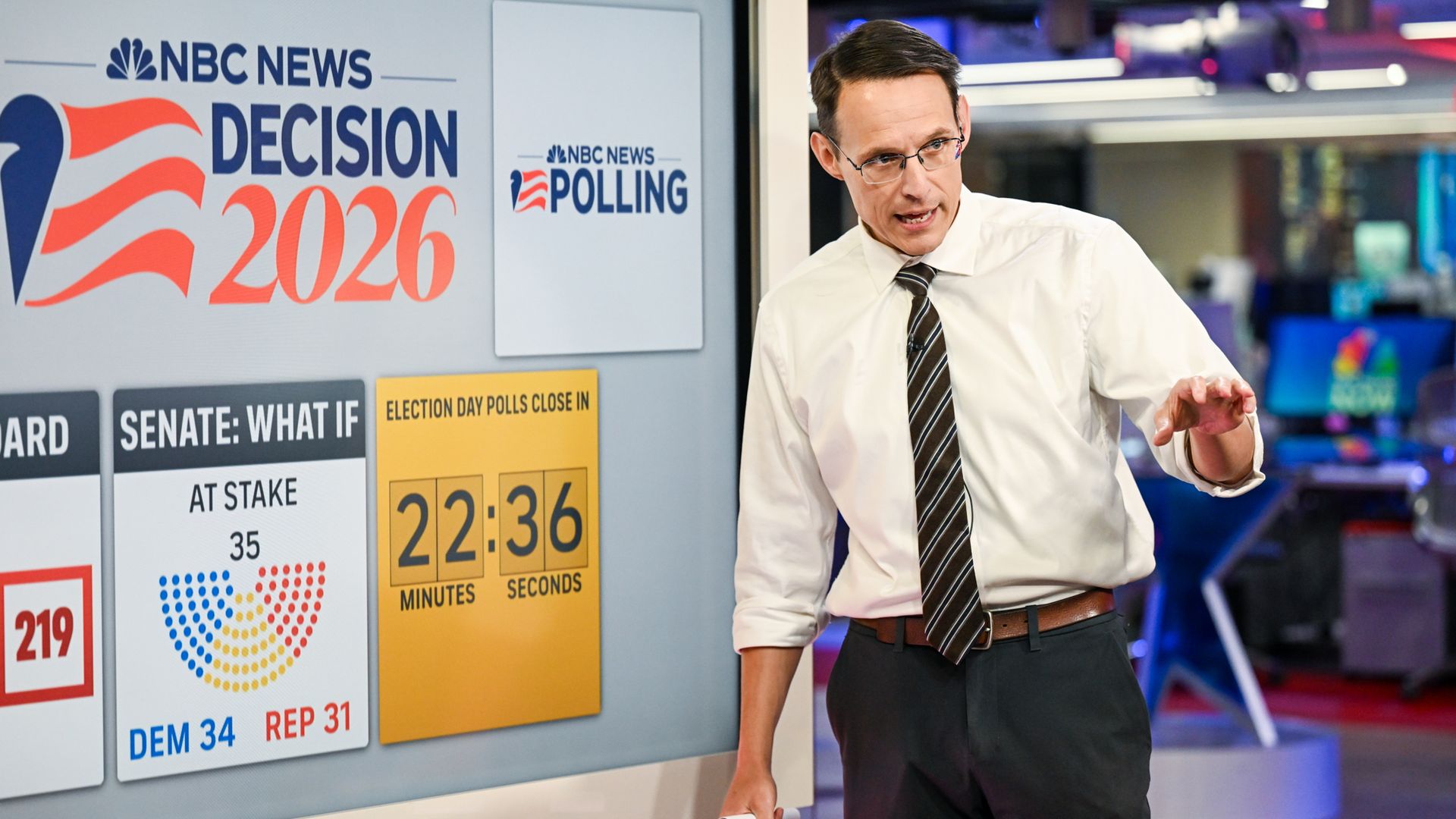
More than 31 million people watched midterm elections coverage in primetime across 13 live television news networks Tuesday, surpassing 2022 viewership by an impressive 23% but still down 14% from 2018, according to Nielsen data.
Why it matters: A historic night for Democrats drew a slightly younger audience. Around 9% of viewers were between ages 18-34, up from 7% in 2022.
Tuesday's Democratic election sweep could tap the brakes on the autonomous vehicle industry's ambitious growth plans.
Why it matters: Just as robotaxis are hitting the streets in larger numbers, the technology has become more politically charged in Washington and statehouses across the country.
Tech stocks plunged Thursday in the most visible sign yet that investors are growing worried about a slowdown in the AI boom.
The latest: The tech-heavy Nasdaq Composite index was down 4.7% at 3 p.m., with just an hour left in trading. The broader stock market was also down sharply.
The sell-off is shaping up to be the stock market's worst showing since the April 2025 tariff panic.
OpenAI's researchers used the company's latest cyber model to take advantage of nearly 1000 security flaws in the popular Linux operating system — a piece of extensively vetted software that underpins much of the world's digital infrastructure.
Why it matters: AI is making it possible to uncover and test security weaknesses at a scale that could overwhelm companies' ability to fix them before hackers strike.
LIV Golf is officially shutting down, with attorneys on Thursday telling a bankruptcy court in New Jersey that the Saudi-backed league would transition from a restructuring plan to a liquidation.
Driving the news: This comes less than 24 hours after investment firm BC Partners walked away from a $300 million investment in LIV Golf, which had been on life support since Saudi Arabia's Public Investment Fund pulled its financial support.
Voters aren't buying the tech industry's data center pitch as concerns about electricity bills outweigh claims of creating jobs and improving American competitiveness.
Why it matters: The sharp rejection of the $10 trillion infrastructure buildout is a massive challenge for companies and their comms leaders tasked with convincing Americans they stand to benefit from the projects.
Newly elected senators and governors are bringing a pointed message into office: Americans are struggling to make ends meet while powerful interests wield too much influence.
But their recent remarks also reveal potential openings for cooperation.
Why it matters: For comms chiefs, these messages offer an early look at where their businesses might face political scrutiny, along with opportunities to find common ground and build goodwill with incoming leaders.
Corporate America can't ignore the message voters are sending with the scale of Democrats' midterm victories. This wasn't an election defined by any single issue. It was everything, all at once.
Why it matters: For communicators, the challenge now is separating political noise from the concerns that directly affect their businesses and shaping decisions that tackle those issues.
Zipline, a South San Francisco-based drone delivery service, on Thursday announced that it's raised $1.5 billion at a $21.5 billion post-money valuation. It also expanded its Walmart partnership.
Why it matters: Drone delivery may eventually supplant data centers as the target of local community ire against Big Tech, as evidenced by a recent battle between my hometown and Amazon.
Elon Musk is moving ahead with plans to build a nationwide cellular network. Can he really do it, or is it just a ruse to bring the big telecom companies to the negotiating table?
Why it matters: SpaceX has spent billions on spectrum and struck a multiyear agreement with Qualcomm to build a 5G network. But a deal with an existing carrier could make more economic sense, raising questions about how much of the network Musk actually intends to build.
Nyquis, a startup providing grid-monitoring technology, raised $6.3 million in seed funding led by Gigascale Capital and South Park Commons.
Why it matters: The financing comes as extreme weather heightens power supply risks, energy demand is rising, and a bipartisan push is underway to greatly expand U.S. transmission.
The AI industry is scrambling to repackage a $10 trillion infrastructure buildout to appease a hostile electorate that overwhelmingly voted to restrict data center construction in ballot measures across the country.
It's not just changing the name of data centers to "compute campuses," but offering communities real money, including dividends and benefits for schools or cities, plus environmental concessions and labor protections.
Why it matters: Tuesday's election proved voters won't tolerate unchecked growth, although the market and many analysts see the blue wave slowing — but not stopping — data center construction around the U.S. To prevent an existential threat, the world's biggest companies are working on a rebrand.
How well they execute on their promises will determine the pace of the global AI race.
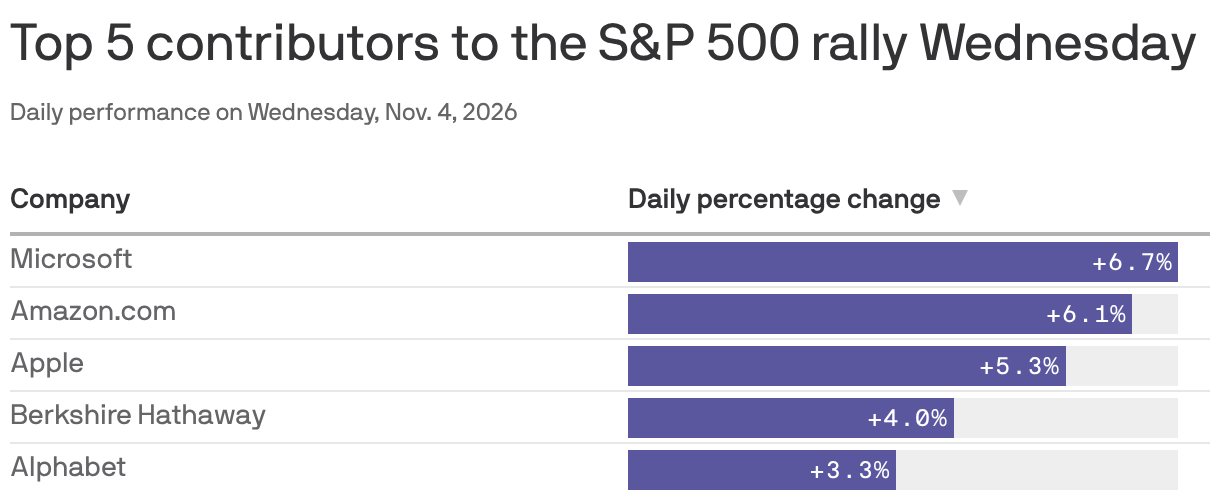
Voters clearly put the brakes on the AI buildout this week, but the biggest tech companies kept on rolling.
Why it matters: The rally in the shares of the likes of Microsoft and Amazon reflects a growing realization on Wall Street that a slowdown in the AI race may not be such a bad thing.
If companies can put off enormous spending commitments, they get to show healthier cash flows, avoid financing costs and possibly sidestep risky investments.