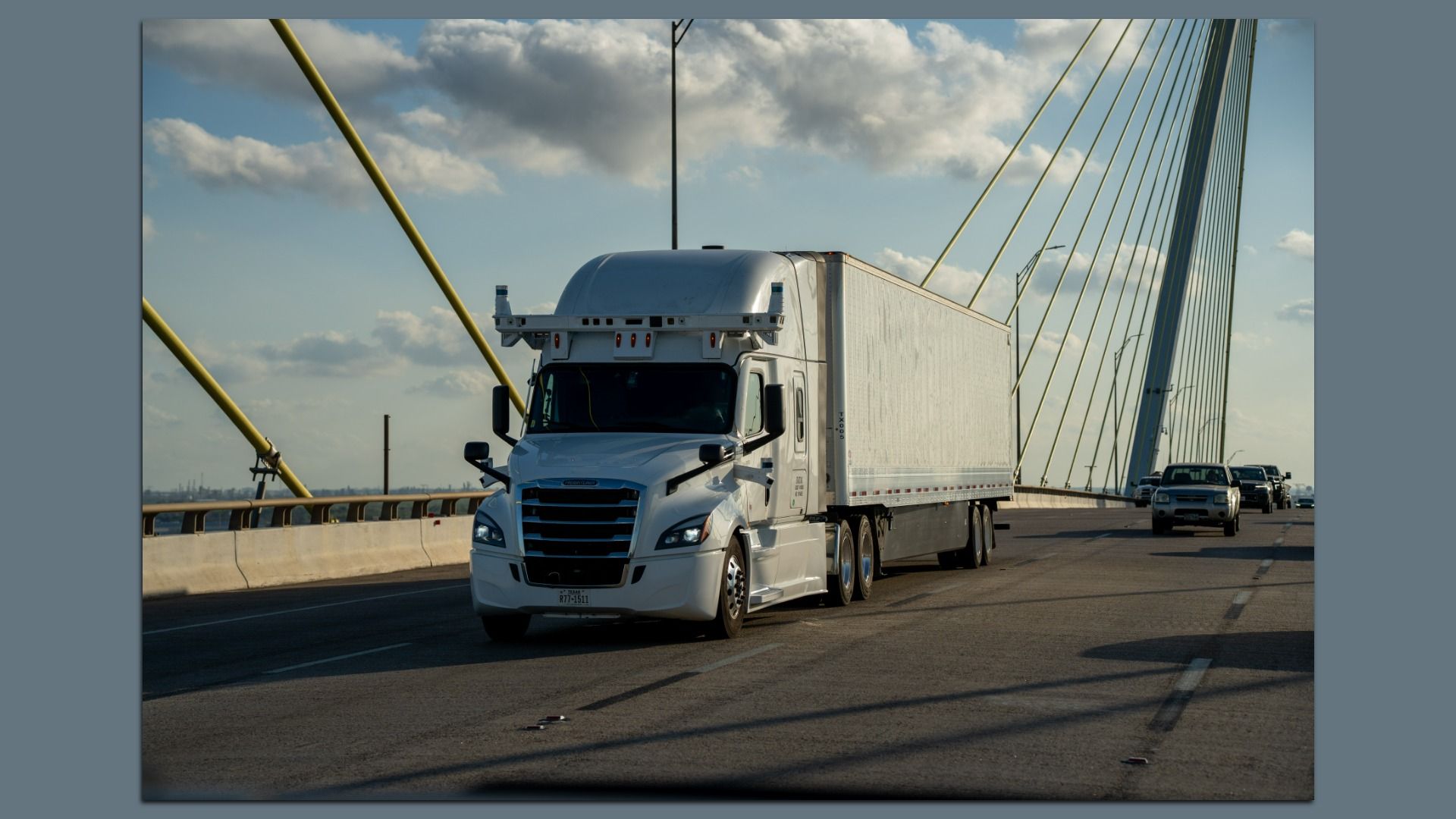
Autonomous trucking startup Bot Auto says it has delivered its first "fully humanless" over-the-road commercial truckload in Texas, marking another key milestone for the American trucking industry.
Why it matters: The 230-mile run between Houston and Dallas was not a pilot or demonstration. It was a paid commercial delivery made directly to a customer's loading dock.
Camp Mystic won't reopen for summer 2026 after withdrawing its license renewal application following the 2025 flood that killed 27 girls.
Why it matters: The announcement Thursday comes as families are still seeking answers on what went wrong and whether camp leaders were sufficiently prepared for the rapid flooding that overtook campers.
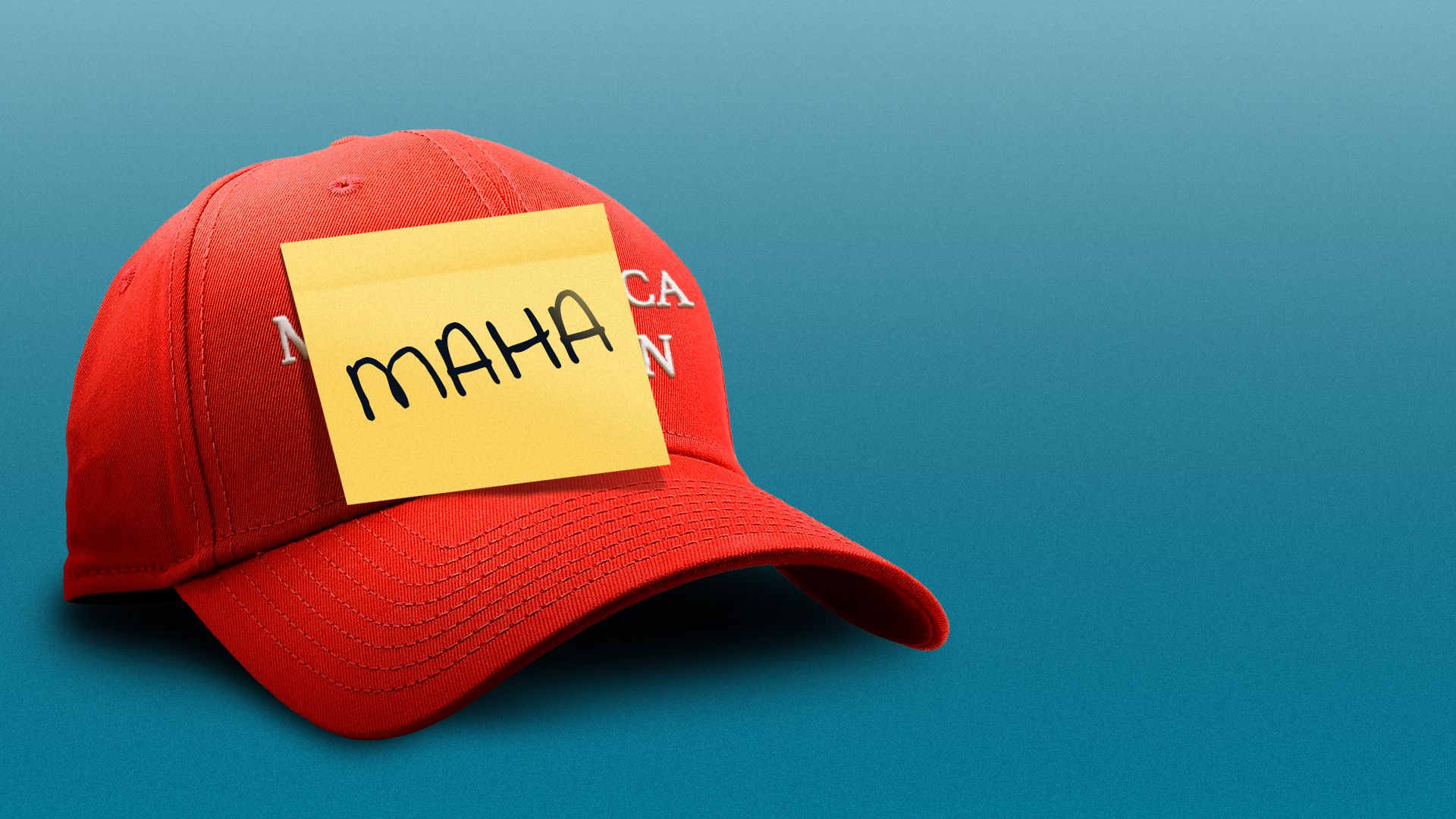
The "Make America Healthy Again" movement notched a big win on pesticide regulation during Thursday's debate on a House farm bill, only to see the White House pull the nomination of a favored influencer for surgeon general hours later.
Why it matters: The events showed how the movement continues to have clout on matters related to the food supply, but can be a political liability when it comes to vaccines and other public health matters.
Earlier this year, Regency Centers officially broke ground on The Village at Seven Pines, a 182,000 square foot open-air mixed-use development at Butler Boulevard and I-295 in Jacksonville, Florida.
What you need to know: The Village will serve as the commercial heart of Seven Pines, supporting convenience, connection and long-term community growth.
The Saudi sovereign wealth fund on Thursday confirmed it's withdrawing support for LIV Golf after the 2026 season.
Why it matters: The move places the tour's future in jeopardy four years after it was launched as a splashy, well-capitalized competitor to the PGA Tour.
Former Snowflake CEO Bob Muglia, a longtime Microsoft server boss, is backing JuliaHub, a startup that sees a role for AI agents designing complex products such as cars and airplanes.
Why it matters: JuliaHub is betting AI plus Julia, the open-source technical computing language, can challenge Simulink, MathWorks' decades-old tool for modeling and simulating complex systems.
Oil prices reached their highest levels overnight since the Iran war began, with Brent crude topping $126 per barrel before pulling back on Thursday morning.
Why it matters: The jump will keep sending U.S. gasoline prices higher — and shows the market reacting to the possibility of a long stalemate that keeps the Strait of Hormuz throttled.
Why it matters: The bluebuck — a member of the antelope family once found in modern-day South Africa — was hunted to extinction more than two centuries ago.
Claire's is launching a sweeping rebrand aimed at winning over Gen Alpha — offering an early look at how retailers are rethinking how to reach the next generation of shoppers.
Why it matters: Retailers are racing to connect with the first fully digital-native generation — those born from 2010 through 2024 — but there's no clear playbook yet.
Citi is rolling out a new internal AI platform that lets employees create agents, tapping into top models within one secure system that can scale those agents across the firm.
Why it matters: The AI race is playing out on Wall Street as much as it is in Silicon Valley, and banks are racing to offer the best AI models to employees without compromising on safety.
What did investors take away from the four Big Tech companies reporting earnings late Wednesday? If you're going to spend big on AI, you better have the growth to justify it.
Why it matters: Investors are over CEOs hyping AI and ready for CFOs to start explaining the return on their AI spending.
The U.S. is producing so much natural gas that at one hub in West Texas, drillers have to pay customers to take the stuff — or put another way, prices are negative!
Why it matters: It's surprising given that we're in the middle of the worst energy shock in history.
But unlike oil, which trades in a global market, natural gas still mostly trades at the regional level. And the U.S. produces enough to supply itself.
The big picture: The negative price tag is an indication of just how well-positioned the U.S. is when it comes to coping with the energy shock of the Iran war — particularly in the natural gas market.
The natural gas bounty not only insulates the U.S. from the war shock but actually creates an economic tailwind, Bloomberg reports.
"Cheap supplies of gas — a key manufacturing input and a major player in meeting power demand from artificial intelligence — stand to give the US an edge over countries facing fuel shortages," per Bloomberg.
Between the lines: While prices at the pump get a lot of attention, and rightly so, natural gas is increasingly important. It now accounts for about 40% of all U.S. electricity generation — and is powering the AI boom.
Zoom in: The glut of natural gas in West Texas stems from a surge in production over the past 15 years that has far outpaced the pipelines needed to move it out of the region.
This isn't the first time the price has turned negative.
The gas is a byproduct created during the oil drilling process.
New pipeline capacity is set to come online, but more gluts could be on the way.
What they're saying: That will "provide incremental takeaway capacity for a basin awash in molecules," says Chris Louney, a commodity strategist at RBC Capital Markets.
But "the basin is prolific, and associated gas will continue to be produced, often in excess, alongside crude oil."
How it works: For now, that local oversupply — even as other parts of the world face acute shortages — highlights how fragmented natural gas markets remain.
Prices are still driven largely by regional infrastructure, not just global supply and demand.
By the numbers: U.S. natural gas prices outside of the region are still positive — the benchmark Henry Hub natural gas price is sitting at $2.64 per million BTUs, down about 20% from last year.
That's much lower than for Asia and Europe, both depend on imports through the Strait of Hormuz. The benchmark gas price is up about 47% in the EU and more than 50% in Asia from last year.
Asian countries, outside of China, are grappling with a shortage that's led to rationing and severe measures to deal with shortfalls and high prices.
What to watch: The market has been becoming more global, especially with the U.S. rising as the world's top exporter of liquefied natural gas.
Still, the Iran war is exposing the limits of that interconnected system.
NTT Data, a major data center operator, is buying carbon removal credits from startup Climeworks to help meet its climate goals, the companies exclusively shared with Axios on Thursday.
Why it matters: Surging energy demand from AI is increasing scrutiny of data centers' emissions — and could expand the pool of buyers for carbon removal as the sector faces setbacks.
The AI industry has entered an era of perpetual upheaval where market leaders are crowned — and dethroned — every few months.
Today's hottest company could be eclipsed by summer and the laggard could revolutionize the world.
Why it matters: As AI changes everything, keeping up with who's dominant and who's falling behind is becoming an existential question for investors, big businesses and regular users trying to guarantee their own futures.
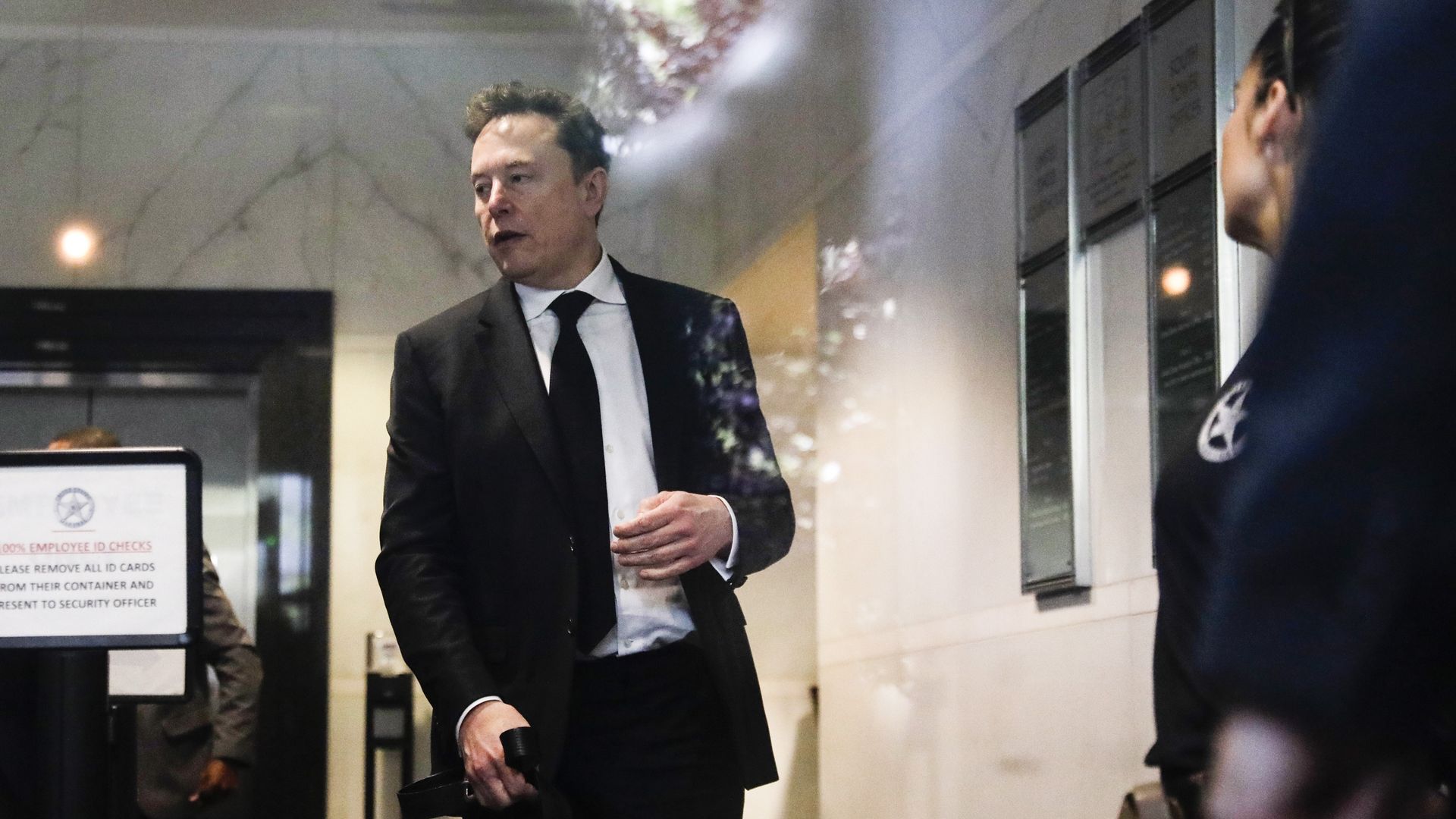
Elon Musk portrayed himself in court this week as a leading advocate for AI safety — in contrast to what he described as the profit-consumed OpenAI that he's suing.
Why it matters: Musk's self-portrait as a guardian of AI safety clashed with OpenAI's counterargument: that Musk was fine with a for-profit OpenAI when he thought he could control it.
How the debate over Musk's motivations is resolved could be key to the outcome of the lawsuit the richest man in the world is waging against OpenAI.