Prediction markets are going more and more mainstream by the day despite recent sports gambling scandals.
Why it matters: About a dozen states haven't yet legalized sports betting — and there's little momentum toward doing so — but prediction markets are quickly filling in the gap.
The BBC formally apologized to President Trump after criticism over how a documentary edited his Jan. 6 speech, and said it does not plan to rebroadcast the program.
Why it matters: Though it apologized, the BBC disagreed that the edit merited a defamation claim, and it did not indicate that it would compensate Trump, as he had demanded.
The IRS has announced its new 401(k) contribution limits for 2026.
The big picture: The agency said in a news release on Thursday that it has increased the amount individuals can contribute to their 401(k)s — $24,500 for next year, up from $23,500 in 2025, the largest increase in two years.
As chief corporate affairs officer at Synchrony, Sue Bishop is responsible for protecting and enhancing the company's reputation.
Why it matters: Bishop is the first to hold the chief corporate affairs role at the consumer financial services company, which spun out from GE in 2015.
There's a new CCO+ title that's trending across the industry: chief communications and brand officer.
Why it matters: With AI upending how consumers discover brands and boycotts spreading at the speed of a post, communications teams are emerging as the real brand gatekeepers.
Disney shares plunged 8% in early trading Thursday after the company reported disappointing revenue and warned of a prolonged distribution fight with YouTube TV.
Why it matters: Disney+ and Hulu's continued growth was overshadowed by a streaming-era carriage disagreement and declines in the legacy TV business.
The Washington Commanders want to build the "loudest, most dynamic" venue in the NFL, announcing Thursday that architecture firm HKS will design its new $2.7 billion stadium in D.C.
The big picture: Expectations are high for the 65,000-seat stadium — from local fans to President Trump, who wants it named after himself.
Starbucks' big rollout of its holiday menu Thursday may come with extra heat, as unionized baristas hold a one-day strike timed to disrupt one of the company's biggest promotions.
Google is turning its Gemini AI into a personal shopper, with new tools that can search, compare, call stores and even buy gifts for you.
Why it matters: It's the tech giant's biggest step yet toward "agentic commerce," one of the hottest frontiers in the effort to commercialize AI for general audiences.
Fewer solar projects are being delayed now compared to this time last year, the U.S. Energy Information Administration reported this week.
Why it matters: Conventional wisdom pointing to politics, permitting and local battles suggests solar is facing increasing opposition, but short-term trends suggest that may be changing.
Uber is rolling out a new way to pay for someone else's trip — like aride home from the airport for a visiting parent, or a late-night drop-off for a babysitter.
Why it matters: The company's betting on demand as millions juggle holiday travel, pickups and drop-offs.
Wall Street is worried about valuations, a measure of how expensive an asset is. One solution could be extending the time horizon for company earnings projections to 36 months from the current 12 months.
Why it matters: It would be a way to change the numbers without anything fundamentally changing.
What they're saying: "Eventually Wall Street is going to justify the valuations (on hot tech stocks) by extending its duration on its valuation metrics," José Torres, senior economist at Interactive Brokers, tells Axios.
The S&P 500 is now trading at 23 times forward earnings, compared with a historical average of 18 times earnings. "Have a three-year horizon, and then all of a sudden, the valuations make sense," Torres says.
Reality check: Changing something like valuation timelines may actually make sense for the modern investor.
Strategists and portfolio managers regularly point to the fact that tech valuations are always overstretched, but these names tend to grow into their valuations over time.
Adjusting the forward earnings time horizon could allow for it to be more clearly reflected in one of the most used metrics for evaluating any given security.
Thought bubble: My mentor, who taught me how to cover markets, once told me "data doesn't lie unless you make it."
Changing the forward earnings timeline could be a way to massage the data into a more palatable story for investors, or it could offer a more realistic view on how Wall Street values stocks today anyway.
Wall Street's AI obsession is blinding investors to investment opportunities that exist outside of the technology, says a new report from Bank of America.
Why it matters: The AI trade has dominated the market and its gains. If that boom plateaus, certain non-AI stocks could lead the next leg of the rally.
Here's what's new on Paramount+, Netflix, Hulu, Disney+, Apple TV+, Prime Video, Peacock and HBO Max.
What we're watching: New seasons of "Landman" and "The Secret Lives of Mormon Wives" and a documentary about Eddie Murphy — all part of this weekend's lineup.
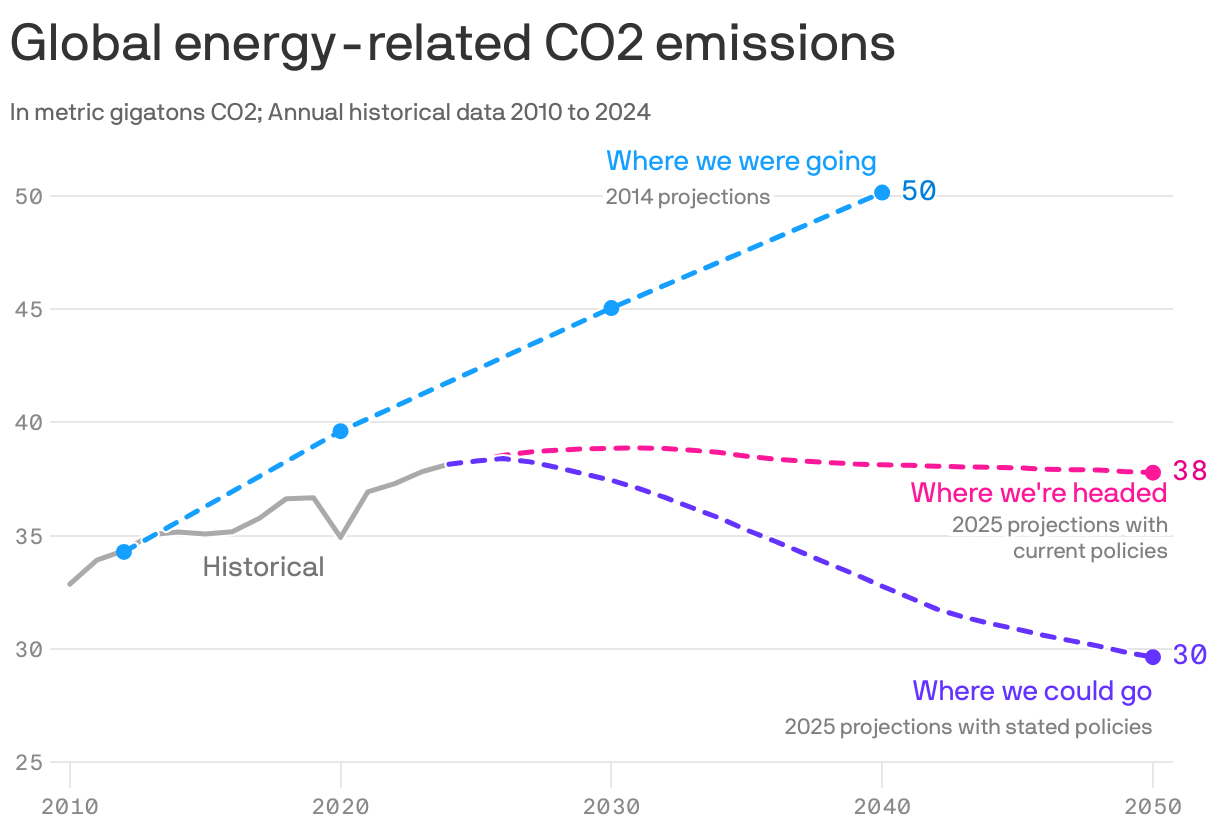
Global efforts to address climate change are — still — going far better today than they were a decade ago, even with recent politics pushing the problem to the back burner.
Why it matters: We humans usually operate on daily, monthly and yearly time frames. So it can be easy to miss the energy transition unfolding over decades and centuries.
Fewer than half of Americans now say religion is an important part of their daily lives, a 17 percentage point drop since 2015, which ranks among the largest declines in the world, according to a new Gallup poll.
Why it matters: The U.S. was once exceptional for its high religiosity among wealthy nations. The shift reflects profound cultural changes that could reshape politics, social ties and even national identity.
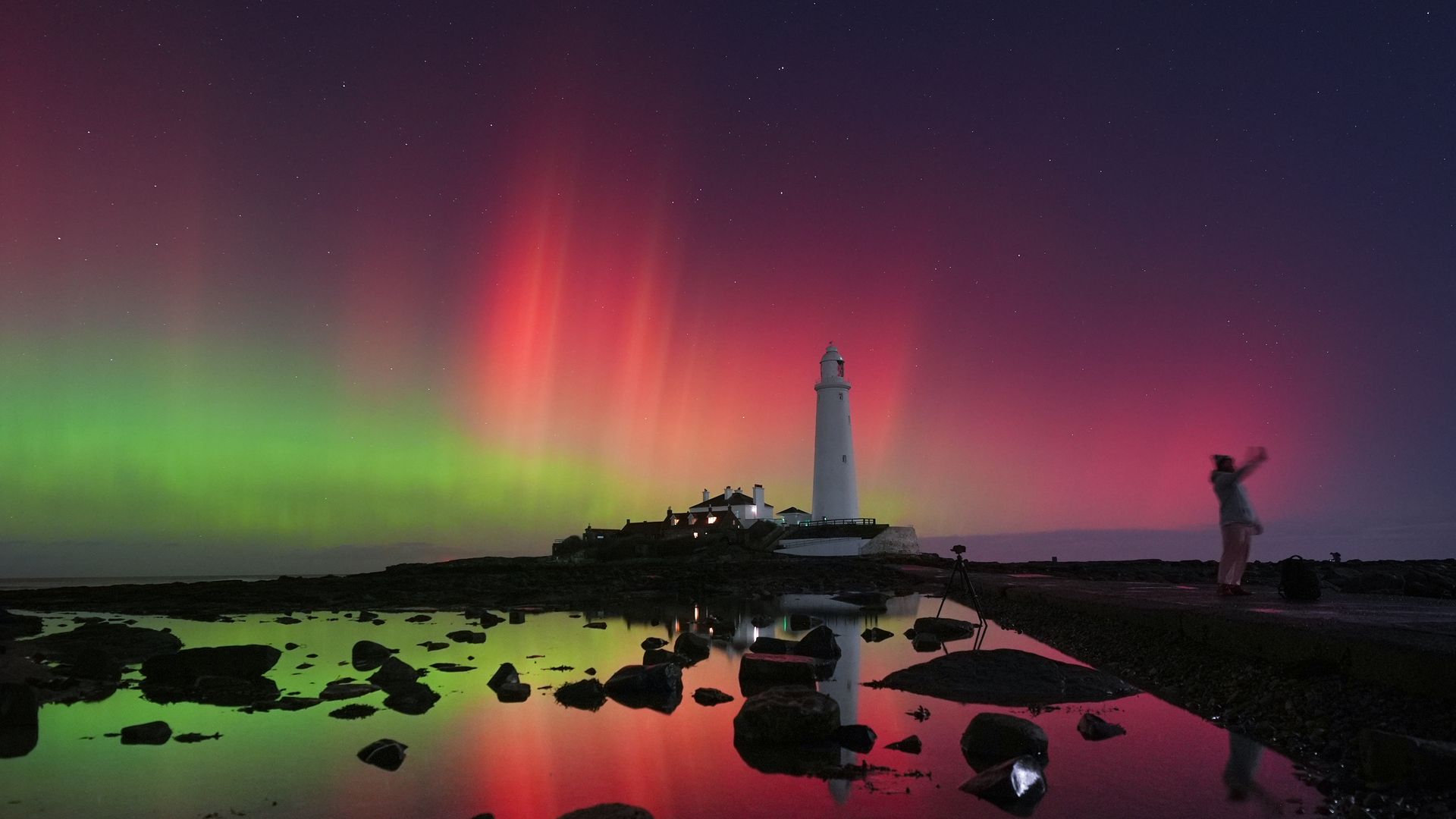
The Northern Lights have been illuminating skies across the U.S. this week, and some lucky spectators may get another chance to see the aurora borealis into Thursday.
The big picture: Intense G4 geomagnetic conditions, the second-highest on the National Oceanic and Atmospheric Administration's five-step scale, produced magnetic conditions that were "eight times stronger than what's normal" on Tuesday night, NOAA's Space Weather Prediction Center forecaster Shawn Dahl said in a video on X.