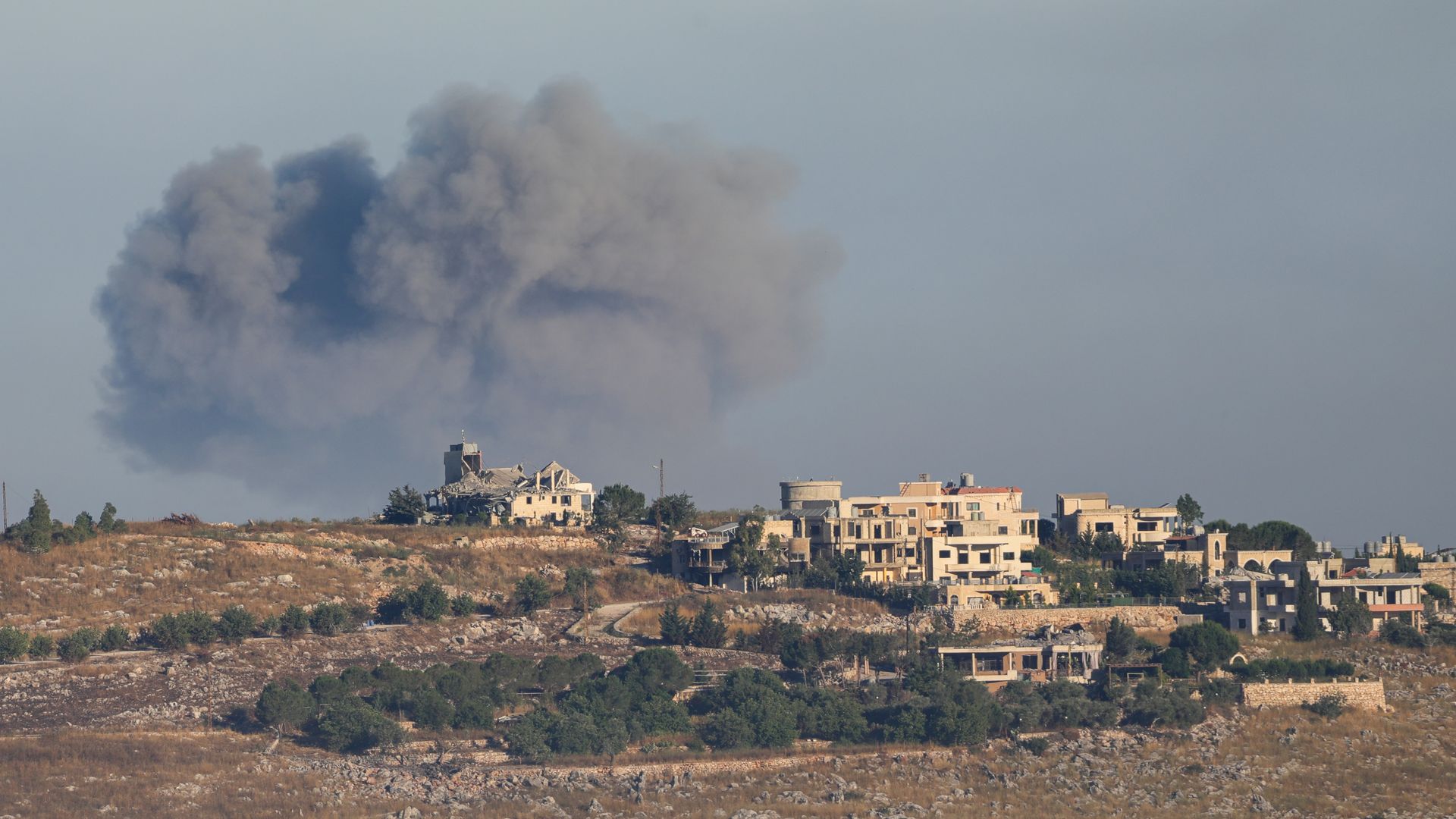
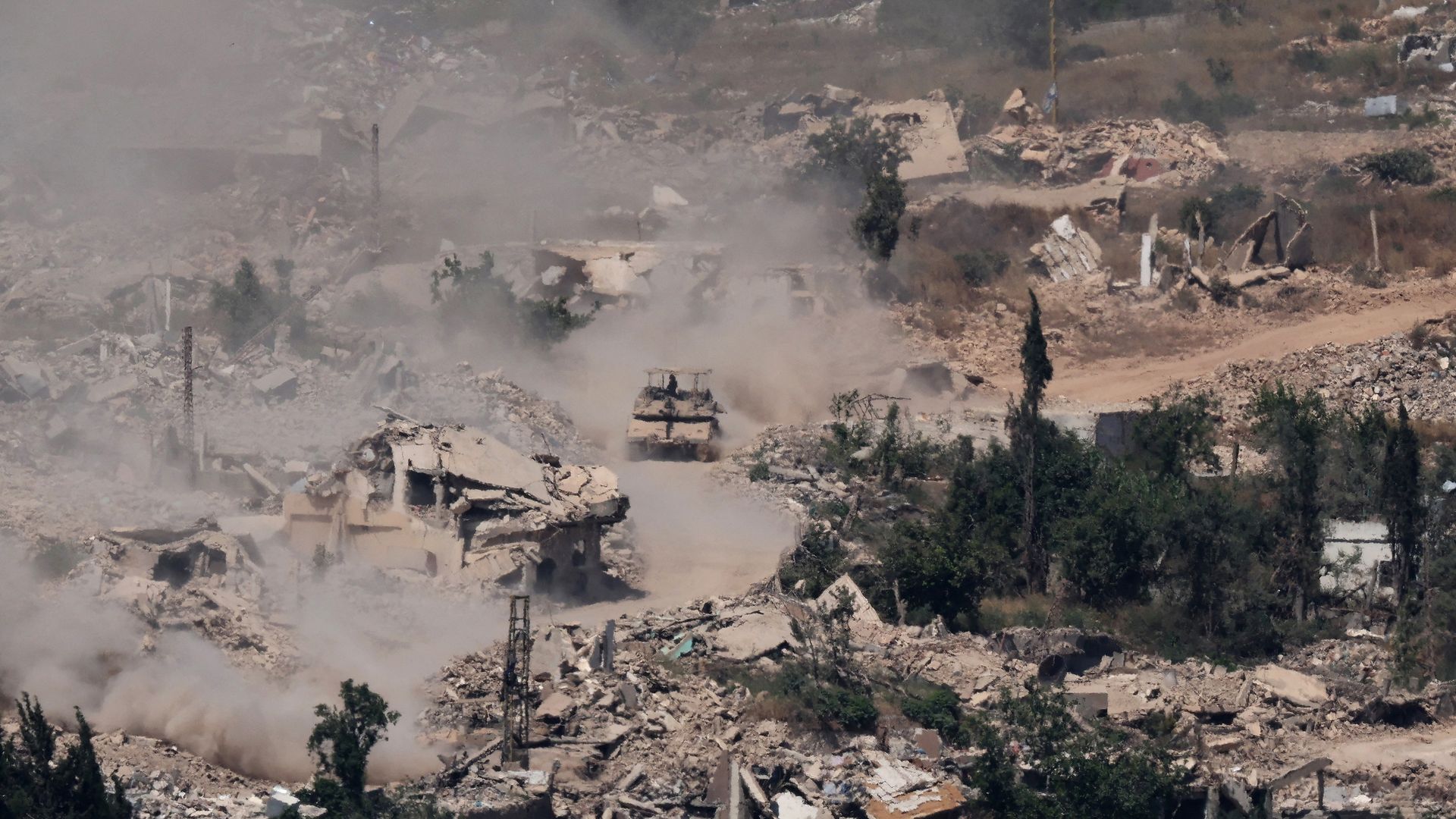
The Iranian armed forces announced Saturday they will close the Strait of Hormuz — just three days after it reopened — alleging America's failure to rein in Israeli attacks on Lebanon violates the new ceasefire deal.
Why it matters: This is the first big crisis between the U.S. and Iran since signing a memorandum of understanding to end the war earlier this week.
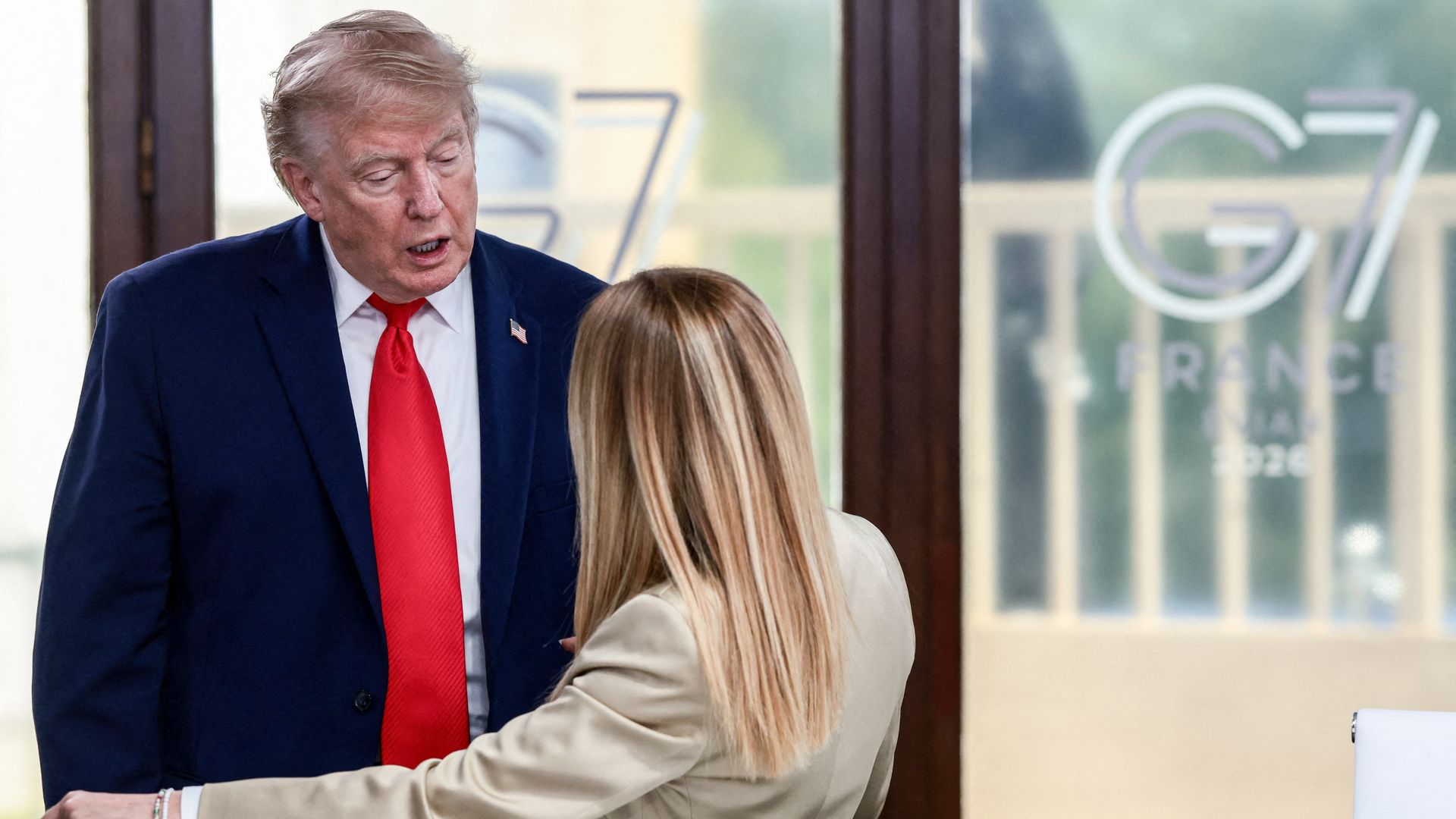
Donald Trump and Giorgia Meloni's war of words over a factually contested photo op request at the G-7 exploded on Saturday, with the one-time friends blasting each other in angry terms on social media.
Why it matters: Even as Trump lavishes praise on American adversaries like China's Xi Jinping, close allies are increasingly willing to split with him.
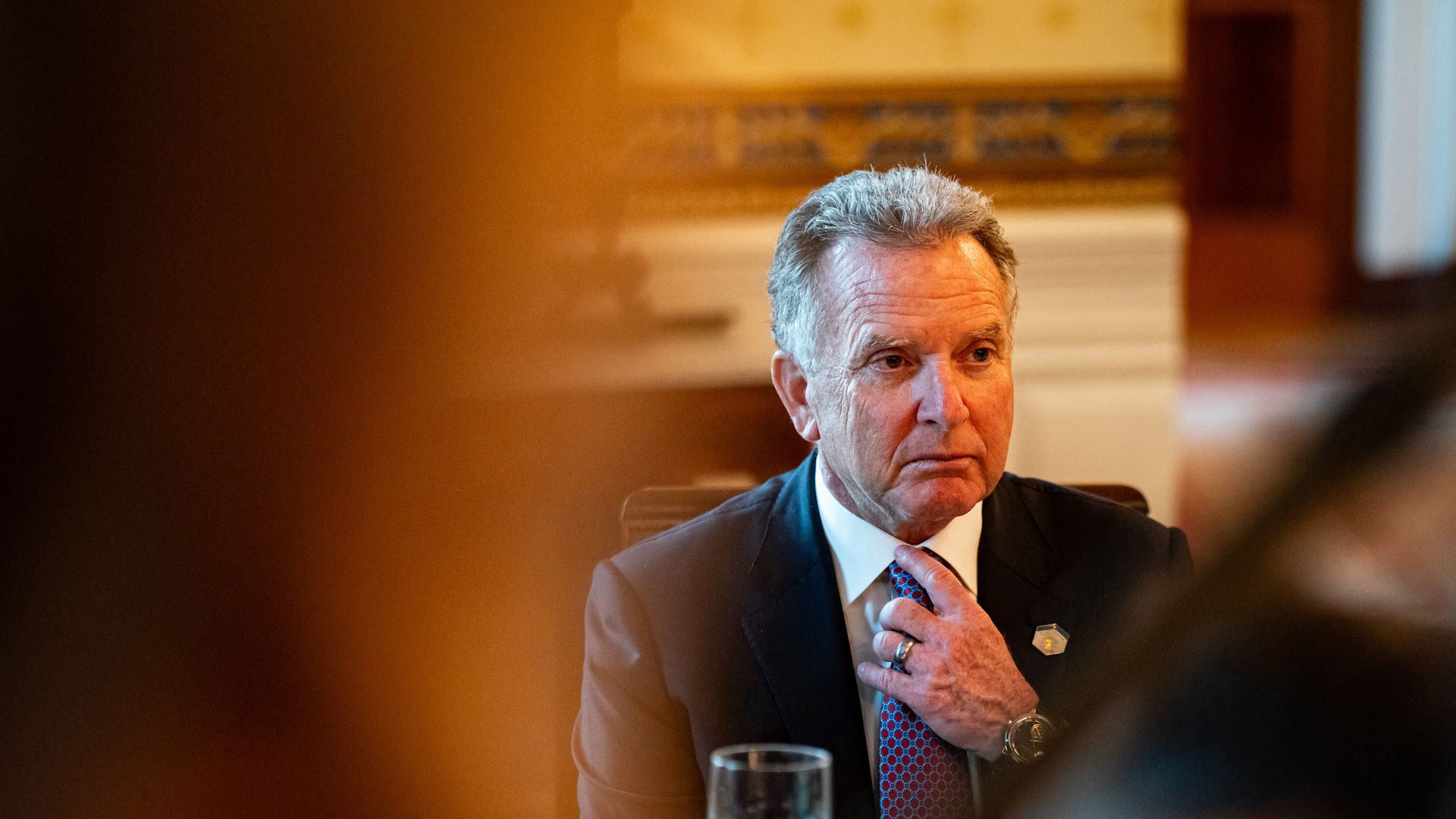
White House envoys Steve Witkoff and Jared Kushner are in Switzerland, where the first round of talks with Iran on a potential nuclear deal is expected to take place on Sunday, U.S. officials told Axios.
Iran's foreign minister Abbas Araghchi traveled to Switzerland on Saturday to join the talks. Vice President Vance is expected to travel to Switzerland on Saturday to participate in the negotiations Sunday, a per source familiar, while Iranian parliament speaker Mohammad Ghalibaf is also expected to attend.
Why it matters: The talks were supposed to start on Friday but were postponed because of the fighting between Israel and Hezbollah in Lebanon. It's not yet clear if a new time has been set for the talks.
Why it matters: Trump has long admired leaders who wield centralized power and stamp their will on history. He skipped over traditional American allies when asked which world leaders he respects.
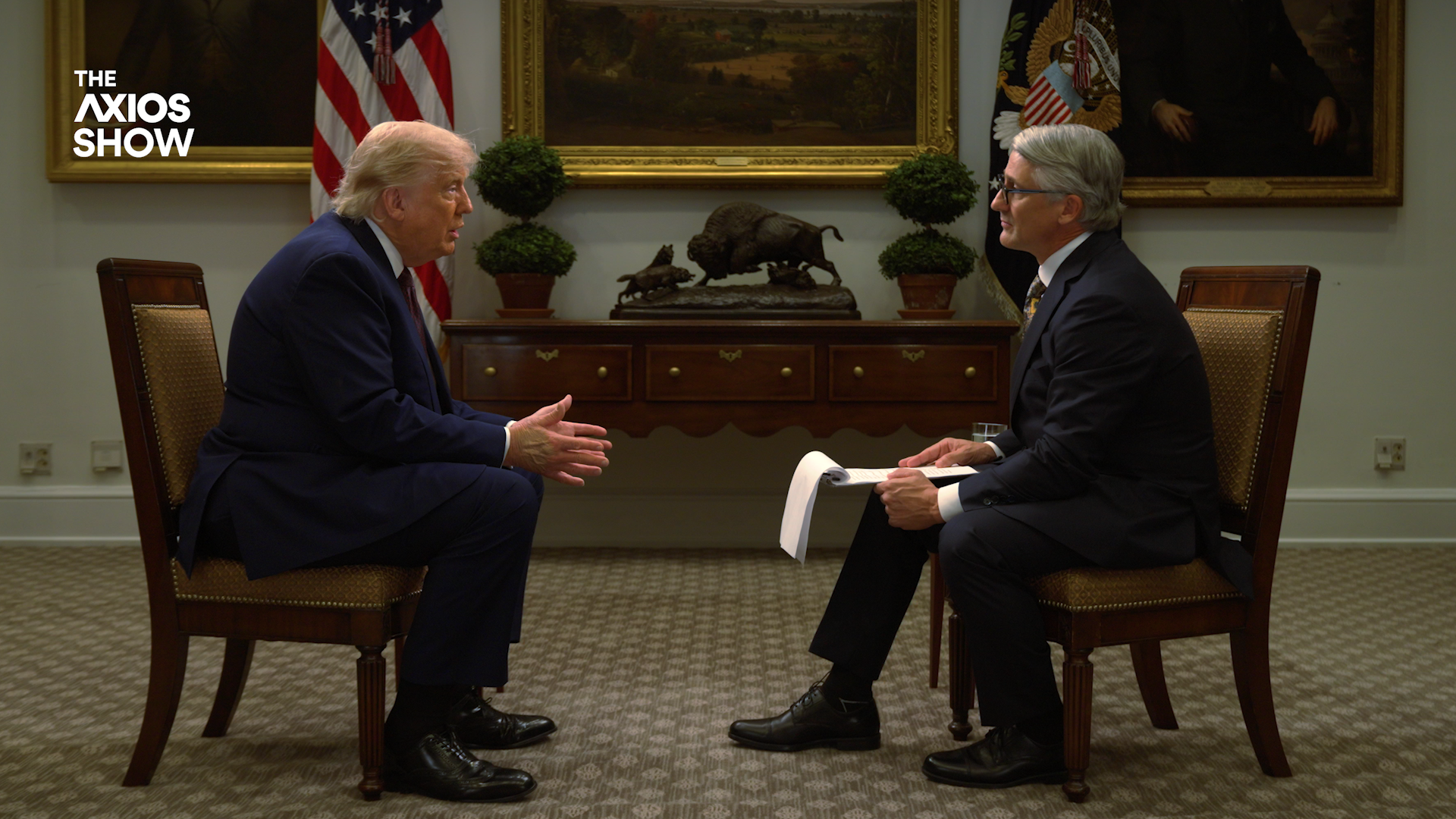
President Trump said Thursday on "The Axios Show" that "it's possible" a potential Cuba invasion would resemble the swift capture of Venezuelan President Nicolás Maduro in January.
Why it matters: Trump wants to project U.S. military power across the Western Hemisphere, fitting a second term defined by blunt force and expansionist ambition.
President Trump tells "The Axios Show" that his deal to end the war in Iran averted a global depression, that Cuba could get the same treatment as Venezuela, and that a leading AI lab looked in recent days like a national security threat.
The big picture: In a sweeping 45-minute interview on Thursday with Axios White House correspondent Marc Caputo, Trump made clear his view of the extent of his post-war power: "There are no limits."
President Trump declared on "The Axios Show" on Thursday that he's discovered "no limits" to his power since going to war with Iran.
A forthcoming book reveals he's been entertaining an even grander idea: that he may be the most powerful man in history.
Why it matters: Trump is no longer merely testing the limits of the presidency. He's describing power in world-historical terms — placing himself in the lineage of conquerors, dictators and strongmen who bent nations to their will.
Two U.S. officials told Axios on Friday that Israel and Hezbollah had agreed to a renewed ceasefire in Lebanon, but clashes continued even after it was supposed to be in effect.
Hezbollah sources told Reuters the group would observe the ceasefire, but a spokesperson for Israel's military declined to confirm its participation.
Why it matters: The continued fighting between Israel and Hezbollah led to the postponement of U.S.-Iran talks planned for Friday. U.S. officials hope the talks can be launched if the ceasefire holds.
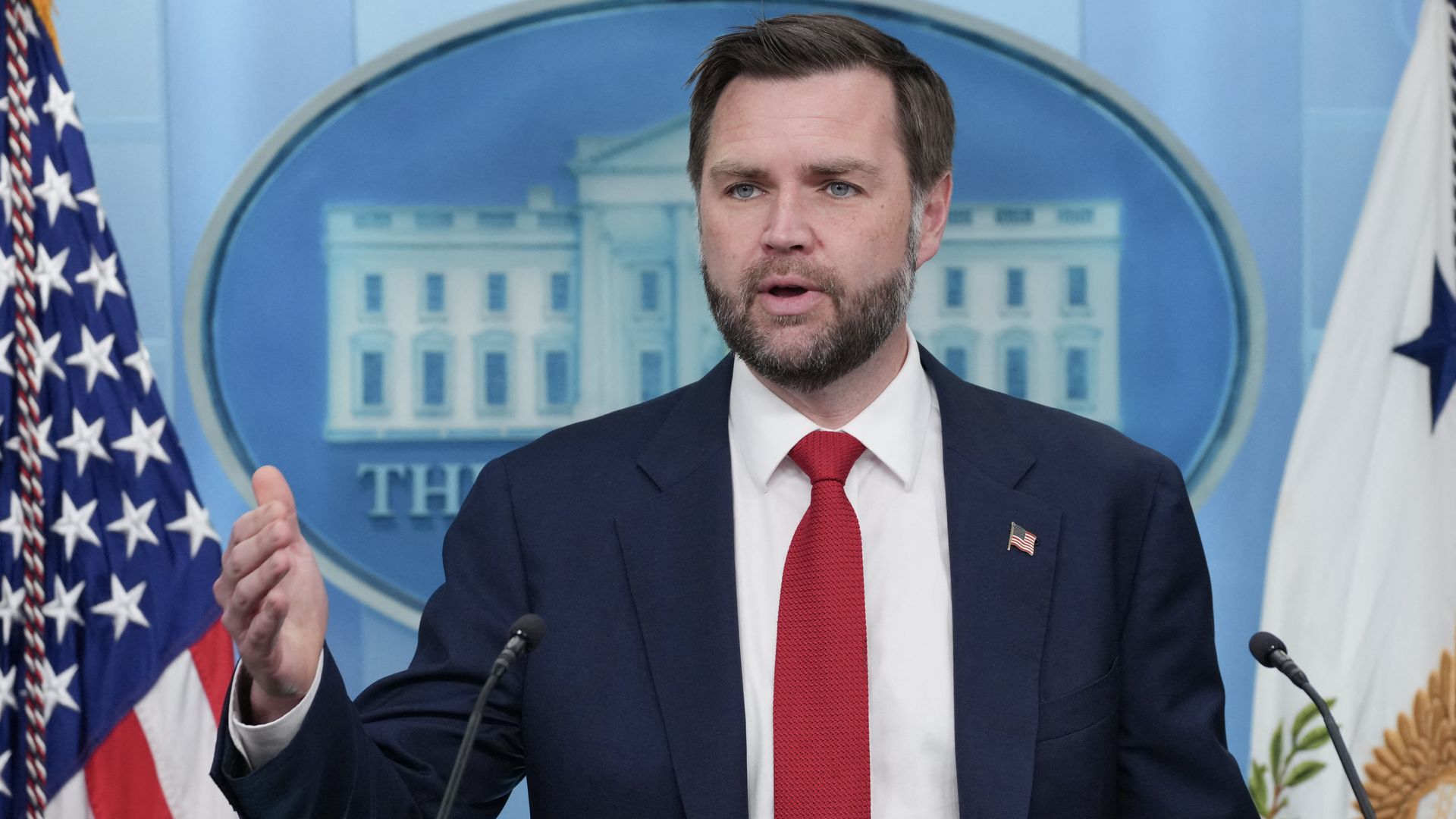
Vice President JD Vance postponed a planned trip to Switzerland for U.S.-Iran talks expected to begin Friday, the White House said.
Why it matters: The White House said the reason for the change of plans was "logistics." But there were some indications that the background for the decision is connected to the shaky ceasefire in Lebanon.