Several family members of hostages held by Hamas in Gaza who have dual U.S.-Israel citizenship told Prime Minister Benjamin Netanyahu in a meeting on Thursday that they get better treatment from the White House than from the Israeli government, two sources who attended the meeting told Axios.
Why it matters: Netanyahu is facing growing public pressure in Israel and abroad as critics accuse him of not pursuing a hostage deal for political reasons.
Immigrants started new businesses last year at more than double the rate of U.S.-born citizens, according to a recent analysis.
Why it matters: Entrepreneurship can lead to financial success for immigrants, especially those who lack legal status to work. They in turn help fuel the nation's economic growth.
The deaths of construction workers in the collapse of Baltimore's Francis Scott Key bridge underscores the key role of immigrants in the U.S. labor force, as well as some of the risks they're exposed to.
The big picture: The tragedy is "a reminder that immigrants are caring for our communities and cities in often unseen ways," United We Dream spokesperson Anabel Mendoza says via email.
Minor League Baseball has announced that its annualCopa de la Diversión, a series-long initiative to appeal to U.S. Hispanics, will include the most teams ever this season.
Why it matters: Last year's MLB World Series was the least-watched on record amid professional baseball's overalldeclining attendance and viewership, but MiLB's Copa de la Diversión is growing its Latino fan base.
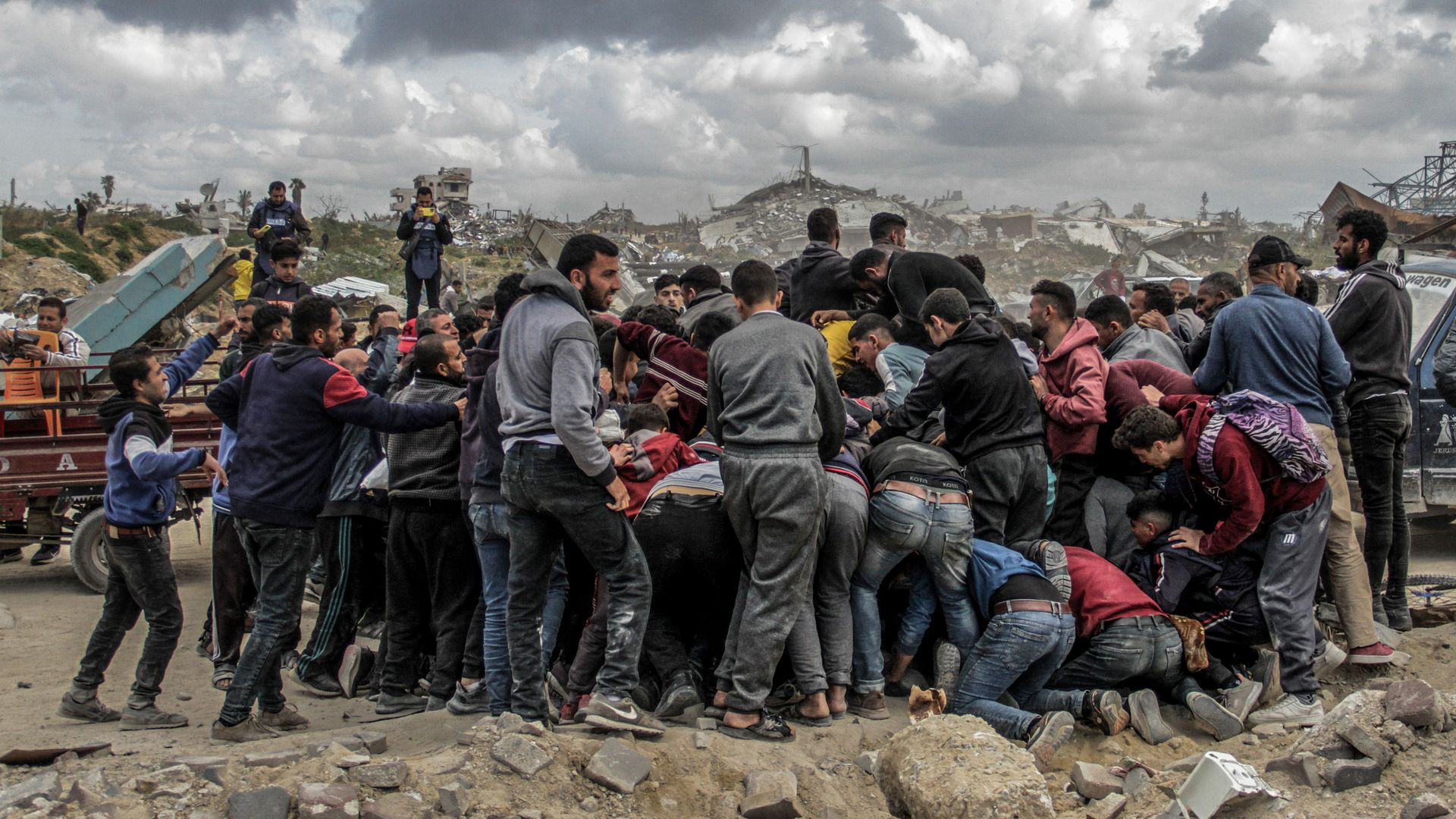
The International Court of Justice (ICJ) issued an order on Thursday calling on Israel to allow unimpeded access for humanitarian aid into the Gaza Strip, which the UN has warned is on the verge of famine.
Why it matters: The court's ruling is part of a growing international pressure campaign to push Israel to do more to address the dire humanitarian situation in Gaza. It came as part of a case, brought by South Africa, accusing Israel of state-sanctioned genocide in Gaza.
President Biden is facing pressure from dozens of lawmakers and hundreds of rights groups to expand immigration protections for people fleeing extreme violence from armed gangs in Haiti.
Context: Weeks of violence by armed Haitian gangs have left thousands of people dead, kidnapped or injured and aggravated one of the world's most severe humanitarian crises, with some 5.5 million Haitians needing assistance and over 125,000 children "imminently" at risk of severe malnutrition, per the U.N.
Over one billion meals a day were wasted globally across households in 2022, per a UN report released Wednesday, amounting to nearly one fifth of total food that year.
The big picture: The staggering amount of waste comes as global food insecurity and the climate crisis plague communities around the world.
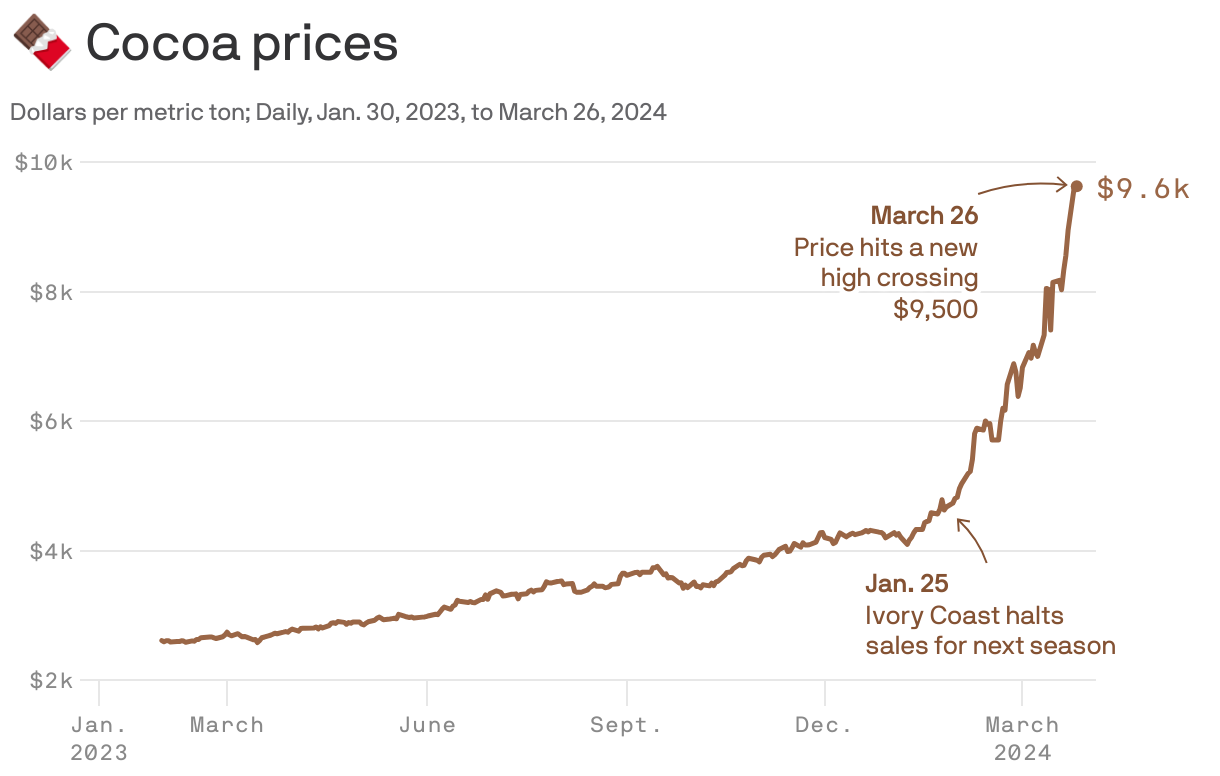
Cocoa prices extended a torrid rally, briefly setting a new record above $10,000 in a move that makes sweet treats pricier for consumers and chocolate makers alike.
According to Reuters, major cocoa plants in Africa reduced processing because they couldn't afford to buy beans.
The crisis is likely to intensify, with Ghana set to lose key funding access allowing it to buy beans, Bloomberg reported.
By the numbers: In the past six weeks, prices of wholesale beans traded in New York have doubled, trading just above $10k per metric on Tuesday before closing slightly below that level — a250 percent jump from last year.
At the time of writing, the cocoa price was around $9,700 per metric ton.
Deep dive: The cocoa crisis has been in the making for a long time, according to Tedd George, founder and chief narrative officer at Kleos Advisory. "We saw it coming and unfortunately, it's played out exactly as everyone said it would."
George says climate change and changing weather patterns turbo-charged the financial crisis in Ghana, threatening cocoa production.
He says local Ghanaian farmers have been unable to restore old trees because it costs too much to buy pesticides; this in turn led to the spread of black pod disease and swollen shoot virus during the last quarter of 2023.
This may lead to farmers resorting to smuggling beans to profit from higher prices, because many are currently locked into fixed contracts.
State of play: The Ivory Coast cocoa regulator, Le Conseil Cafe-Cacao, recently stopped selling contracts for cocoa exports forward sales for the 2024-25 season as production numbers drop.
Reuters reports that in normal times, the heavily regulated market allows buyers to set pre-agreed prices a year in advance.
However, in times of shortage, "the system breaks down" and dealers buy the beans at higher than the pre-agreed prices to secure the delivery.
What they're saying: "At the moment, both Ghana and Cote d'Ivoire are scrambling for beans to meet contracts some even from last season," says George. "That's where there's a real problem."
To reduce the cost burden, some candy makers are replacing the ingredient, cutting down on packaging and bar sizes, or using new technologies to make cocoa-free chocolates.
Adam Maxwell, whose food tech startup, Voyage Foods, has also reverse-engineered coffee and peanut butter to make said in an emailed statement:"While we can't say for certain, if you look at long-term historical cocoa pricing data, it's not crazy to think prices will be where they are today or even higher."
Yes, but: Approximately 92 percent of Easter-celebrating Americans are still set to purchase candy and chocolate this year, contributing to over $5 billion in confectionery sales during the Easter holiday season, according to the U.S. National Confectioners Association.
What we're watching: Whether chocolate remains affordable for everyone, or ends up becoming a luxury item.
Israeli Prime Minister Benjamin Netanyahu is planning to send two top Israeli officials to Washington as early as next week for talks about a possible military operation in Rafah, four U.S. and Israeli officials told Axios.
Why it matters: It's a sharp reversal by Netanyahu who on Monday canceled the same trip by the same people in protest over the U.S. not vetoing a UN Security Council resolution calling for a ceasefire in Gaza and the release of hostages held by Hamas.
A majority of Americans disapprove of Israel's military actions in Gaza, in a stark shift since last fall, according to a Gallup poll released Wednesday.
Why it matters: The new findings come as Israel prepares for a controversial ground invasion of Rafah. Tensions have grown between President Biden and Israeli Prime Minister Benjamin Netanyahu as the humanitarian toll of Israel's war has mounted.
President Biden is facing blowback from pro-Israel lawmakers in both parties for allowing the U.N. Security Council to pass a resolution calling for a temporary ceasefire in Gaza and the release of Israeli hostages.