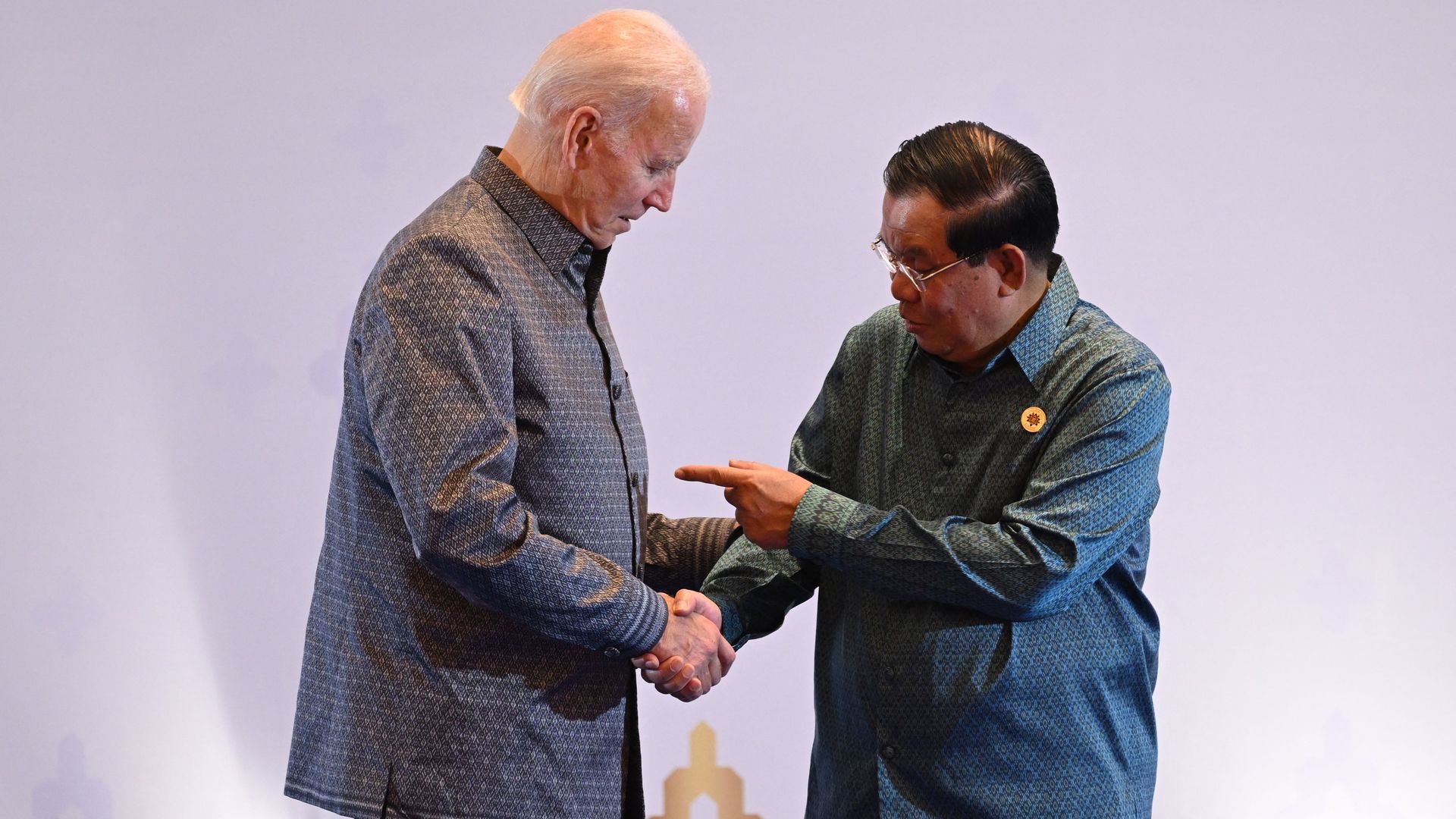
Why it matters: Biden's visit comes days ahead of his important meeting with Chinese President Xi Jinping. The president is presenting the United States as a friendly and calm ally for the region as China's influence grows and North Korea unnerves nearby leaders.
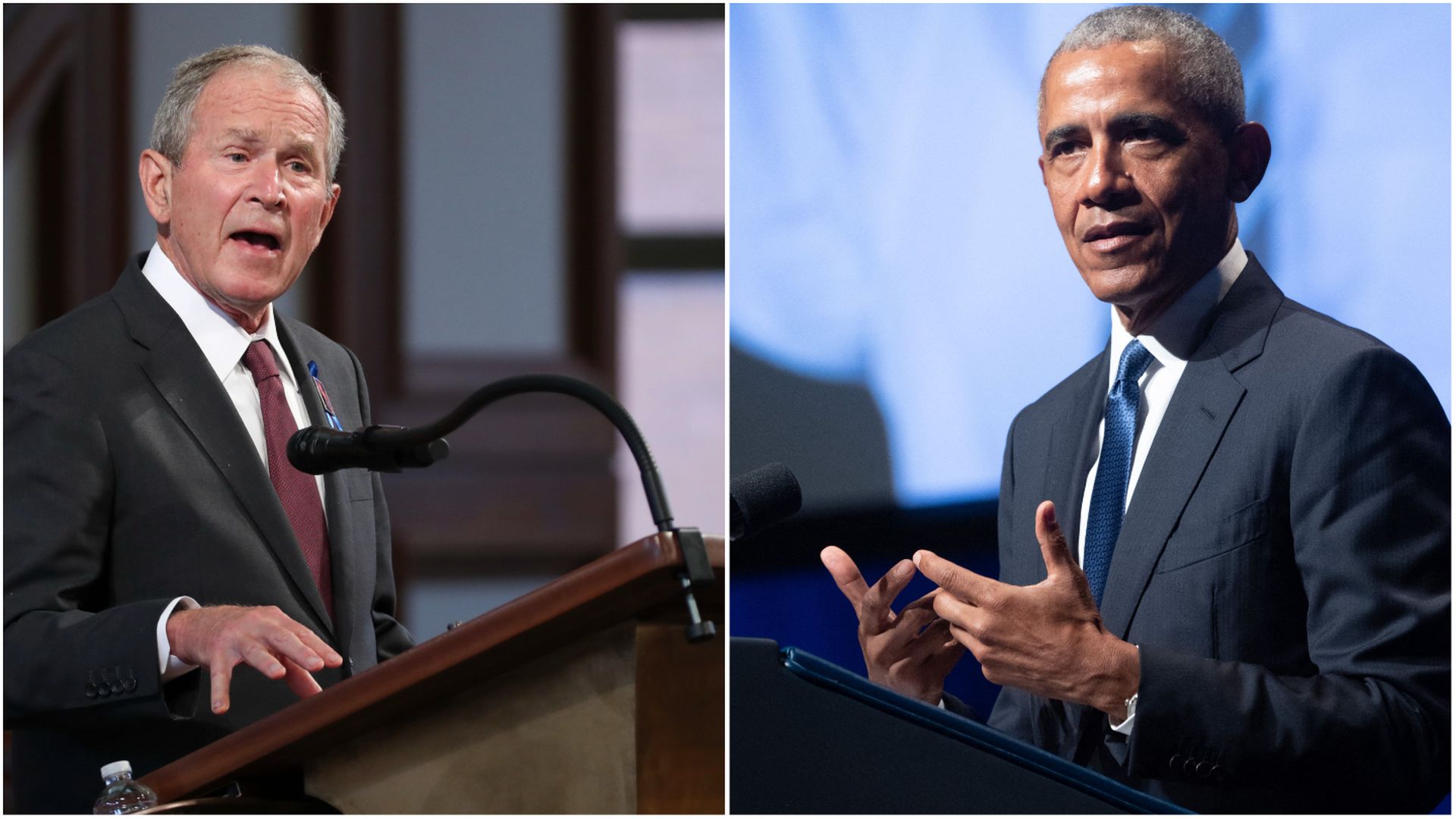
Former U.S. Presidents George Bush and Barack Obama are headlining back-to-back democracy conferences next week, highlighting rising threats from authoritarianism and disinformation — and how to combat them globally and at home.
Why it matters: Bush and Obama — a Republican and a Democrat respectively — didn't coordinate their timing, organizers say. But their events — Bush's is Nov. 16 in Dallas and Obama's is Nov. 17 in New York — are happening the week after the U.S. midterm elections.
Ukrainian police officers, as well as TV and radio broadcast services, returned to the southern city of Kherson Saturday following a massive withdrawal of Russian troops, the Associated Press reports.
Why it matters: Ukraine has taken its first steps toward making the southern city of Kherson more livable again after eight months of occupation.
Ukrainian President Volodymyr Zelensky said Friday that the country's troops had entered the key southern city of Kherson, calling it a "historic day."
Why it matters: Russia's withdrawal from the only provincial capital its military captured since invading neighboring Ukraine eight months ago marks a major setback for Moscow and a remarkable victory for Ukrainian forces.
China's government eased some pandemic measures Friday — including reducing quarantine periods for travelers and close contacts of people infected with COVID-19 and ending penalties on airlines for bringing virus cases into the country.
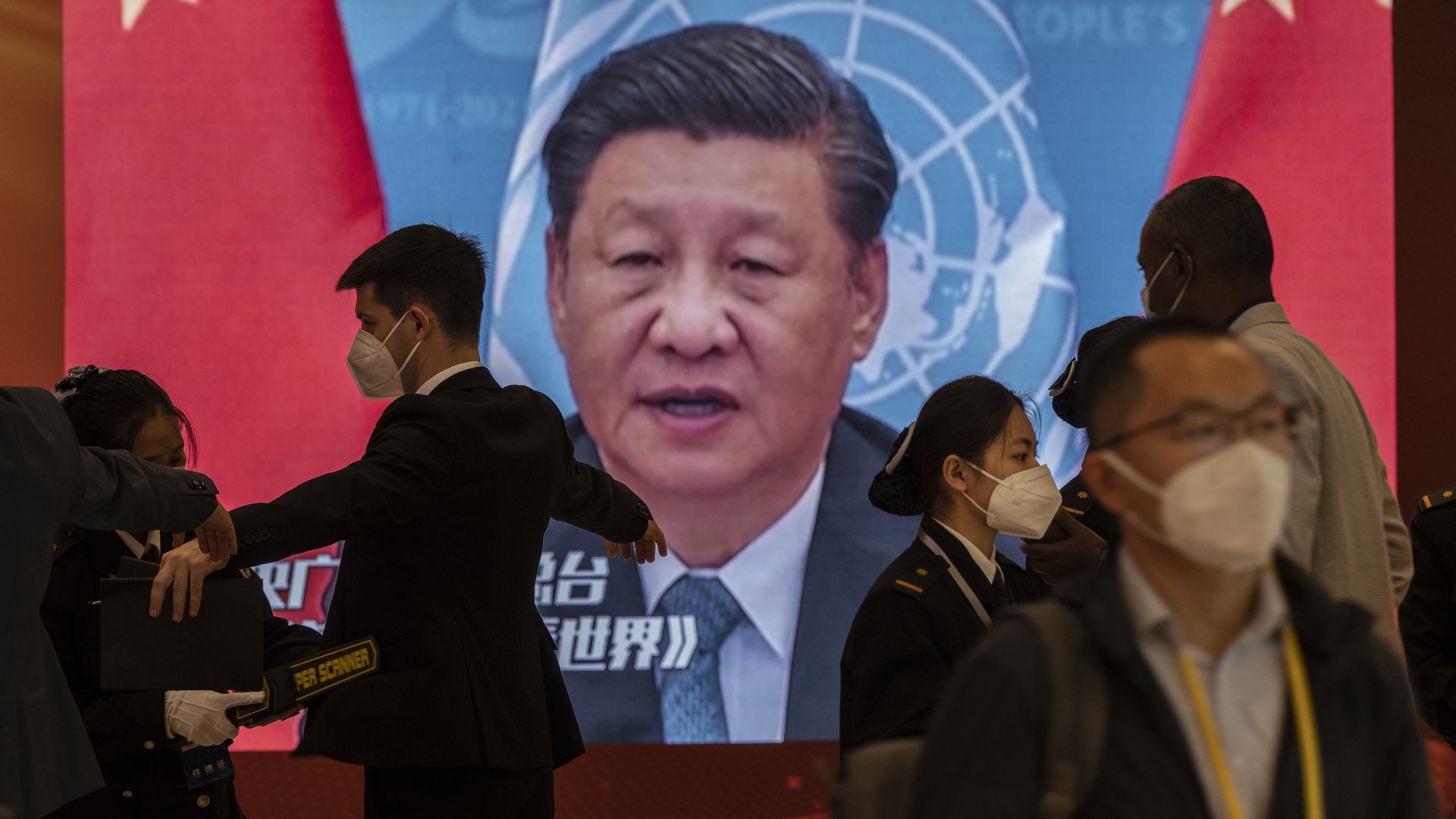
Why it matters: The new rules are a notable adjustment to President Xi Jinping's zero-COVID policy. China is the last major economy to have retained the strategy of trying to keep out the virus with measures such as lockdowns and quarantines.
State Department spokesperson Ned Price said it was "abhorrent" that Israeli politician Itamar Ben-Gvir, the leader of a Jewish supremacist party who is set to become a minister in the next government, praised the late Rabbi Meir Kahane, who was known for his racist and extreme rhetoric, at a memorial service in Israel on Thursday.
Why it matters: Such strongly worded criticism by a State Department official is unusual when it comes to issues related to Israel. Ben-Gvir, whose party is part of Benjamin Netanyahu's right-wing bloc that recently won the Israeli elections, is expected to be appointed the new minister of internal security.