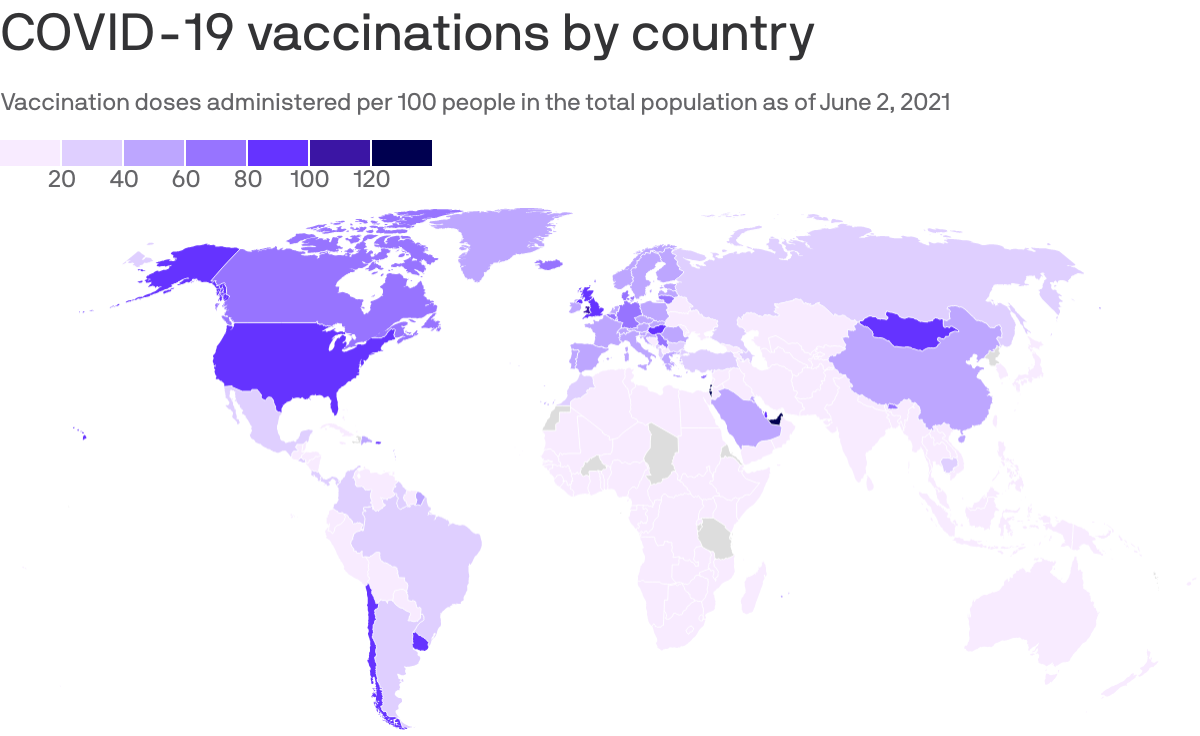
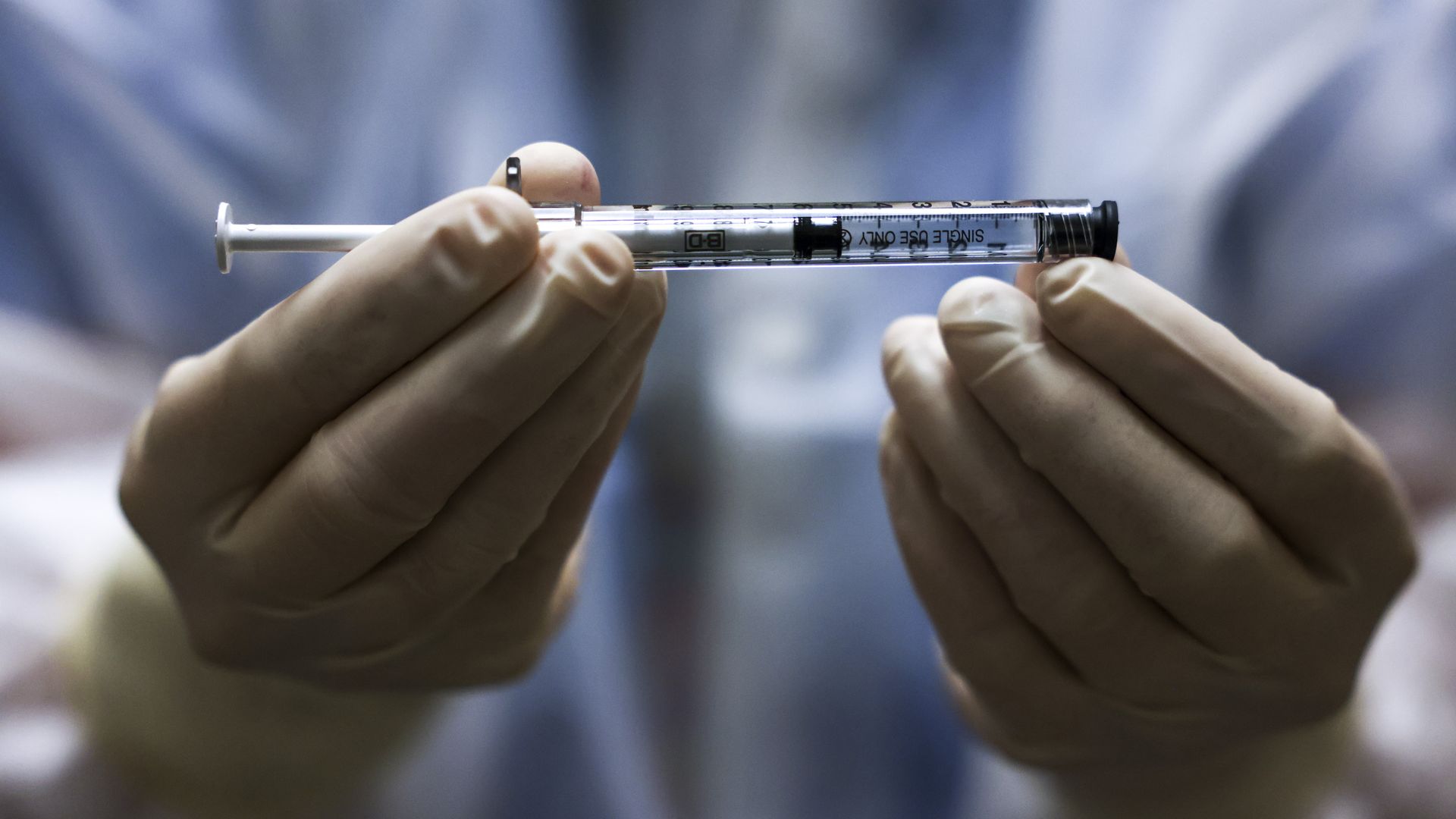
The United States has 4% of the world's population, 20% of all recorded COVID-19 deaths, and nearly 30% of all vaccine doses administered to date, according to Our World in Data.
The big picture: The U.S. and United Kingdom, both devastated by the pandemic, have sprinted far out ahead of other large countries in terms of vaccine rollout.
Monday provided two major reasons for optimism about the global pandemic recovery.
Driving the news: Real-world data from Israel found that the Pfizer-BioNTech vaccine was at least 97% effective in preventing symptomatic COVID-19 cases, and President Biden signed a $1.9 trillion stimulus bill that the Organization for Economic Co-operation and Development (OECD) projects will add a full percentage point to global economic growth this year.
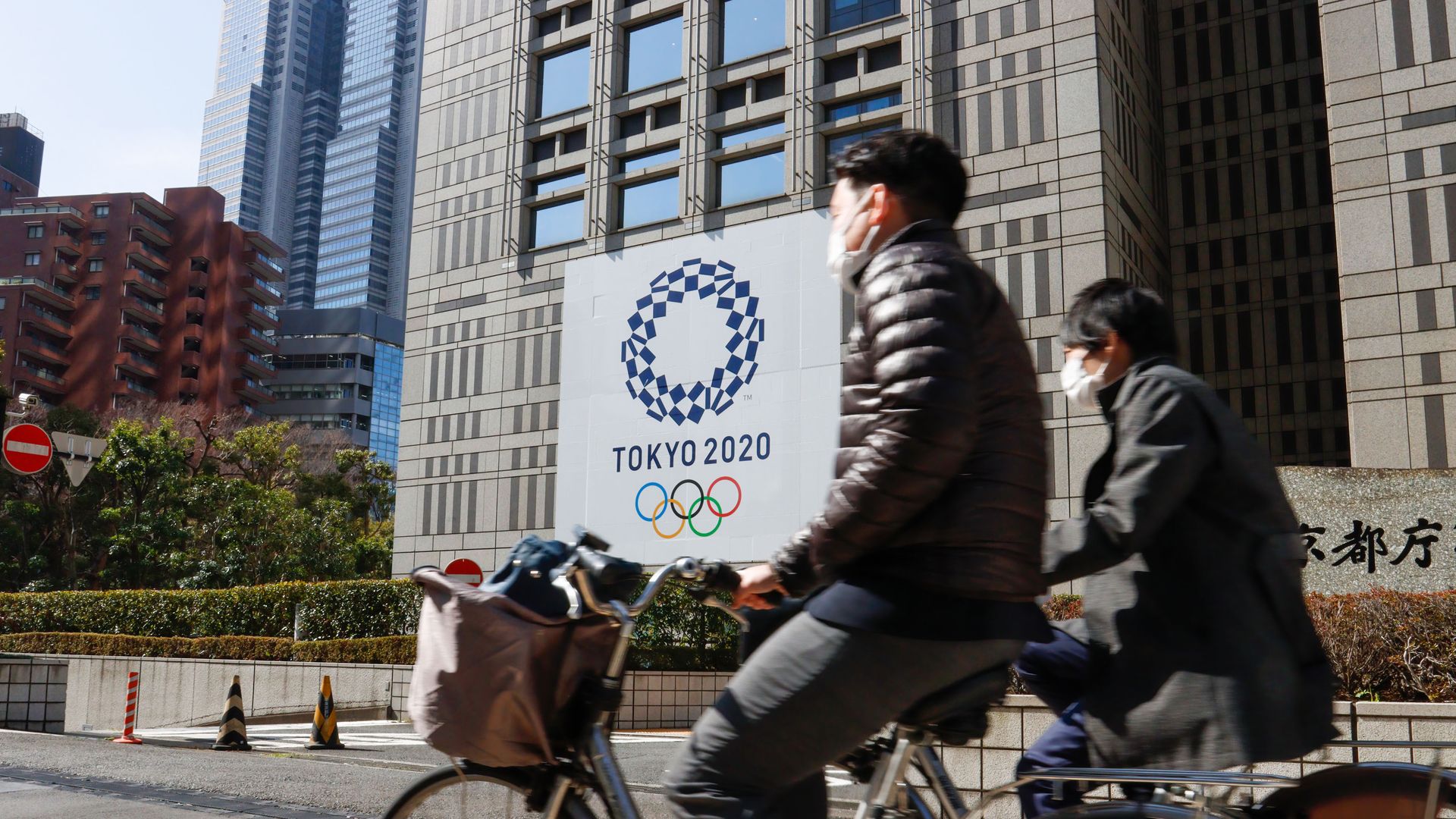
The International Olympic Committee will purchase coronavirus vaccines from China for all Olympic and Paralympic competitors ahead of this summer’s Tokyo Games and next year’s Beijing Winter Games, the organization's president announced Thursday.
Why it matters: The move aims to reassure the public that this summer's Games will not result in a super-spreader event. Polling in Japan is strongly leaning against holding this year's Olympics.
Only 18% of pandemic economic recovery spending approved in 2020 among the world's 50 largest economies can be considered "green," per new analysis from the UN and the University of Oxford. It falls to 2.5% when you combine recovery and shorter term rescue packages that together exceed $14 trillion.
Why it matters: The UN and other multilateral bodies have called on nations to use COVID-19 economic responses to back areas like low-carbon power, electric vehicles, efficient buildings and more.
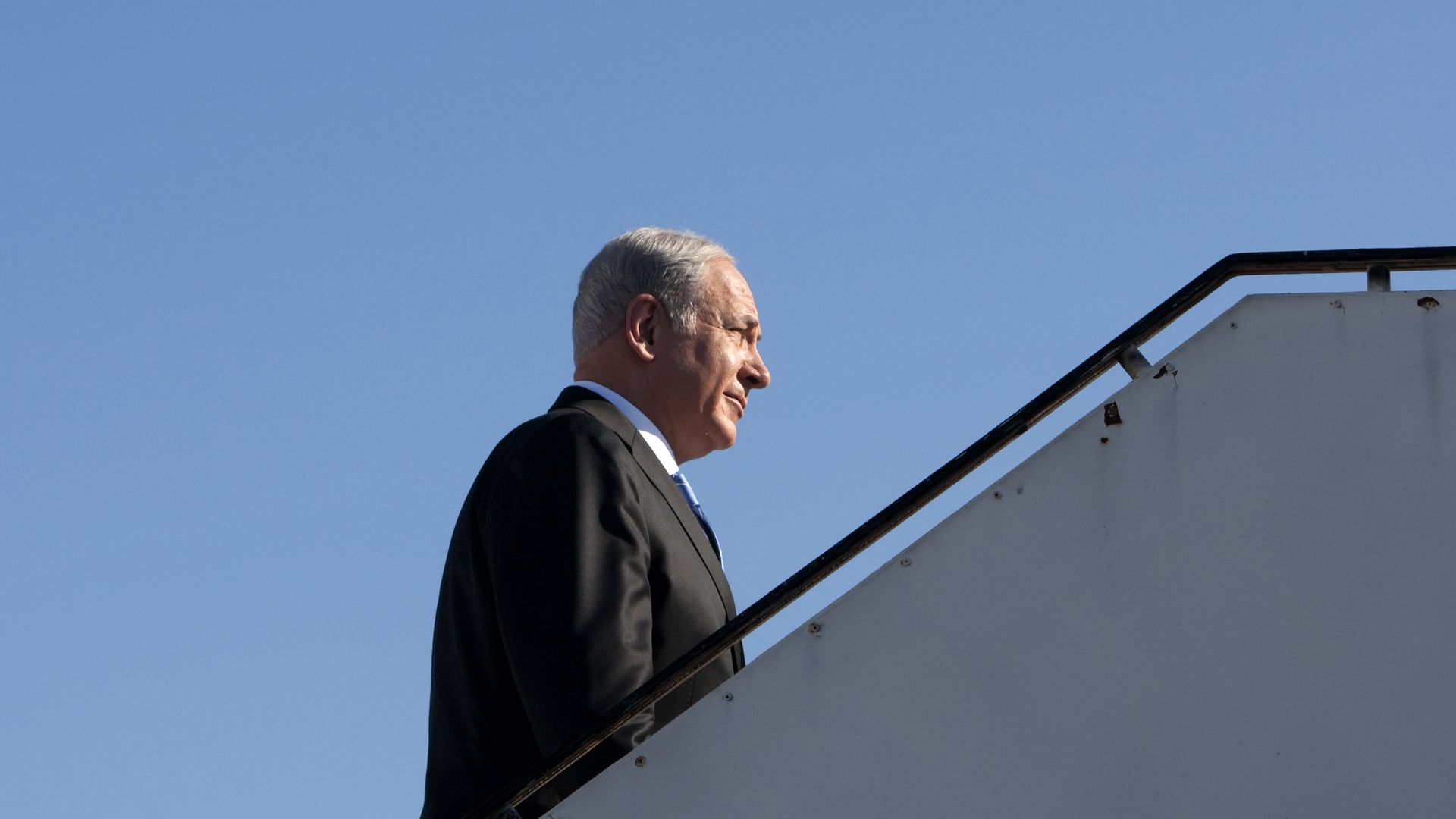
Israeli Prime Minister Benjamin Netanyahu has postponed a trip planned for Thursday to the United Arab Emirates at the last minute after his wife was hospitalized with appendicitis.
Why it matters: Netanyahu has been attempting to squeeze in a visit the UAE to rally his base before Israel's March 23 elections, but this is the fourth time his trip has been postponed. Netanyahu wanted to use the trip stress his foreign policy advantage over his less experienced rivals.
The European Medicines Agency has recommended Johnson & Johnson's single-dose COVID-19 vaccine for everyone over the age of 18.
Why it matters: The approval from the European Union's medical regulator paves the way for the vaccine to receive conditional authorization in the bloc's 27 member states as soon as Thursday, per Politico.
Wealthy nations — including the U.S., the U.K. and the EU — have vaccinated their citizens at a rate of one person per second over the last month, while most developing countries still haven't administered a single shot, according to the People's Vaccine Alliance.
Why it matters: As higher-income countries aim to achieve herd immunity in a matter of months, most of the world's vulnerable people will remain unprotected.
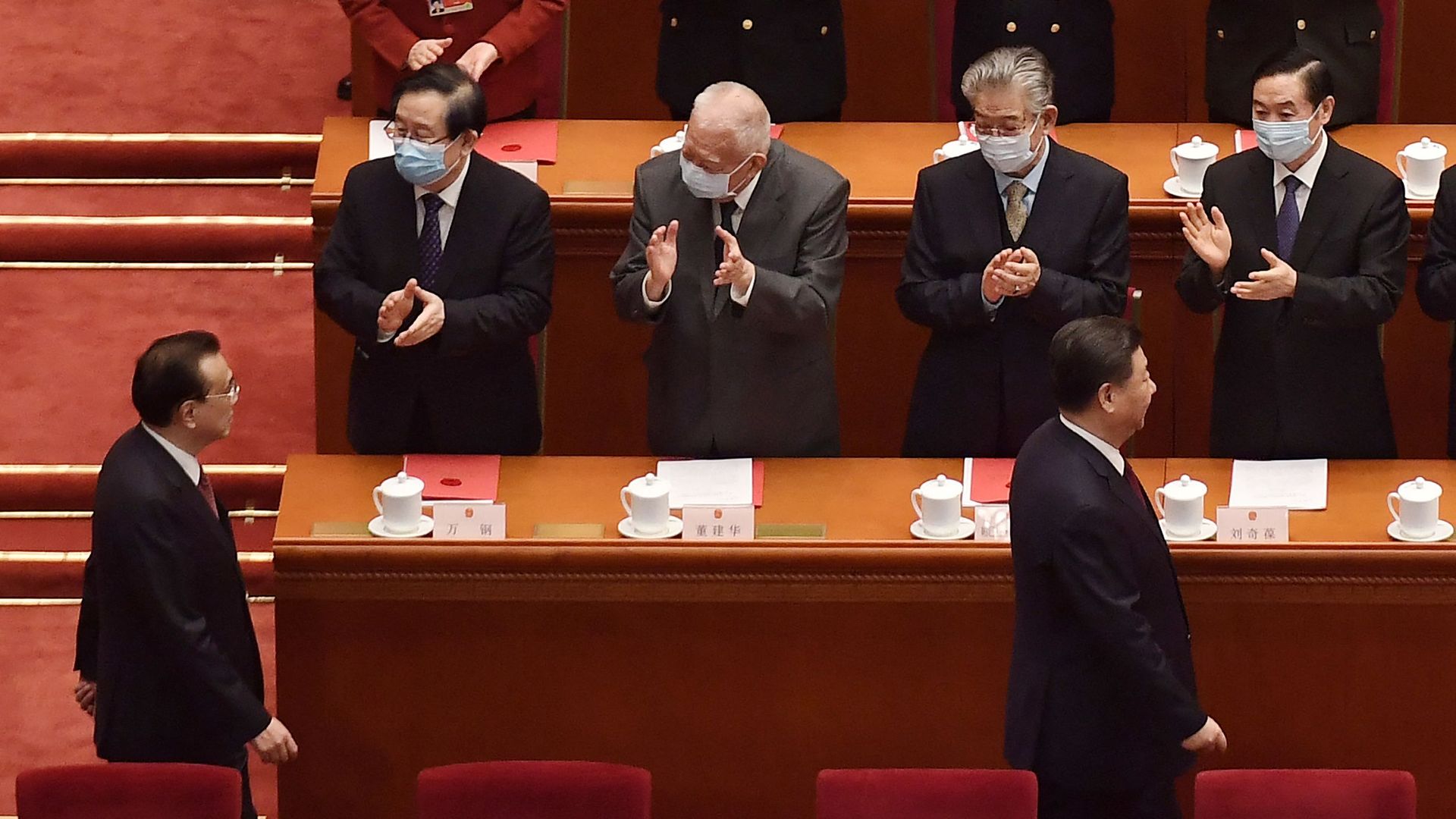
China's legislature on Thursday passed a resolution called the "patriots governing Hong Kong," in a move to overhaul the city's elections.
Why it matters: The action effectively gives the Chinese Communist Party control of the Asian financial hub's elections, reducing democratic representation and allowing a "pro-Beijing panel to vet 'patriotic' candidates," the BBC notes.
Nearly 12 million women lost access to family planning services including birth control and contraceptives because of the COVID-19 pandemic, the United Nations Population Fund said in a report published Thursday.
Why it matters: The UNPF said the data from 115 low- and middle-income countries shows the disruption for a total of 3.6 months caused by the pandemic over the past year led to 1.4 million "unintended pregnancies."
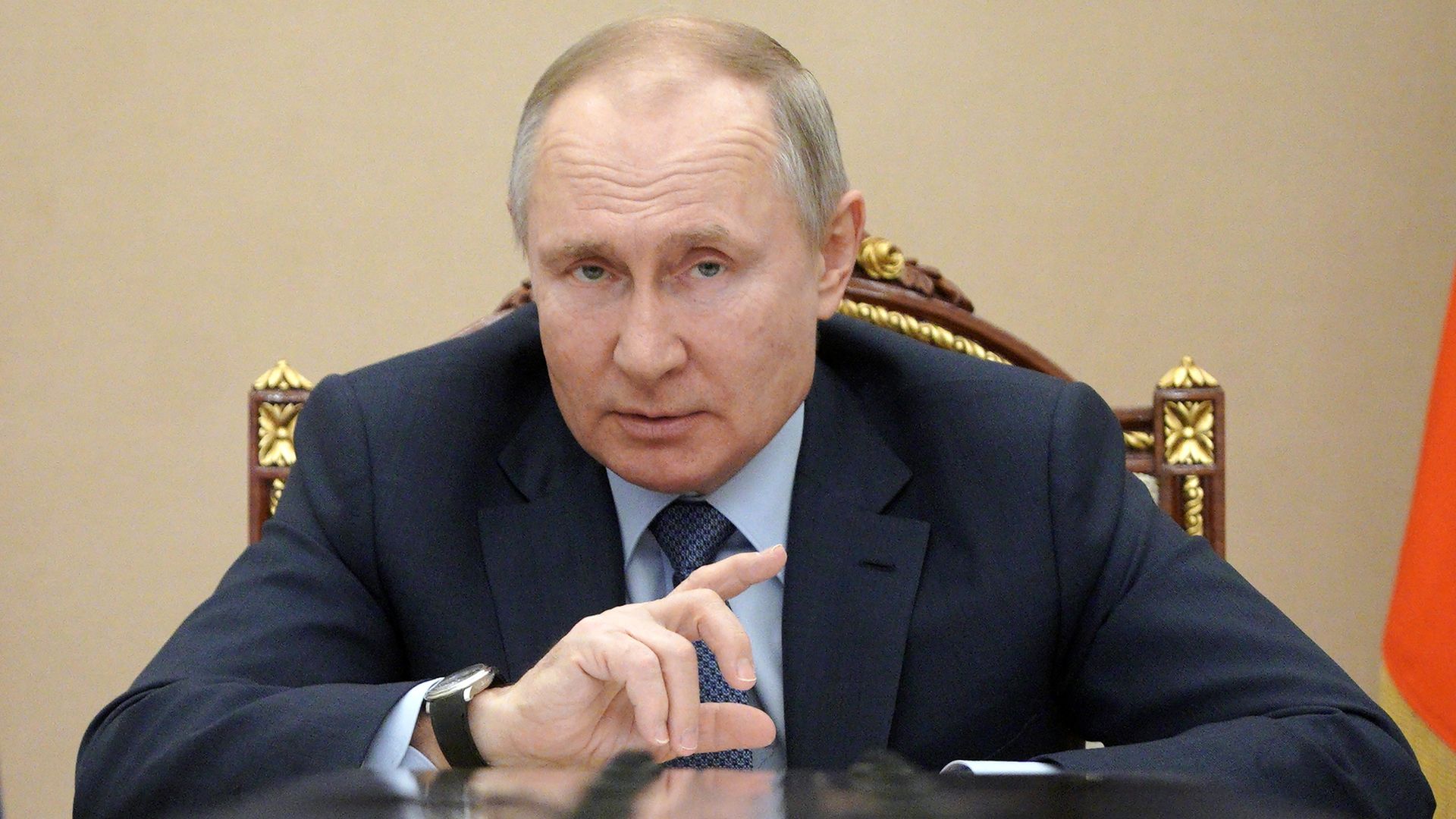
Russia's government said Wednesday it will slow access to Twitter, claiming the social media giant has failed to remove illegal content from its platform.
Why it matters: Twitter and other U.S. internet companies have long been spaces for freedom of expression in Russia, though the government in recent years has limited its internet connection to the rest of the world to wrest more control over the country's domestic internet.
President Biden's moves to restore the economy and public health are making the U.S. even more of a magnet for migrants, worsening the crisis at the U.S.-Mexico border.
The big picture: The president is racing to get every American vaccinated. He's about to inject $1.9 trillion into the economy with his COVID-19 relief law. And he and his team are vowing a more humane approach to immigration.
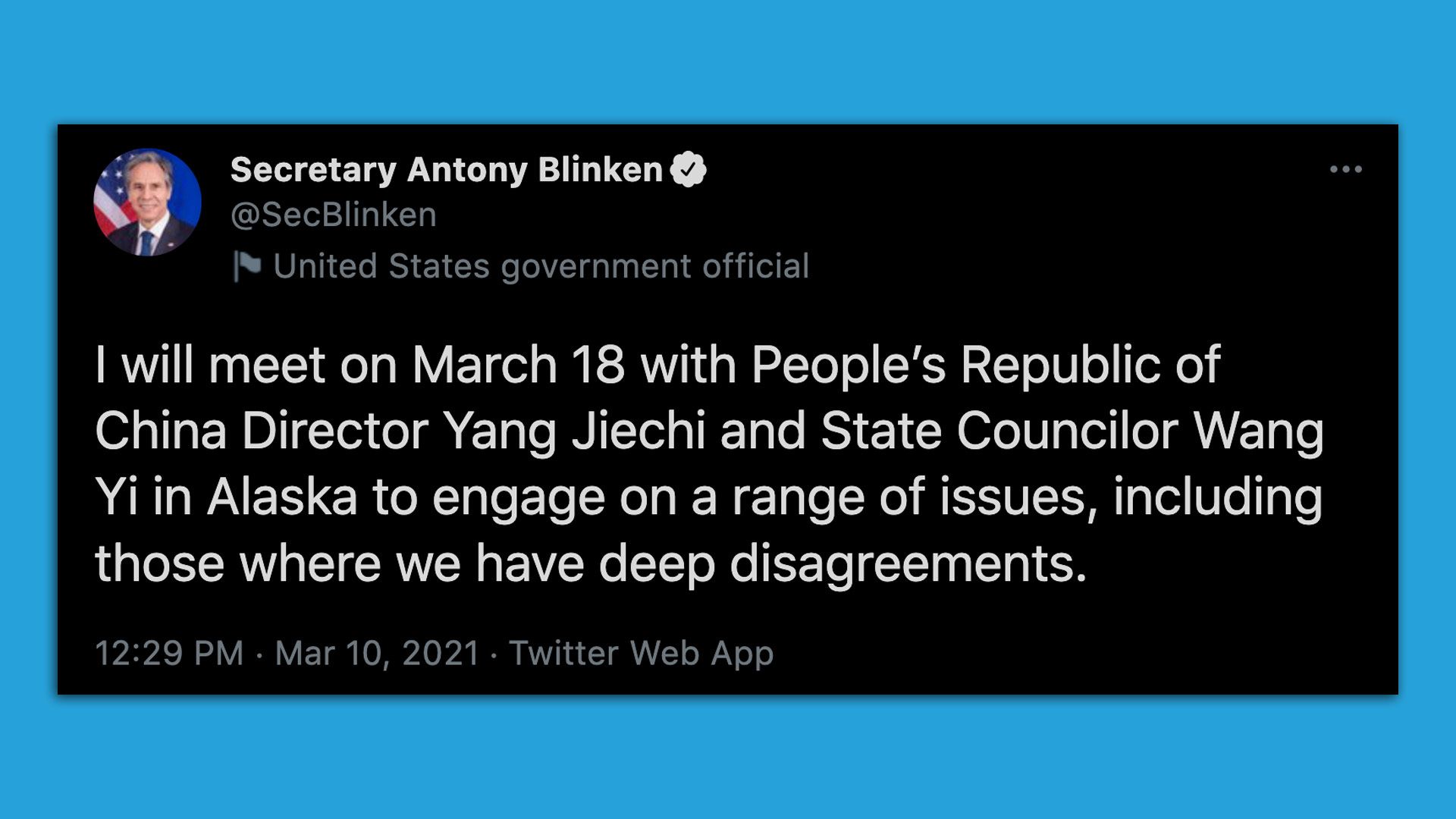
U.S. officials announced Wednesday they'll hold their first high-level, in-person summit next week with China — and cyberattacks, human rights and Chinese actions in Taiwan and Hong Kong are likely on the agenda.
Why it matters: China's leaders may see the current moment as a window of opportunity to persuade a new administration the United States has much to gain from supporting Beijing's global goals and much to lose if the U.S. tries to thwart them.
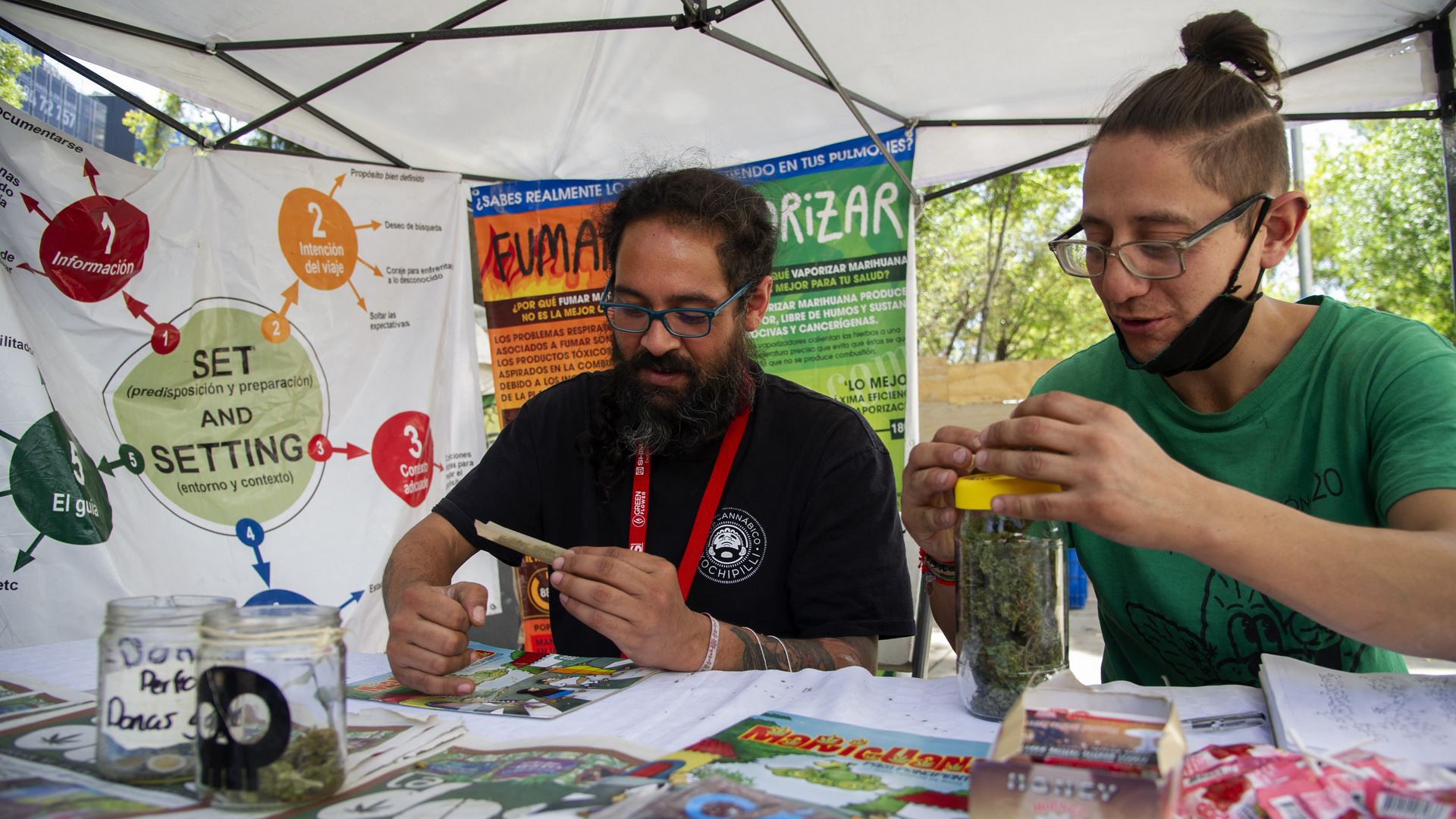
Lawmakers in Mexico's lower house passed a bill Wednesday to legalize recreational marijuana.
Why it matters: The action sets it up for approval in the Senate before it's sent to President Andrés Manuel López Obrador, who has signaled support for the measure.