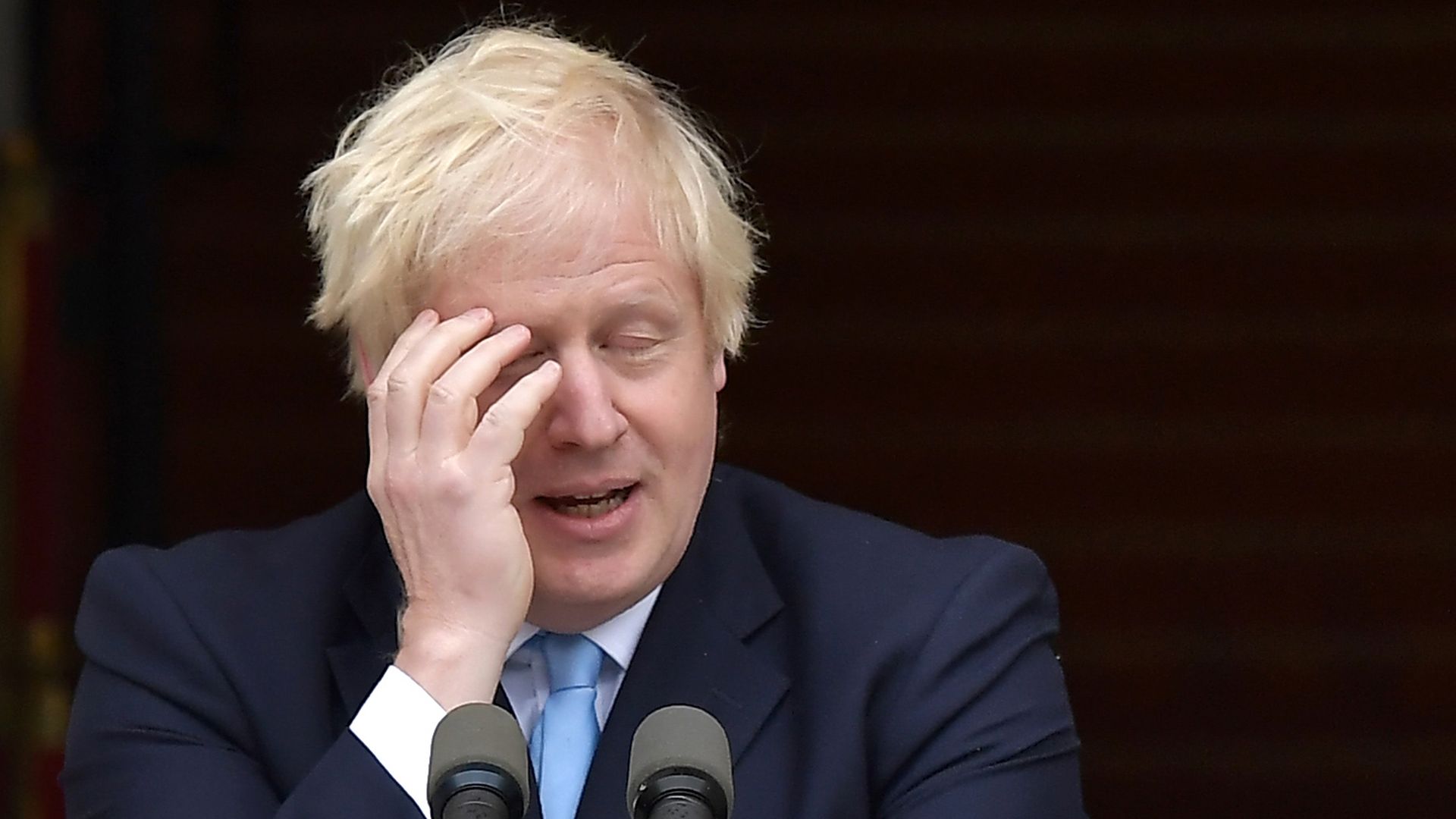
On the U.K. Parliament's last night before beginning a month-long suspension, Prime Minister Boris Johnson failed for the 2nd time to earn the two-thirds majority necessary to call a snap general election.
Why it matters: Johnson was hoping to use an election to circumvent a law passed by Parliament last week that will require him to seek a Brexit extension rather than crash out of the EU without a deal on Oct. 31. The prime minister has said he would rather be "dead in a ditch" than seek an extension, but he now appears to be left with little other choice outside of breaking the law.
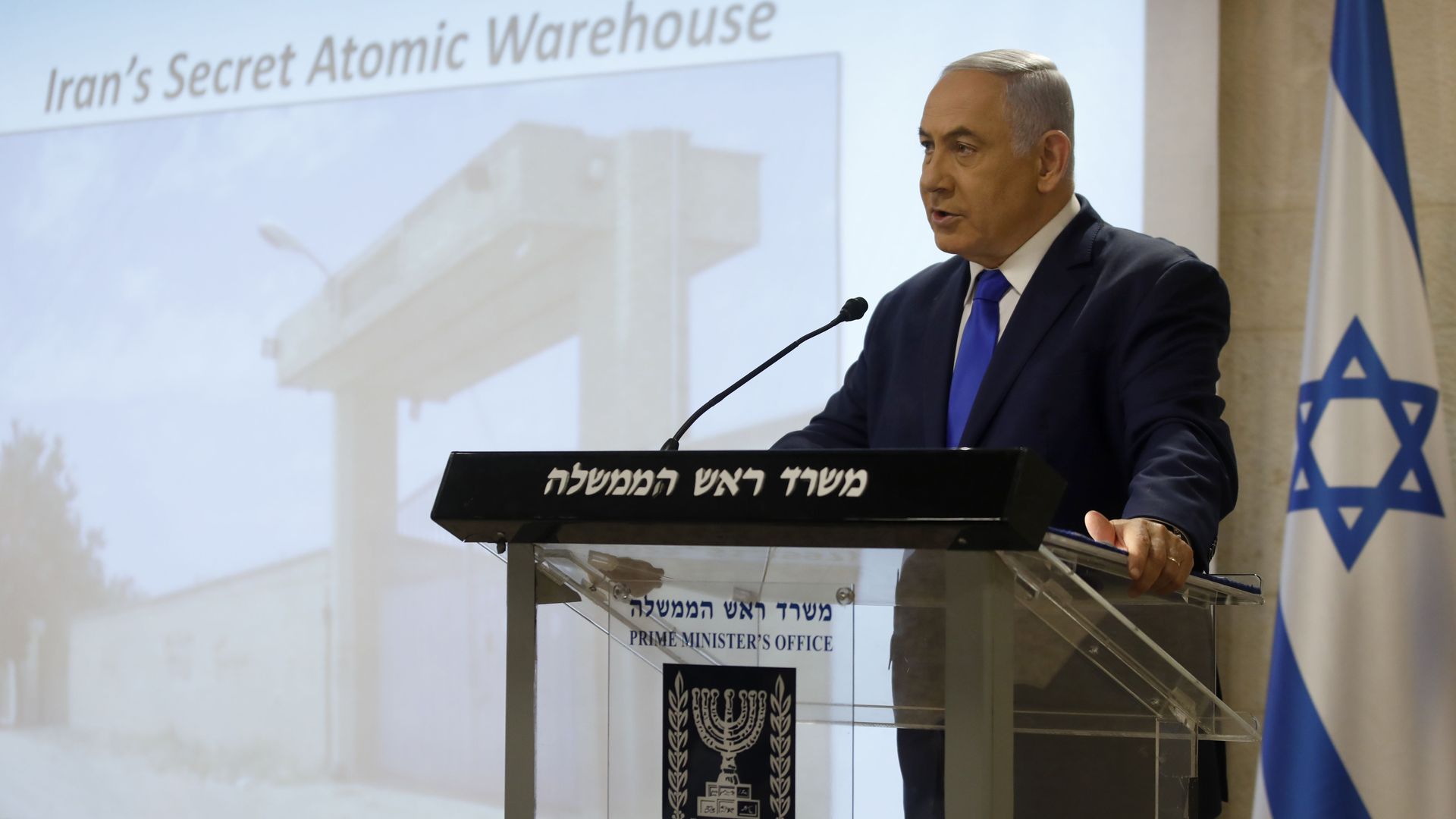
In a statement to the press Monday, Israeli Prime Minister Benjamin Netanyahu revealed what he claimed was a covert nuclear weapons development site near the city of Abadeh, Iran, that was demolished in July after the Iranians realized it was compromised.
Why it matters: Netanyahu made his statement the same day that the International Atomic Energy Agency (IAEA) Board of Governors convened in Vienna to discuss the Iranian nuclear program and Iran's attempts to block access and information from UN atomic inspectors. Netanyahu’s statement also comes 8 days before the Israeli elections, allowing him to again highlight the threat posed by Iran and emphasize a message that has been core to his re-election campaign.
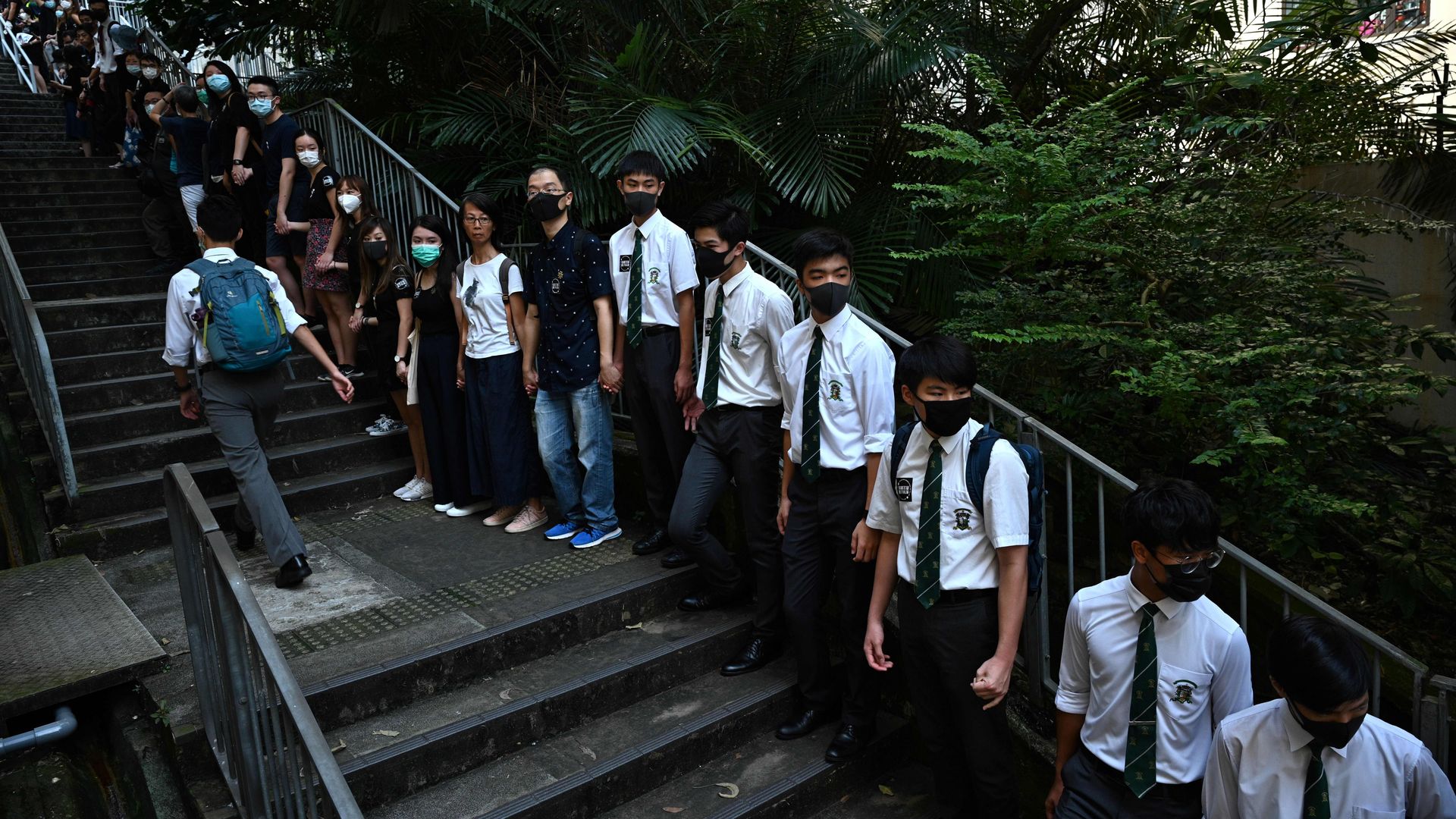
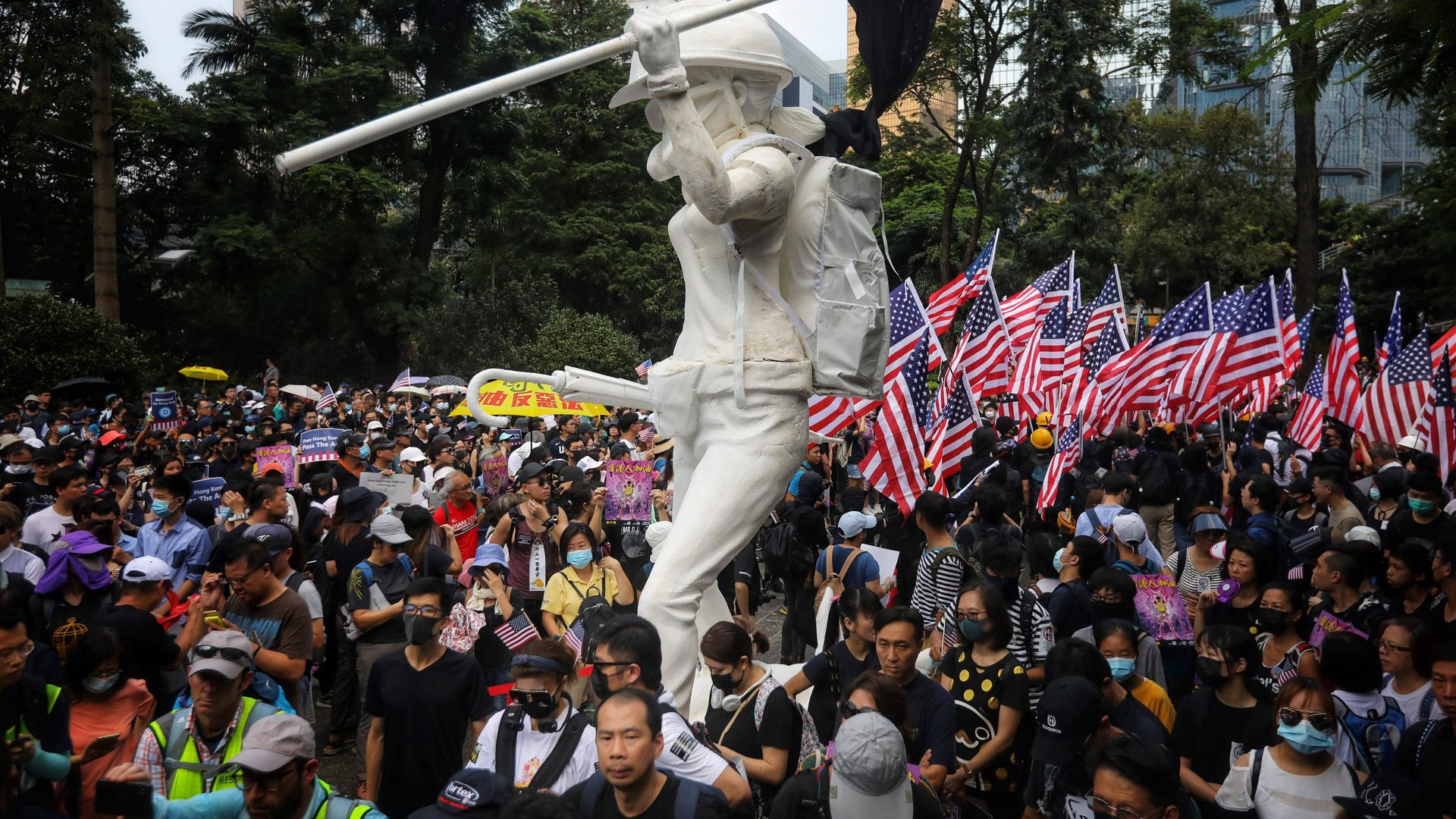
Thousands of students formed human chains outside schools across Hong Kong Monday in solidarity with pro-democracy protesters, as the city's government issued a warning to the U.S. to keep out of its affairs, AP reports.
The big picture: The students' silent protest took place a day after violent clashes between police and activists in the semiautonomous Chinese territory following a peaceful march to the U.S. Consulate, where thousands of protesters called on President Trump to "liberate" the former British colony and for Congress to pass the Hong Kong Human Rights and Democracy Act, per AP.
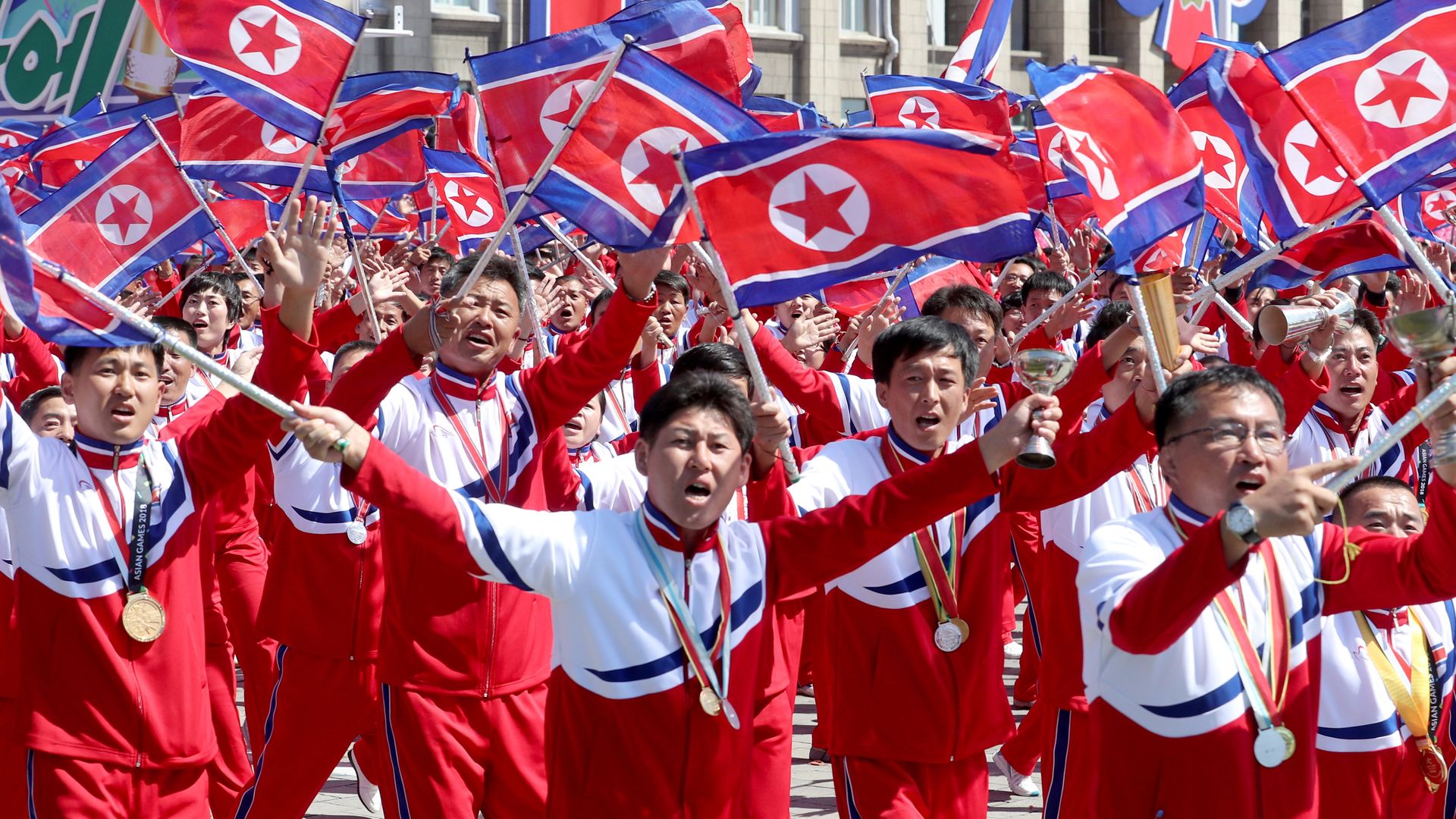
U.S. Cyber Command released samples of North Korea's government-funded malware to researchers during the early hours of North Korea's Day of the Foundation of the Republic — a move seemingly timed to unnerve the hermit nation during a national holiday.
The big picture: Cyber Command periodically releases malware to the research community to bolster private sector defenses against foreign threats. But while previous releases received praise from the researchers for providing new details about threat groups, the North Korean samples that were atypically released on a Sunday don't immediately appear to be as fruitful.
French Foreign Minister Jean-Yves Le Drian said Sunday that the European Union will not grant the U.K. an extension to its Oct. 31 Brexit deadline if the current situation doesn't change, Bloomberg reports.
"We won’t start over again every three months. Let the British Parliament, let the British authorities tell us what’s the path."
Thousands of Hong Kong protesters marching to the U.S. Consulate Sunday sang the U.S. national anthem and called on President Trump to "liberate" the Chinese-controlled territory as police looked on, Reuters reports.
Why it matters: This is the latest in a series of weeks-long demonstrations that have plunged the Asian financial hub into its worst crisis in decades. The protests show no sign of abating, despite Hong Kong leader Carrie Lam saying on Wednesday that she was formally withdrawing a bill that would have seen citizens extradited to mainland China — a key demand of protesters.
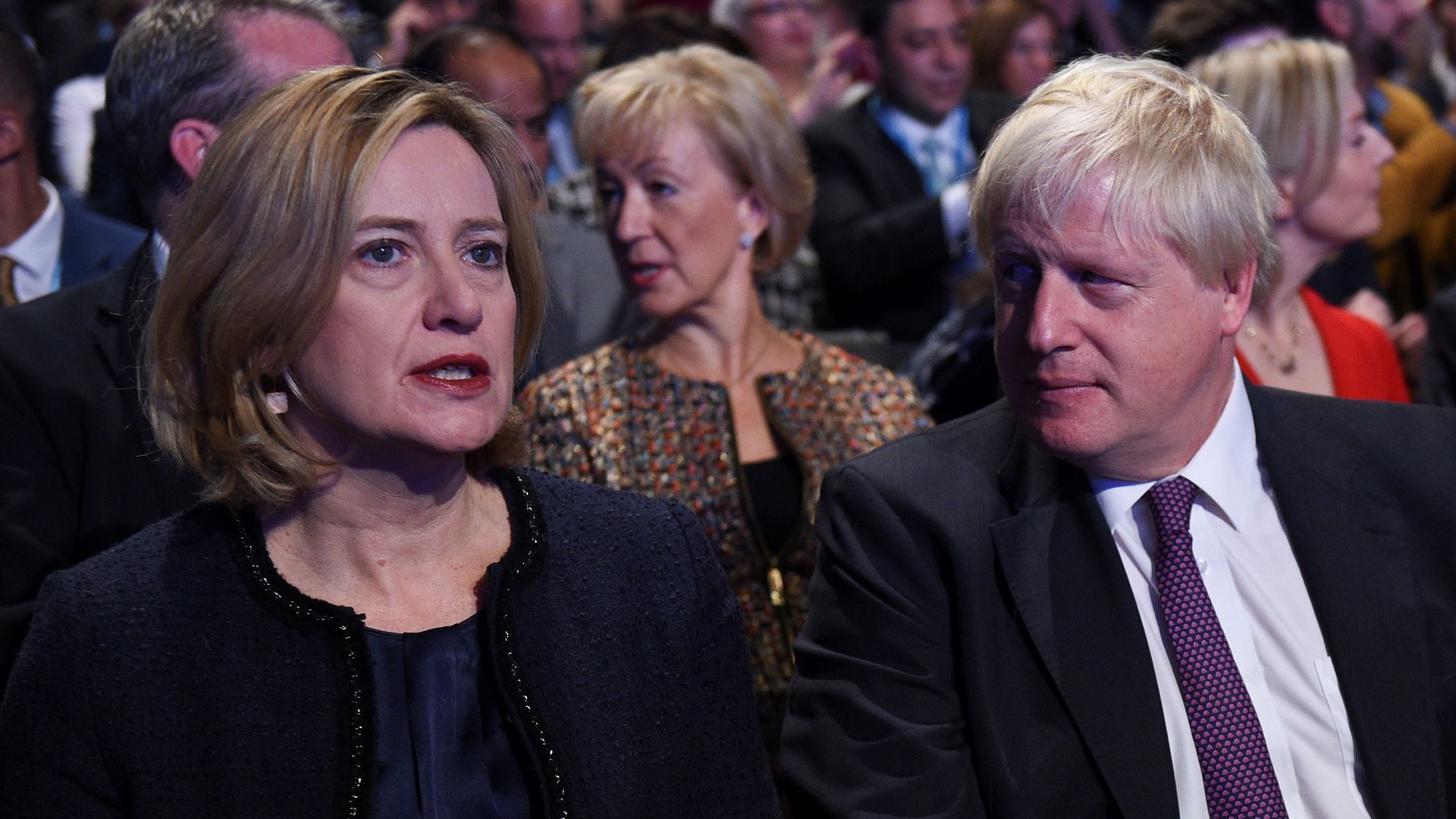
Amber Rudd resigned on Sunday as the British government's work and pensions secretary and surrendered the Conservative Party Whip, meaning she'll now sit as an independent lawmaker in the House of Commons.
Why it matters: Rudd was one of the few Remain-supporting ministers in Boris Johnson's Cabinet. In her resignation letter, Rudd said expelling 21 rebel lawmakers from the party for voting against Johnson's Brexit plans was an "assault on decency and democracy." The expelled lawmakers had served for a total of 350 years and included high-ranking former government ministers and the grandson of Winston Churchill.