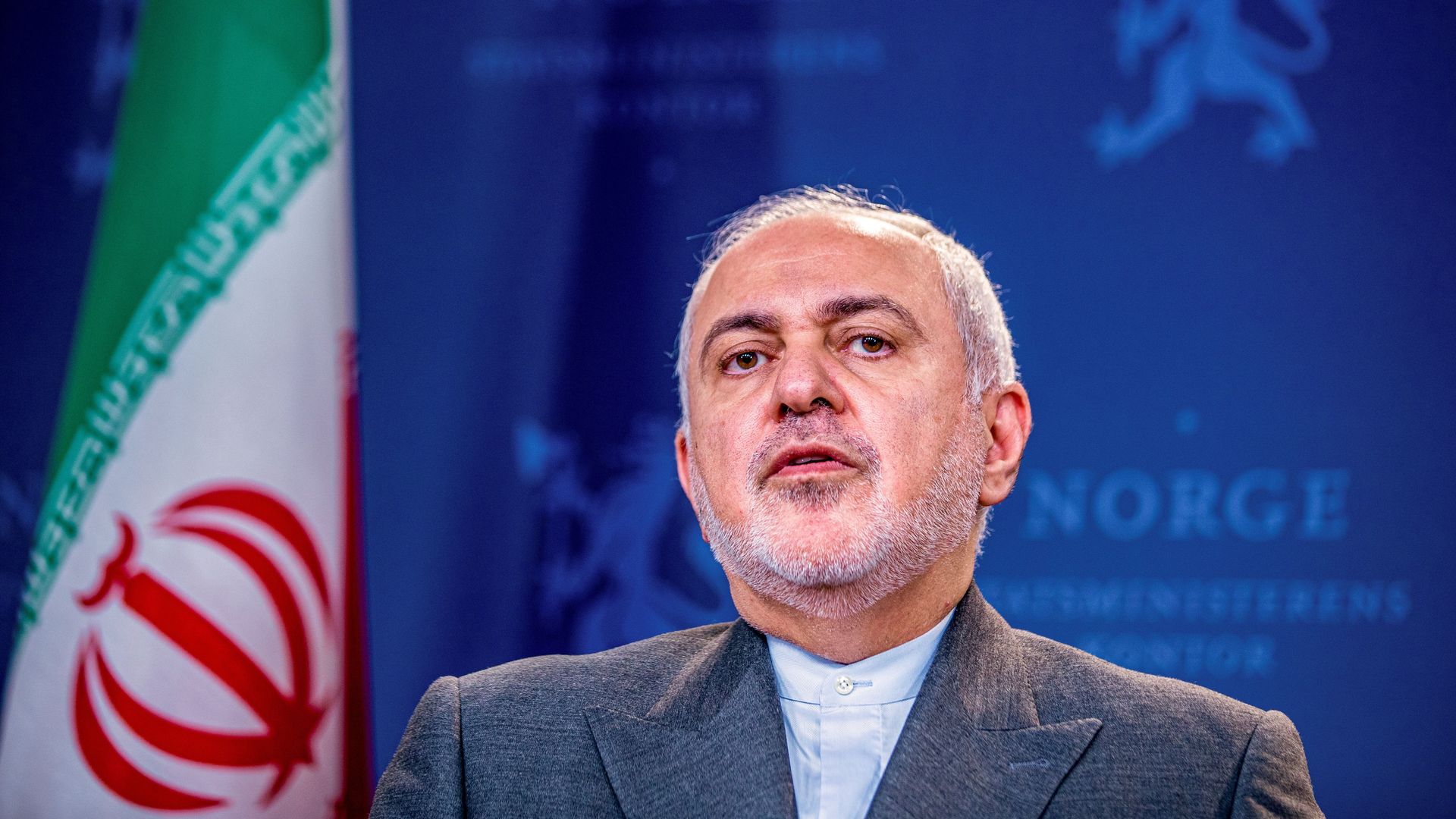
Iranian Foreign Minister Mohammad Javad Zarif arrived on Sunday at the site of the G7 summit in Biarritz, France, at the invitation of French Foreign Minister Jean-Yves Le Drian, officials confirmed.
Why it matters: Zarif is viewed as the "international face" of Iran's government and was sanctioned by the U.S. last month amid a recent escalation of tensions between the 2 countries. Zarif is not expected to meet with President Trump or any U.S. officials, though Treasury Secretary Steven Mnuchin said on Fox News that the president has previously stated his willingness to sit down for talks with Iranian officials with "no preconditions."
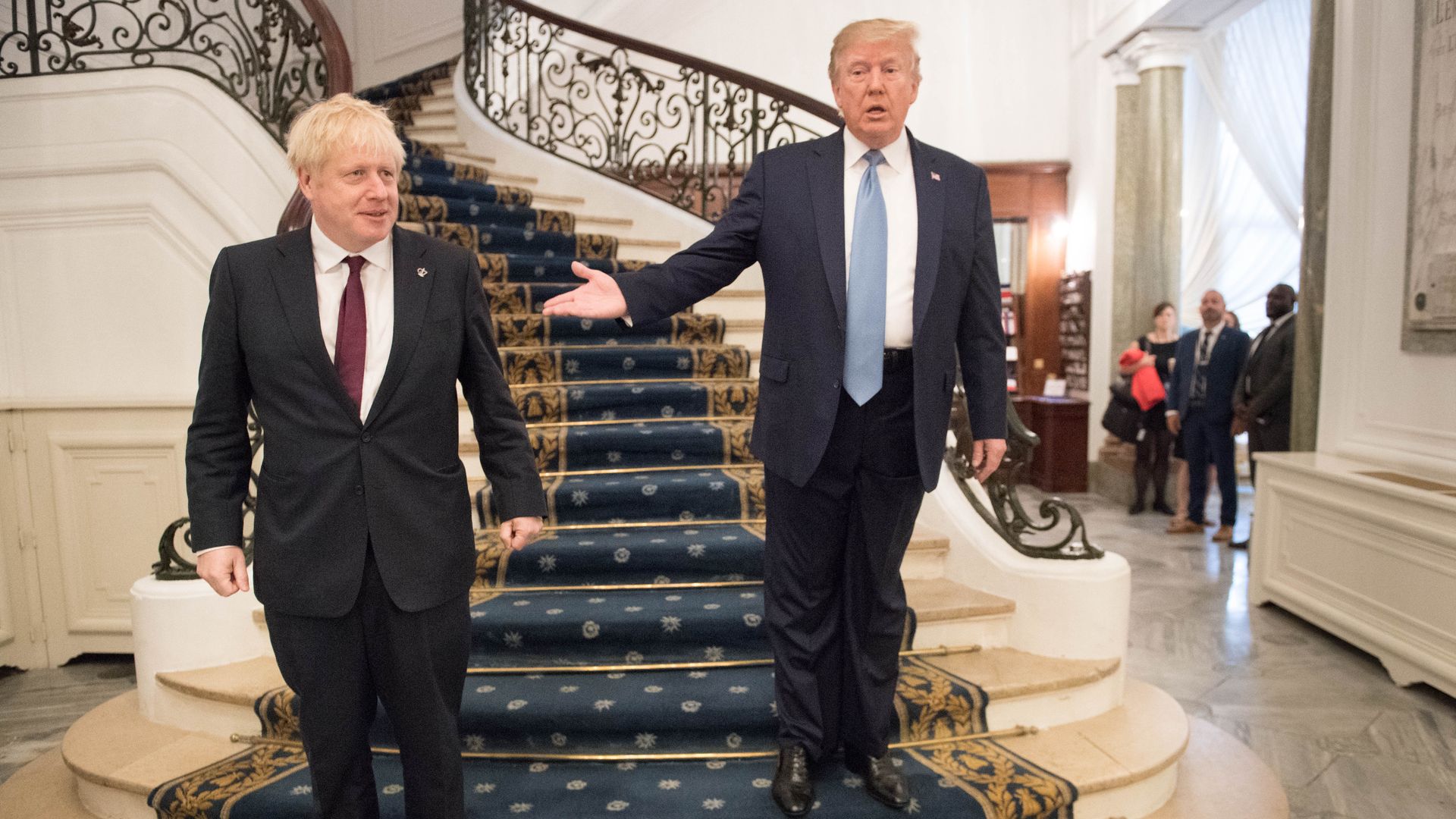
President Donald Trump promised Britain Sunday a "very big trade deal" with the U.S. — "bigger than we’ve ever had with the U.K." — and declared British Prime Minister Boris Johnson the "right man" to oversee Brexit, Reuters reports.
The big picture: Trump said Britain leaving the EU would be like losing "an anchor round the ankle," per the BBC.But as the Oct. 31 Brexit deadline looms, it is still unclear whether the United Kingdom can leave the European Union with an agreement in place or, indeed, whether the U.K. will leave the EU. Johnson has vowed it will happen "do or die," but experts warn that leaving without a deal could have catastrophic consequences.
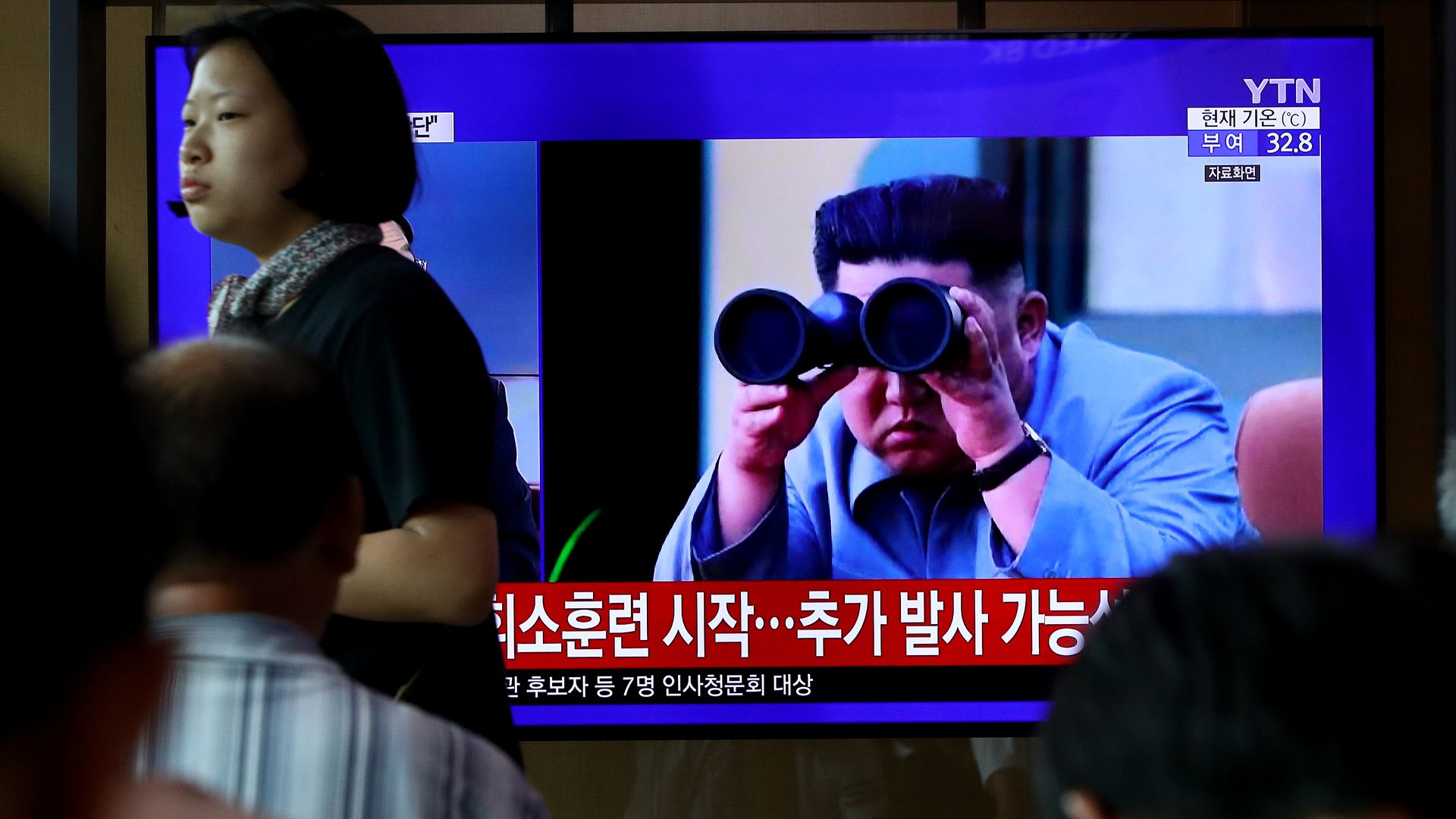
North Korean leader Kim Jong Un supervised the test-firing of a "newly developed super-large multiple rocket launcher," the country's state-run KCNA news agency reports.
Why it matters: This appears to be yet another demonstration of North Korea expanding its weapons arsenal apparently with the intention of increasing leverage ahead of the possible resumption of negotiations with the U.S. to denuclearize, as AP points out.
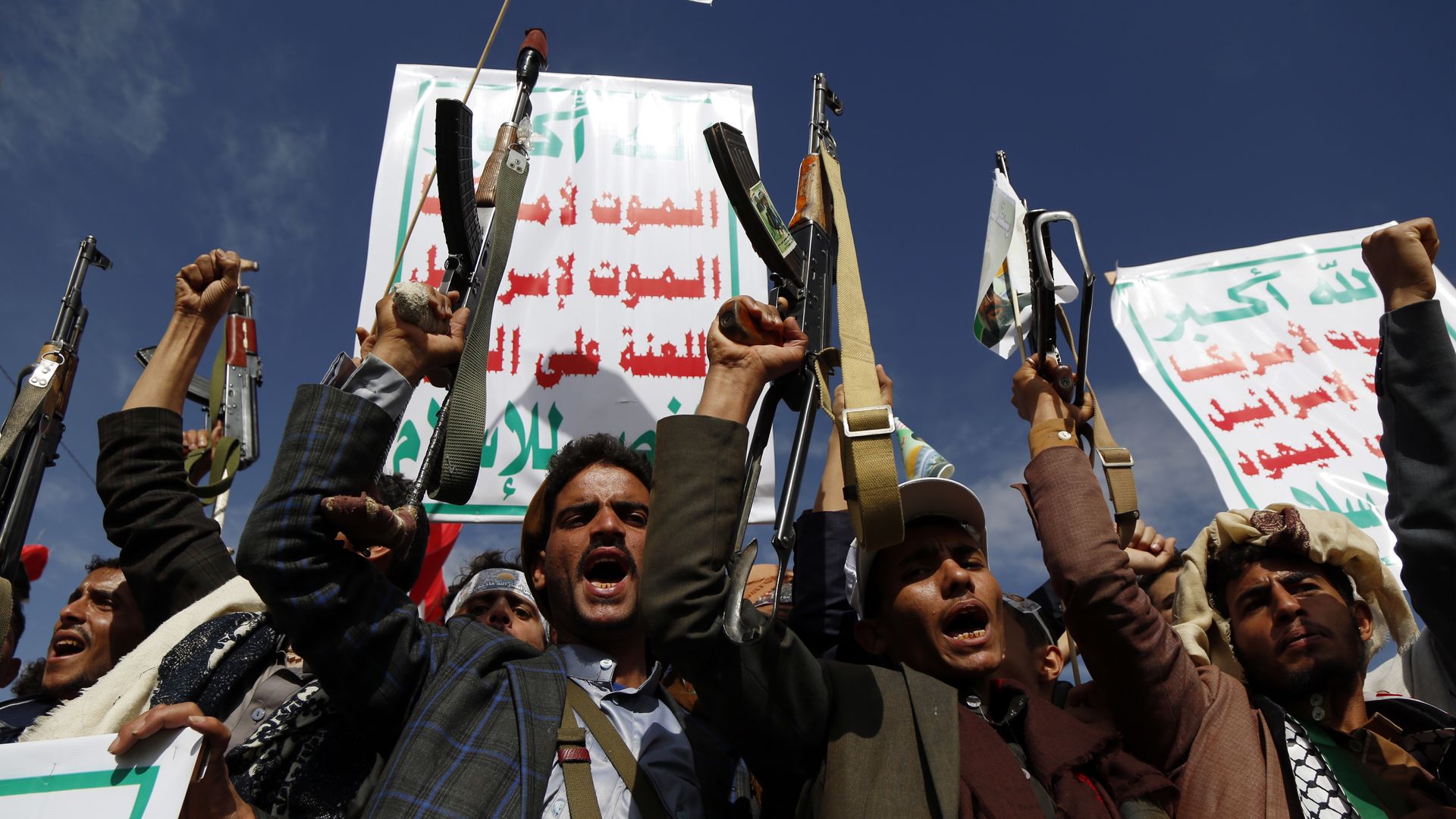
Iran's partnership with the Houthi rebels in Yemen — heralded this week by a hardline Iranian newspaper as "the battle of destiny in the south" — has become one of its most successful campaigns across the Middle East.
Why it matters: At surprisingly little cost to Tehran, the Houthis have waged a drawn-out war straining the coffers and reputation of Saudi Arabia, Iran's main regional rival. The conflict has also afforded Tehran a foothold on the Arabian Peninsula, allowing it to threaten maritime traffic on the Red Sea.