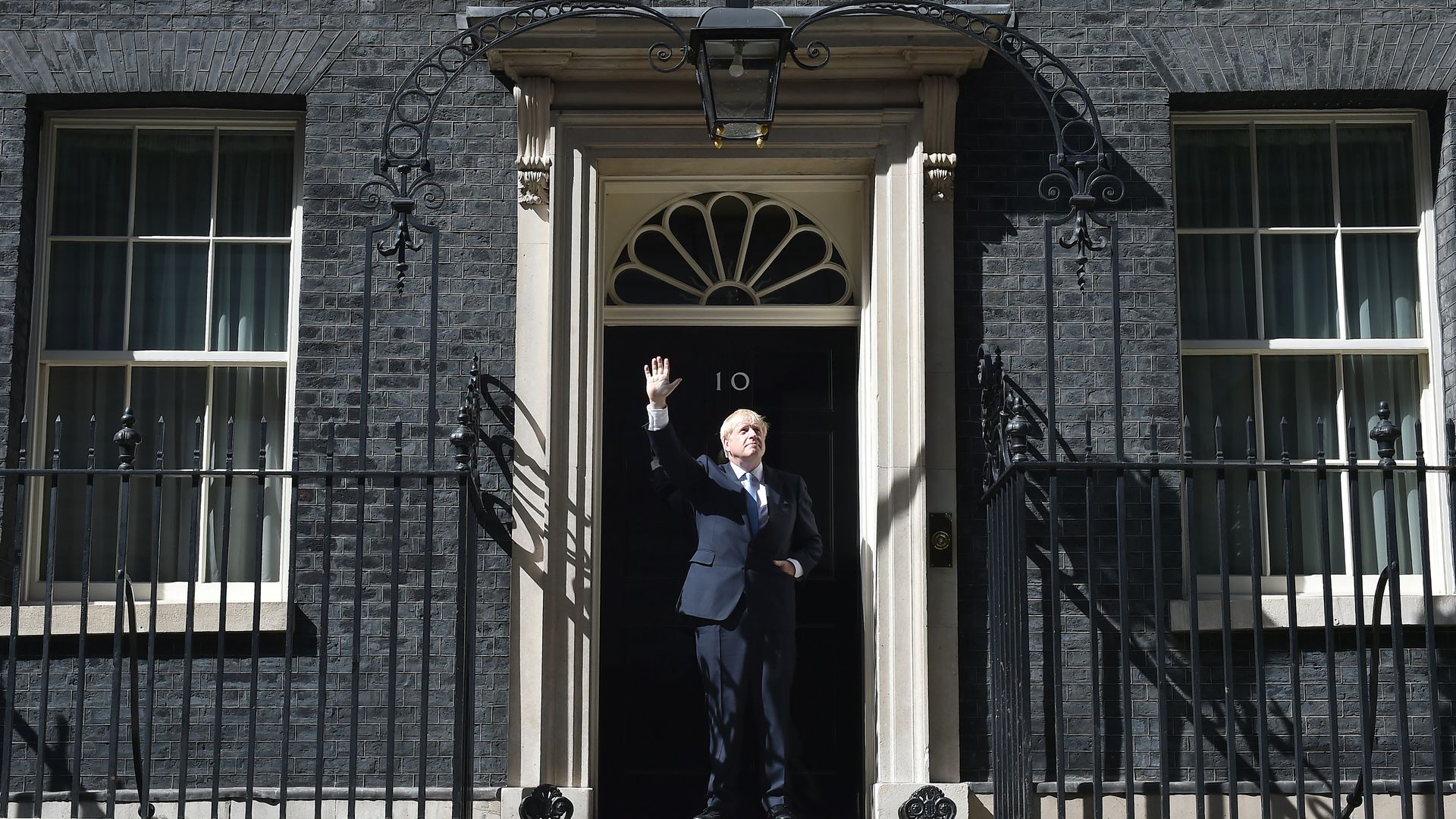
Newly installed Prime Minister Boris Johnson brought the Theresa May era to a screeching halt on Wednesday, dispatching 17 cabinet ministers and installing a team of loyalists and enthusiastic Brexit backers.
Why it matters: Johnson came to power through the Conservative leadership contest that followed May's resignation, not by winning a general election. It's highly unusual for an incoming prime minister to make sweeping personnel changes under such circumstances, and Johnson has sent a clear message that the Brexiteer flank is now in control.
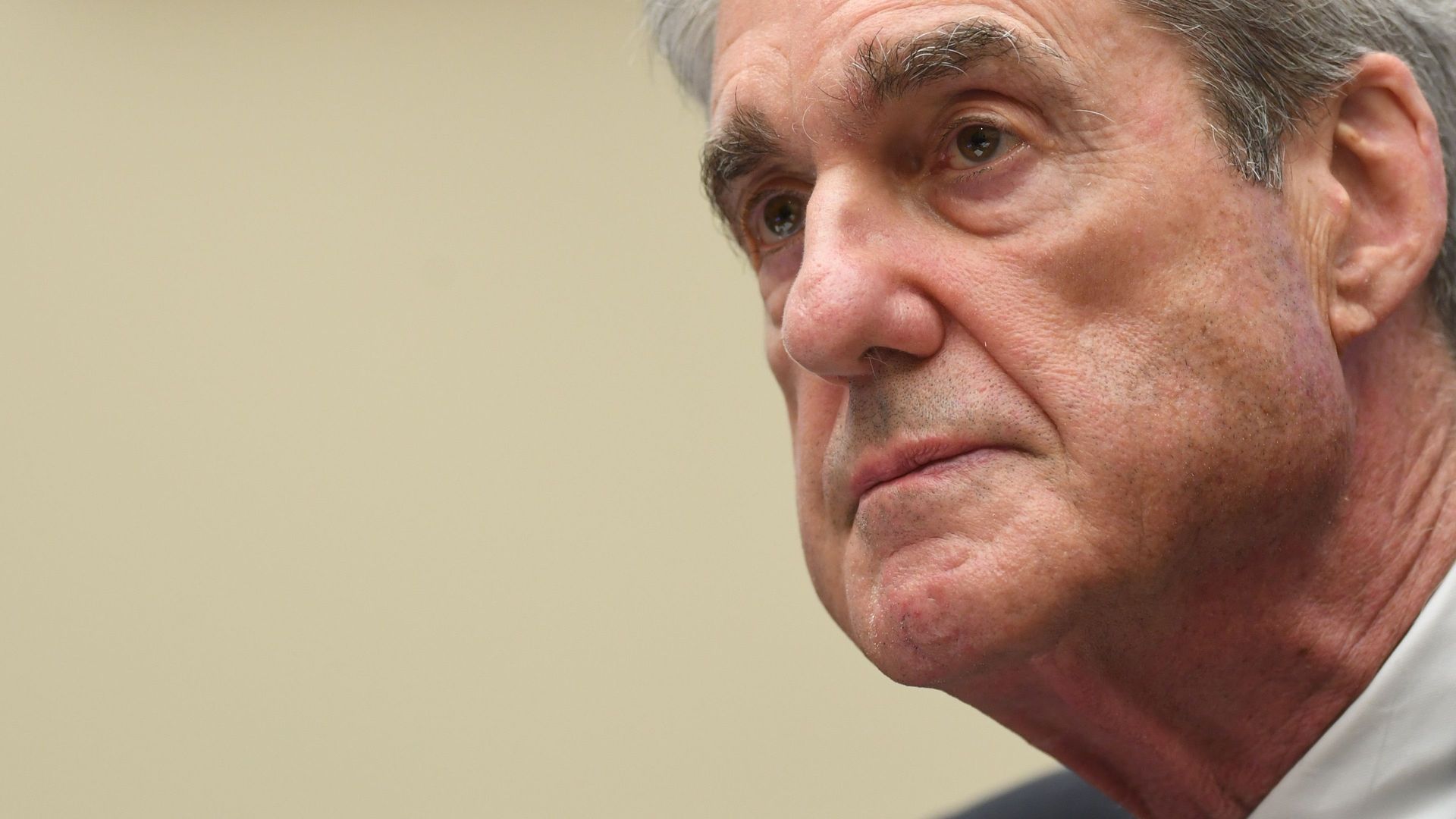
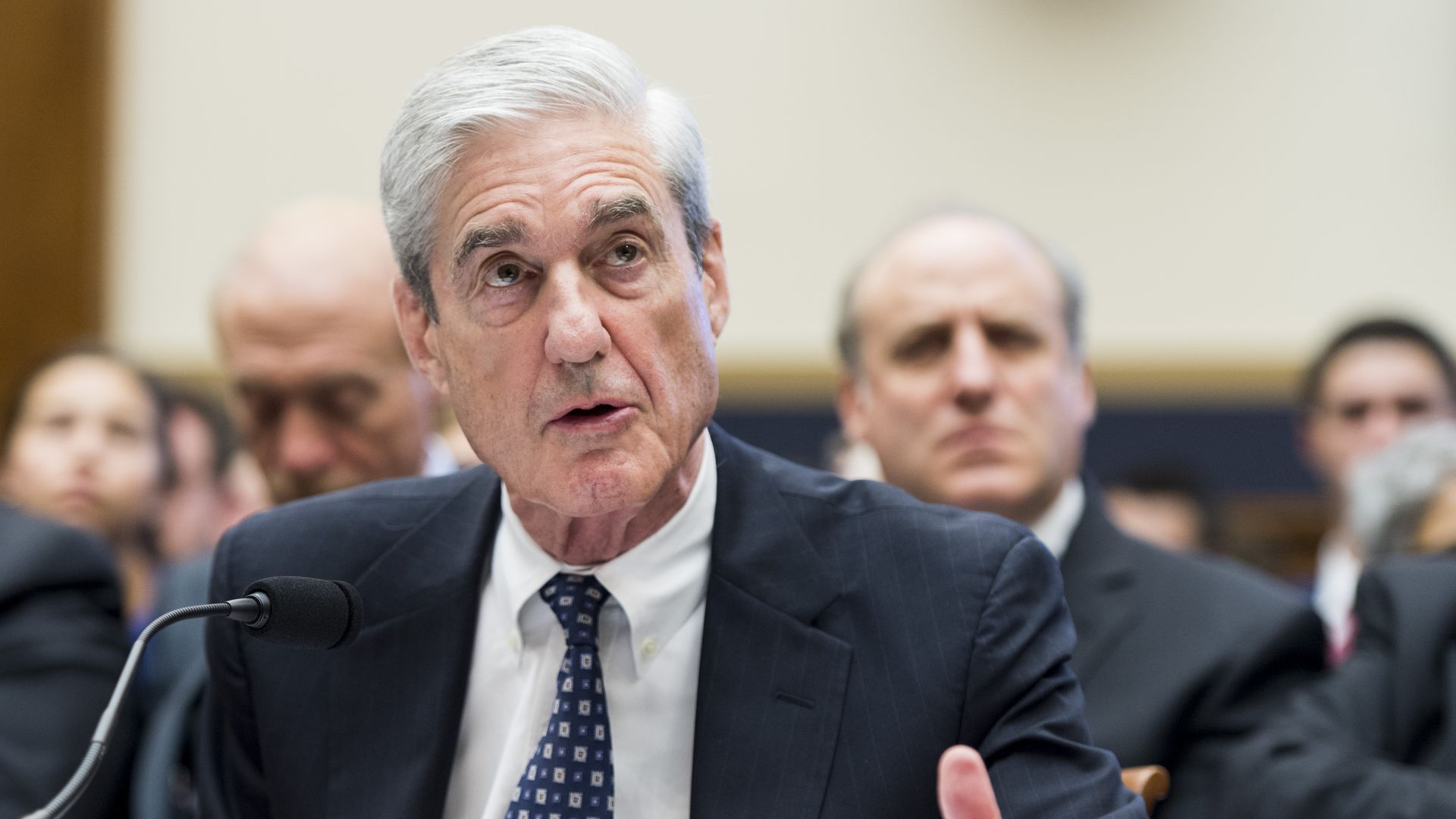
In his testimony Wednesday, former special counsel Robert Mueller disputed 5 of President Trump's frequent claims about his investigation into Russian interference in the 2016 election and the president's potential efforts to obstruct justice.
The big picture: Many of the claims Mueller knocked down were already refuted in his 450-page report, but Democrats were seeking to animate the special counsel's findings through Wednesday's high-stakes testimony. That was clear from the moment that Chairman Jerry Nadler (D-N.Y.) opened the hearing with his line of questioning.
Following Wednesday morning's hearing before the House Judiciary Committee, which largely focused on allegations of obstruction of justice by President Trump, former special counsel Robert Mueller testified before the House Intelligence Committee on efforts by Russia to interfere in the 2016 presidential election.
What's new: Mueller told Rep. Sean Maloney (D-N.Y.) that he didn't subpoena President Trump for an interview "because of the necessity of expediting" the investigation. "If we did subpoena the president, he would fight the subpoena and we would be in the midst of the investigation for a substantial period of time."
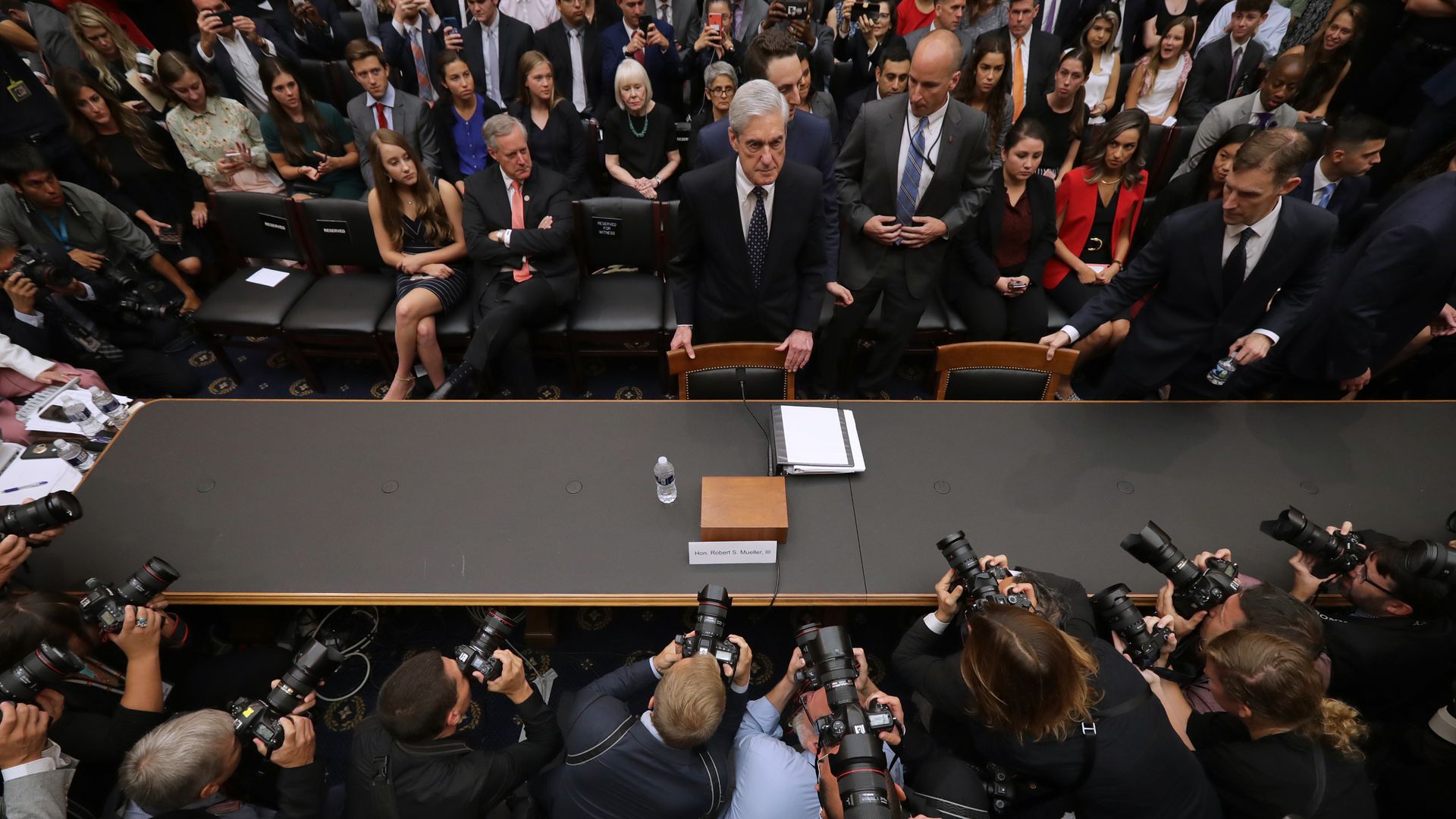
Former special counsel Robert Mueller testified Wednesday in back-to-back sessions before the House Judiciary and Intelligence Committees.
The big picture: Mueller — who refused to read directly from the report during his appearances, denied Democrats some of the cinematic wins they'd hoped for — was generally concise with his responses, often asking members to repeat their questions and directing them to refer to the wording in his report.
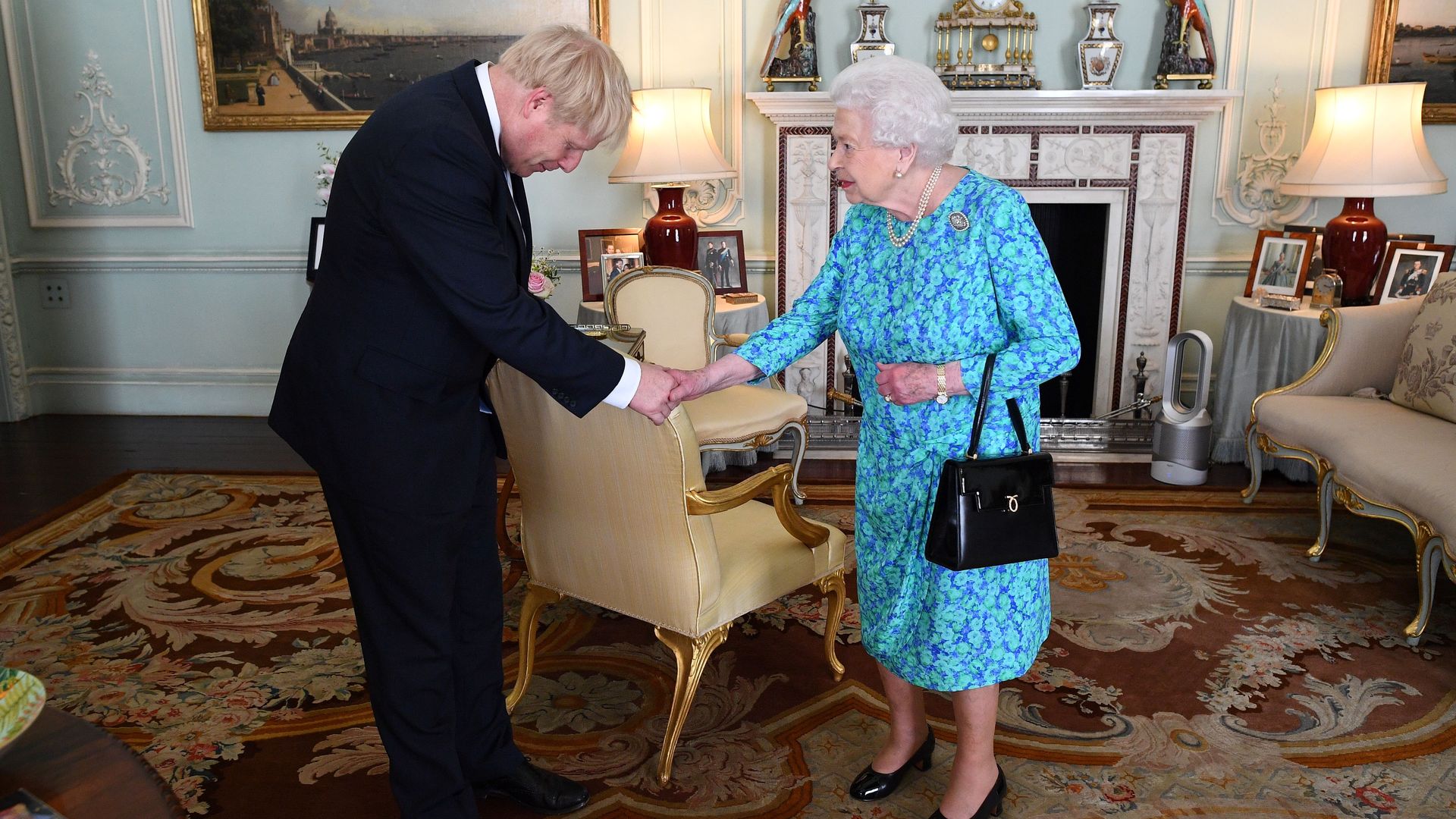
Boris Johnson officially became the U.K.'s prime minister on Wednesday after his meeting with Queen Elizabeth II at Buckingham Palace.
The big picture, via Axios' Dave Lawler:He now has 99 days to fulfill his promise to bring the country out of the European Union by Halloween, with or without a deal. Johnson says a "no-deal" exit, which would have major economic repercussions for the U.K. and the world, is preferable to another delay, despite a parliamentary majority prepared to act to block it.
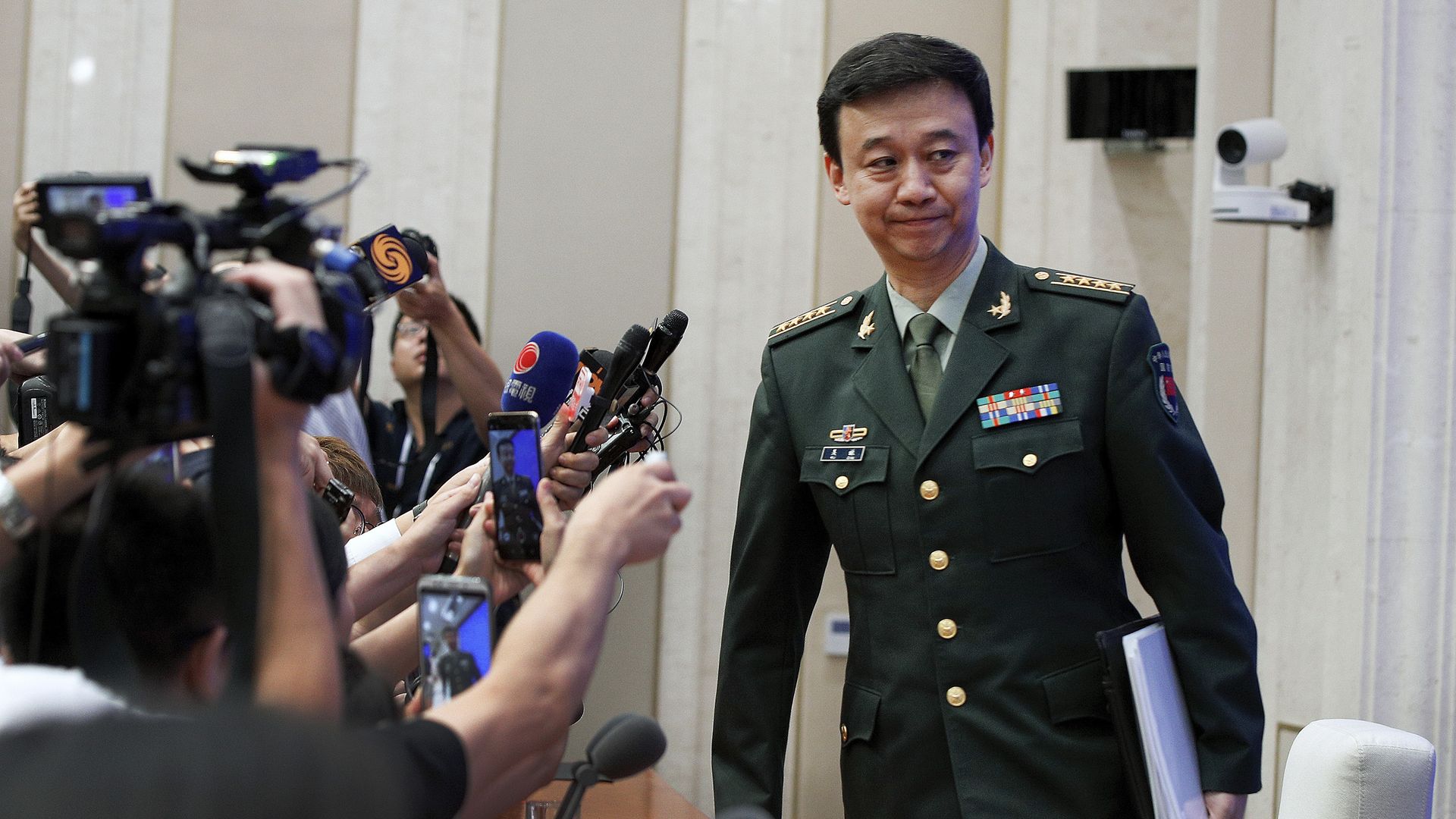
China criticizes the U.S. for undermining global stability and says it won't "renounce use of force" against Taiwan in a defense white paper published on Wednesday.
Details: Defense Ministry spokesman Wu Qian told a news conference if "anyone dares to separate Taiwan from China, the Chinese army will certainly fight, resolutely defending the country’s sovereign unity and territorial integrity," according to AP. The white paper states "we will not attack unless we are attacked, but we will surely counterattack if attacked."
Former FBI Director James Comey said on Tuesday that he believes special counsel Robert Mueller, if pressed, would argue that there is sufficient evidence to charge President Trump on "at least some" of the allegations of obstruction outlined in his report.
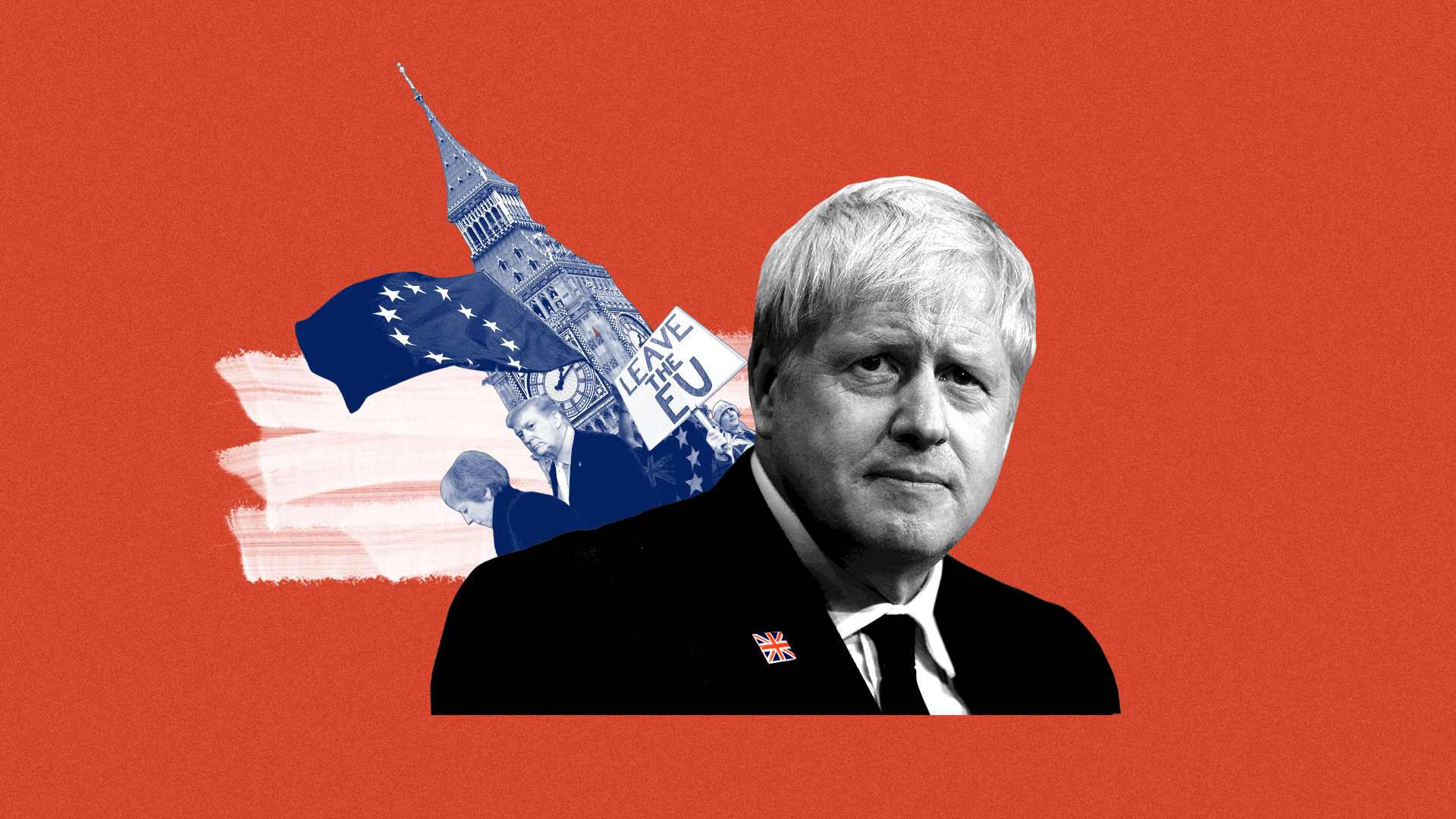
Boris Johnson easily defeated Foreign Secretary Jeremy Hunt to claim the leadership of the U.K. Conservative Party on Tuesday, setting the stage for him to become the country's next prime minister tomorrow.
The big picture: Johnson played a central role in pushing the "Leave" campaign over the top in the 2016 Brexit referendum — a shock result that unleashed the political chaos that consumed Johnson's most recent predecessors, David Cameron and Theresa May. Now, the man is meeting the moment he helped create.
South Korea's Defense Ministry says the country's fighter jets fired hundreds of warning shots at Russian military aircraft that entered its airspace early Tuesday, Reuters reports.
Why it matters: This would be the first time a Russian warplane has violated South Korean airspace, as South Korea's Yonhap news agency notes — though Russia later issued a denial of the claim, per AFP.