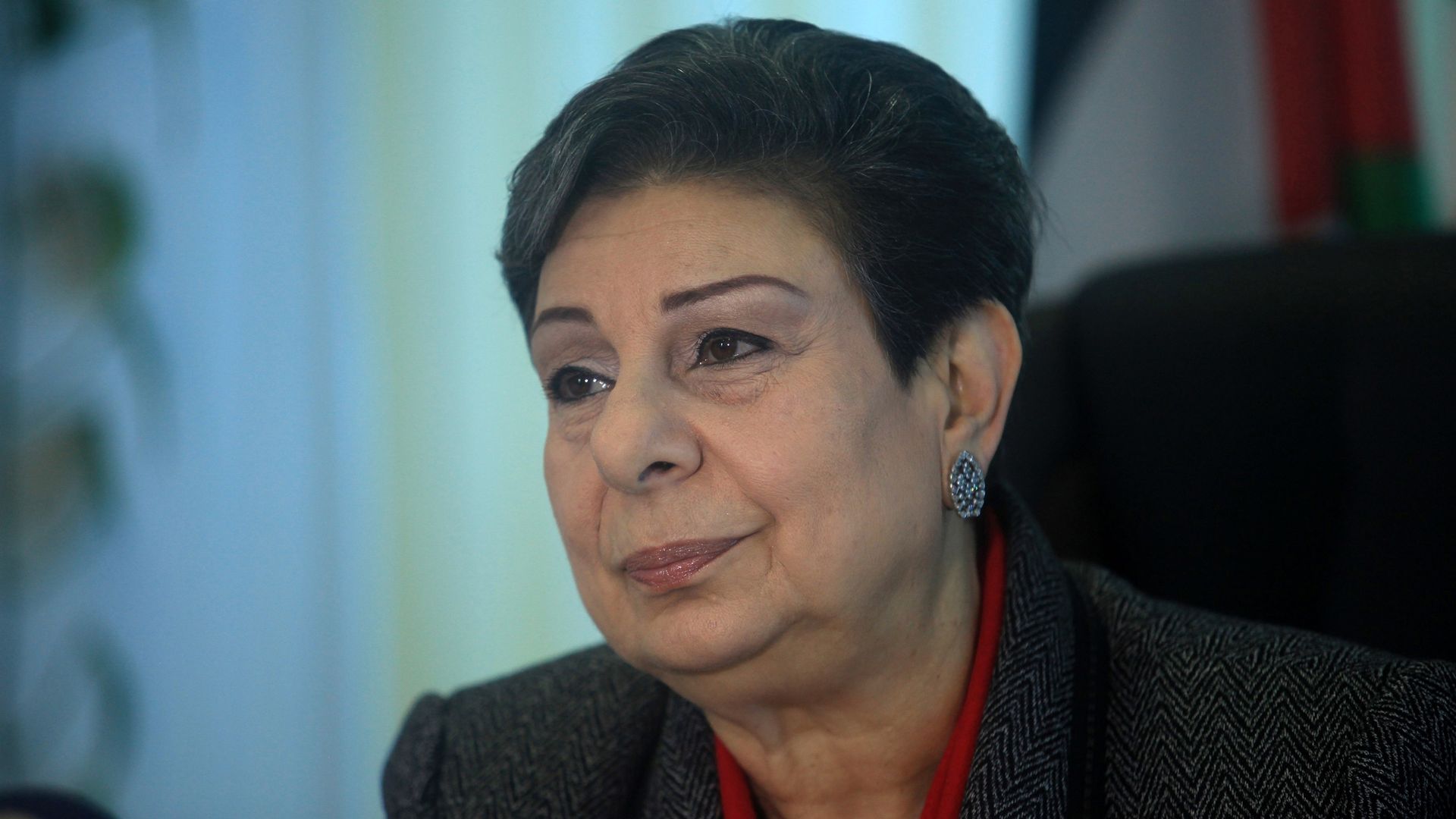
PLO executive committee member Hanan Ashrawi claims she was denied a visa to the U.S. for political reasons.
Why it matters: Ashrawi is one of the best known and most respected Palestinian leaders internationally. She had close contacts to officials in previous U.S. administrations, including former Secretary of State Condoleezza Rice. The news comes amid a breakdown in relations between the U.S. and the Palestinians.
President Trump told reporters Monday that he will meet with Russian President Vladimir Putin and Chinese President Xi Jinping at the G20 Summit on June 28 and 29 in Osaka, Japan.
Why it matters: This will be the first time Trump will meet with Putin since the release of the Mueller report, and the first time he'll meet with Xi since U.S.-China trade talks collapsed, resulting in increased tariffs on $200 billion worth of Chinese goods and threats of retaliation. Trump also told reporters that he hasn't yet decided whether to go forward with new tariffs on $325 billion of Chinese goods, as he has previously threatened.
China Mobile isn't hiding its frustration after the Federal Communications Commission denied the wireless firm's bid to operate in the U.S.
What's happening: "After 7 years and 8 months of application, FCC now denies (China Mobile's) bid to operate in the U.S. without apparent reasons and basis," it said in a statement.
Saudi Arabia said Monday 2 of its oil tankers sustained "significant damage" in sabotage attacks near the coast of Fujairah in the United Arab Emirates, as 1 was on its way to pick up oil for the U.S.
Why it matters: The U.S. had warned that "Iran or its proxies" could target vessels in the region. The UAE said Sunday 4 commercial vessels were targeted by "sabotage operations" near its territorial waters, per Reuters. The U.S. says it's deployingforces including an aircraft carrier and B-52 bombers to the Persian Gulf to counter Iranian threats.
The U.S. Embassy in Baghdad on Sunday issued a security alert due to heightened tensions in Iraq, advising American citizens not to travel to Iraq, avoid places known as U.S. citizen gathering points, keep a low a profile and be aware of their surroundings.
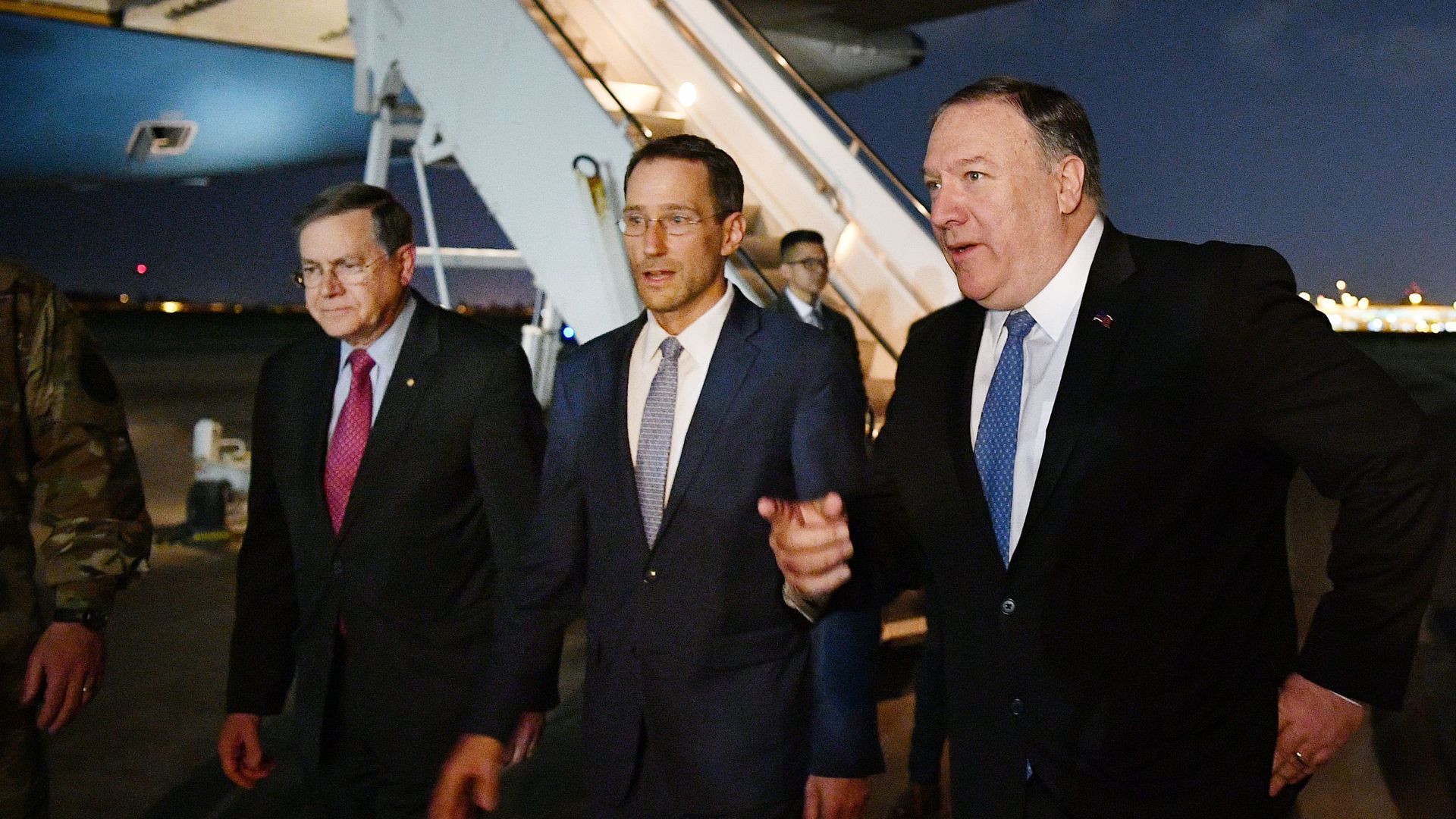
Context: Earlier this month, Israel gave the White House information on an alleged Iranian plot to attack U.S. interests in the Gulf, prompting national security adviser John Bolton to announce that the U.S. would deploy a carrier strike group and a bomber task force to the region to send "a clear and unmistakable message." Secretary of State Mike Pompeo made an abrupt trip to Baghdad last week, which he explained was meant to reaffirm U.S. support for "a sovereign, independent" Iraq, free from the interference of neighboring Tehran.
The former chief of staff of the Israel Defense Forces (IDF), Gen. Gadi Eizenkot, warned White House officials last week that there could soon be a violent escalation in the West Bank, and he recommended that the Trump administration take this into account as part of its calculations for the upcoming release of its peace plan.
Why it matters: Eizenkot, who was the IDF's chief of staff until just 4 months ago, is highly respected by Prime Minister Benjamin Netanyahu, most of his Cabinet ministers and the Israeli public.
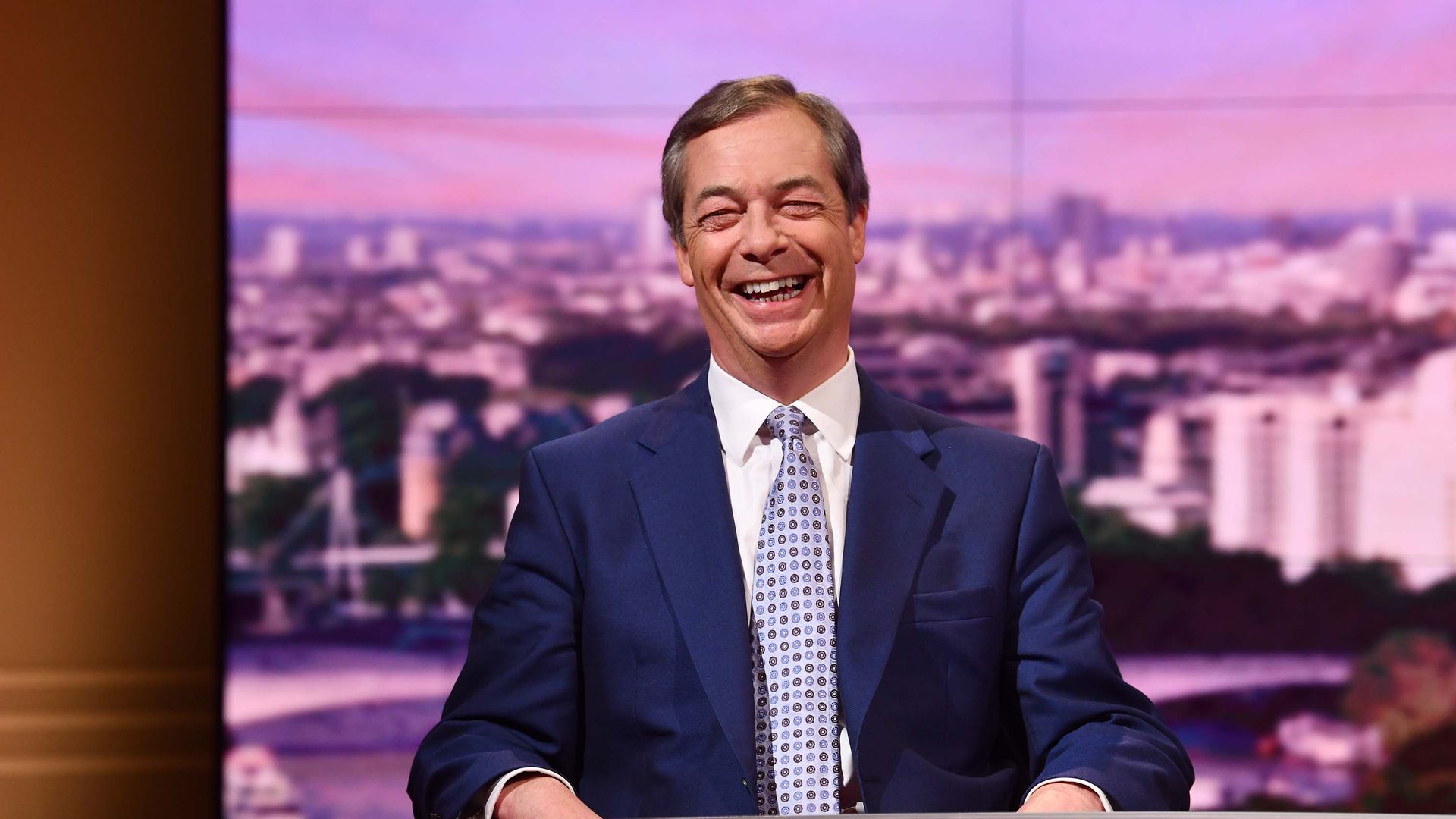
Nigel Farage's newly formed Brexit Party is on pace to receive more votes than the U.K.'s two mainstream parties combined in this month's European elections, according to a new Opinium/Observer poll.
Why it matters: The U.K. was scheduled to leave the European Union on March 29 at midnight, but Prime Minister Theresa May's failure to get a deal passed in the House of Commons forced her into asking the EU for an extension. With that has come the requirement that the U.K. participate in the European Parliament elections on May 23-26. With 90% of Brits viewing the botched negotiations as "a national humiliation," many voters consider the elections a chance to rebuke the mainstream Conservative and Labour parties.