Wednesday's world stories

President of Chad made military hardware demand on historic Israel trip
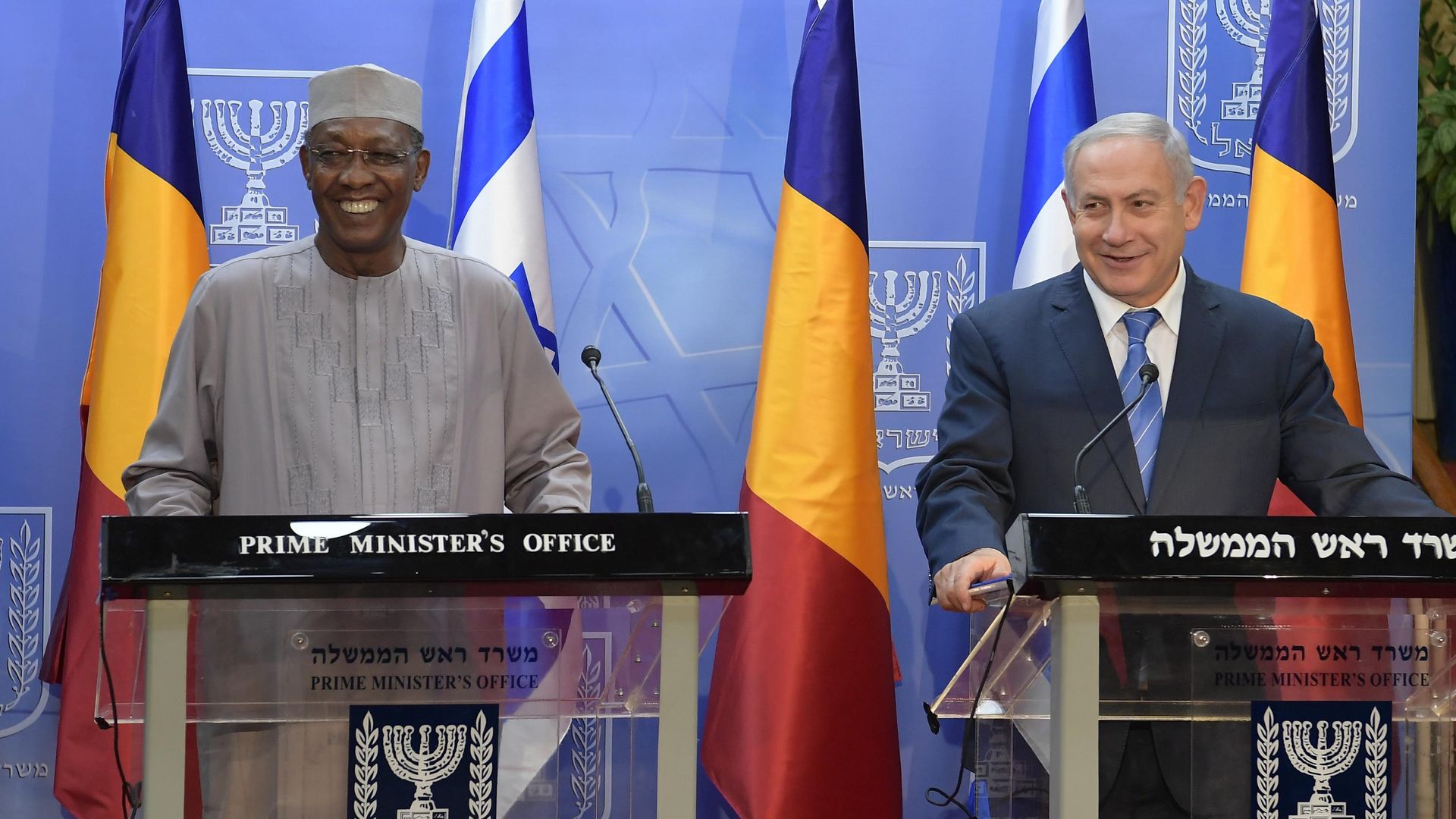
On his historic visit to Israel this week, the president of Chad presented Prime Minister Benjamin Netanyahu with a list of demands regarding Israeli military and defense aid, Israeli Foreign Ministry officials told me.
Why it matters: Israeli Foreign Ministry officials tell me that the list President Idris Deby presented included military hardware Chad wants to buy from Israel, and some aspects of the list raised concerns among Israeli government officials briefed on it. Deby and his aides were very assertive in their demands and even insinuated that they might link them to their decision on whether to renew diplomatic ties with Israel, the officials tell me.
Russia’s attack on Ukraine was an attack on the international order
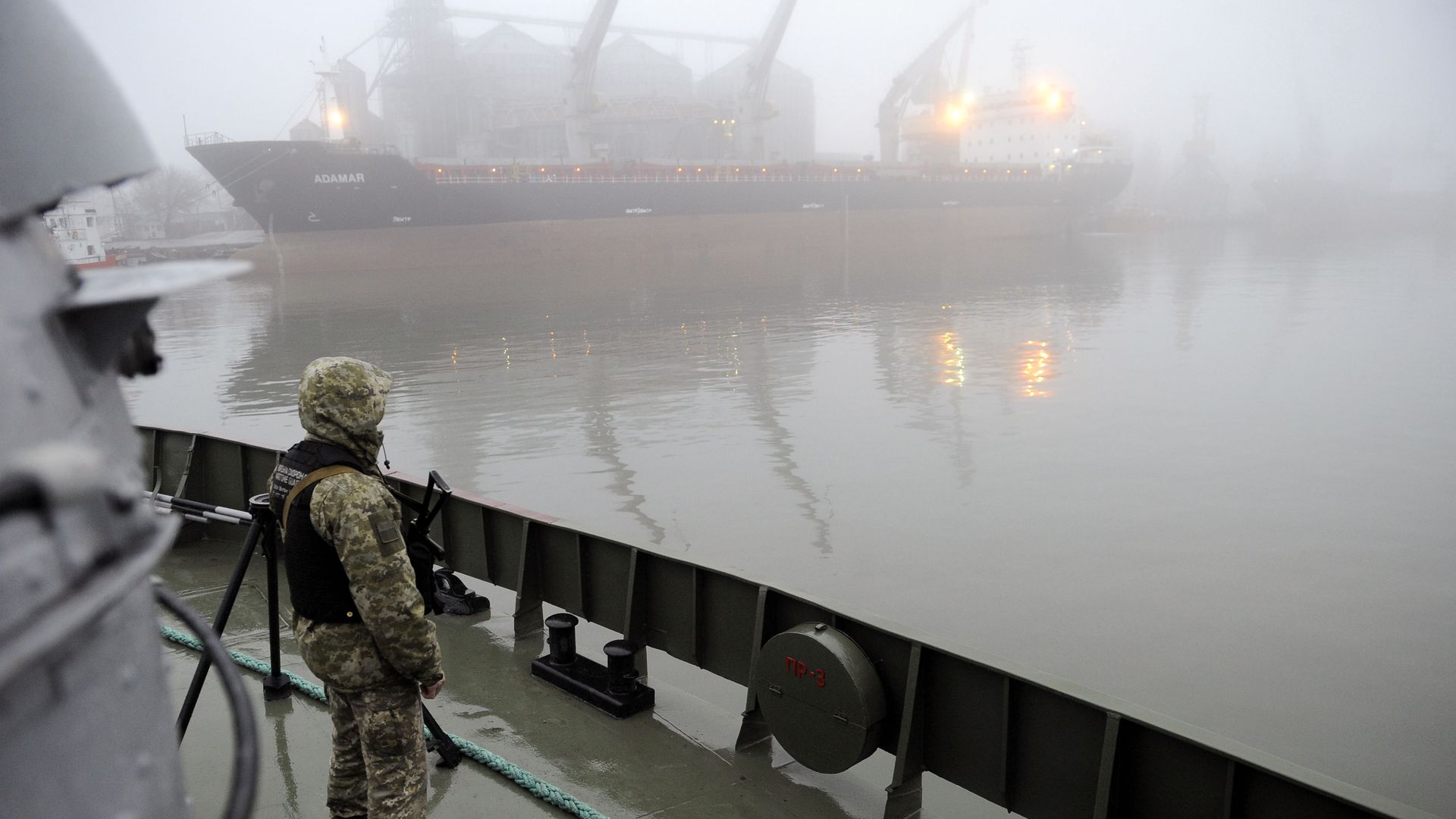
Russia’s deliberate Sunday attack on two Ukrainian patrol boats and a tugboat, which violated a 14-year-old treaty that gave both states use of the inland sea, continues Moscow's policy of “nibble warfare.” For nearly a decade, Vladimir Putin has used political intimidation, cyber warfare and fictitious claims of protecting ethnic Russians in neighboring states to advance his revanchist goals while skirting the threshold for international retaliation.
Why it matters: The attack is a reminder of Putin’s ongoing intimidation of NATO member states on the Black Sea, and of Moscow’s potential to heat up the “frozen” conflict over Transnistria, a thin slice of land that separated from Moldova after the USSR's dissolution. If Russia gets away with breaking its treaty with Ukraine and violating a neighboring state’s territorial waters, China may also learn that more aggressive tactics in disputes with its South China Sea neighbors would carry little to no risk.

China's ambassador to U.S.: We want to turn Uighurs into "normal persons"
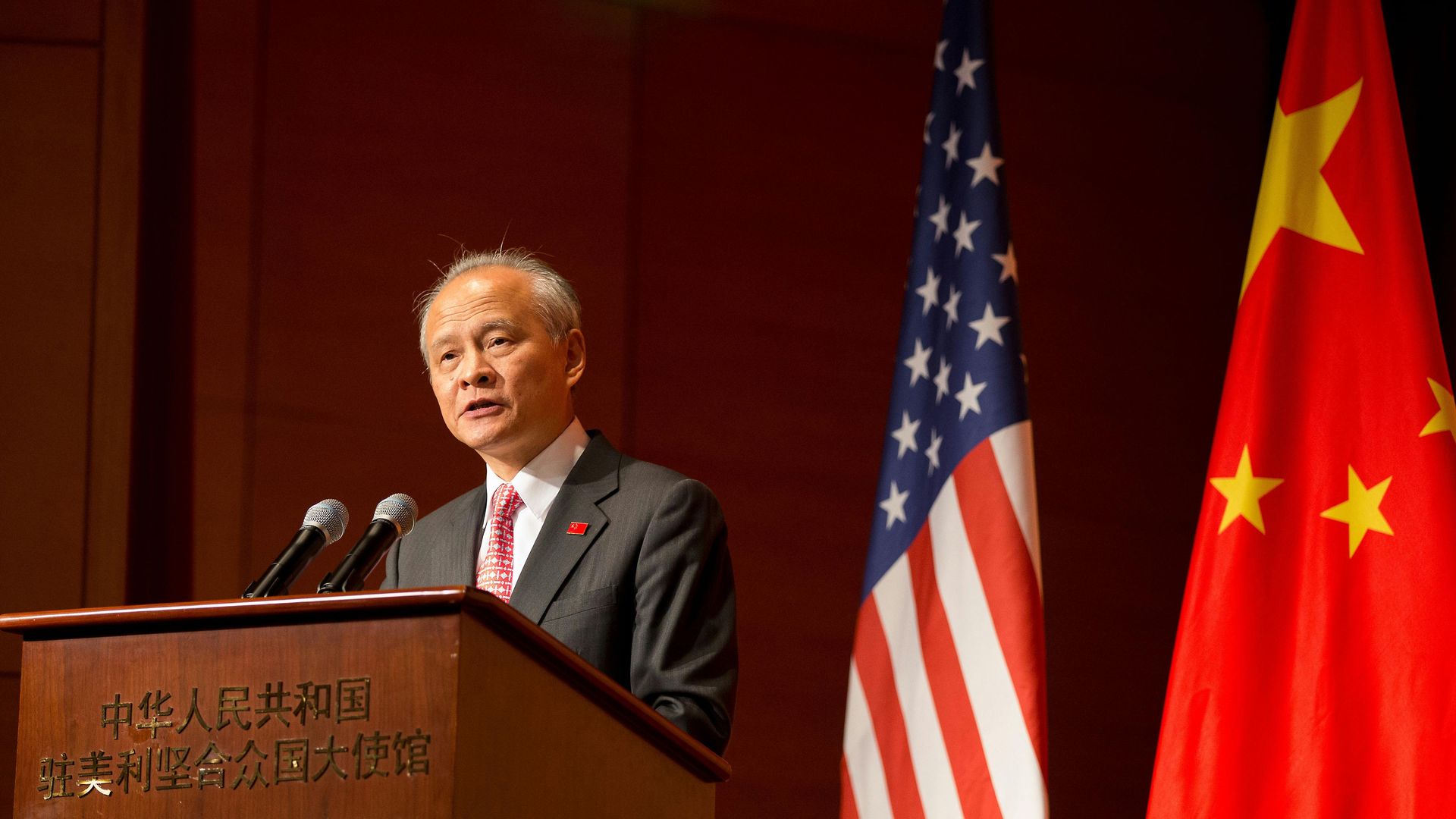
Cui Tiankai, China's ambassador to the U.S., told Reuters that China is trying to "re-educate" its Muslim Uighur minority and other Muslim groups in Xinjiang province to "turn them into normal persons [who] can go back to normal life."
The big picture: China's mass detention and surveillance against Uighurs in Xinjiang have faced international criticism — with the UN classifying it as a "massive internment camp." The Trump administration has weighed sanctions against the Chinese government in response, and Cui told Reuters that China will "retaliate...in proportion" if sanctions are imposed, likening it to sanctioning the U.S. officials over the fight against ISIS.
Go deeper: China is afraid of its ethnic minorities

U.K. Treasury says any form of Brexit would hurt British economy
The United Kingdom's Treasury released an analysis on Wednesday concluding that, under Prime Minister Theresa May's proposed Brexit deal, the U.K.'s GDP would be left 3.9% smaller after 15 years than if the country remained in the European Union, reports the BBC.
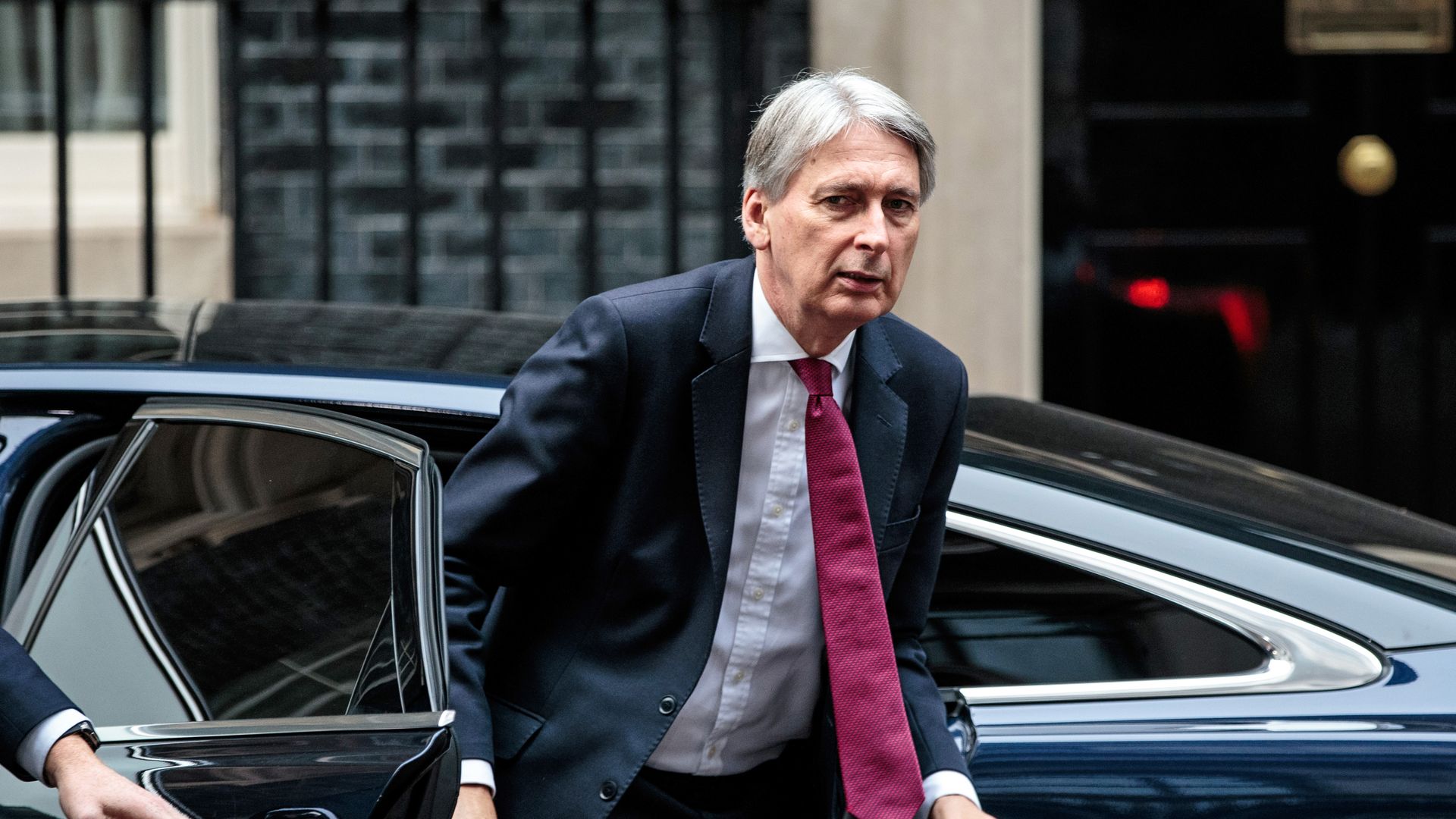
The big picture: If Parliament rejects May's plan and the U.K. crashes out of the EU without a deal, the country's GDP would be 9.3% smaller after 15 years, according to the analysis. Chancellor Philip Hammond, the country's top finance minister, admitted that remaining in the EU would be the best outcome in purely economic terms, but that Brexit has "political benefits" and that the government remains committed to selling May's deal to the British people.
U.S. demands Palestinians release citizen held for selling land to settlers
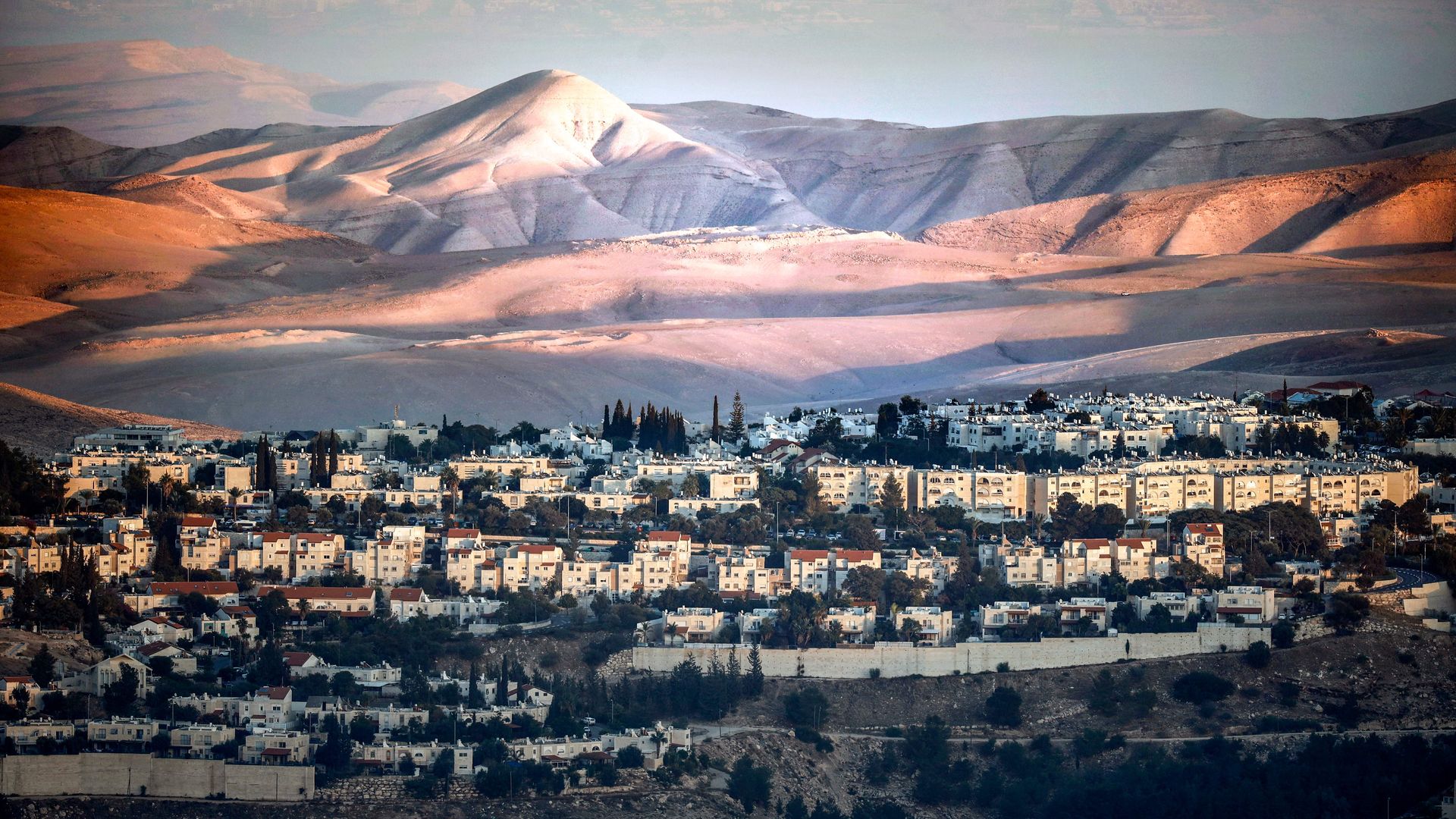
The Trump administration has demanded that the Palestinian Authority release a Palestinian — and U.S. citizen — currently being held in Ramallah. The man, Isaam Akel, was arrested two months ago by the Palestinian General Intelligence Service for allegedly selling real estate in East Jerusalem to Israeli settlers.
Why it matters: The Palestinian Authority is cracking down on sales of land by Palestinians to Jewish settlers in East Jerusalem and the West Bank. According to Palestinian law, such deals are illegal. The Palestinians claim Jewish settlers are trying to buy property from Palestinians in East Jerusalem to prevent the eventual establishment of a Palestinian capital there — and it's exacerbated by the Trump administration's decision to recognize Jerusalem as the capital of Israel, move the U.S. embassy to the city and downgrade the U.S. consulate in Jerusalem that conducted relations with the Palestinians.

Controversial Chinese scientist hints at another gene-edited pregnancy
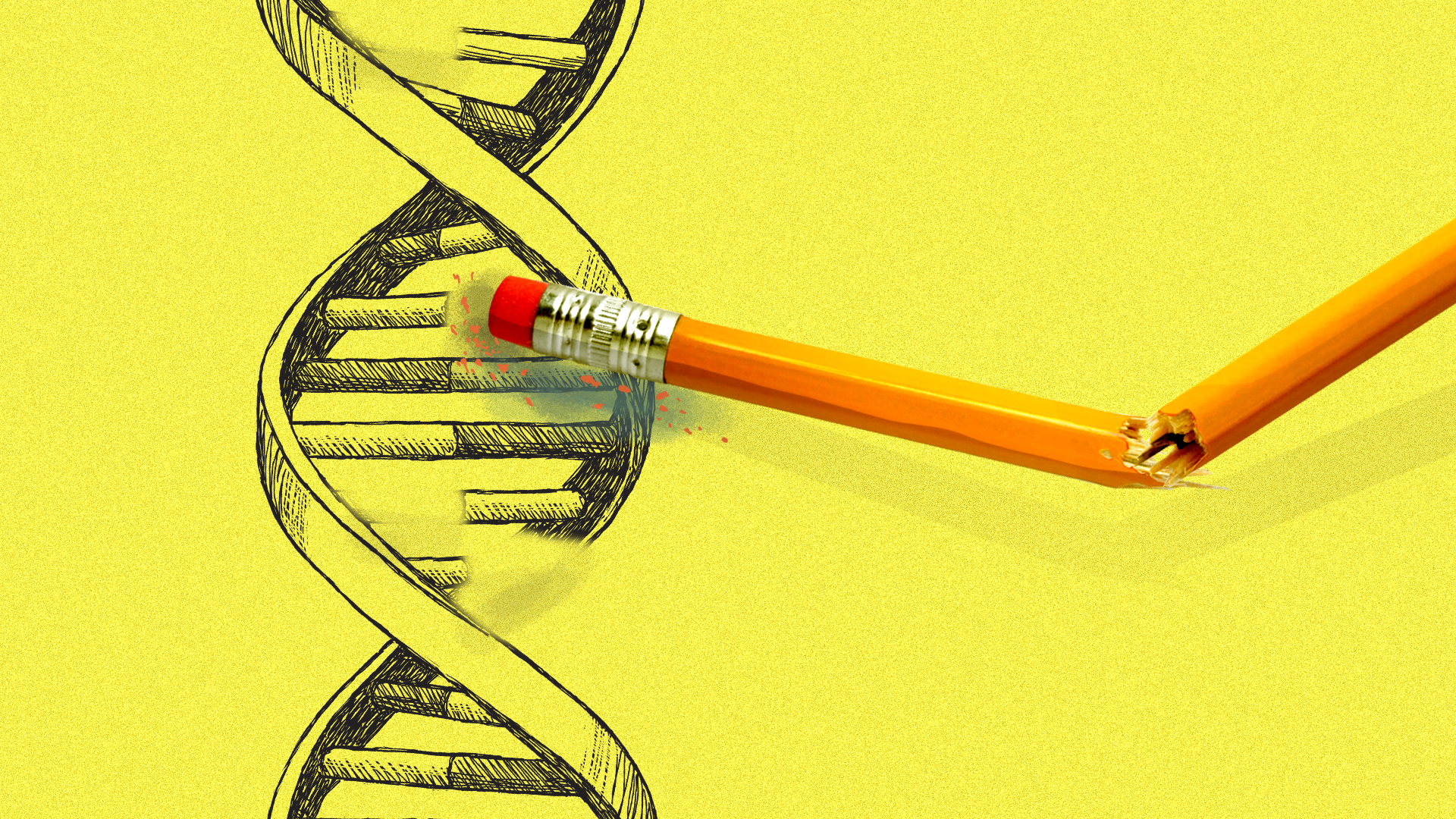
Debate continues in scientific and ethical circles over whether the gene-editing tool CRISPR is ready to safely be used to edit embryos for implantation, in reaction to unverified claims made Sunday of a successful birth of gene-edited twins and a possible second edited pregnancy.
What's new: The lead scientist of the controversial claim, He Jiankui, presented some of his data at an international conference in Hong Kong. “First, I must apologize that this result was leaked unexpectedly," He said.
But, voicing what appears to be the general scientific consensus was David Baltimore, chair of the organizing committee, who says the research has not met what's been considered the basic criteria for this type of experiment to start.
"That has not happened, and it would still be considered irresponsible."— David Baltimore, who said he was speaking his personal view at the conference
Scoop: The secret meeting between Israel and Sudan
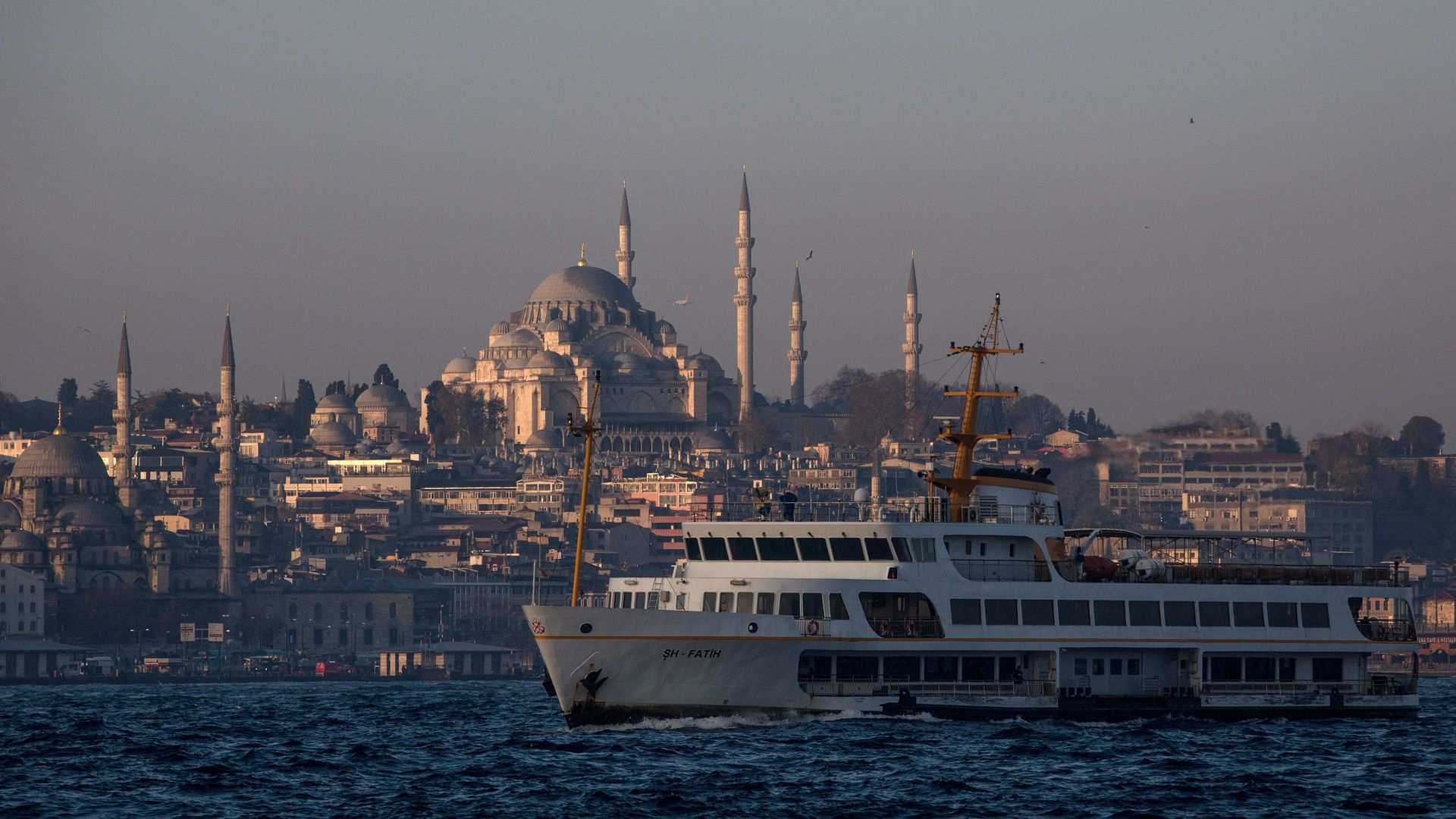
A special envoy from the Israeli Foreign Ministry held a secret meeting in Istanbul with Sudanese officials a year ago as part of an attempt to renew the dialogue between the two countries, a source briefed on the meeting told me.
Why it matters: There has been deep hostility between the two countries over the last several decades, though Sudan is not officially designated in Israel as an enemy state. Israel is the only country in the world that Sudan does not allow its citizens to visit legally. Sudan used to host Hamas' headquarters and was an ally of Iran, but since 2014 it has started to distance itself from Tehran and pivot toward Saudi Arabia. In response, Israel began in 2016 to quietly lobby the U.S. and EU members to boost economic aid to Sudan.

New test for Trump as Crimea crisis heats up between Russia and Ukraine
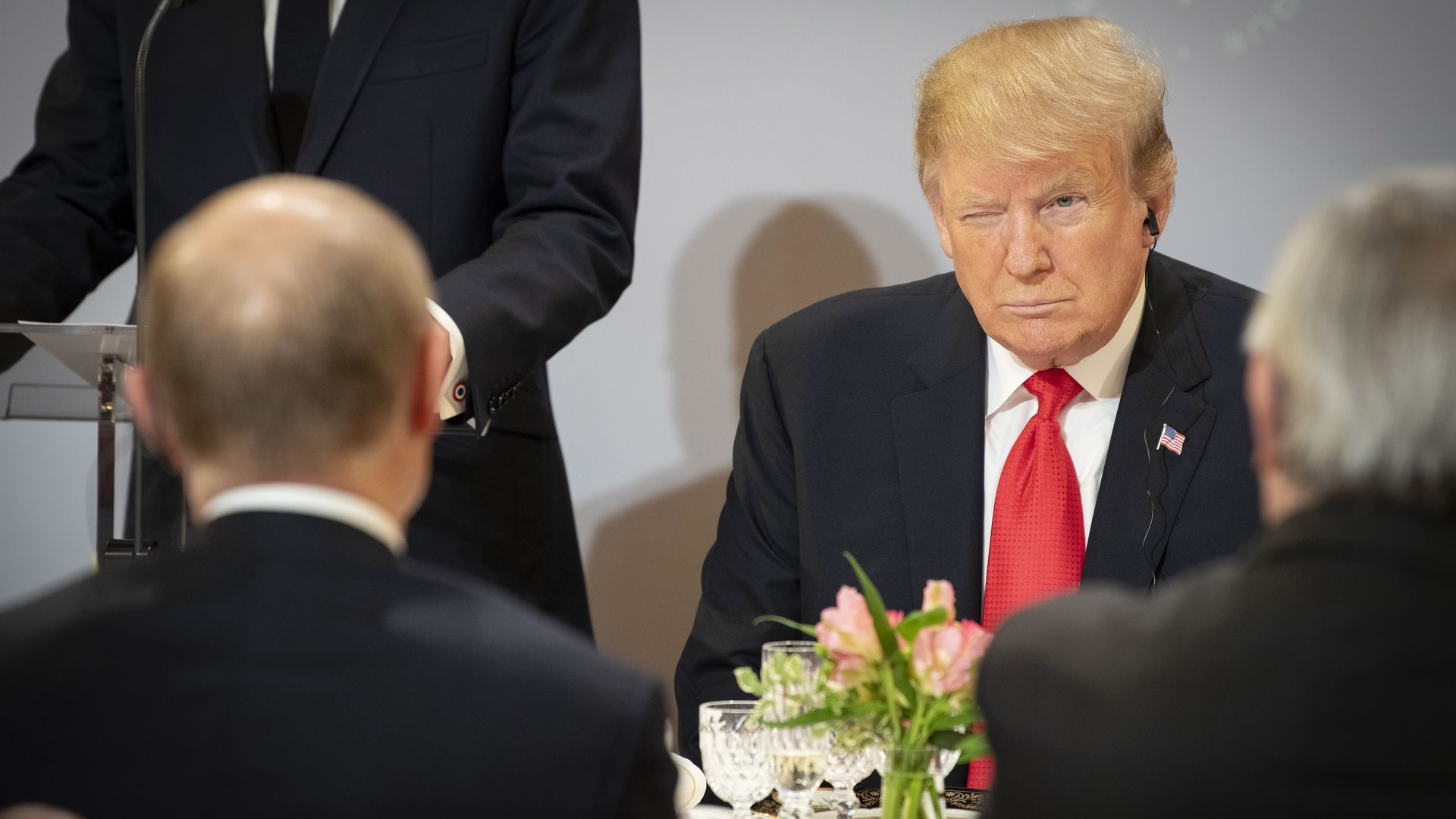
The Ukraine crisis presents an important new test for President Trump.
The big question: Will Trump say anything about Russia taking its aggression even further? Or will he normalize this rogue behavior? The pressure from the national security establishment will be to call out Russia, while Trump's own instincts tend to favor Putin.

Russia opens new front in Ukraine conflict
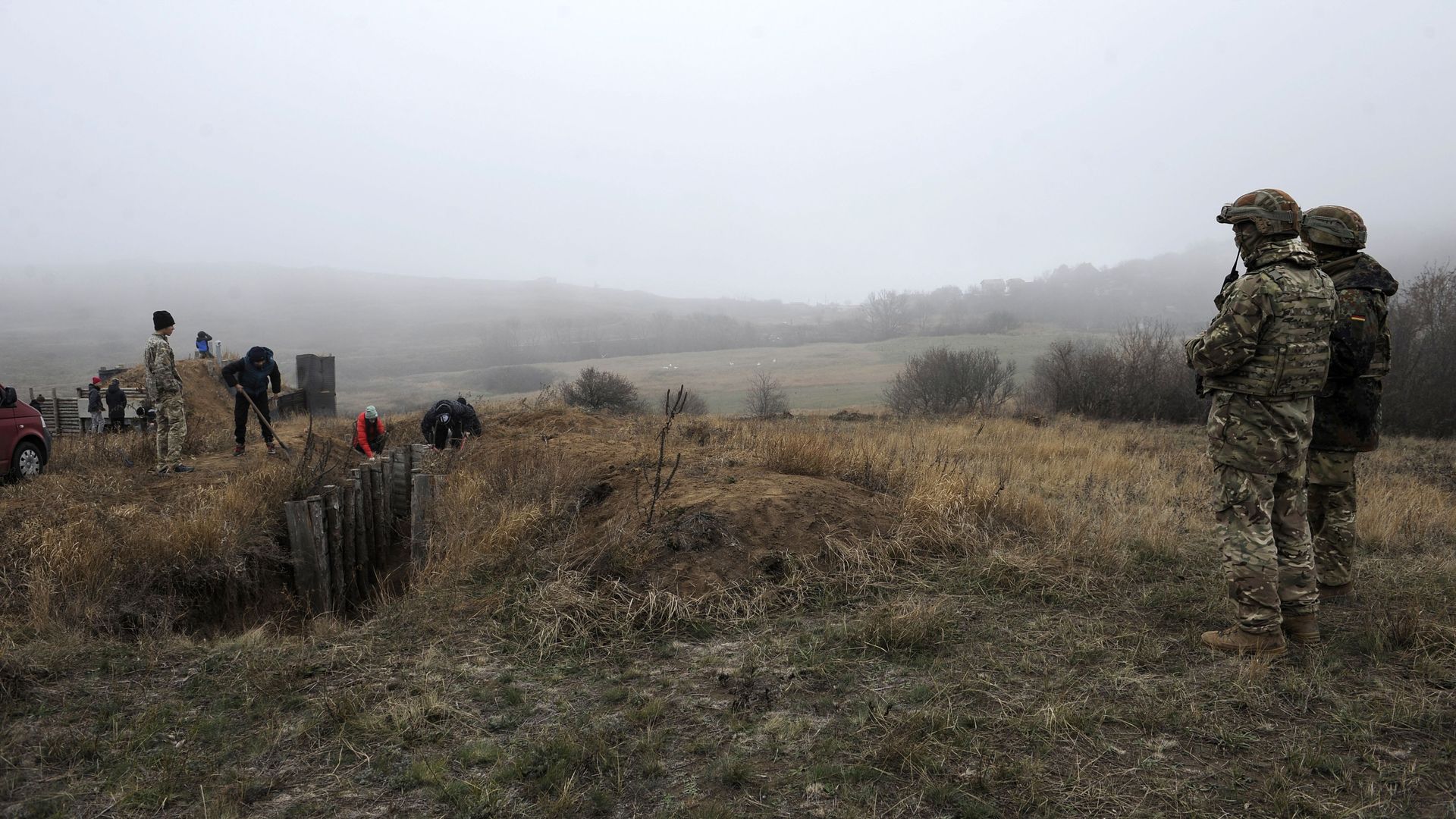
Much of Ukraine is now under martial law a day after Russia intercepted, fired on and seized three Ukrainian naval vessels off of Crimea, wounding at least six sailors in the process.
Why it matters: “This is a new, more dangerous form of aggression,” says John Herbst, a former U.S. ambassador to Ukraine now at the Atlantic Council. “In the light of day, Moscow demonstrated that it will attack Ukraine with its conventional forces.” Absent U.S. and European pushback that turns “a Kremlin tactical victory into a strategic defeat,” he says, further aggression is likely.