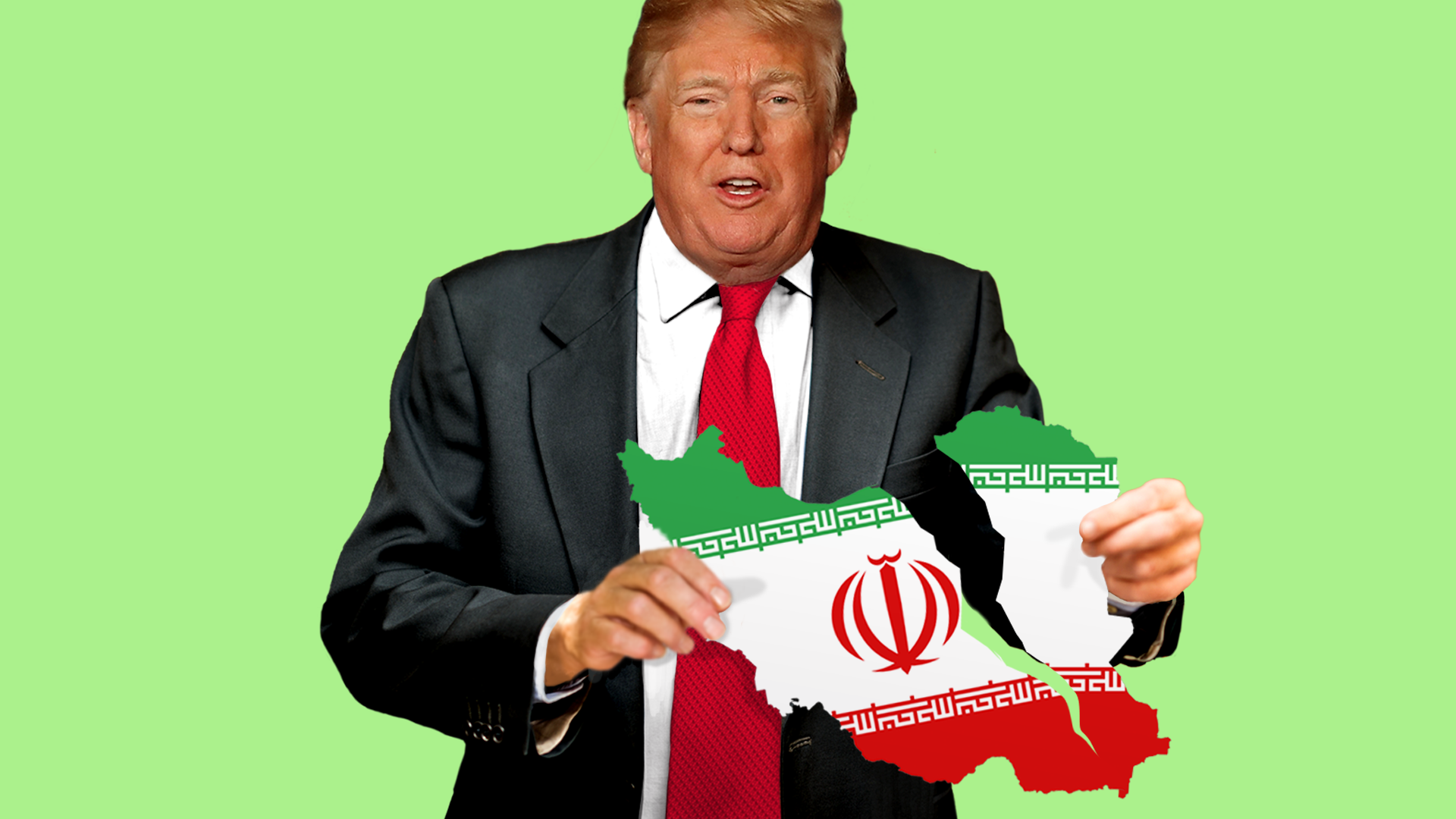
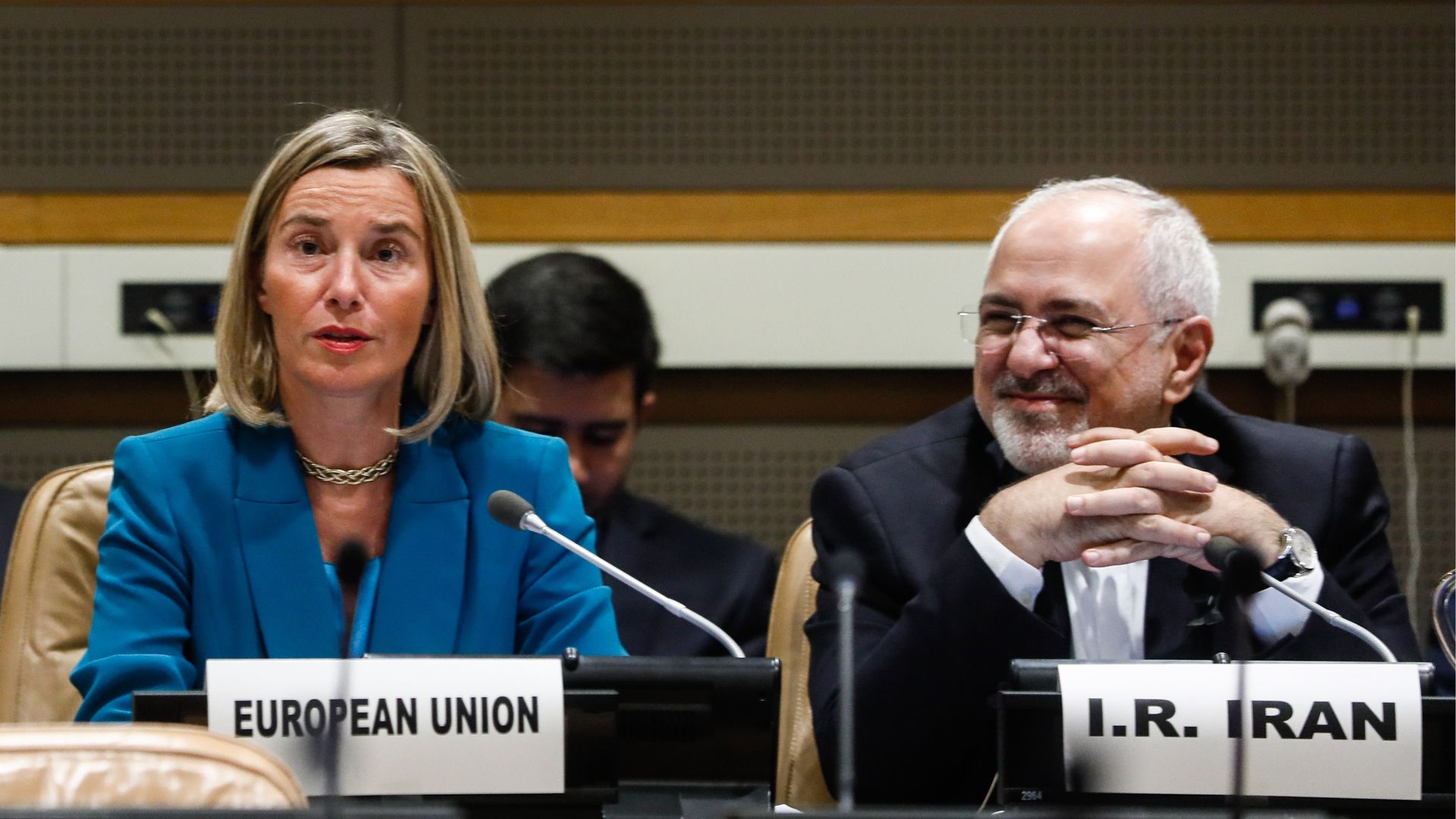
President Trump has risked a split with America's closest allies and a possible ramp up in Iran's aggression, or even its nuclear program, in pursuing the hardline policies that culminated today in the restoration of sanctions on the country's oil, shipping and financial sectors.
Why it matters: The administration is betting the sanctions will hit the Iranian economy hard and force the regime to change course (or, perhaps, to change). The sanctions will indeed be painful, particularly as the SWIFT global payments system has now announced it’s cutting off several Iranian banks. But experts are far from convinced the pain will cause the regime to move in the direction Trump would like to push it.
The Trump administration reimposed sanctions on Iranon Mondaymorning, marking another step in its maximum pressure campaign. Foreign companies have already decamped from Iran, with oil sales plunging even before this tranche of sanctions came into effect.
The big picture: The administration's ostensible end goal is not only to harm Iran’s economy, but also to bring about a change in the country's policies — namely its ballistic missile program and regional expansionism — or to its regime. While this latest round of sanctions will doubtless inflict considerable economic pain, the administration's bigger gamble is more uncertain.
In a Sunday interview heralding the sanctions that have now been restored against Iran, Secretary of State Mike Pompeo issued a warning to “watch the Iranians.” How Iran responds to the U.S.’ imposition of sanctions — which include penalties against Tehran’s energy, shipping, insurance and banking sectors — matters just as much as the U.S.' will to enforce them.
The big picture: There is a growing consensus among analysts that Tehran will likely attempt to wait out the Trump administration and refrain from breaching the nuclear deal. Should Tehran hunker down and play for time, the Trump administration will need to find creative ways to tighten the sanctions belt such that time will cost the regime money, and lots of it.
Belgium-based payments system SWIFT — a linchpin of the global financial system that allows Iran to get paid for its oil, pay for its imports and finance its activities abroad — announced Monday it is "suspending certain Iranian banks’ access to the messaging system," reports the Financial Times.
Why it matters: Ensuring that Iranian banks remain plugged into the SWIFT network was a key part of Europe's strategy to keep the Iran deal alive, Axios' Jonathan Swan reported in August. Now that SWIFT has announced it will comply with new U.S. sanctions, Europe could seek to activate a special payments system to maintain trade ties with Iran. Treasury Secretary Mnuchin warned Monday that such a move could trigger sanctions against any financial institution that engages in "certain significant transactions" with Iran.
The wealth of the world's billionaires rose by $1.4 trillion in 2017, the largest annual increase ever.
The details: Nearly all of that increase was driven by the Asia-Pacific region, and specifically China, where billionaire wealth rose 39%. The region minted three new billionaires a week over the course of the year. 701 billionaires are over the age of 70, accounting for nearly 40% of the wealth in the chart above.
With U.S. sanctions on Iranian oil set to kick in Sunday at midnight, Iran's foreign minister has reached out to a number of key European leaders to reaffirm their countries' support for the 2015 nuclear deal, Politico reports.
Why it matters: The European Union has been vocal in its disapproval of President Trump's unilateral withdrawal from the Iran deal. The first round of U.S. sanctions, which went into effect in August, has already taken a significant toll on Iran's economy, but it's the second round — which targets Iran's critical oil exports — that could threaten total collapse. Iran's ability to preserve trade ties with the EU would undermine the Trump administration's "maximum pressure" approach to sanctions.